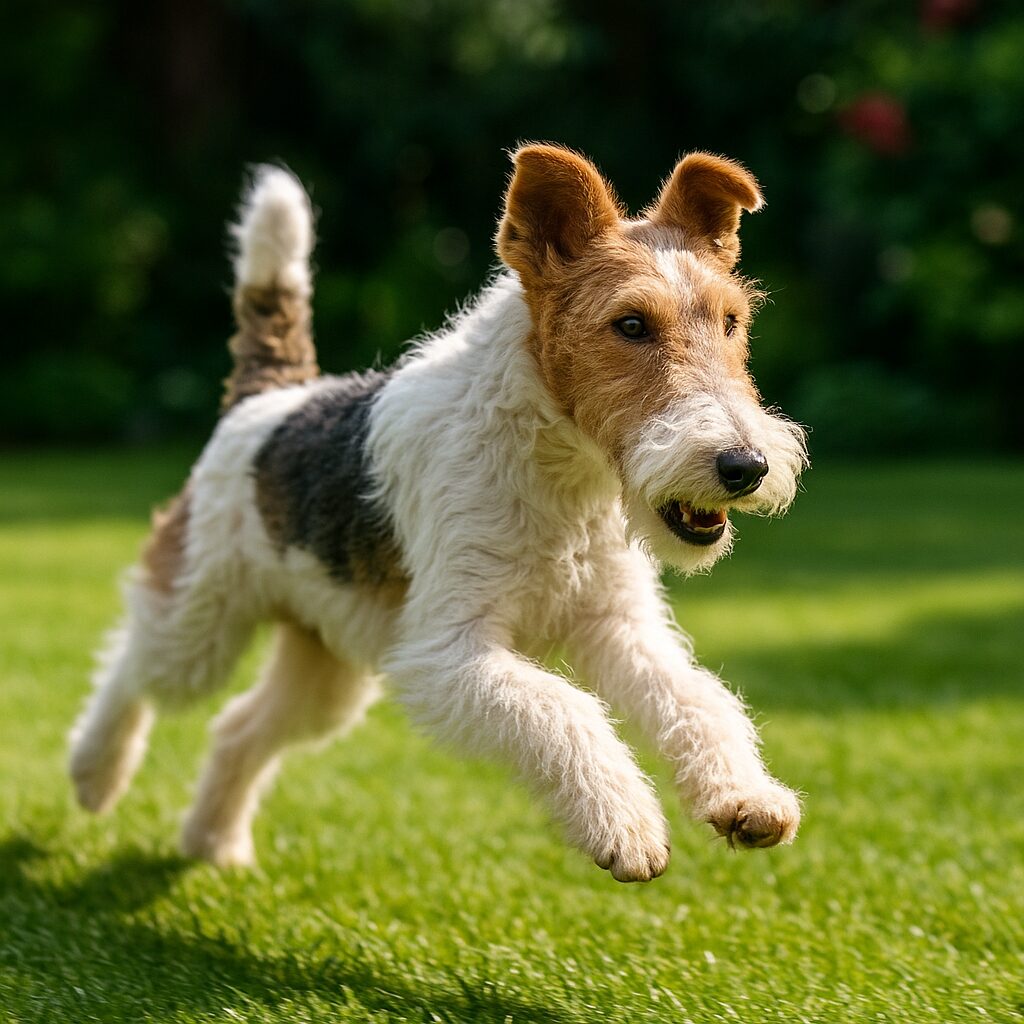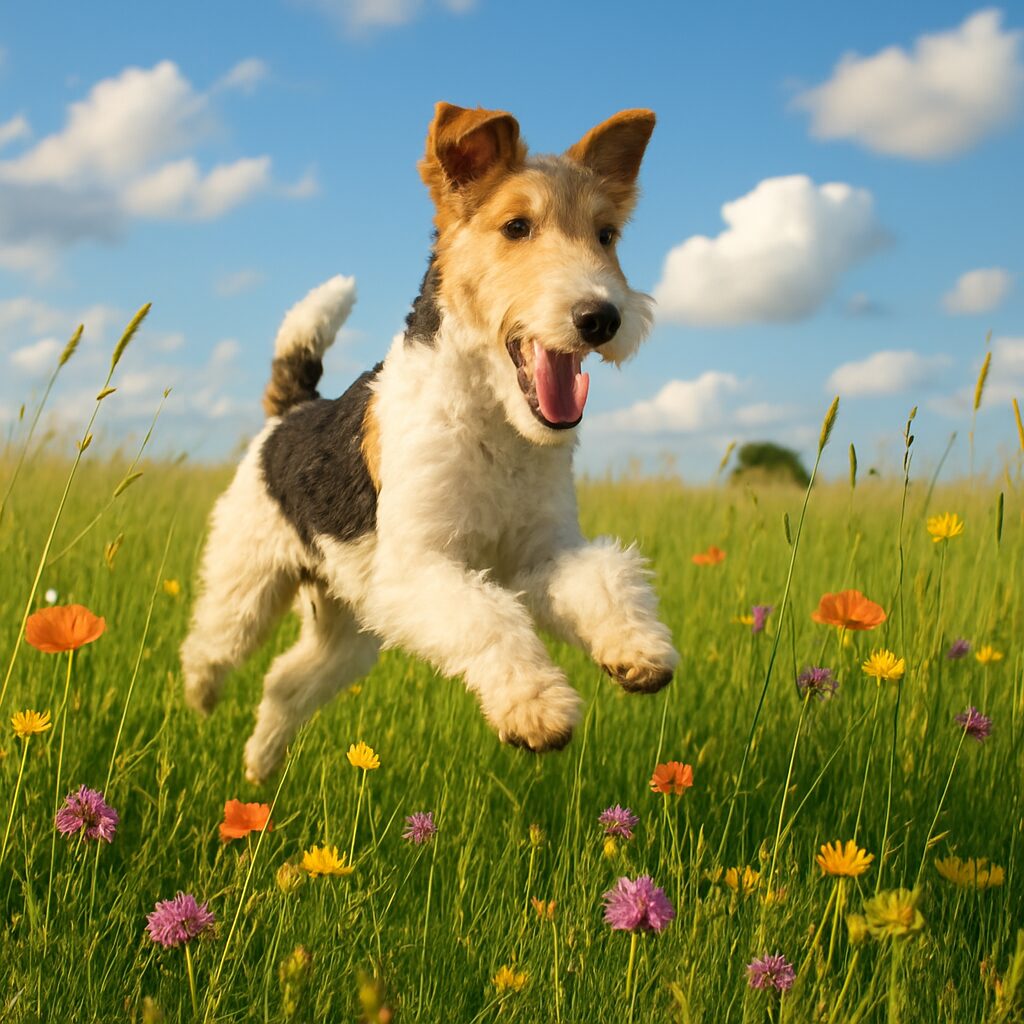
The Wire Fox Terrier is a small dog, but with unsuspected energy and grit. Known for its rough coat and athletic silhouette, it combines curiosity, courage, and loyalty. This article explores in detail its history, temperament, grooming needs, as well as the keys to balanced training. Whether you are a future owner or simply an enthusiast, you will learn everything about this lively companion.
In Brief
🐾 English origin and hunting pleasure: the Wire Fox Terrier traces its roots to 18th-century terrier competitions, combining robustness and liveliness.
✂️ Specific grooming: its coarse coat requires regular maintenance by hand-stripping every 3 to 4 months to preserve texture and color.
🎓 Strong character: playful and independent, it requires early socialization and firm training framework, otherwise it may become too unruly.
🏡 Active life: it thrives in large spaces or gardens, enjoys agility and long walks, but will also adapt to a dynamic household.
Origins and Evolution of the Wire Fox Terrier
The Wire Fox Terrier was bred in England in the 18th century with the aim of flushing foxes out of their underground dens. Its coarse hair provided natural protection against brambles and moisture. Quickly, breeders established a standard to obtain a versatile dog, capable of exploring cavities, swimming, and competing in terrier trials.
From farm terriers to show rings
Originally, several terrier lines coexisted, often crossed with Beagles or other local terriers. The rigorous selection primarily targeted courage and endurance. Over time, “fox-hunting” trials gave way to dog shows, where aesthetic qualities and proud gait are now judged.
Establishing the standard
In 1876, the Kennel Club formalized the Wire Fox Terrier’s criteria: maximum height of 40 cm, solid bone structure, narrow head, and flat profile. The predominantly white coat may have black or tan markings. This nearly unchanged standard proclaims the breed’s “intrepid” character and guarantees a certain visual unity.
Character and Temperament
Quick-witted and curious, the Wire Fox Terrier stands out for its contagious zest for life. Its behavioral profile makes it both a stimulating and demanding companion.
- Overflowing energy: always ready to play, it needs daily exercise.
- Independence: stubborn, it may ignore commands if it feels too constrained.
- Hunting: its instinct drives it to chase any small animal, requiring vigilance in rural areas.
- Loyalty: it forms a strong bond with its owner and watches over its family.
- Intelligence: quick to understand, but also prone to boredom if stimulation is lacking.
“The Wire Fox Terrier is the embodiment of the classic terrier: no compromise between tenacity, liveliness, and independence. A companion who will never leave you in the shadows.”
Dr. Clara Martín, Veterinary Behaviorist, University of London
A lively and curious temperament
One might think that a small dog would be calm: not at all. The Wire Fox Terrier digs, scratches, and investigates relentlessly. Its active nose and keen sense of smell make it unbeatable on the trails. Stimulating its intelligence through search or puzzle games prevents boredom, which can lead to destructive behaviors.
Relations with the family
As a true pack dog, it enjoys family life. With an exaggerated sense of play, it willingly plays with children, but its exuberance requires supervision. Conversely, it is wary of strangers and may bark at any intruder. Gradual socialization teaches it tolerance and calmness.
Care and grooming of the coat
The Wire Fox Terrier’s hard coat is its trademark. It requires specific care to stay neat and maintain its texture.
- Weekly brushing: removes dead hair without stripping the hard layer.
- Manual stripping: to be done every 3-4 months to preserve the roughness of the coat.
- Light bath: only in case of heavy dirt, with a gentle shampoo adapted to rough textures.
- Ear monitoring: clean to prevent ear infections and wax buildup.
Grooming by stripping
Hand stripping is done tuft by tuft, pulling in the direction of hair growth. This method, although time-consuming, removes dead undercoat without injuring the skin and maintains the “wire” appearance. Many breeders or specialized groomers offer this service.
Exercise and well-being
Agility, cani-cross, long walks: the Wire Fox Terrier loves to move. It needs at least 1 hour of intense daily activity. Without this, the dog gets bored and may show separation anxiety. A fenced garden is a major asset for it to fully express its exploratory character.
Education and socialization
Training a Wire Fox Terrier requires consistency and gentleness. Its stubbornness sometimes makes it difficult, but its intelligence speeds up well-conducted learning.
- Basic positions: sit, lie down, heel, from 8 weeks old.
- Positive reinforcement: treats, petting, and games reward good responses.
- Short sessions: 5–10 minutes to maintain attention and motivation.
- Socialization: expose to different people, noises, and animals up to 4 months.
Learning commands
Commands must be clear, firm, and consistent. Physical punishments should be avoided as they may increase mistrust. Conversely, immediate rewards strengthen the bond and the desire to obey.
Maintaining mental balance
Daily, alternate rest times and brain games. A stuffed Kong, a scent board, or trick training are excellent stimulations. Never let boredom settle in to limit destructive hyperactivity.
Health and longevity
Sturdy by constitution, this terrier enjoys good longevity, but some precautions are necessary.
| Criterion | Value |
|---|---|
| Height | 33–40 cm at the withers |
| Weight | 6.5–8.5 kg |
| Life expectancy | 12–15 years |
| Sensitivities | Ear infections, patellar luxations |
“A balanced diet, rich in quality proteins, prevents obesity and supports the muscle mass that the Wire Fox Terrier needs for its liveliness.”
Dr. Éloïse Bernard, Animal Naturopath, Paris
Common Health Issues
Patellar dislocation affects about 5% of subjects. Repeated friction on the joints can worsen it, hence the importance of appropriate exercises. Droopy ears can promote ear infections: it is important to check and clean them regularly.
Veterinary Visits
A biannual check-up is recommended to monitor weight, teeth, and joints. Vaccinations and antiparasitic treatments are up to date, and an annual oral inspection prevents excessive tartar buildup.
Adoption and Daily Life
Choosing a Wire Fox Terrier means committing to an active and sociable dog. Adoption from a breeder who respects the standard and the health of their lines guarantees a fulfilled companion.
Selecting a Breeder
Look for a professional affiliated with a recognized canine club, offering a veterinary certificate and a pedigree. A visit to the kennel allows evaluation of living conditions and puppy socialization.
Integration into the Home
The terrier poorly tolerates prolonged solitude. Plan for care solutions or a canine companion. A quiet resting place and safe toys soothe it when you are absent.
Ideal Environment and Leisure
The Wire Fox Terrier thrives in a stimulating and varied environment where its exploratory nature can be expressed.
Sporting Activities
Agility, flyball, or cani-cross are disciplines where it excels. These sports develop its agility and strengthen the bond with its owner.
Moments of Bonding
Forest hikes, searching for hidden objects, or simple ball games strengthen the bond. Also plan group walks to maintain socialization.