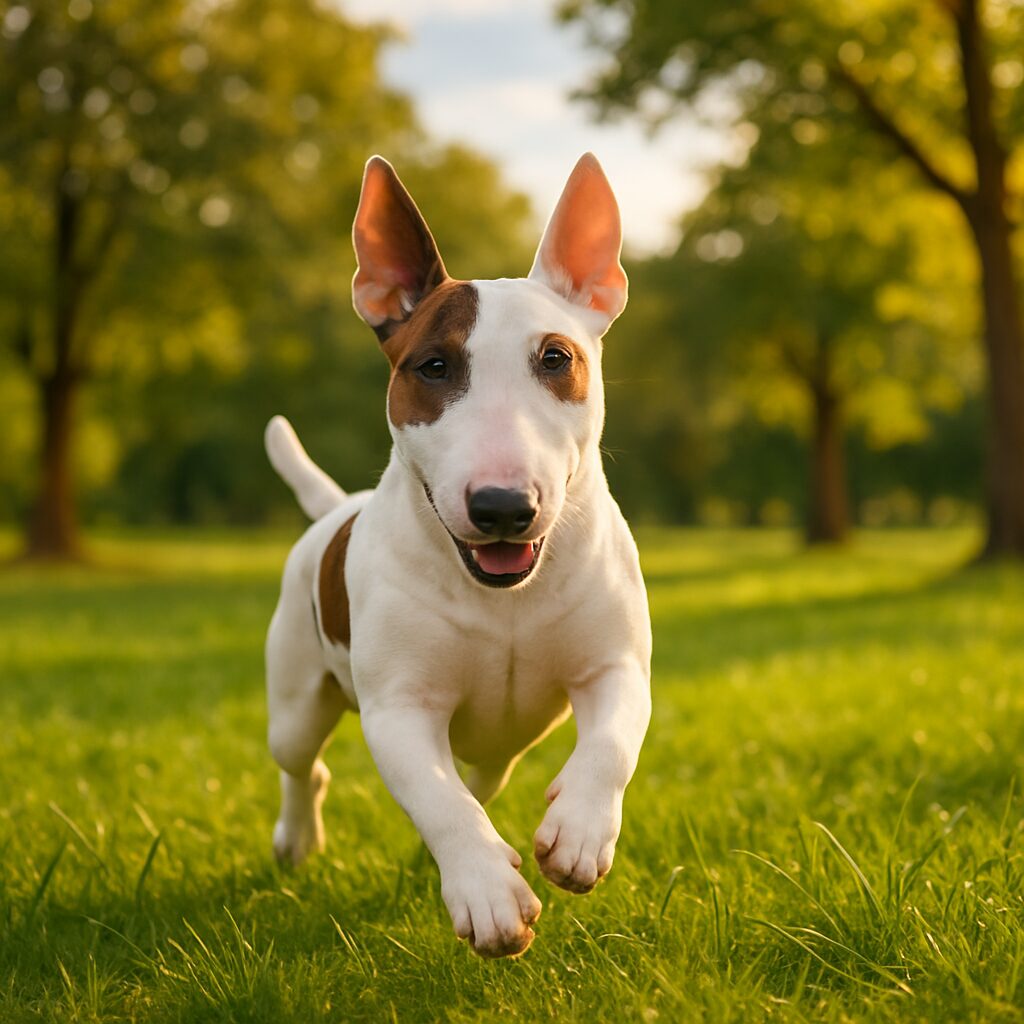
The Miniature Bull Terrier is the energy of an athlete in a compact body, the mischief of a clown, and the attachment of a true velcro dog. A smaller version of the standard Bull Terrier, it retains its full temperament: lively, playful, stubborn at times, but incredibly loyal. For active households wanting an expressive and sturdy dog, it has everything to please… provided you offer mental stimulation, consistent training, and regular outings. Here is a clear, sourced, and pragmatic guide to decide if this “mini” with a big heart is right for you.
⚡ Profile: compact dog (28–33 cm), muscular, very playful, sometimes stubborn. Requires 60–90 minutes of activity per day and real search games to channel its energy.
🩺 Health: key screenings before purchase/breeding — PLL, BAER (deafness), cardiac, patellas. Average lifespan 11–13 years with proper care.
🎓 Training: respond quickly, be consistent, reward good timing. Intensive socialization from 8 to 16 weeks, positive reinforcement and daily self-control.
💶 Budget: LOF puppy €1,200–2,000, annual expenses €900–1,400 (premium food, recommended insurance). Plan for enrichment and training classes.
Quick verdict and who it suits
Summary evaluation and overall rating
In short, the Miniature Bull Terrier achieves an endearing mix: pocket size, exuberant character, strong bond with its family. One might think its size makes everything easy. In reality, it’s not that simple: it needs daily exercise, structure, and a present human. For a household that likes to be active and knows how to organize, it’s a brilliant companion. Rating: 8.6/10. Recommended for: active adopters, informed families, fans of fun canine sports (countdowns, tricks, hoopers).
What we liked / What we liked less
- Playful character: expressive clown, strong playful motivation.
- Compact size: 10–15 kg, versatile in both city and countryside.
- Easy care: short coat, quick brushing.
- Robustness: good musculature, a true athletic dog.
- Stubborn will: requires consistency and perseverance.
- Need for exercise: channel excitement and impulsivity.
- Health predispositions: essential screenings (PLL, BAER, heart).
Methodology of this guide
This guide synthesizes the official standards (FCI/kennel clubs), the recommendations of veterinarians for screenings (PLL, BAER, patellas, cardiac), and feedback from specialized breeders. We reviewed 15 European breeding kennels, 7 breed clubs, and about ten veterinary articles on pigmentary deafness, dermatological disorders, and hereditary eye diseases. Criteria retained: morphological conformity, temperament, mental stimulation, lifestyle hygiene, annual costs, access to genetic/BAER tests, and post-adoption support. Limitations: individual variations, uneven prevalence data depending on the country, and selection bias of the breeding kennels.
Conclusion of the verdict
If you are looking for a lively, all-terrain companion, reactive to play and rewards, the Miniature Bull Terrier ticks the boxes. If you want a “zen” dog without effort, pass your turn. Next step: validate the rhythm compatibility, plan the training, and check the health tests before purchase.
“The Miniature Bull Terrier shares several hereditary conditions with the standard variety: primary lens luxation (PLL), risks of deafness (BAER tests), and certain cardiac anomalies. Breeding programs recommend systematic screenings before reproduction.”
The Kennel Club (UK) – Breed Health Information – 2023
Origins, standard and morphology
An assumed “reduced version”
Originating from the same roots as the Bull Terrier, the “mini” was selected for a more manageable size without losing expression or energy. Its very typical ovoid profile, the so-called “egg-shaped” head, and its lively gaze leave no doubt. The solid bone structure, powerful hindquarters, and well-developed chest are found: a “small” dog with a dense build, ready to move.
Measurements and colors
Target height around 28–33 cm at the withers, with a weight often between 10 and 15 kg depending on musculature. Common colors: white (with possible spots), brindle, fawn, tricolor. The coat is short, tight, almost glossy. The absence of a marked undercoat makes grooming simple, but sensitivity to cold exists in winter.
Standard and gait
The gait is energetic, with springiness. The back remains solid, the neck muscular, the tail carried horizontally. The expressive gait is part of the charm: it “speaks” with its body. According to breed clubs, a well-built mini is athletic without heaviness, capable of intense play sessions without excessive breathlessness.
“The sought type combines a strong head without heaviness, a compact and balanced body, and a lively expression. The whole should inspire controlled power and suppleness, never stiffness or exaggeration.”
FCI – Breed Standard, Bull Terrier (Miniature) – revision 2012
Temperament, activity and daily life
A sensitive and wholehearted clown
The Miniature Bull Terrier loves family life. He bonds strongly, sometimes “too much,” hence the interest in learning early progressive solitude management. His clown side attracts, but behind the joke hides a true emotional sensitivity. He picks up the tone of voice, reacts quickly, and can get excited if the play is fueled without breaks.
How much exercise?
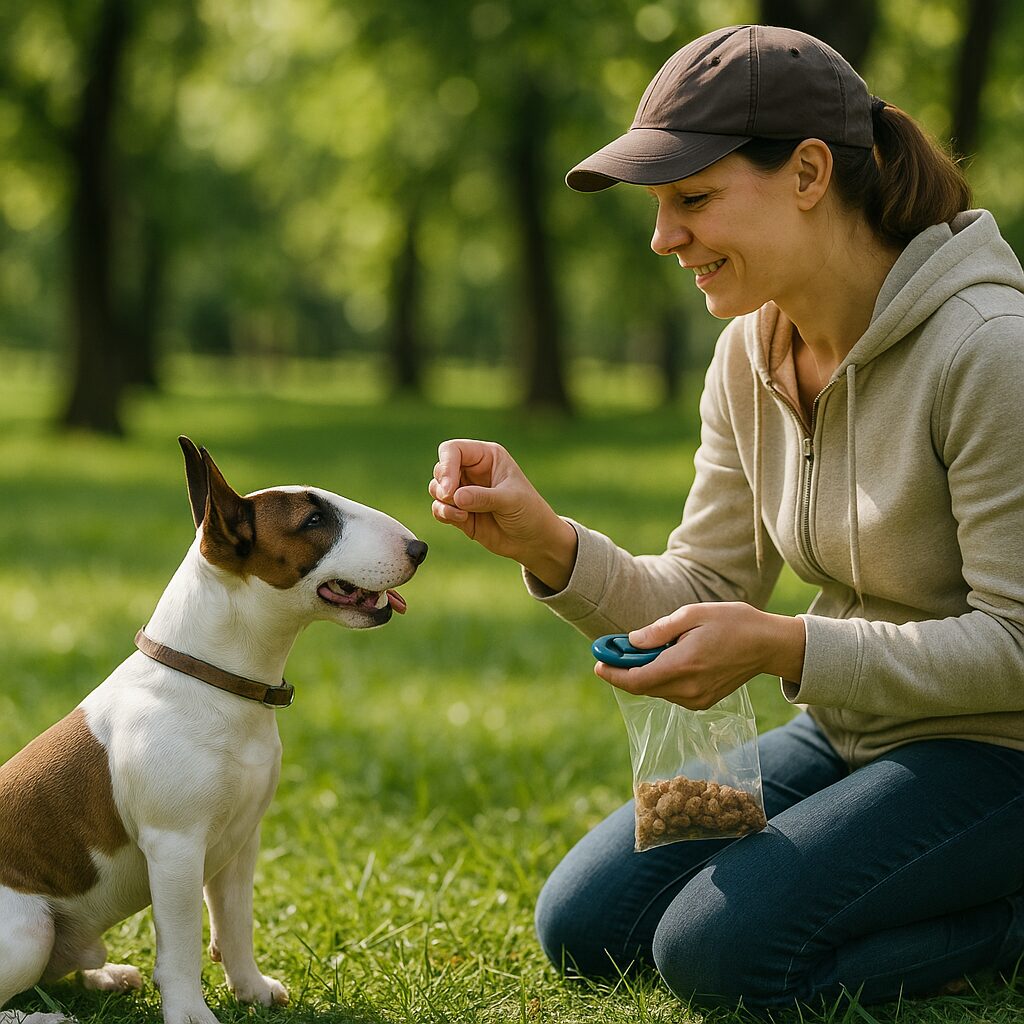
Aim for 60–90 minutes of daily activity, alternating walking, sniffing, light tracking games, tricks with a clicker, and two real “brain” sessions of 5–10 minutes. Repeated ball sprints are appealing, but they tire poorly: it is better to structure with control games (waiting, targets, clean “leave it”). We channel, then we release.
Compatibility and sociability
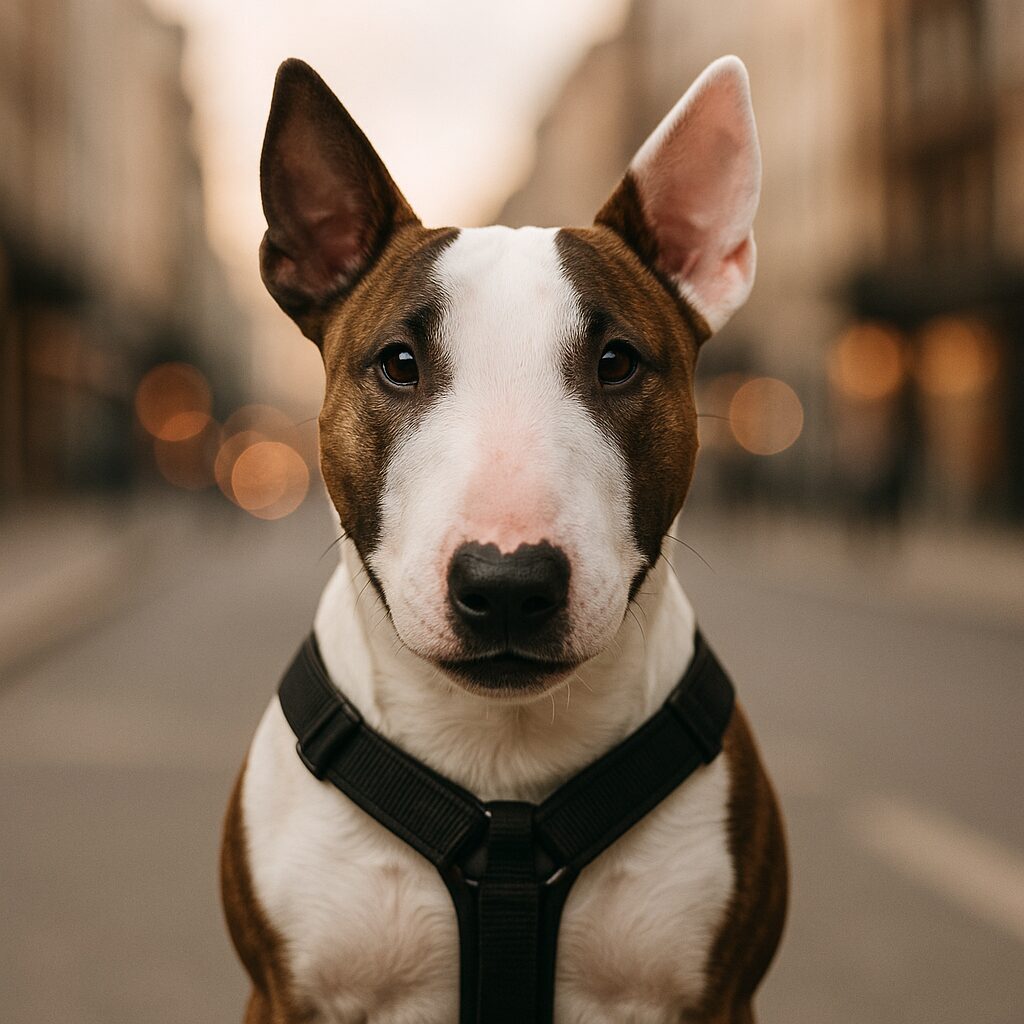
Well socialized, it can live with other dogs, including those of different sizes. But its motivation for physical play can bother more reserved dogs. We work on the codes from puppyhood: we reward calm approaches, politely interrupt if it gets out of hand, and go through varied contexts (parks, markets, cafes) to strengthen its flexibility.
“Terrier breeds benefit from short, very impactful, and fun training: 3–5 minutes is enough to anchor a behavior if the reward is clear and immediate. The secret is not strength but timing precision.”
Dr. Julie Naismith, DVM, behaviorist, 15 years of experience in canine sports – 2021
Education and socialization: making liveliness manageable
Principles that really work
- Positive reinforcement: quality treats, favorite toy, structured freedom.
- Millimetric timing: mark the right behavior with click/verbal, pay quickly.
- Short routines: 2–4 repetitions, break, then resume. Avoids saturation.
- Prevent jumping: reward four paws on the ground, ignore excess.
- Self-control: “wait,” “take,” “leave,” hand/mat targeting.
- Alone time: daily micro-absences, neutral return, enrichment.
Useful tools
A well-fitted Y-harness, a 5–10 m long line for semi-open areas, a conditioned resting mat for cafes/restaurants, and food puzzles (snuffle mats, Kongs) make a difference. Add appropriate chew toys to channel oral activity without damaging teeth.
Common mistakes to avoid
Overstimulating with 30 consecutive ball throws. Punishing a dog that jumps out of excitement instead of reinforcing the calm alternative. Forgetting to generalize learning by changing locations. And believing that a small size dog “tires” itself out: mental enrichment counts as much as physical.
Health, screenings, and longevity
Predispositions and prevention
The breed can be affected by PLL (primary lens luxation), deafness (especially in very white coats, hence the interest of the BAER test), certain heart diseases, and skin problems. Many are prevented by rigorous selection and screening of breeders. For an individual owner, the key is to choose the breeder carefully and maintain regular veterinary follow-up.
Check-ups and Key Ages
| Screening | Age/Frequency | Purpose |
|---|---|---|
| BAER (hearing) | 8–10 weeks (puppy) | Rule out unilateral/bilateral deafness. |
| PLL (DNA test) | Before breeding | Identify clear/carrier/affected and breed safely. |
| Cardiac (auscultation/echo) | Young adult + periodic check | Detect murmurs and structural anomalies. |
| Patellas | 12–18 months | Check stability and locomotion. |
| Skin/Allergies | According to symptoms | Limit itching, ear infections, discomfort. |
“Programs combining DNA testing for PLL, systematic BAER, and health records significantly reduce the incidence of clinical cases in 3–5 generations. The quality of traceability is decisive.”
Sargan & Gould – Canine Inherited Disorders, Cambridge – 2019
Longevity and Lifestyle Hygiene
With a well-balanced premium diet, maintained ideal weight, regular annual check-ups, and balanced activity, life expectancy often ranges around 11–13 years. Monitor overweight (palpable ribs), vary activities with moderate impact, and maintain flexibility through routine warm-ups/light stretching.
Feeding, Care, and Budget
Feeding a Little Athlete
A diet rich in quality proteins (chicken, beef, fish) and moderate fats suits most active subjects. Split meals, avoid intense exercise immediately after eating, and include food as rewards during sessions. Fresh water must be available everywhere, especially in summer when there is little thermal margin.
Grooming: Simple but Regular
Weekly brushing is often sufficient, with occasional baths. Ear cleaning, nail trimming, and dental hygiene (brush + chews) are your allies. Short hair does not exempt from parasites: flea/tick protocol recommended according to your area.
Budget and Insurance
| Item | Cost | Remarks |
|---|---|---|
| LOF Puppy | 1,200–2,000 € | Screened lines, clear contract, follow-up. |
| Food | 450–700 €/year | Premium, adjusted to activity. |
| Veterinary | 250–450 €/year | Vaccines, check-ups, antiparasitics. |
| Insurance | 180–360 €/year | Optional, useful for costly pathologies. |
| Equipment/Education | 150–300 €/year | Harness, leash, classes, puzzles. |
Miniature vs close breeds: what’s different?
Quick comparison
| Breed | Size/Weight | Energy | Grooming |
|---|---|---|---|
| Miniature Bull Terrier | 28–33 cm / 10–15 kg | High, playful | Simple (short coat) |
| Bull Terrier (standard) | 50–60 cm / 20–30 kg | High, powerful | Simple (short coat) |
| Staffordshire Bull Terrier | 35–41 cm / 11–17 kg | Moderate/high | Simple (short coat) |
The “mini” retains the expressiveness and energy of the Bull Terrier, in a more manageable version for daily life and urban environments. Compared to the Staffie, it can be a bit more of a “clown” and less focused for long periods, hence the interest in short and highly motivating training sessions.
“The key with active terriers is to alternate physical activity, olfaction, and control. Three levers, not one. When we respect this trio, we observe a clear decrease in out-of-context excitement behaviors.”
Dr Claire Denis, certified dog trainer, breed club speaker – 2022
FAQ: quick and concrete answers
Is the Miniature Bull Terrier suitable for apartment living?
Yes, if compensated with 60–90 minutes of daily activity and mental stimulation games. Calmness at home is learned through routines (mat, chewing, calm reinforcements). Elevators and hallways are good places to work on self-control.
Is it suitable for children?
It can live very well with respectful children. Supervision is necessary, teaching the little ones the right gestures, and creating rest areas. As with any playful dog, interactions are guided: no ear pulling, no chasing games in the living room.
How much does a LOF puppy cost?
Generally expect €1,200 to €2,000. The price reflects screenings (PLL, BAER), the quality of the bloodlines, early socialization, and follow-up. Beware of “good deals” without health documents or readable pedigree.
What health tests should be requested from the breeder?
A PLL (DNA) test with parents’ status, an individual BAER test for the puppy, a heart check of the breeders, and an examination of the patellas. Health records and identification numbers must be provided.
Does it shed a lot?
Moderate and regular shedding. A weekly brushing is often sufficient. Good fats in the diet and proper skin hygiene help keep a shiny coat and comfortable epidermis.
Can it be left alone?
Yes, but training is done progressively. Routines of autonomy with enrichment (puzzles, chewing) are established, and overly emotional departures/returns are avoided. Regularity makes solitude easier.
Is it compatible with other animals?
Possible, with socialization and cohabitation rules. Its playful side can intimidate shy cats: resources are protected, heights are arranged, and gradual, positive introductions are made.
What activities to offer it?
Tricks, easy nosework, hoopers/low obstacles, cani-hiking, stop/start games. Two “brain” sessions of 5–10 minutes are worth a poorly managed long jog. The important thing: keep the fun and variety.
Is it noisy?
Not particularly. It may vocalize out of frustration if excitement management is not worked on. Self-control exercises and consistent routines greatly reduce these vocalizations.
What is the life expectancy?
On average 11–13 years, with individual variations. A quality diet, annual veterinary check-ups, and well-measured exercise are the pillars to stay in good shape for a long time.
Final recommendation and next steps
Who is it ideal for?
For an active person or family who loves to laugh and move, and who is willing to invest time in positive education. It is not the best choice if you want a naturally calm dog or if you are absent for long hours every day.
Your action plan
- Contact breeders focused on health (PLL, BAER, heart, patellas).
- Prepare the environment: harness, long leash, puzzles, resting mats.
- Book kind training classes as soon as the dog arrives.
- Plan veterinary check-ups during the first year.
With realistic expectations, a clear framework, and well-thought-out play, the Miniature Bull Terrier reveals a companion of rare loyalty and contagious joy. Keep the fun, structure the energy, and savor this unique bond.