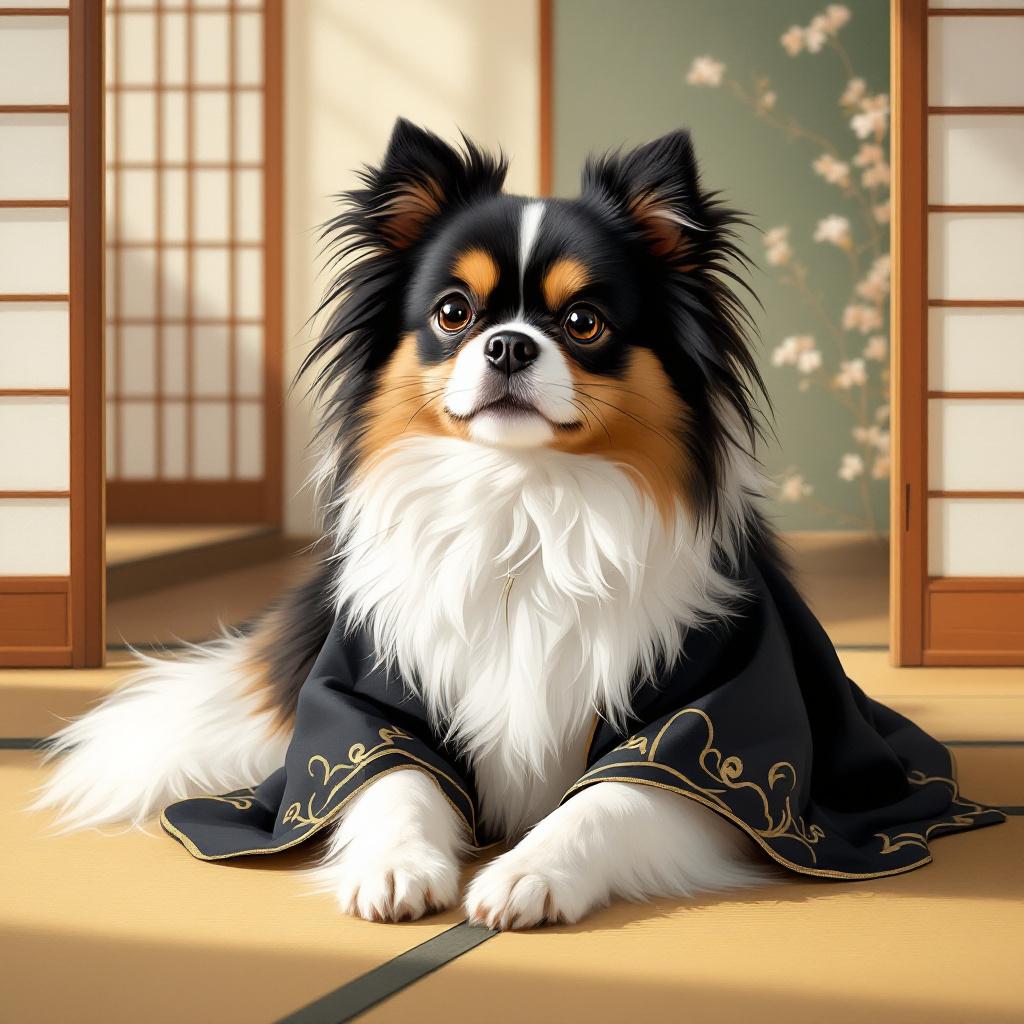
The Japanese Chin, often described as a “little Japanese palace dog,” combines elegance and mischief in a compact form. One imagines it on a silk cushion, but it is much more than a mere show companion: it is an affectionate dog, lively and remarkably well-suited to apartment living. This article offers a clear and practical overview — history, character, care, health, and advice for living peacefully with this little aristocrat with a unique appearance.
In brief
🐾 Origin: Small Japanese palace-bred dog, known for its flat face, high head carriage, and silky coat — ideal for apartment living.
🧠 Character: Affectionate, independent, and sometimes playful; very attached to its family but can be reserved with strangers.
🛁 Care: Regular grooming but not excessive — weekly brushing, attention to facial folds, and occasional baths suffice.
⚕️ Health: Respectable life expectancy around **10–14 years**, with some respiratory and eye predispositions to monitor.
A bit of history and appearance
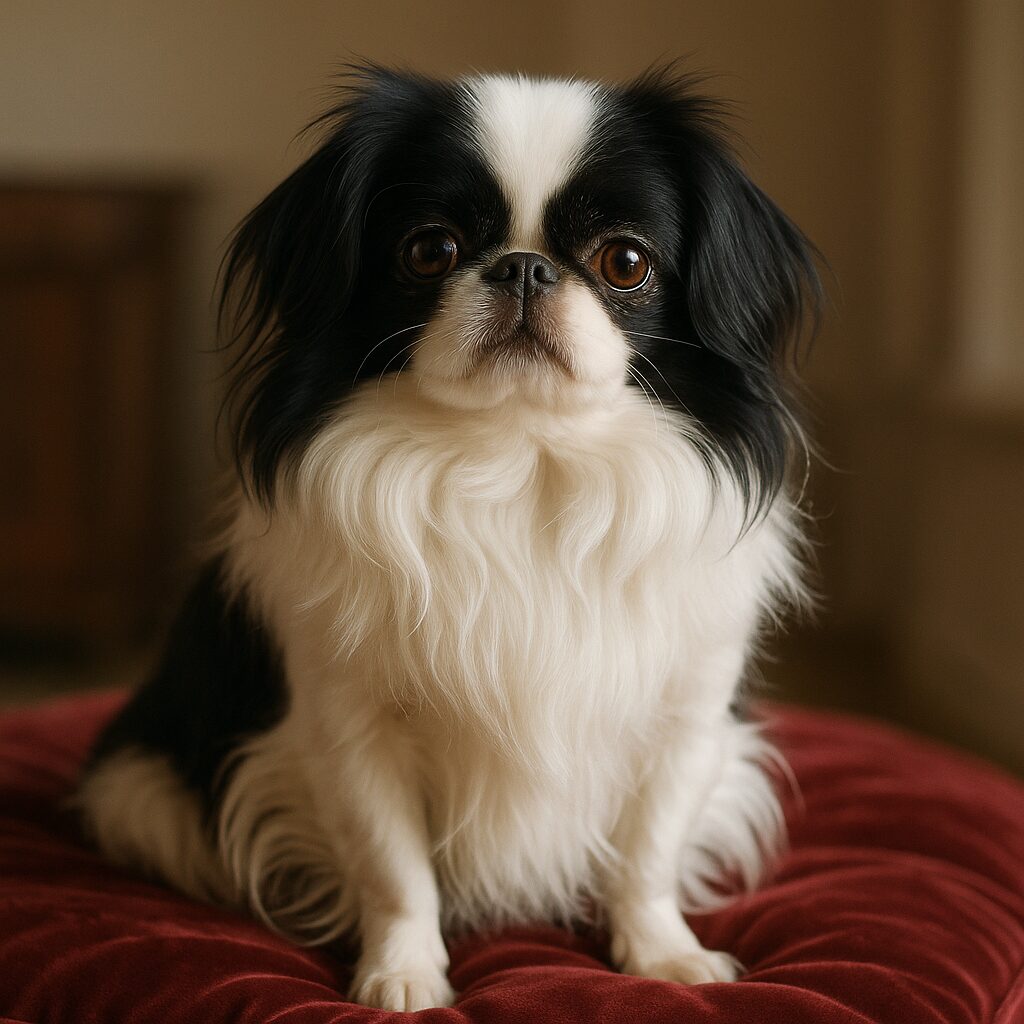
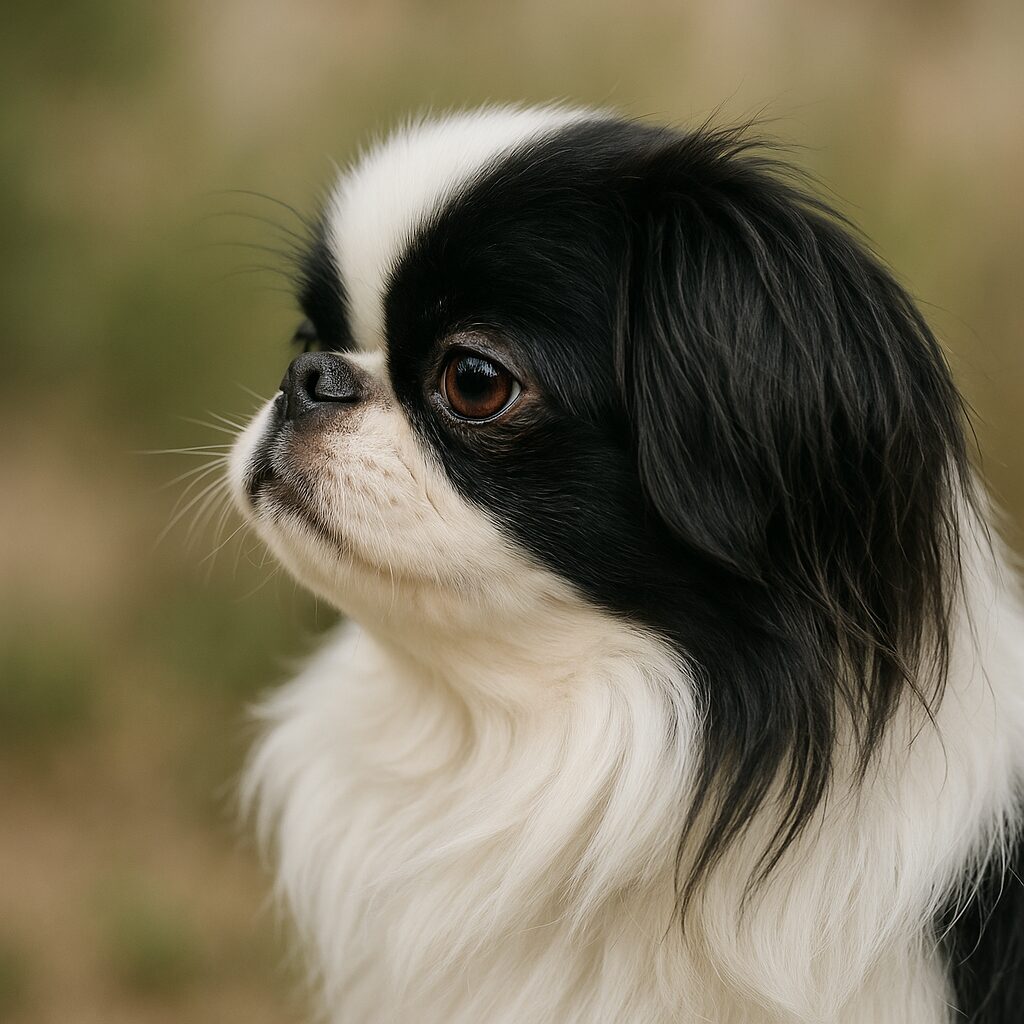
The Japanese Chin was not bred to run in fields: it belongs to the lineage of royal companion dogs from East Asia. Its compact silhouette, broad head, and short muzzle give it an immediately recognizable profile. One might think it comes directly from shogunal palaces — in reality, its history is a weaving of imports, exchanges, and adaptations that have refined its temperament and appearance. This small build hides an expressive presence: when it observes, it seems to weigh every gesture and word, as if to better play its role as a domestic confidant.
Temperament: between refinement and personality
Breed enthusiasts recognize in the Japanese Chin a rare combination: almost aristocratic gentleness, combined with a touch of mischief. It shows deep attachment to its owners — it enjoys participating in family activities, cuddling, or perching on a knee. But beware: this little dog is not a clingy lapdog incapable of autonomy. It also likes to maintain some independence and can display a reserved character towards strangers or other animals. Its sensitivity means that education based on trust and consistency is far more effective than stubborn firmness.
Socialization and play
Early socialization facilitates calm interactions with children and other dogs. The Japanese Chin does not need exhausting hours of play but appreciates moments of attention: small mind games, learning tricks, and calm walks will satisfy its curiosity without overexerting it. Indoors, mentally stimulating activities — treat-dispensing toys or short training sessions — are preferred over prolonged physical exertion.
Coat care and grooming
Its long, silky fur, often worn in curtains, requires regular attention but no exaggeration. Brushing two to three times a week is generally enough to prevent tangles and preserve shine. The hair around the ears and neck requires a closer look more frequently, as these are areas where dirt tends to accumulate.
- Brushing: 2–3 times/week, plus after muddy outings.
- Baths: Every 4–8 weeks depending on activity and coat condition.
- Eyes and folds: Daily cleaning if necessary to avoid irritations and stains.
- Nail trimming: regular, as nails that are too long hinder walking.
Eye and nose care
The brachycephalic conformation (short muzzle) of the Japanese Chin requires particular vigilance: prominent eyes and facial folds promote irritations and infections. Gentle cleaning, alcohol-free, and regular veterinary visits allow early detection of signs of conjunctivitis or corneal ulcer. For the nose, avoiding excessive exertion in intense heat and keeping the area clean reduces potential respiratory complications.
Health: what to watch for
Overall robust, the Japanese Chin nevertheless has some vulnerabilities related to its morphology. Brachycephalic subjects may suffer from shortness of breath, especially in hot weather or during sustained activity. Dental problems are also common in small dogs; occasional scaling and an adapted diet prolong their oral comfort. Eye conditions and certain cardiac predispositions are among the elements to check during annual health check-ups.
| Characteristic | Detail |
|---|---|
| Size | Small (25–30 cm at the withers on average) |
| Weight | 3–6 kg |
| Life expectancy | 10–14 years (with regular care) |
| Main concerns | Respiratory tract, eyes, teeth, sensitivity to heat |
Training and coexistence
Training a Japanese Chin requires finesse rather than firmness: it reacts poorly to harsh methods but thrives with positive reinforcement. Cleanliness should be worked on early with regularity; perfect cleanliness may require some patience, especially with mischievous individuals who like to test limits. For harmony within the home, a few simple rules — meal times, authorized areas, rest times — are enough to establish a reassuring routine.
Practical advice
- Favor rewards such as treats and petting rather than verbal punishment.
- Break learning into small playful sessions to maintain motivation.
- Monitor ambient temperature: avoid extreme heat and cold drafts.
- Gradually introduce meetings with other animals to prevent excessive shyness.
Who is the Japanese Chin suitable for?
This dog is perfect for city dwellers and people looking for a calm, gentle, and affectionate companion. It adapts very well to small spaces and prefers human company. It is less suitable for households wanting a sporty dog or a guard dog. If you work long hours away from home, consider the possibility of regular human presence or a dog sitter — the Japanese Chin hates prolonged solitude.
Should you fall for it?
If you are looking for a discreet but expressive dog that demands affection and presence without requiring intense physical effort, yes: the Japanese Chin is an excellent choice. Its refined beauty is accompanied by a temperament capable of forging a deep bond with its human. However, if your priority is a very active and independent animal, it is better to consider other breeds.
FAQ
- Does the Japanese Chin bark a lot?
- No, it is not excessively noisy. It may alert to the presence of a stranger, but it does not tend to bark without reason.
- What is the ideal physical activity for this breed?
- Short and regular walks, indoor games, and some mental stimulation are enough. No need for long runs.
- Does the coat require professional grooming?
- Not systematically. Professional grooming a few times a year can enhance the coat, but regular home maintenance is often sufficient.
- Are there frequent genetic problems?
- Respiratory, eye, and dental problems are the most commonly encountered. Tests and veterinary monitoring help detect and manage these risks.