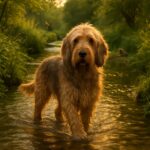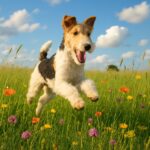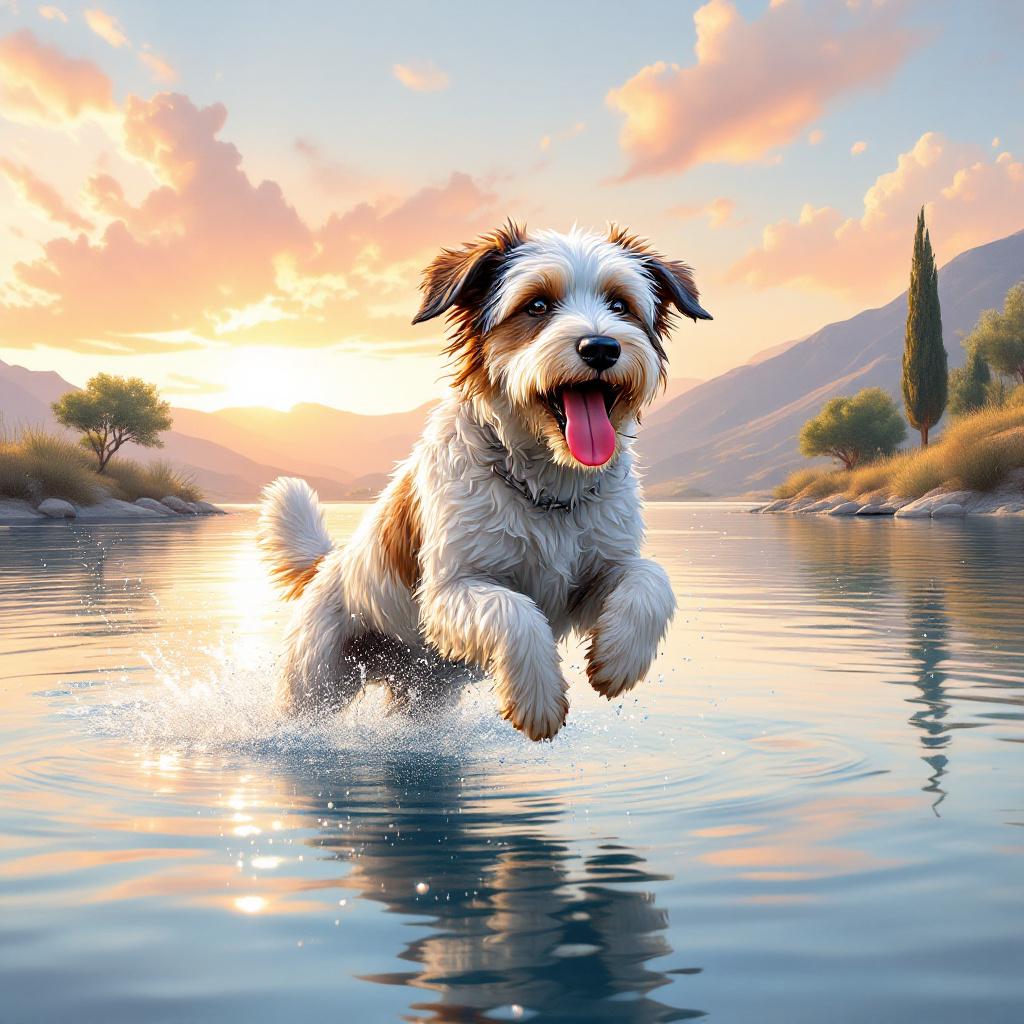
The Spanish Water Dog (or Spanish water shepherd) first surprises with its look: a robust silhouette, a curly or corded coat reminiscent of a sea cloud, and bright eyes that show intelligence ready for action. This versatile dog, long confined to shepherds and fishermen in Spain, now appeals to active households looking for a loyal, sporty companion who is… not always easy to distract. Here I detail its history, temperament, concrete needs (sport, mental stimulation, grooming) and provide practical advice so that life with a SPWD is a success, whether living by the sea or in a house with a garden.
In brief
🐾 Origin: Spanish working dog, used for guarding, searching and fishing; versatile and robust.
💧 Exercise needs: high — at least **1 to 2 hours** of daily activities, ideal for canine sports and swimming.
✂️ Grooming: curly or corded coat; specific maintenance: clipping, upkeep of cords or regular brushing depending on the chosen style.
🧠 Character: intelligent, independent but loyal; suitable for active families and owners ready to invest time and consistency.
Origin and history of the Spanish Water Dog
The Spanish Water Dog has its roots in the countryside and coasts of Spain where it worked both as a shepherd dog and as a fishing assistant. Contrary to the idea of a pure and uniform lineage, there are several regional strains, which explains a certain variety in sizes and abilities. People often think of sheep as the only companion of a shepherd: in reality, these dogs accompanied everyone — shepherds, farmers, fishermen — because their versatility made them indispensable. They knew how to gather livestock, track game, and dive without hesitation to retrieve a net or an object fallen into the water.
Appearance and standards
Size, coat and particularities
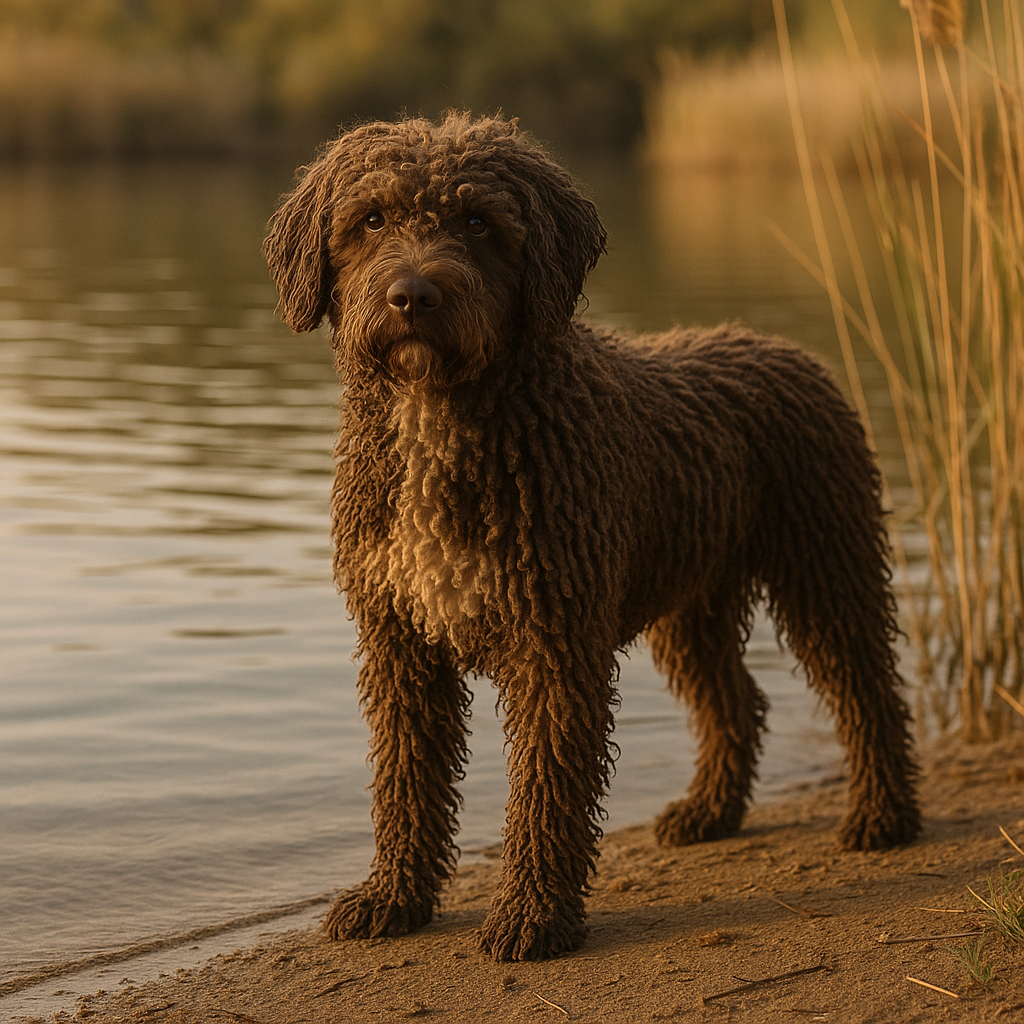
The SPWD has a compact and muscular silhouette. The standards describe a dog neither too big nor too heavy: balance and agility prevail. The coat is the most striking feature: it can be curly, woolly or formed into cords. This texture has a dual function: protection against water and insulation, but also adaptation to tasks. Colors vary — white, black, brown, or even merle — and markings on the chest or legs are common.
| Characteristic | Min | Max |
|---|---|---|
| Male height (at withers) | 45 cm | 55 cm |
| Female height (at withers) | 43 cm | 53 cm |
| Approximate weight | 18 kg | 30 kg |
| Coat types | curly, woolly, corded | |
Character: what you really need to know
One might think this dog is a docile plush toy: in reality, it conserves its energy and thinks before acting. The Spanish Water Dog is loyal and attached to its home, but retains a marked independence. This trait sometimes makes it stubborn, which requires firm, consistent training based on reward rather than coercion. In the presence of other animals, it can be watchful: early socialization is therefore essential so that it accepts dogs, cats and visitors without stress.
Family Compatibility
With children, he is often patient and protective, especially if interactions are supervised and respectful. For very calm families, or elderly people looking for a dog that is essentially cuddly, he may be too demanding in terms of stimulation. On the other hand, for sporty households, lovers of hiking, agility, or canicross, he is an ideal partner: he loves work and maintains a constant curiosity.
Exercise and Stimulation Needs
The SPWD requires intelligent movement. Long walks, fetch games, learning tricks, canine sports: all of these suit him perfectly. Swimming resonates deeply with him — he loves water — and it is an excellent way to tire him out without putting too much strain on the joints. Boredom makes him destructive or nervous; offering mental activities such as varied obedience sessions, food puzzles, or scent training prevents many problems.
- Daily minimum: 60 to 120 minutes of varied activity.
- Ideal: alternating cardio efforts, fetch games, and cognitive exercises.
- Recommended activities: swimming, agility, tracking, herding work, sport obedience.
Grooming: Between Cords and Short Cuts
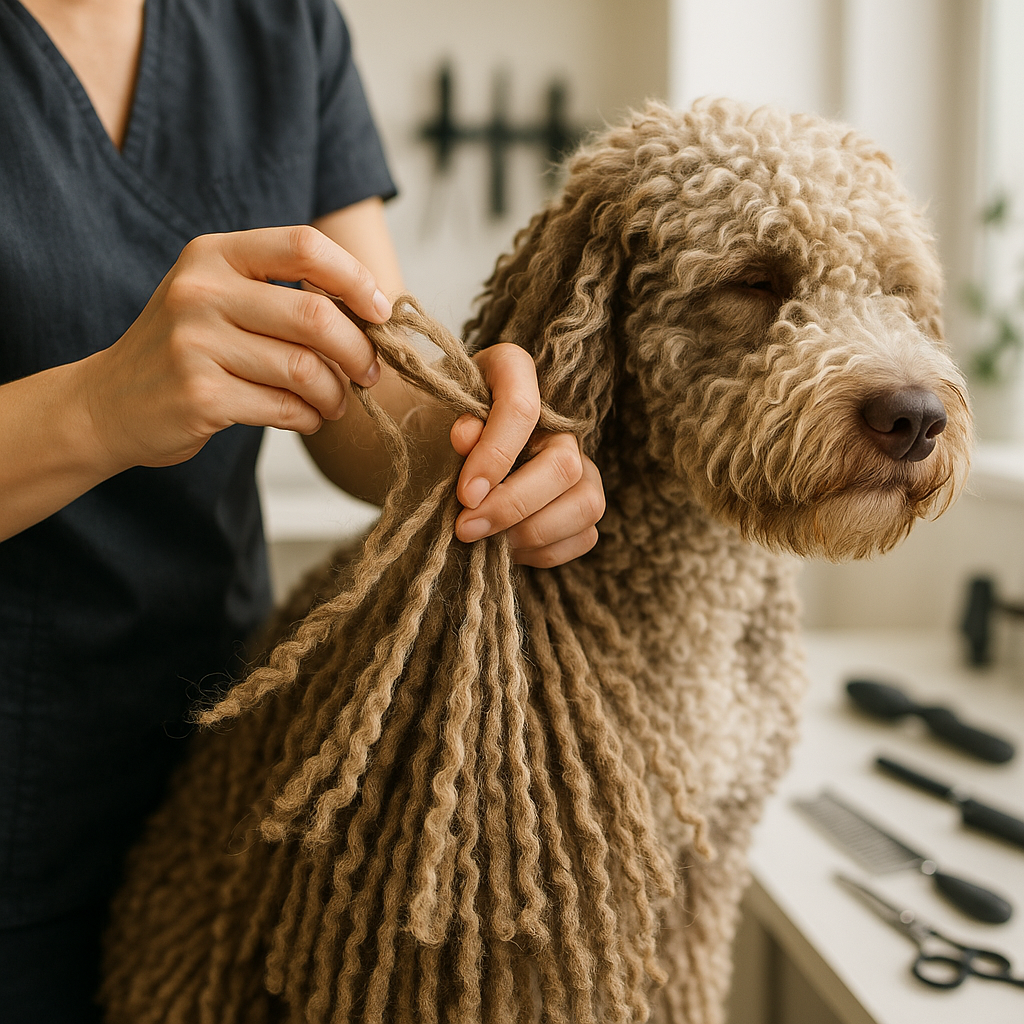
The Spanish Water Dog’s coat is a matter of choice. It can be left in cords, which requires rigorous maintenance: manually separating new strands, checking for knots, and properly drying after swimming. Conversely, a short cut or regular clipping simplifies daily life but involves visits to a groomer to maintain a harmonious structure. Whatever the style, ear care (risk of otitis for dogs who love water), nail trimming, and dental checks remain essential points.
Practical Maintenance
To limit problems: dry the dog after each swim, check under the cords to avoid trapped moisture, and plan regular inspections of folds and ears. If you opt for a short cut, schedule a session every 2 to 3 months depending on the regrowth speed.
Health and Life Expectancy
Overall robust, the Spanish Water Dog has an average life expectancy between 12 and 14 years. Certain conditions require attention: hip dysplasia (as with many medium/large breeds), eye problems, and skin allergies. Health tests on breeders and appropriate veterinary follow-up (controlled exercise during growth, quality diet, regular screenings) significantly reduce risks.
Training: Effective Methods
The key to successful training boils down to two words: consistency and stimulation. Methods based on positive reinforcement work very well — treats, toys, play — but it is also important to set clear limits. The SPWD learns quickly, demands logic, and gets bored if exercises are repetitive and without challenge. Breaking learning into short, fun sessions is often more productive than a long, monotonous session.
“An intelligent dog without a challenge remains a noisy dog. Give him a job and you will have a fulfilled companion.”
Adopting a Spanish Water Dog: Points to Check
If you are considering adoption, prioritize a respectful breeder who presents health tests and allows meeting the mother and the breeding conditions. Also ask to see the parents to assess temperament. Shelters and associations may sometimes house adult SPWDs: adopting a dog already socialized and known can be an excellent option.
Checklist before adoption
- Check health certificates (hips, eyes).
- Observe the puppies’ behavior: curiosity, absence of extreme hypervigilance.
- Inform about the type of coat and grooming costs.
- Assess your ability to provide daily exercise and stimulation.
Summary table: essential needs
| Aspect | Requirement | Practical advice |
|---|---|---|
| Exercise | High | Varied activities + swimming |
| Grooming | Medium to high | Choose cords or cut; regular maintenance |
| Socialization | Essential | Expose from youth to people and animals |
| Health | Good | Screenings at the breeder |
FAQ
Does the Spanish Water Dog bark a lot?
No more than a working dog: it may vocalize if bored or sensing an intrusion. Daily stimulation and clear routines reduce unnecessary barking.
Can it live in an apartment?
Theoretically yes, if you compensate with intense and regular daily activities. However, it thrives more easily in a house with outdoor access.
Is the coat hypoallergenic?
It is often described as less allergenic than other breeds because it sheds little. It depends on the person: test proximity before adoption if you are allergic.
At what age should training start?
As soon as it arrives home. Puppies need structure, guided play, and gradual socialization. Short, frequent, and varied sessions work best.
Practical conclusion
The Spanish Water Dog is not a “dog for everyone,” but for those seeking an active, intelligent companion with a strong working character. With consistent training, investment in physical activity, and thoughtful coat maintenance, it becomes a loyal and versatile partner, appreciated both for its aquatic skills and affectionate presence daily.