
The Bracco Italiano looks like a living Italian painting: square silhouette, gentle gaze, and broad gait, it embodies a rustic elegance rare among hunting dogs. Less publicized than some Anglo-Saxon pointers, it nevertheless charms with its versatility — attentive hunter, gentle and sporty companion capable of expressing great complicity with its human. This article offers a technical and practical overview for those who want to know the breed, evaluate it, and raise it calmly.
In brief
🐾 Origin: ancient Italian hunting dog, recognized for its versatility between retrieving, tracking, and pointing — **open to varied work**.
🎯 Physical characteristics: square build, expressive head, **medium to large size** and coat often fawn or spotted.
🩺 Health and care: robust but sensitive to long ears and overweight; **regular hygiene** and recommended physical activity.
🏃♂️ Behavior: affectionate, attentive, and sometimes stubborn; thrives with consistent training and stimulating activities.
History and origin of the Bracco Italiano
The Bracco Italiano draws its roots from the peninsula for several centuries: depictions on frescoes and sculptures testify to dogs with a similar appearance since the Renaissance. One might think it is a modern breed, but in reality, its lineage is the result of long rural selection, carried out by Italian peasants and hunters who sought a dog capable of working on varied terrains, from plains to hills. Its official recognition took time, especially outside Italy, which explains why it sometimes remains discreet in international standards.
Appearance and standard: the charm of the Italian pointer
General morphology
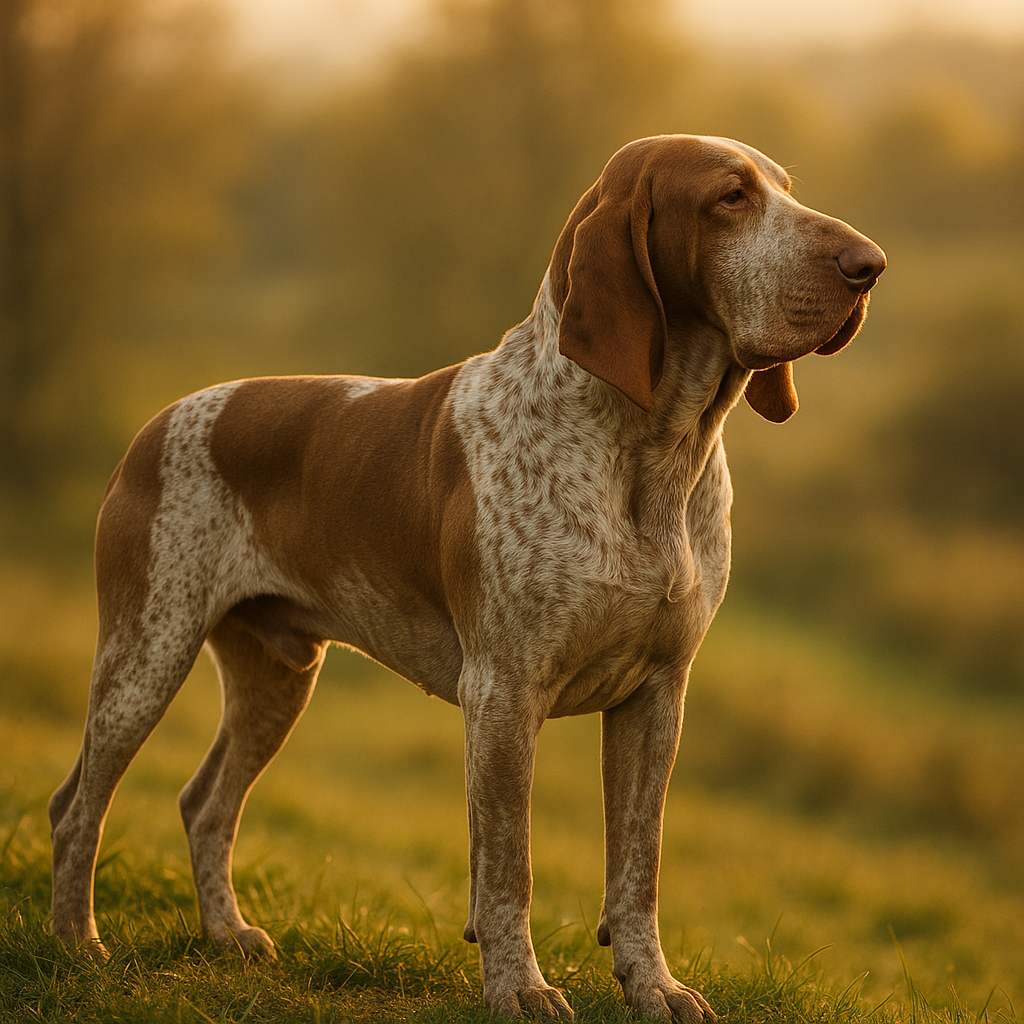
The Bracco has a fairly square silhouette: the body length is close to the height at the withers, giving it a stable center of gravity and a regular gait. Its head is massive without being heavy, with a well-developed nose and drooping lips that give it a melancholic yet gentle look. The long, drooping ears are characteristic — aesthetic, certainly, but also requiring some regular hygiene attention.
Coat, sizes, and visible characteristics
The dominant coats range from solid fawn to white and fawn spotted. The hair is short, dense, and low maintenance in brushing — but it highlights the dog’s general line. Here is a useful summary table to remember the key figures:
| Characteristic | Female | Male |
|---|---|---|
| Height at withers | 52–58 cm | 58–67 cm |
| Approximate weight | 20–28 kg | 25–32 kg |
| Coat | Short, dense | Short, dense |
Temperament and abilities
The Bracco is above all a working dog who has retained great gentleness in daily life. In the field, its way of covering the area is methodical: nose low or raised, depending on the search for a trail; when pointing, its stance is firm without excess. At home, it often appears reserved with strangers but deeply marked by the relationship with its owner. It is not the type of hyperactive and destructive dog if given a suitable framework and physical exercise.
Family and Dog Compatibility
With children, it can be surprisingly patient, especially if interactions have been well supervised from a young age. For living with other dogs, it will all depend on socialization: some Braccos can be dominant, others very accommodating. The important thing is to establish clear rules and encourage positive and gradual meetings.
Care, Health, and Prevention
Generally robust, the Bracco is not without susceptibilities: floppy ears = risk of ear infections to monitor, and the head conformation sometimes involves lip folds prone to irritation if hygiene is not regular. Overweight is a real trap for this breed — it reduces endurance, unnecessarily stresses the joints, and impairs quality of life. A suitable diet, divided according to activity, and regular veterinary check-ups are enough to limit problems.
- Weekly maintenance: light brushing, checking ears and eyes.
- Diet: quality kibble, adjusted in proteins and energy according to work.
- Veterinary checks: hips, elbows, and ophthalmological exams recommended by breed clubs.
Recommended Training and Activities
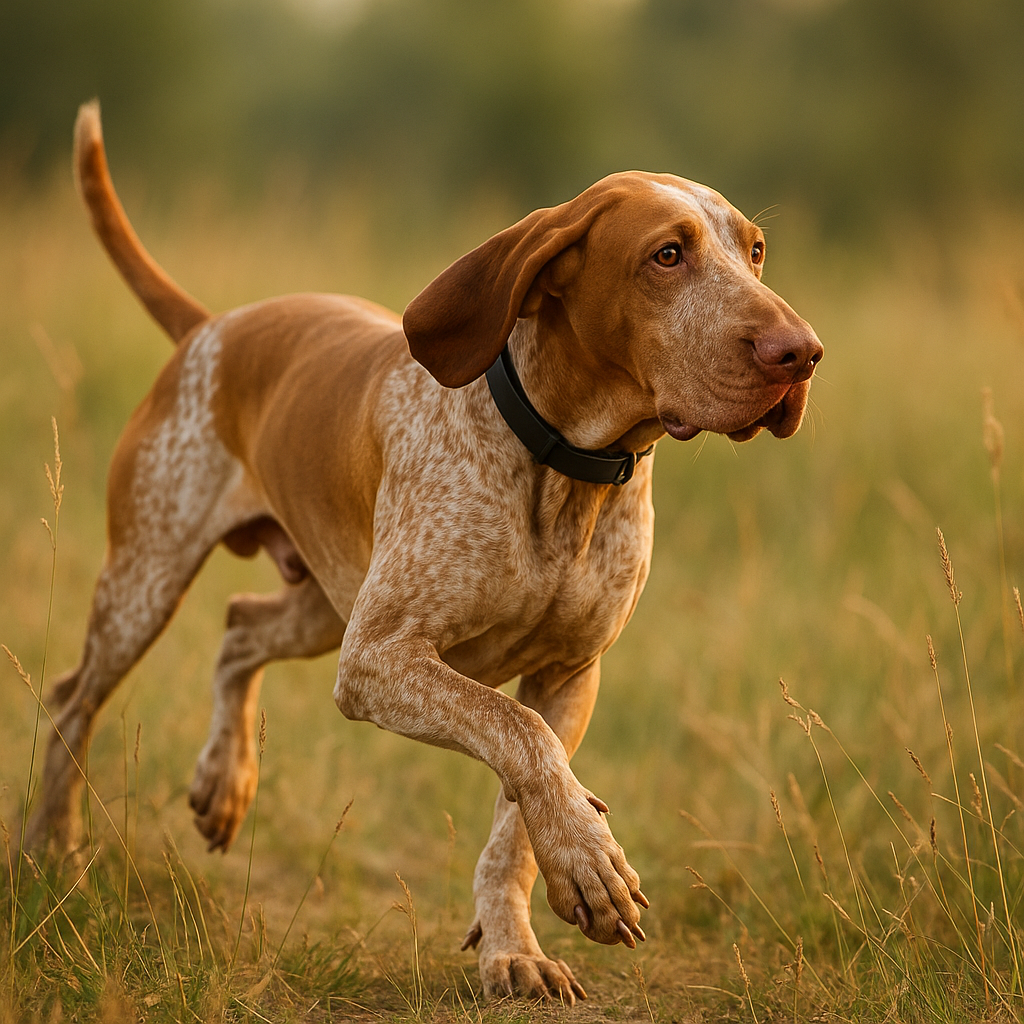
The Bracco learns quickly when the approach is based on clarity and variety. Dry repetition can bore it; the use of consistent rewards (treats, games, praise) works well. In hunting, it is versatile: small game, plains, or driven hunt courses. Outside of work, it thrives in activities such as obedience, tracking, moderate canicross, or blood tracking. These activities stimulate olfactory intelligence and maintain physical fitness.
Practical Tips for Training
- Start socialization young (noises, people, vehicles).
- Favor short and varied sessions to maintain attention.
- Introduce recall systematically in a secure area before exposing it to strong distractions.
Choosing a Bracco: Breeder, Adoption, Questions to Ask
Choosing a Bracco puppy requires evaluating several parameters: health of the parents, breeding conditions, temperament of siblings, and attachment to a working or companion line. A good breeder will provide health guarantees (screening certificates) and show you the parents’ behavior in hunting or obedience situations. Adopting an adult can also be relevant: dogs already socialized and trained often integrate more quickly into family life.
Essential questions to ask the breeder: health tests performed, environment of the puppies, presence of the parents on site, post-adoption follow-up.
Strengths and Limitations of the Breed
Among the strengths: great versatility, affectionate temperament, overall robustness. On the limitations side: need for regular exercise, sensitivity to ears and weight, and a certain independence that can challenge handlers who are too authoritarian. In short, the Bracco suits active, patient owners ready to invest time in training and health.
Quick Summary Table
| Criterion | Asset | Attention |
|---|---|---|
| Temperament | Endearing, hardworking | Sometimes reserved |
| Maintenance | Simple coat | Ear care |
| Activity | Excellent endurance | Needs regular exercise |
FAQ
Is the Italian Bracco suitable for apartment living?
Possible provided that sufficient daily exercise is ensured: long walks, free running, and mental stimulation. An apartment without active outings quickly leads to boredom.
Is it a good dog for a novice owner?
A motivated novice, ready to learn the basics of positive training and invest time, can do very well. However, without guidance and consistency, the Bracco can quickly develop problematic behaviors.
What is the life expectancy?
On average between 11 and 14 years, depending on genetics, diet, and living conditions. Prevention and veterinary follow-up optimize these figures.