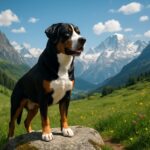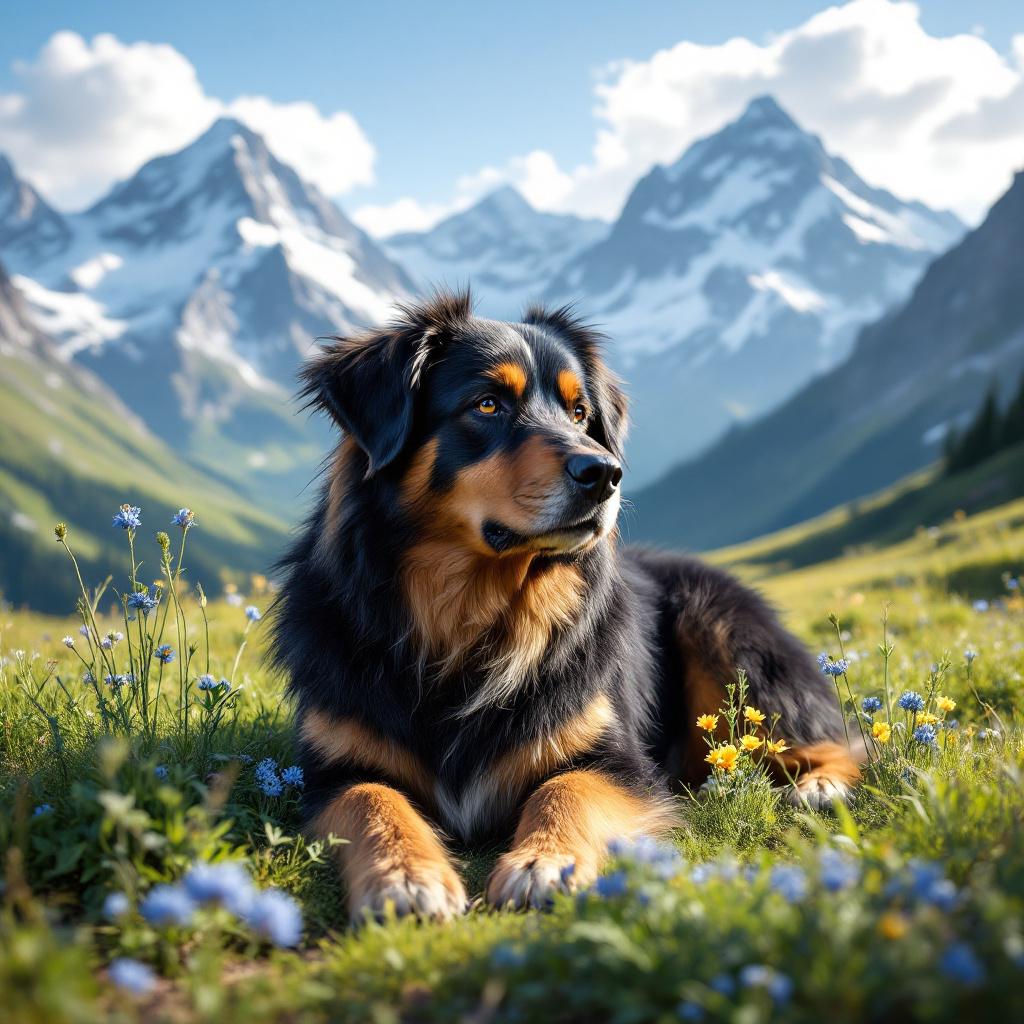
The Bernese Mountain Dog, often called Bernese Mountain Dog in English, embodies this warm image of a solid and affectionate companion who seems straight out of the alpine pastures. Large, thick, tricolored, he attracts attention with his imposing physique and charms with an astonishingly gentle character. One might think that such a size rhymes with roughness: in practice, the Bernese Mountain Dog prefers human contact, family balance, and long but calm walks rather than displays of strength. This article unfolds, without unnecessary jargon, everything you need to know to live with this mountain dog: morphology, temperament, health needs, training, and practical recommendations to make him a harmonious companion in the long term.
In brief
🗻 Alpine origin: Swiss working dog, robust and versatile, formerly used to pull small equipment and guard livestock — today mainly a family companion.
❤️ Temperament: faithful, patient, and sociable; he tolerates children well but requires early socialization and a consistent education structure.
🧴 Care: thick double coat, significant seasonal shedding, requires regular brushing and preventive joint care.
📏 Size and life expectancy: 23–28 kg for females, 35–55 kg for males, and an average lifespan of 7 to 10 years, conditioned by the prevention of hereditary diseases.
History and vocation: from work in the alpine pastures to the family couch
The Bernese Mountain Dog traces its roots to the Swiss alpine regions where, a few centuries ago, powerful dogs accompanied farmers to pull, guard, and haul carts. Their versatility made them indispensable: physical strength, cold resistance, and stable temperament. With industrialization, their utilitarian role diminished, but the breed retained this robust character combined with great gentleness. Today, he excels as a family dog, therapy dog, and sometimes in gentle sports activities like hauling or hiking, when his physical limits are respected.
Appearance and standards: understanding the physique
Silhouette and coat
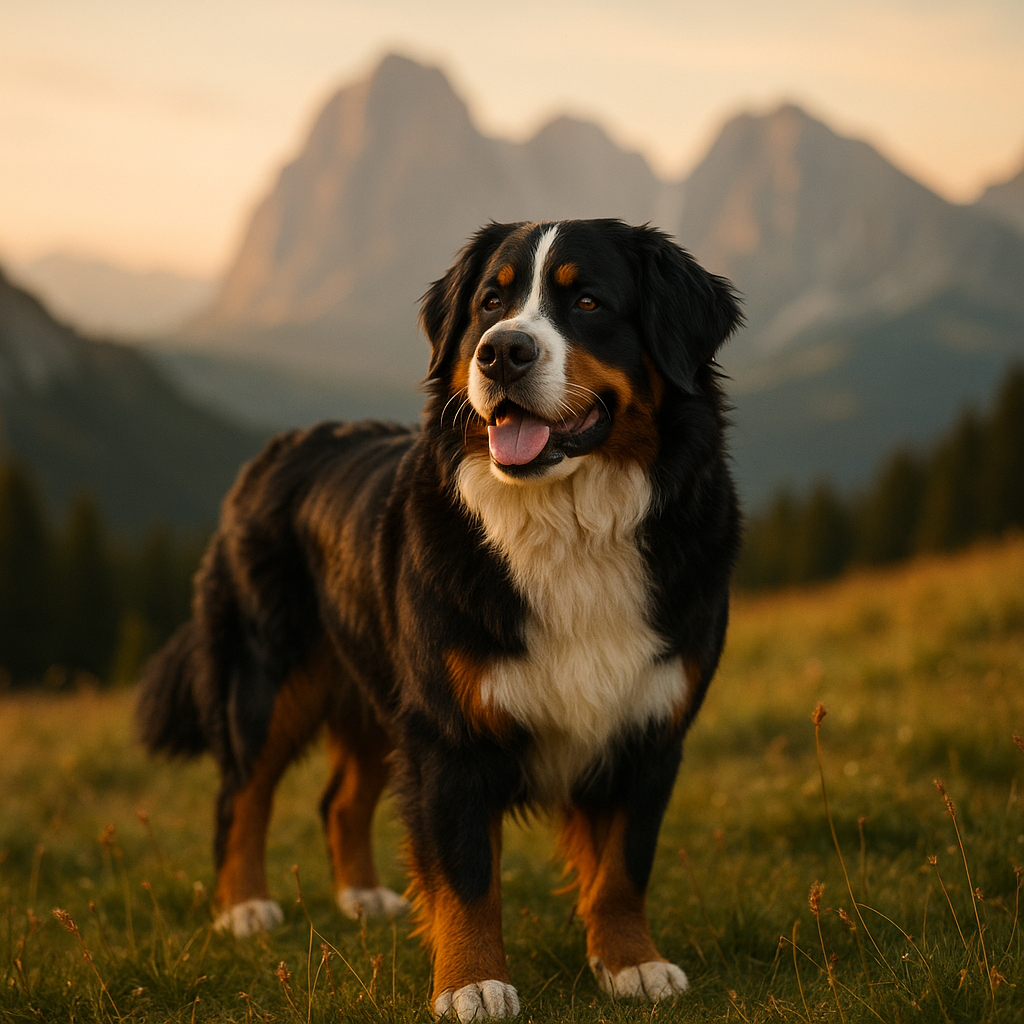
Imposing size, strong bone structure, broad chest: the Bernese Mountain Dog does not go unnoticed. His tricolored coat — predominantly black, rust, and white — is more than aesthetic; it adapts to the climate. The coat is double: a dense undercoat for warmth and a weather-resistant outer coat. This coat requires regular maintenance to avoid tangles and control seasonal shedding.
Quick measurement table
| Characteristic | Female | Male |
|---|---|---|
| Height at withers | 58–64 cm | 64–70 cm |
| Weight | 23–38 kg | 35–55 kg |
| Life expectancy | 7–10 years (variable depending on health and prevention) | |
| Colors | Tricolor: black, rust, white (well-defined markings) | |
Temperament and social interactions
For those familiar with the breed, the first surprise is often its gentleness: despite a large build, the Bernese Mountain Dog shows great patience and a genuine desire to please. It is affectionate, rarely aggressive, and develops strong bonds with its family. However, this sociability requires regular exposure to diverse environments from a young age — without this, it risks developing excessive shyness or anxiety in unfamiliar situations.
Relationship with children and other animals
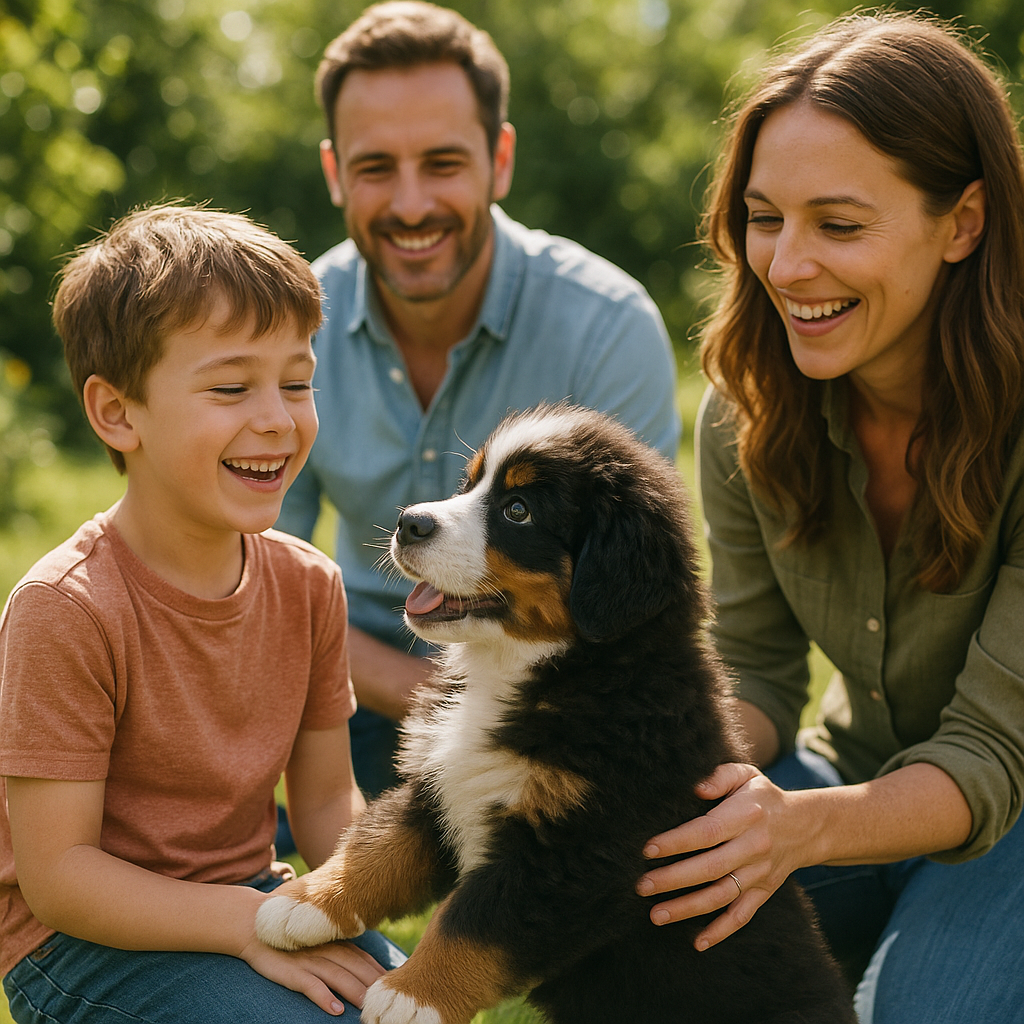
Generally very tolerant with children, it is nevertheless necessary to teach the youngest to respect the dog’s signals (when it wants to be left alone, when it is tired). With other dogs, it can get along perfectly if socialization has been carefully done; with smaller animals, caution is advised, especially if the dog has not been accustomed early to rodents, cats, or poultry.
Health: points of vigilance and prevention
The Bernese Mountain Dog has certain genetic predispositions: hip and elbow dysplasia, gastric torsion (stomach twist), and forms of cancer more frequent than in other breeds. Rather than worrying, these risks should be integrated into veterinary follow-up: screening X-rays for dysplasia, dietary protocols and moderate exercise to limit the risk of torsion, regular monitoring to detect any abnormalities early.
Concrete prevention advice
- Schedule hip and elbow X-rays before breeding.
- Divide meals and avoid intense effort immediately after eating to prevent gastric torsion.
- Maintain an ideal weight: overweight accelerates joint problems.
- Vaccinations, antiparasitics, and annual check-ups to monitor general health.
Feeding and exercise: finding the balance
The Bernese Mountain Dog’s diet must respect its life stage and activity. A growing puppy requires adapted food to support bone development without excess calories that would promote joint problems. The adult needs a ration proportionate to its size and daily activity: moderate long walks, mountain hikes, calm games — it appreciates regular exercise but does not necessarily need intense workouts or complicated canine obstacles.
Examples of daily routine
- Two structured walks per day (30–60 minutes each).
- A scent search game or a mental exercise to stimulate the mind.
- Rest and access to a quiet corner, especially during hot periods.
Education: method and essential steps
Education must be firm but gentle. The Bernese Mountain Dog responds poorly to harsh methods: coherence of rules, rewards, and calm repetition are preferred. Basic commands (sit, lie down, recall) are not only practical but crucial for safety, especially since the dog’s size can make interactions with others unpredictable if recall is not reliable.
Practical tips for effective education
- Start early: socialization between 8 and 16 weeks is crucial for future adaptation.
- Short and regular sessions (5–10 minutes, several times a day) for learning.
- Positive reinforcement: treats, games, vocal praise.
- Gradually expose to noises and varied situations to limit fear.
Grooming and Coat Care
The nature of the coat requires regular but simple maintenance: weekly brushing, increased during shedding (spring and autumn) where two to three sessions per week may be necessary. Rarely bathed — too many baths would remove protective oils — and prefers gentle shampoos when necessary. Ears, nails, and teeth are part of the routine: check ears to prevent otitis, trim nails if necessary, and brush teeth to avoid tartar buildup.
Choosing a Puppy: Criteria and Questions to Ask
Choosing a puppy requires looking beyond immediate charm: ask for the parents’ health certificates (dysplasia screening, available genetic tests), observe the litter’s behavior (proactivity, curiosity, sociability), and verify the breeding conditions. A responsible breeder will be transparent about medical history and offer follow-up after adoption.
Checklist Before Adoption
- Parents’ health certificates (hips, elbows).
- Up-to-date vaccinations and identification.
- Behavioral observations of the puppy: play, reaction to stimuli, sociability.
- Questions about socialization and the diet used so far.
Advantages and Limitations: Who Is This Dog For?
The Bernese Mountain Dog suits a loving family ready to invest time in regular walks, grooming, and veterinary care. It is not the best companion for a hyperactive city life without regular access to green spaces. Its shorter lifespan compared to small dogs requires emotional preparation: this dog deeply loves its close ones, and the commitment it demands is often rewarded with unwavering loyalty.
FAQ
Q: Is the Bernese Mountain Dog suitable for apartment living?
A: It can adapt if the owner commits to providing long and regular walks, but ideally a house with a garden and frequent outings is best to avoid boredom and weight gain.
Q: At what age can a puppy start long walks?
A: Avoid sustained effort until the end of growth (about 12–18 months). Walks can be short and frequent during growth and gradually lengthen.
Q: Is the Bernese Mountain Dog hypoallergenic?
A: No. Its dense undercoat and heavy shedding release hair into the environment, making it unsuitable for allergic individuals.
Q: What is the best diet to prevent dysplasia?
A: A balanced diet, adapted to life stage and activity level, with controlled calcium and calorie intake is recommended. Consult your veterinarian for a specific formula.
Q: Does the Bernese Mountain Dog tolerate heat well?
A: It tolerates cooler climates better; in hot weather, reduce effort, provide shade and fresh water, and avoid the hottest hours.