Halfway between the lightness of the greyhound and the power of the Foxhound, the Harrier captivates with its extraordinary stamina and balanced character. Less known than some hunting dogs, this small athlete with floppy ears nevertheless cultivates a passion for tracking that dates back to medieval England. Let’s explore together its roots, qualities, and how to best integrate it into your daily life.
In brief
🐾 British origin: originating from Sussex county, this hound is hunted in the traditional way, by voice, over several hours without tiring.
💪 Remarkable endurance: capable of covering about ten kilometers over varied terrain, it combines speed and stamina to track hares and foxes.
🏡 Versatile and sociable: affectionate with the family, it adapts to an active life, from walking (or jogging) to playing in the garden.
🛁 Moderate maintenance: weekly brushing is sufficient, but an outdoor dog will need regular checks of its paws and ears.
Origin and history of the Harrier
Medieval roots in Sussex county
Traces of dogs similar to the Harrier date back to the 14th century, at a time when English peasants undertook small communal hunts. Unlike royal packs, these hunting companions did not need the brute strength of the Mastiff or the extreme speed of the Greyhound: they sought rather a compromise between tenacity and moderate speed. Sussex county, with its rolling landscapes and moorlands, shaped their robust build and tenacious character.
Evolution over the centuries
Under the influence of English courts, breeding was refined, sometimes mixing in Foxhound blood to gain speed or Beagle blood to reduce size. Gradually, the Harrier found a place in the homes of minor nobility and seasoned hunters. Its name, derived from “hare,” highlights its specialization: tracking the hare in packs, while maintaining a lighter build than the Foxhound.
Physical characteristics
A silhouette perfectly adapted to hunting
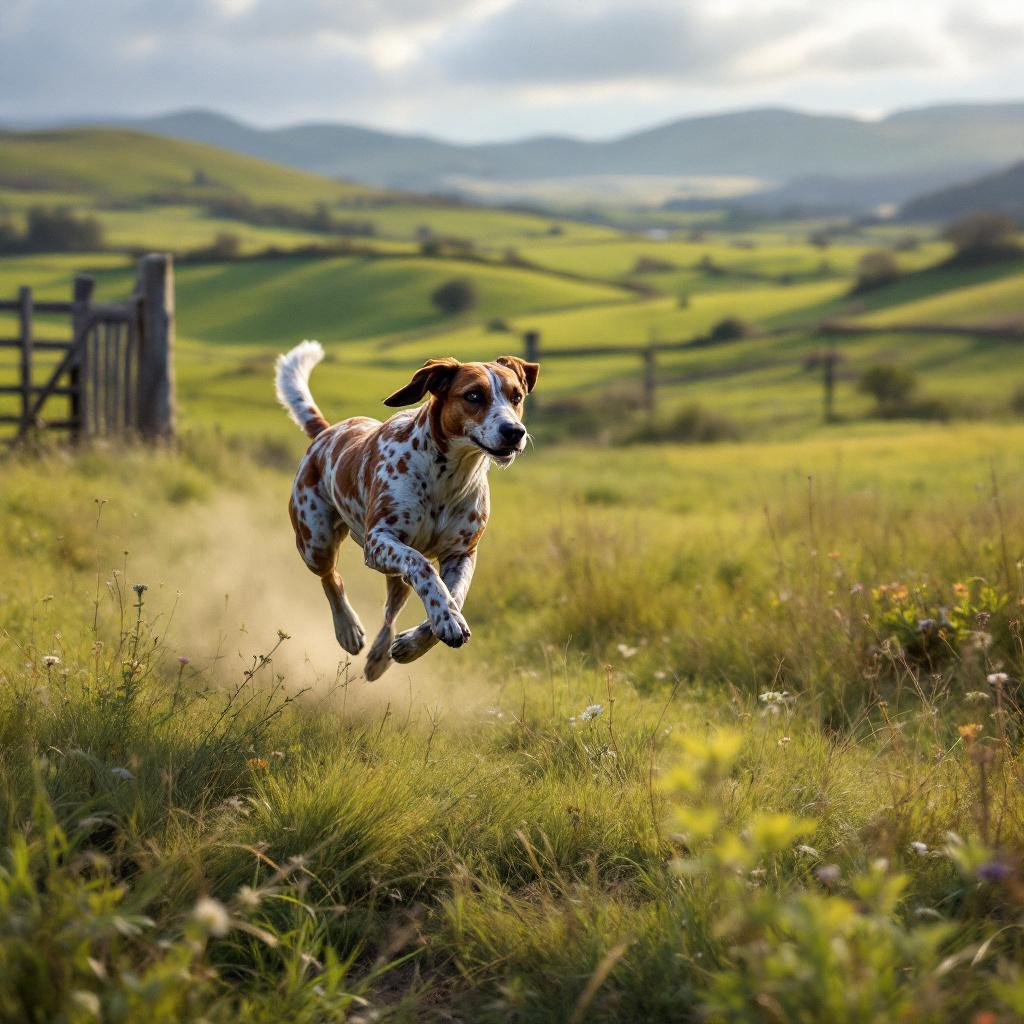
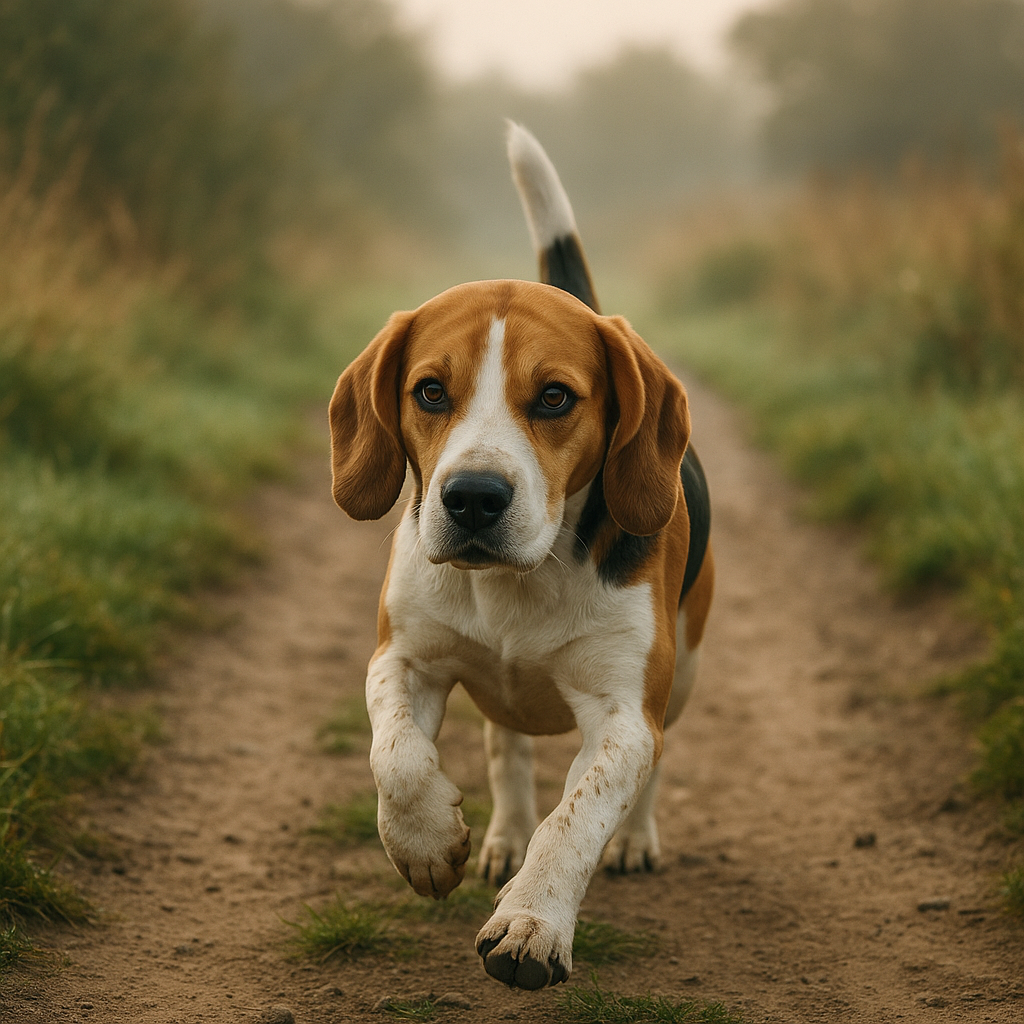
The Harrier has a medium size, generally between 48 and 56 cm at the withers. Its bone structure is solid enough to absorb shocks and running on rough terrain, without being too heavy to slow its pace. The chest is deep and the croup slightly sloped, favoring fast and regular strides. All these elements contribute to a natural ease when it launches after its prey.
Coat and colors
Traditionally tricolor (black, tan, and white), there are also bicolor Harriers (black and tan, or tan and white). The coat, dense and short, benefits from good water resistance: a boon for tracking in rain or damp undergrowth. A simple quick check—a stroke over the entire body—allows spotting any wounds or parasites, as the skin remains clearly visible under the coat.
Temperament and Behavior
Energy and Endurance
For a Harrier, a day without sustained physical activity is a real torment. Its muscles thrive on kilometers traveled, and it particularly enjoys winding trails where it can use its scenting ability. Without sufficient exercise—at least 1.5 to 2 hours of running, brisk walking, or hiking—it risks developing anxiety or destructive behaviors (digging, prolonged barking).
Socialization and Training
The Harrier generally proves to be gentle and sociable, although it retains a certain independence inherited from its role as a hunter. Training based on reward and consistency pays off: no harshness is necessary to earn its trust. Introduced early, it easily lives with children and tolerates other dogs, provided it is properly socialized.
Care and Maintenance of the Harrier
Its short, waterproof coat requires only weekly brushing with a soft brush. However, the paws, pads, and nails must be checked after each outing to avoid cuts and splinters.
- Feeding: prioritize kibble rich in protein (minimum 28%) to support its musculature.
- Exercise: minimum 10 km/day alternating jogging, cycling (on leash), forest hikes.
- Hygiene: regular ear cleaning to prevent ear infections in humid areas.
- Socialization: outings to dog clubs, meetings with other breeds, voice training.
| Type of Care | Frequency | Practical Advice |
|---|---|---|
| Brushing | Once a week | Use a grooming glove to remove dead hair |
| Ear Cleaning | Once a week | Dry carefully to avoid moisture |
| Nail Check | Every 3 to 4 weeks | Cut just before the pink part of the nail |
| Bath | Once every 3 months | Mild shampoo specifically formulated for dogs |
Health and Longevity
Main Concerns
The Harrier enjoys good general health. Recurring problems are more related to hunting injuries (sprains, muscle tears) or common conditions in sporting dogs: hip dysplasia, hereditary eye diseases. Regular veterinary check-ups and monitoring for arthritis from age 7 will help keep the dog active longer.
Prevention Rather Than Cure
A diet adapted to working dogs, enriched with omega-3 and chondroprotectors, can delay joint wear. Likewise, a program of stretching and massages after exercise helps reduce the risk of injuries.
Harrier and Daily Life
Recommended Activities
Beyond hunting, the Harrier excels in cani-cross, sport tracking, and even agility for its jumping and reactivity qualities. It also enjoys simple games like frisbee or ball throwing, provided the pace is gradually increased to avoid premature fatigue.
Compatibility with Children and Other Animals
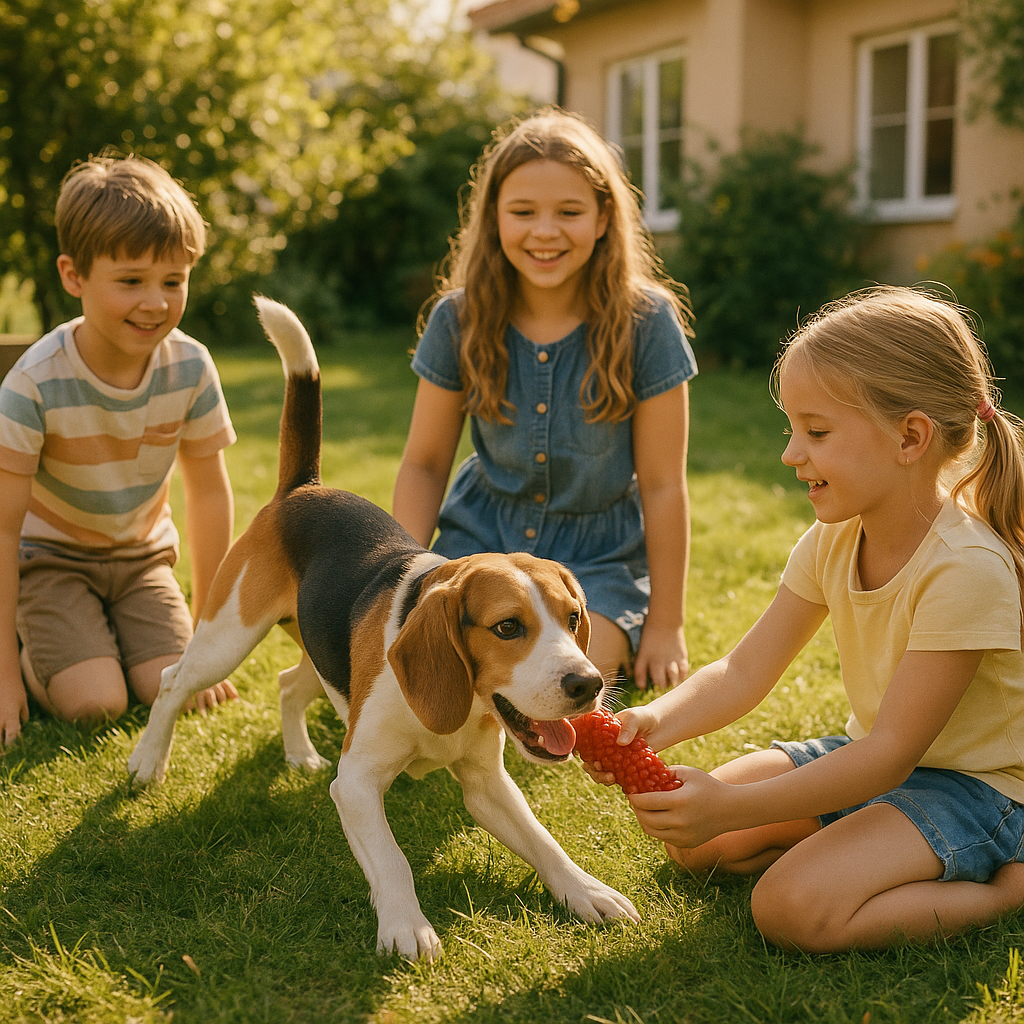
In an active household, it shows affection and patience. It is not uncommon to see it gently cuddling a toddler before quickly going off to fetch a toy. Its tolerance toward cats will mainly depend on its socialization: accustomed from a young age to their presence, it will coexist without problem; otherwise, its hunting nature may take over.
FAQ
What is the ideal age to start training a Harrier?
From the age of 8 weeks, you can begin simple commands (sit, stay) with playful rewards. The key is to keep sessions short (5–10 minutes) to maintain their attention.
Is the Harrier suitable for an apartment?
If it gets very intense exercise (several long walks per day), it can adapt to apartment living. However, living in a cramped space without a garden is rarely satisfying for its active temperament.
How to manage its hunting instinct without releasing it into the wild?
Lure work and tracking in a dog club provide a controlled outlet for its scenting ability. Hide-and-seek games with hidden treats also stimulate its sense of smell without uncontrolled escape.