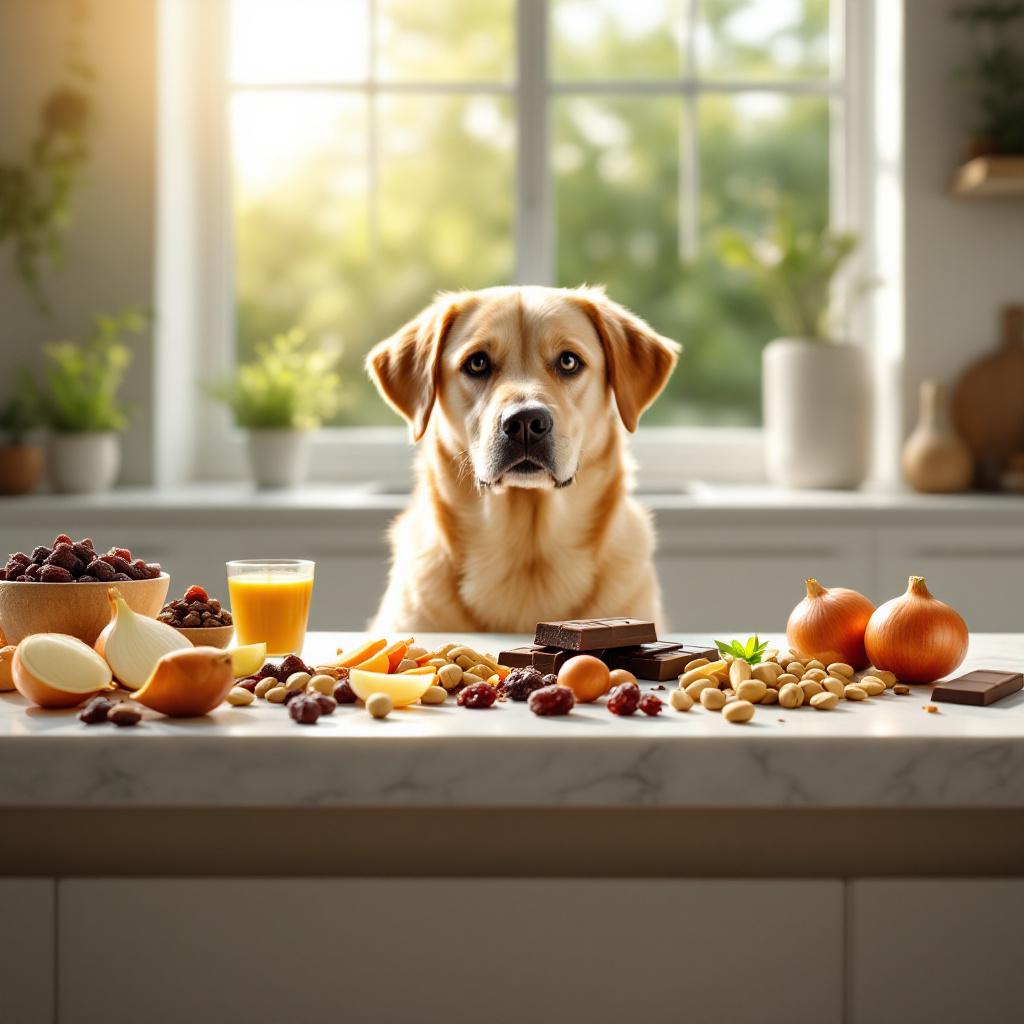
| Key Points | Details to Remember |
|---|---|
| 🍇 Grapes and Raisins | Cause kidney failure |
| 🍫 Chocolate | Contains toxic theobromine |
| 🧅 Onions and Garlic | Lead to hemolytic anemia |
| 🍬 Xylitol | Triggers severe hypoglycemia |
| 🥜 Macadamia Nuts | Cause muscle weakness |
| ☕ Coffee and Tea | Accelerate heart rate |
Dogs share our daily lives, sometimes even at the table. Yet, some foods seem harmless while they trigger a potentially fatal reaction in our four-legged companions. Between little-known pitfalls and prevention reflexes, this overview aims to enlighten every owner. It breaks down 30 foods to avoid, while detailing symptoms and tips to drastically reduce risks.
Why Some Foods Are Toxic to Dogs
Canine physiology does not digest certain molecules like theobromine or xylitol. Like humans, each species metabolizes compounds differently: a fruit or treat that seems ordinary can trigger an unhealthy biological cascade. Moreover, their small size multiplies the toxic effect of even a minimal dose.
Categories of Harmful Foods
To make the list more readable, it is segmented into major groups: products rich in caffeine, industrial sugars, vegetables from the allium family, stone fruits… Each section includes a focus on symptoms and a brief prevention method.
Chocolate and Caffeine-Based Products
Theobromine and caffeine excessively stimulate the nervous and cardiac systems. A simple piece of dark chocolate can be enough to trigger vomiting, hyperactivity, or even epileptic seizures in a small dog.
- Dark chocolate (the theobromine content is highest here).
- Milk chocolate (less concentrated, but dangerous depending on the dose).
- Coffee (pure caffeine, significant heart acceleration).
- Tea (theine, similar effects at lower doses).
Prevention method: always keep these products out of reach and preferably store them in a closed cupboard. On walks, avoid leaving cups or leftover containers lying around.
Sugars and Artificial Sweeteners
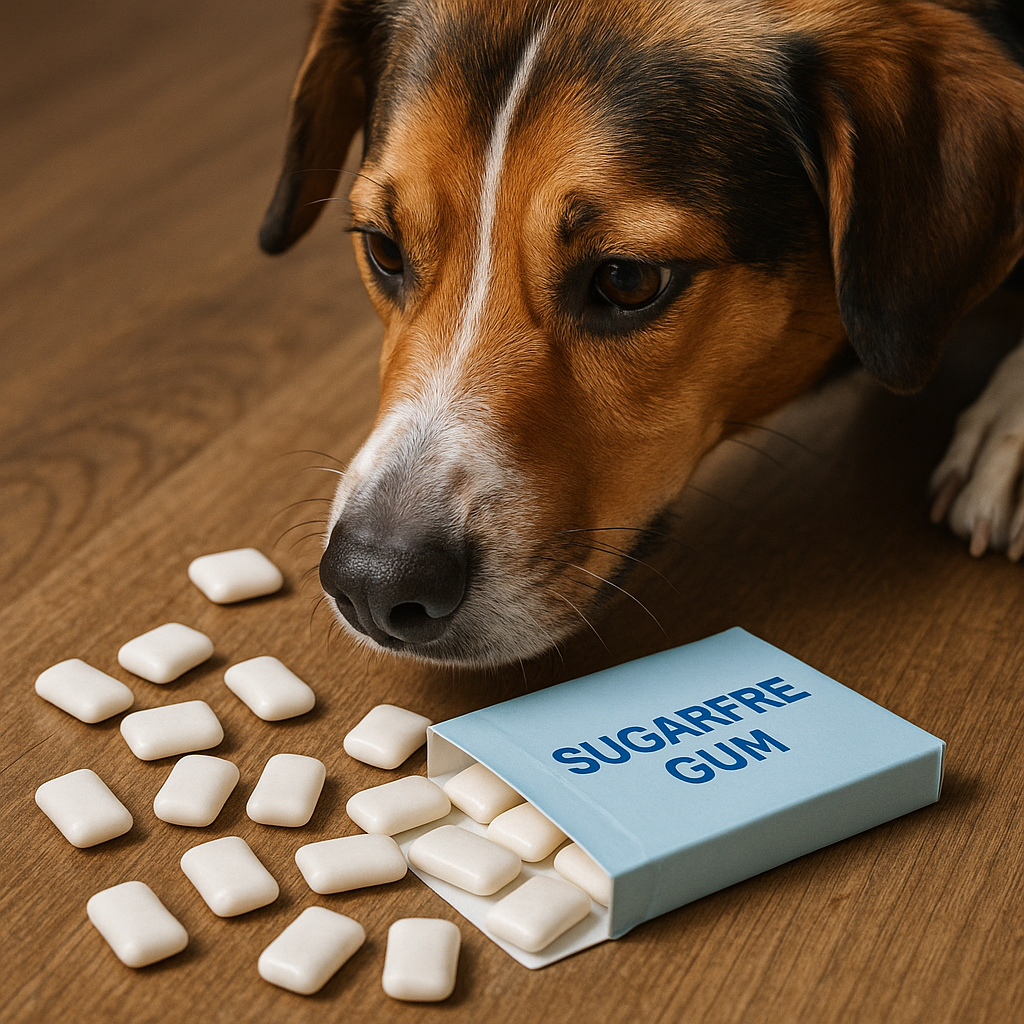
Xylitol, omnipresent in gums and some candies, triggers a rapid drop in blood sugar in dogs. Within minutes to hours, tremors, convulsions, and coma may occur.
- Chewing gum and “sugar-free” candies.
- Toothpaste sometimes containing xylitol.
- Certain light desserts, diet ice creams…
Prevention: systematically check the ingredient list before leaving treats lying around. Store the toothpaste tube out of reach.
Allium Vegetables and Herbs
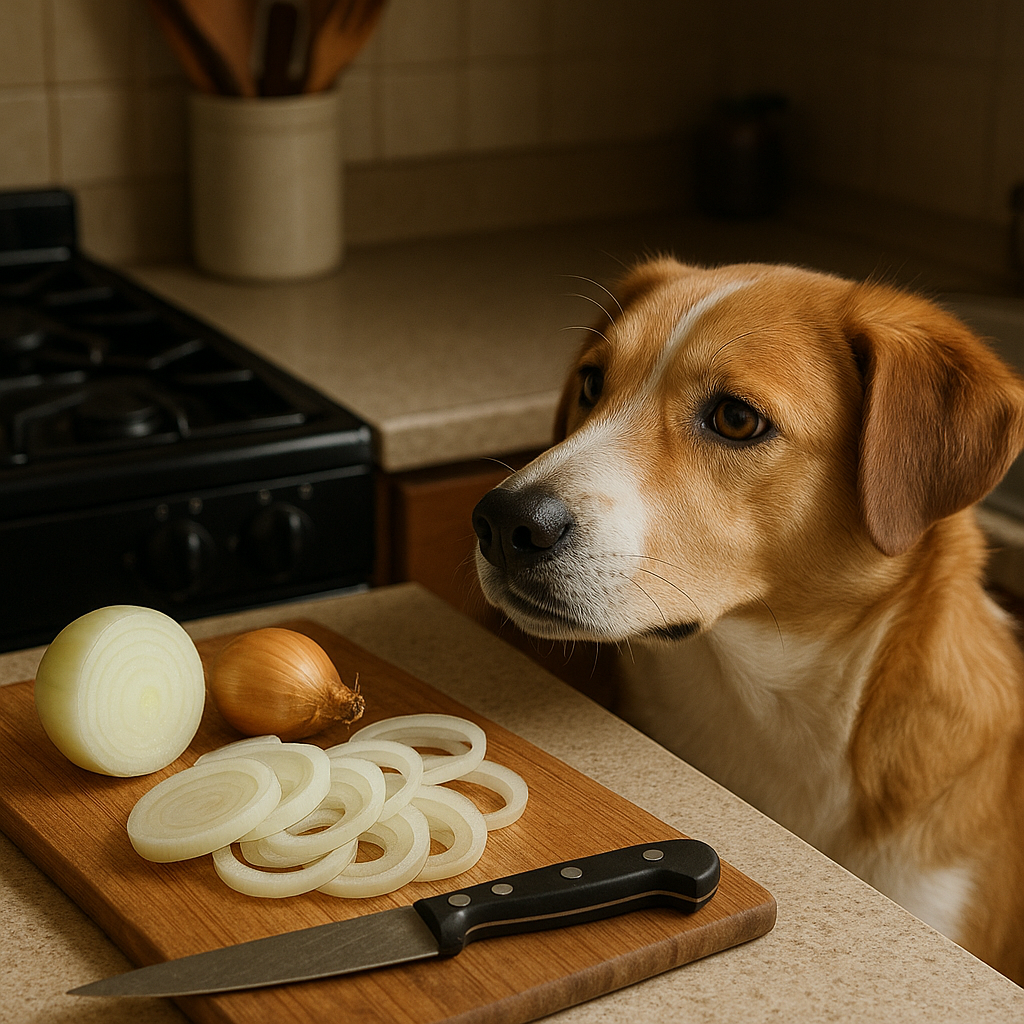
Garlic, onions, shallots, or chives contain compounds that damage red blood cells. Dogs can develop progressive hemolytic anemia, with pale mucous membranes and general weakness.
- Raw or cooked onions.
- Garlic and garlic powder.
- Shallots, chives.
To limit exposure, avoid any preparation including these ingredients and say no to kitchen scraps from heavily seasoned dishes.
Detailed List of 30 Foods to Avoid
Here is the complete list, sorted alphabetically, with a mention of the most frequent symptoms and a preventive tip.
| Food | Main Effect | Prevention |
|---|---|---|
| Apricots (pit) | Toxicity with cyanide | Remove the pit, throw it in a closed trash bin |
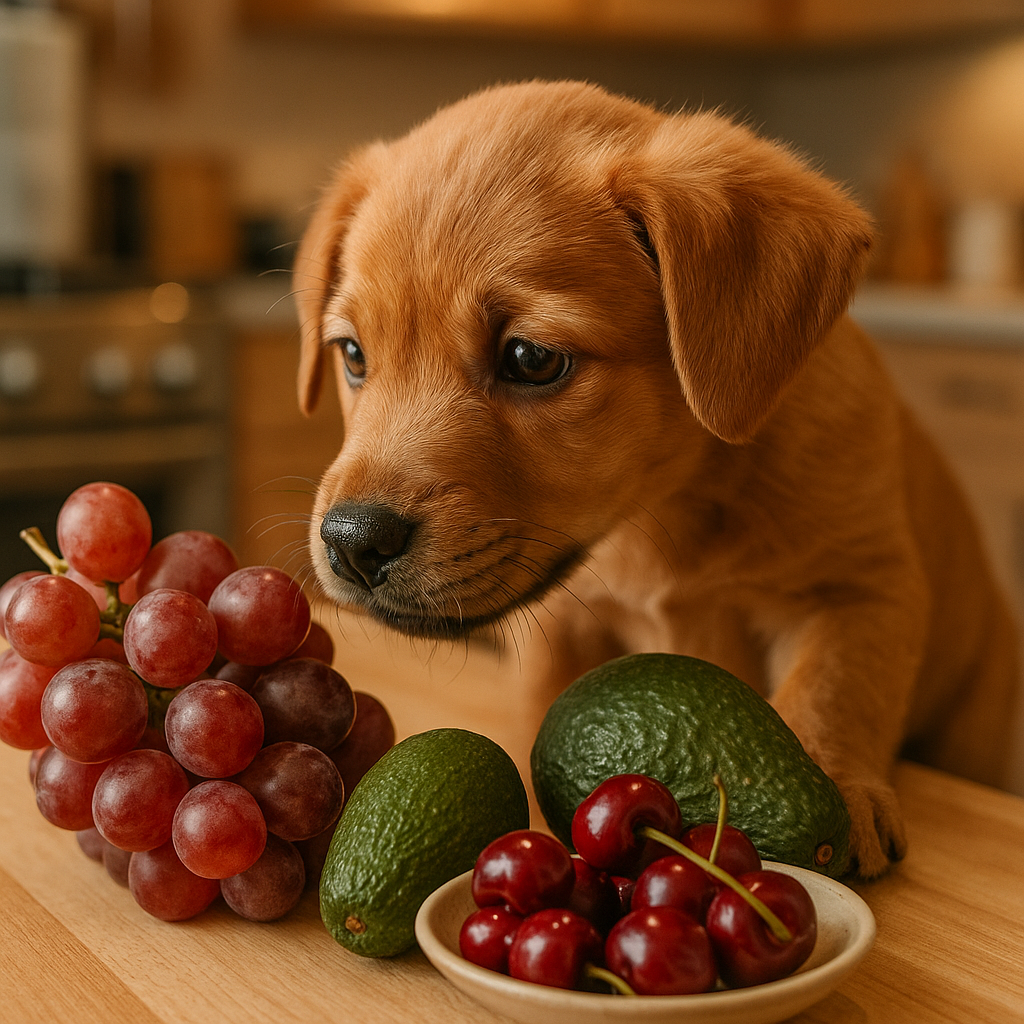
| Avocado | Pancreatic inflammation | Never offer even in small quantities |
| Garlic | Anemia | Avoid any preparation including garlic |
| Dark chocolate | Hyperactivity, seizures | Secure cupboard, locked trash bin |
| Coffee | Increased heart rate | Do not leave cups within reach |
| Chewing gum (xylitol) | Hypoglycemia | Keep out of reach, closed trash bin |
| Shallot | Hemolytic anemia | Immediately discard leftovers |
| Grapes, raisins | Kidney failure | Never share a raisin |
| Macadamia | Muscle paralysis | Store in an airtight container |
| Walnuts (centers) | Risk of pancreatitis | Avoid any consumption |
| Onion | Destruction of red blood cells | Avoid savory dishes |
| Raw dough (leavened) | Bloating, ethanol poisoning | Never leave dough accessible |
| Peaches (pit) | Cyanide | Peel, remove pit |
| Green potatoes | Solanine | Do not serve undercooked homemade fries |
| Rhubarb (leaves) | Kidney disorders | Only discard the leaves |
| Green tomatoes | Solanine toxin | Wait for full ripeness |
| Alcohol | Nervous depression | Prohibit any fermented drink |
| Milk | Lactose intolerance | Prefer fresh water |
| Salted peanut butter | Excessive sodium | Choose unsalted and xylitol-free version |
| Artificial sweeteners | Hypoglycemia | Always check the label |
| Industrial semi-finished products | Harmful additives | Cook homemade with simple ingredients |
| Rhubarb leaves | Kidney dysfunction | Absolutely avoid the leaves |
| Grapes | Kidney failure | Do not offer even a single grape |
| Raw bread dough | Toxic ethanol | Do not leave to rest unattended |
| Stone fruits | Cyanide | Carefully pit |
| Bananas (overripe) | Bloating | Limit to a small piece |
| Blueberries | Risk of diarrhea | Offer in small quantities |
| Cheese | Lactose intolerance | Prefer plain yogurt |
| Wild mushrooms | Unknown, deadly risk | Defuse all curiosity during walks |
Symptoms of poisoning and emergency reflexes
- Severe vomiting and diarrhea
- Seizures or tremors
- Hyperactivity or conversely great lethargy
- Pale gums, muscle weakness
At the slightest doubt, contact your veterinarian or an animal poison control center immediately. Note the ingested food and the dog’s weight: this information speeds up care.
Daily prevention methods
- Store packaging hermetically, out of reach
- Train the whole family on dangers, including children
- Offer treats specially designed for dogs
- Install a trash bin with a flap, keep compost out of reach
FAQ
What to do if my dog has ingested a toxic food?
Contact a veterinarian as a priority. Do not attempt to induce vomiting without professional advice: some substances can perforate the esophagus on the way back up.
How to prevent accidental ingestion?
Train your dog on a leash during walks, store food in secure cabinets, and avoid leaving leftovers on the table during meals.
Which symptoms should be monitored as a priority?
Repeated vomiting, excessive salivation, trembling, or abnormal behavior often indicate a warning sign.
Do all dogs react the same way?
No: breed, age, weight, and health status influence sensitivity. A young dog or a senior remains more vulnerable.