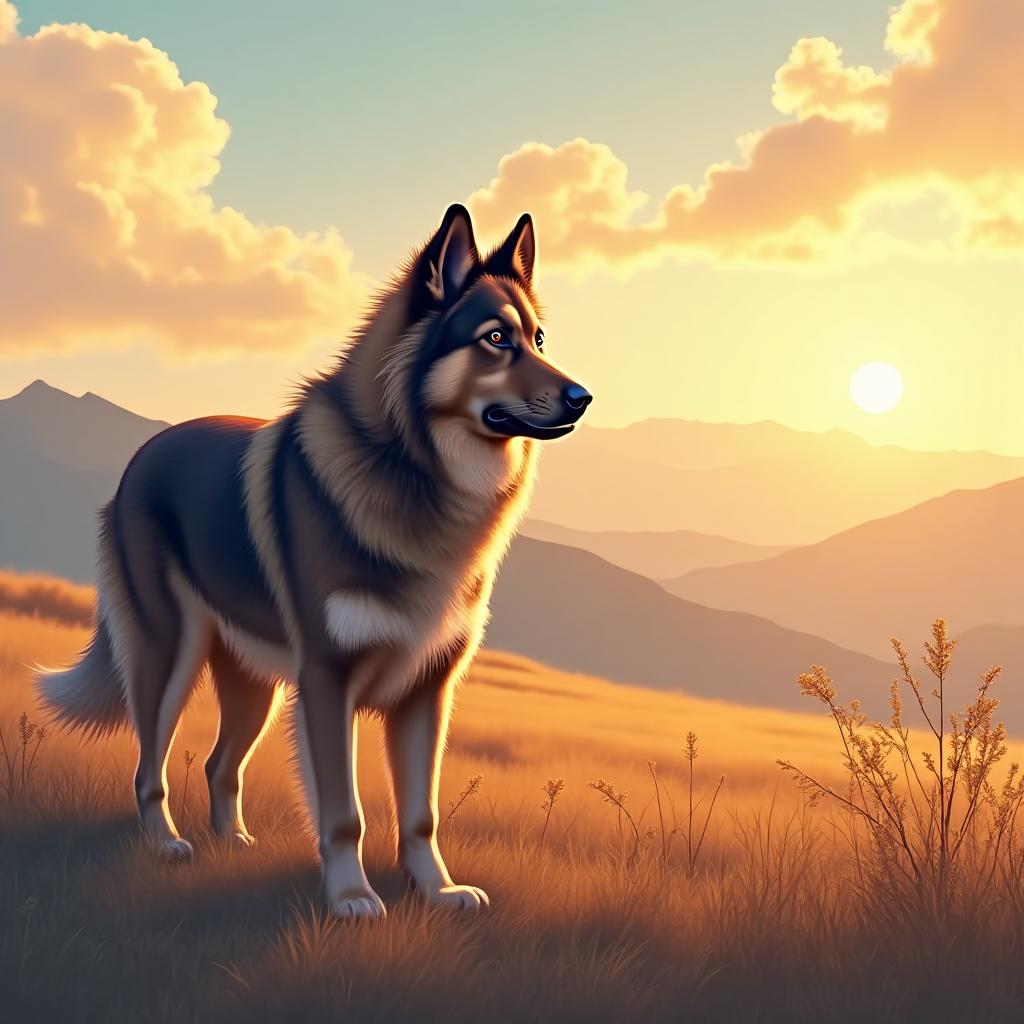
In the heart of the rugged Caucasus plateaus, a dog with thick fur and an imposing build stands out for its magnetic presence and unwavering devotion: the Caucasian Shepherd Dog. More than just a companion, it embodies an ancestral guardian role, shaped by centuries of selection to protect flocks and families. Contrary to the image of a "bloodthirsty monster," this authentic molossian reveals, to those who understand it, a vibrant loyalty and an unwavering sense of duty.
🐾 Ancient origins: originating from the Caucasus mountains, this dog has protected shepherds and livestock for generations, retaining a powerful working instinct.
🛡️ Exceptional protective instinct: loyal to its clan, vigilant towards strangers, it naturally shows suspicion and self-discipline as a sentinel.
✂️ Demanding care: dense double coat, heavy seasonal shedding, and regular brushing to maintain skin health and coat shine.
🌄 Life in open space: optimal fulfillment in a large fenced area, with adapted physical activity to channel its energy and confidence.
Origins and History
The earliest traces of dogs similar to the Caucasian Shepherd Dog date back several millennia, when the mountain tribes of the Caucasus needed an implacable defender for their flocks. In these harsh regions, where climatic conditions are extreme, only the most robust and intelligent subjects survived. The ancestors of today were therefore selected for their musculature, thick undercoat, and strength. Over time, each village refined the lineage to meet its own requirements: some valued size, others agility or the ability to make quick decisions when facing a predator.
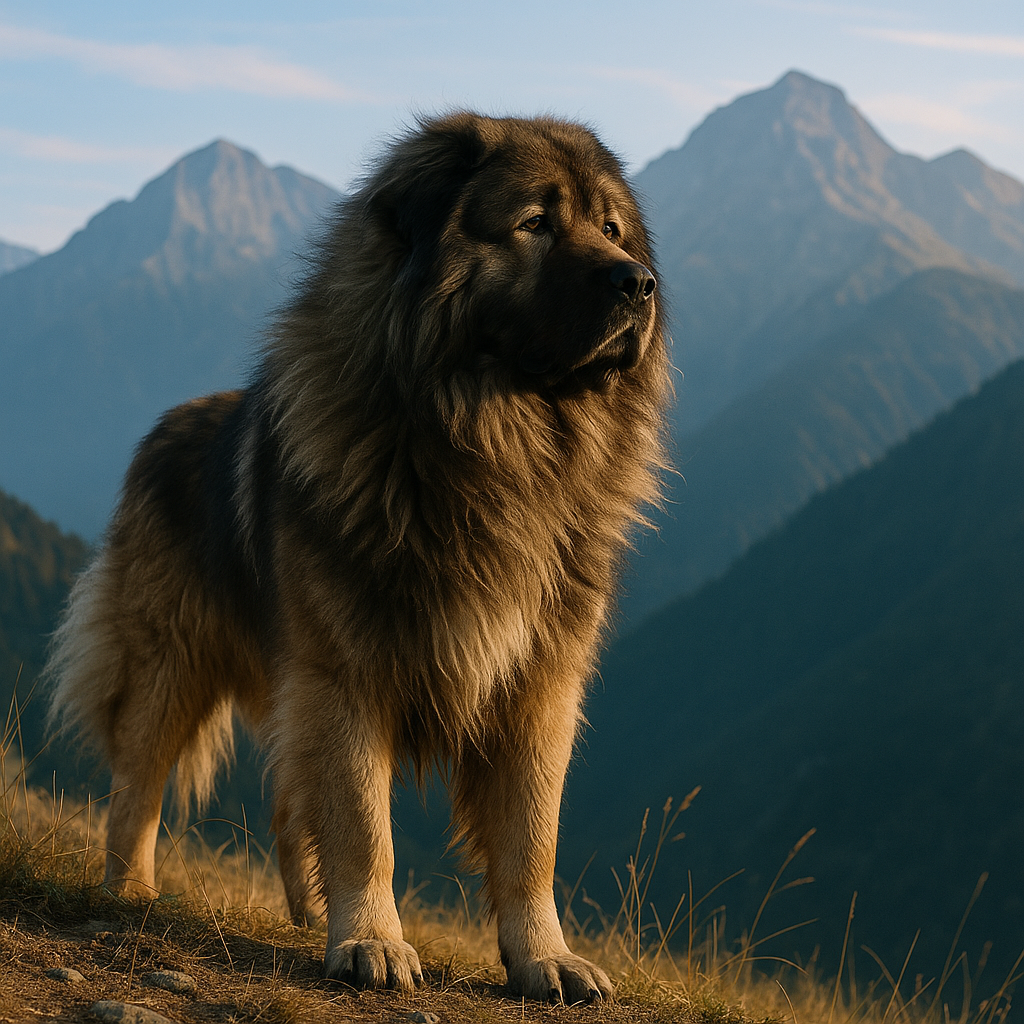
"The shepherds of the Caucasus told me that a single dog could stand up to a hungry bear," recalls an author passionate about guard dog breeds.
During the Soviet era, the State launched standardization programs, officially recognizing the breed under the name "Ovcharka of the Caucasus." This recognition allowed the establishment of a standard but also preserved the original role of this dog: vigilance and protection. Even today, serious breeders ensure that these fundamental qualities are not diluted, even though the breed’s popularity has led some to make it a simple pet, sometimes unsuitable for its temperament.
Character and Personality
Meeting a Caucasian Shepherd Dog is becoming aware of the duality of its soul: on one hand, an tireless protector, always on alert; on the other, a gentle companion attached to its “pack.” This dog has strong self-confidence, rarely prone to anxiety, which makes it stable in new situations. However, its territorial instinct is such that it may consider any stranger a potential threat, hence the importance of early and solid socialization.
- Loyalty: deep bond with the home, it follows its owner with respect.
- Independence: capable of taking initiatives without constant instructions.
- Vigilance: always attentive ears, piercing gaze.
- Balanced temperament: neither excessively aggressive nor submissive, it knows how to moderate its energy.
If one crosses the barrier of its initial mistrust, one discovers a dog sometimes playful, capable of almost contemplative moments of calm. Its impressive size then sheds all tension, giving way to a familiar, almost phlegmatic companion.
Quick Comparison with Other Molossers
| Breed | Male Size | Weight | Temperament |
|---|---|---|---|
| Caucasian Shepherd | 70–75 cm | 50–100 kg | Protective, independent |
| Bullmastiff | 64–69 cm | 50–59 kg | Balanced, gentle |
| Mastiff | 70–91 cm | 68–110 kg | Calm, sociable |
Coat Care and Health
At the edges of its coat, two layers can be distinguished: a woolly undercoat, insulating against the cold, and a stiffer outer layer to repel moisture. During shedding periods, these two layers renew almost simultaneously. Without a weekly brushing routine (or even daily during shedding), knots and clumps of dead hair quickly accumulate.
- Gentle brushing with a curry comb for the undercoat.
- Wide-toothed comb for the outer layer.
- Regular checks of ears and paws.
- Occasional grooming to clean areas often damp (neck, rump).
Medically, this breed does not show major predisposition to certain bone or heart diseases, provided diet and exercise are balanced. Responsible breeders often conduct hip dysplasia tests to select healthy lines.
Training and Socialization
In the education of such a powerful molosser, consistency and gentleness combine to avoid excessive dominance. The first social interactions should take place from the age of 2 months, with different types of people and animals, so the dog learns to distinguish a familiar presence from a stranger. Unlike a hyperactive herding dog, the Caucasian Shepherd Dog is generally calmer and thinks before acting. Learning basic commands (sit, lie down, heel) should be done in short but frequent sessions to preserve its concentration.
“Firmness without violence is the key: a determined look is often enough to obtain obedience,” explains a dog trainer specialized in large breeds.
Mental enrichment—tracking games, stimulating courses—complements physical training and strengthens the bond between the owner and their guardian.
Daily Life and Family Integration
Despite its impressive appearance, this dog is not an indefatigable athlete: it alternates between moments of patient watchfulness and phases of sustained activity. A simple large fenced garden, combined with regular walks in nature, is enough for its fulfillment. Indoors, it is content with a sturdy bed, resistant to its weight, and a space where it can retreat.
- Calm lifestyle, adapted to active families but not exclusively urban.
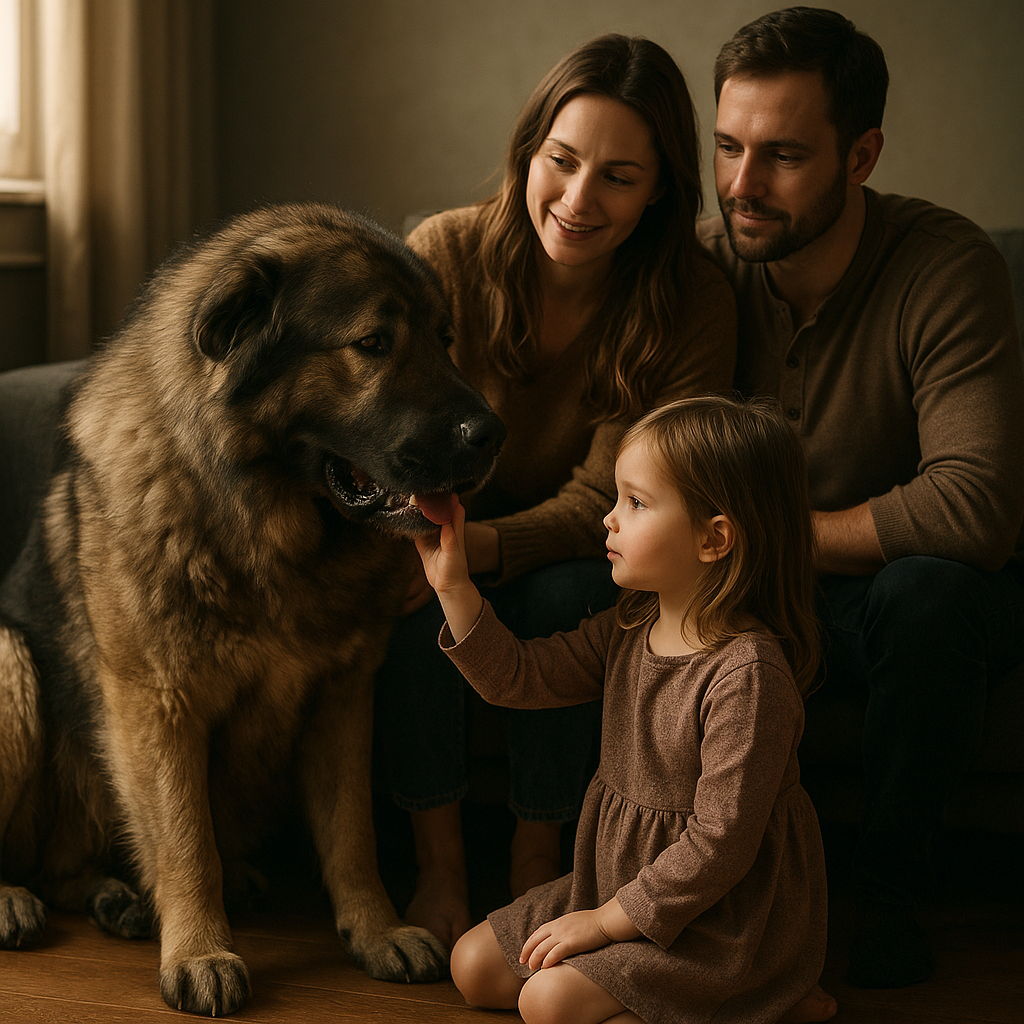
- Safe interactions with children, under supervision, as its size can make it clumsy.
- Need for clear markers and an established hierarchy.
FAQ
What size and weight can a Caucasian Shepherd Dog reach?
Males generally measure from 70 to 75 cm at the withers and weigh between 50 and 100 kg. Females are a bit smaller, while still remaining massive dogs.
Is it suitable for apartment living?
No, its need for space and territorial instinct require a fenced outdoor area. In an apartment, it could show stress and destructive behaviors.
How to manage its guarding instinct with visitors?
Thanks to early socialization and gradual learning of basic commands, it can be made to understand that an admitted visitor remains a friend. Rewards and consistency are essential.
Is this dog suitable for beginners?
Its size and character make it a challenge for an inexperienced owner. It is preferable to have already raised a large breed dog and to be supported by a professional during the first months.