
The Rat Terrier is not just a simple companion: it is a formidable hunter of small critters and a valuable ally for those living in the countryside. Agile, lively, and endowed with a strong character, it now finds its place both on a farm and with an urban family ready to offer daily exercise. Let’s discover together its origins, unique temperament, and the keys to caring for this endearing dog.
🐾 American origin: born from the work of Texan farmers and raccoon producers, the Rat Terrier was selected for its hunting instinct and versatility.
⚖️ Featherweight: between 5 and 12 kg depending on the variety, a compact build that allows it to slip easily into burrows.
💡 Overflowing energy: ten minutes of play is not enough! A walk in the open air and scent challenges are essential for its balance.
❤️ Loyal companion: behind its little hunter appearance hides a very affectionate dog, ideal for an active family or a breeder fond of small animals.
Origins and History of the Rat Terrier
The Roots of the Rat Terrier in the 19th Century
In the early 1800s, British immigrants introduced various terriers to the United States intended to eliminate rats and mice on farms. It was in Texas that this small dog, a mix of Manchester Terrier, Fox Terrier, and sometimes Bull Terrier, took shape. Breeders primarily sought an enduring companion, capable of working all day in barns without ever faltering in front of a too-crafty rodent.
Evolution and Recognition of the Breed
With the rise of dog shows at the beginning of the 20th century, breeding became structured and the Rat Terrier distinguished itself by its versatility. The “Standard” variety (up to 11 kg) and the “Miniature” version (under 5 kg) emerged to meet different needs. In 1974, the United Kennel Club officially recognized the breed, opening the doors to competitions where it excels in agility, jumping, and tracking.
Physical Characteristics and Temperament
A Compact and Agile Build
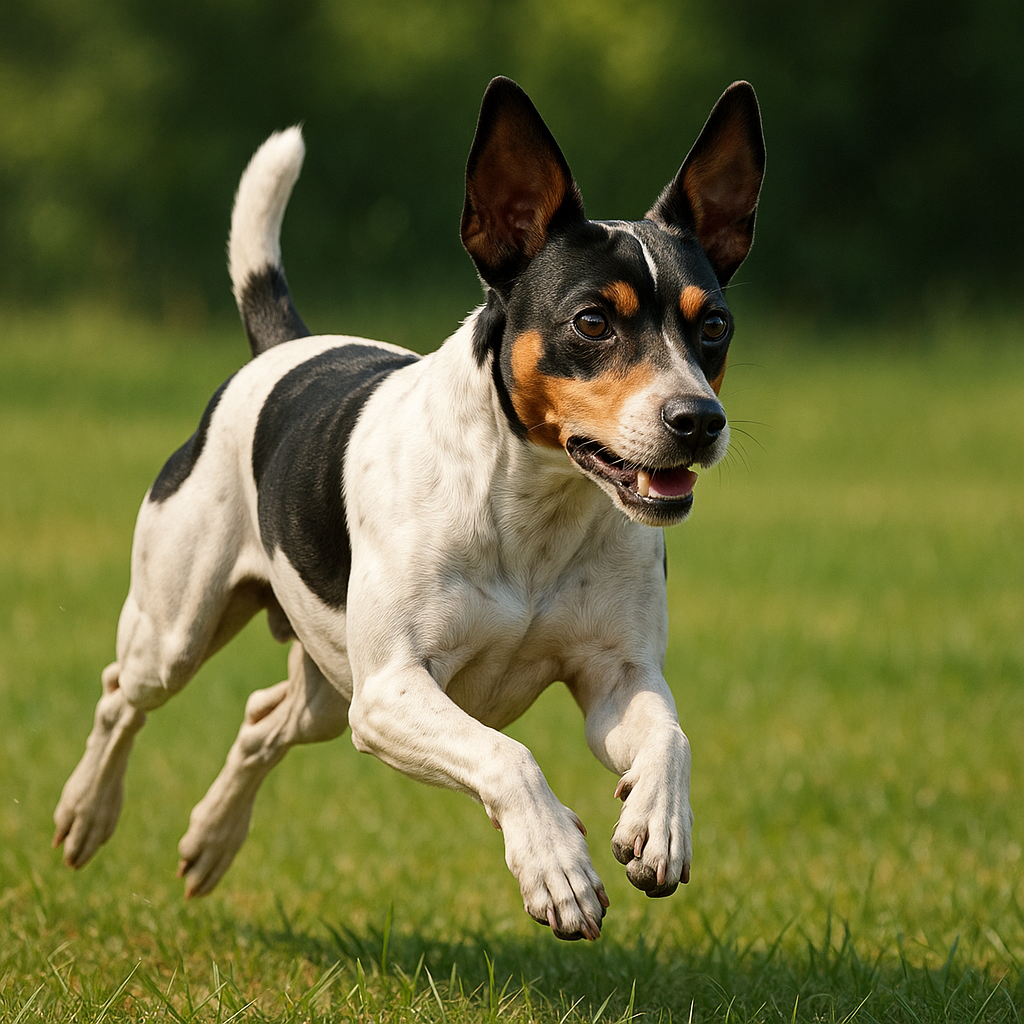
The Rat Terrier first surprises with its harmonious proportions: a well-developed chest, a muscular back, and slender but strong limbs. Its elongated head and bright eyes reflect constant curiosity. Whether tricolor, black and white, or brindle, its smooth coat requires minimal but regular grooming to limit dead hairs on clothing.
A Hunter’s Temperament… and a Companion’s
One might think that a dog so determined to flush out vermin would be introverted or difficult to live with. In reality, the Rat Terrier also knows how to be tender and close to its owner. Very communicative, it barks to signal the arrival of a visitor or the presence of a rodent, then quickly returns to demand affection. Its loyalty makes it a vigilant protector, without being fearful or aggressive.
Care, Feeding, and Health
Need for exercise and stimulation
- Daily walks of at least 45 minutes to expend its energy.
- Tracking or agility games to engage its intelligence and sense of smell.
- “Digging” moments where it has to find hidden treats, excellent for preventing boredom.
Adapted diet
- A caloric intake adjusted according to its age and activity level.
- Avoid overly fatty kibble to limit joint problems.
- Split its meals into two servings to preserve digestion.
Main health concerns
Although this breed is generally robust, it can suffer from eye conditions (PPMD, cataract) and patellar luxation. Genetic screening by the breeder and annual veterinary check-ups help detect these risks early and extend its lifespan, which ranges between 12 and 16 years.
The Rat Terrier as a modern companion
Family life and socialization
“My Rat Terrier gets along wonderfully with children, as long as his rest phases are respected.”
Its small size makes it compatible with apartment living, provided outings are frequent. Very sociable, it appreciates the presence of other dogs and enjoys relaxing at the heart of the home. Early socialization (noise, children, other animals) is however essential to balance it.
Recommended activities
- Agility: its liveliness and light build make it a prime candidate.
- Canicross: for athletes, the Rat Terrier loves to pull lightly and take on speed challenges.
- Intelligence games (puzzles, hole boards) to cultivate its sense of smell.

Registration and responsible breeding
Choosing a breeder or adoption
| Criterion | Questions to ask | Why it is important |
|---|---|---|
| Health tests | What eye and joint screenings have you performed? | Limit the risk of hereditary conditions |
| Breeding conditions | Do the puppies grow up in a family or kennel? | Promotes good socialization and a balanced temperament |
| Written guarantee | Is there a health certificate and a possibility of return? | Security for the buyer and the puppy |
Raising a Rat Terrier: key points
- Maintain consistent training to channel its energy.
- Ensure regular meetings with other dogs.
- Organize safe play sessions to preserve its hunting instinct.
FAQ
What is the lifespan of a Rat Terrier?
Between 12 and 16 years, thanks to its robust constitution and regular veterinary care.
Can a Rat Terrier live in an apartment?
Yes, if it benefits from daily walks of at least 45 minutes and moments of mental stimulation.
How to channel its hunting instinct?
Through tracking games, agility, and hiding toys that engage its sense of smell.