
Behind its colossus appearance and calm gaze, the Bullmastiff hides a surprisingly gentle temperament: it is both a silent watchman and an affectionate companion. This mastiff, whose history is woven between guard dog and family friend, is equally suited to property surveillance as to playful games with children. Yet, far from one-dimensional clichés, it reveals a range of nuanced behaviors, between determination and placidity. Let us explore together this fascinating balance, from its origins to its education, to understand how this brave giant integrates so naturally into our homes.
🐾 Imposing appearance: large dog (60-70 cm), powerful musculature and massive head, ideal for deterrence.
🛡️ Loyal guardian: protective and calm character, natural vigilance without gratuitous aggression, suited to family life.
🍖 Moderate care: regular exercise needs, balanced diet, and easy coat care thanks to short hair.
🎓 Firm education: requires structured training from a young age to channel its energy and reinforce obedience.
Origins and history
Genesis of the Bullmastiff
At the dawn of the 19th century, British gamekeepers wanted a powerful dog, fast enough to catch a poacher and calm enough not to injure him. By crossing the Dogue de Bordeaux, the Mastiff, and sometimes even the Bulldog, they obtained a dog with an imposing stature, capable of subduing an intruder by the strength of its body rather than by biting. This balance between power and restraint was born from rigorous selection, which laid the foundation for the cautious and efficient character of the Bullmastiff.
Evolution of the guardian role
Initially used to protect hunting estates, the Bullmastiff quickly earned its stripes in the British police and army, before spreading to other continents. Its reputation as a silent dog, capable of immobilizing an opponent without barking, made it indispensable in certain security missions. Today, it is no longer about tactical operations, but about guarding a home and sharing family life, without losing an ounce of its protective instinct.
Physical characteristics
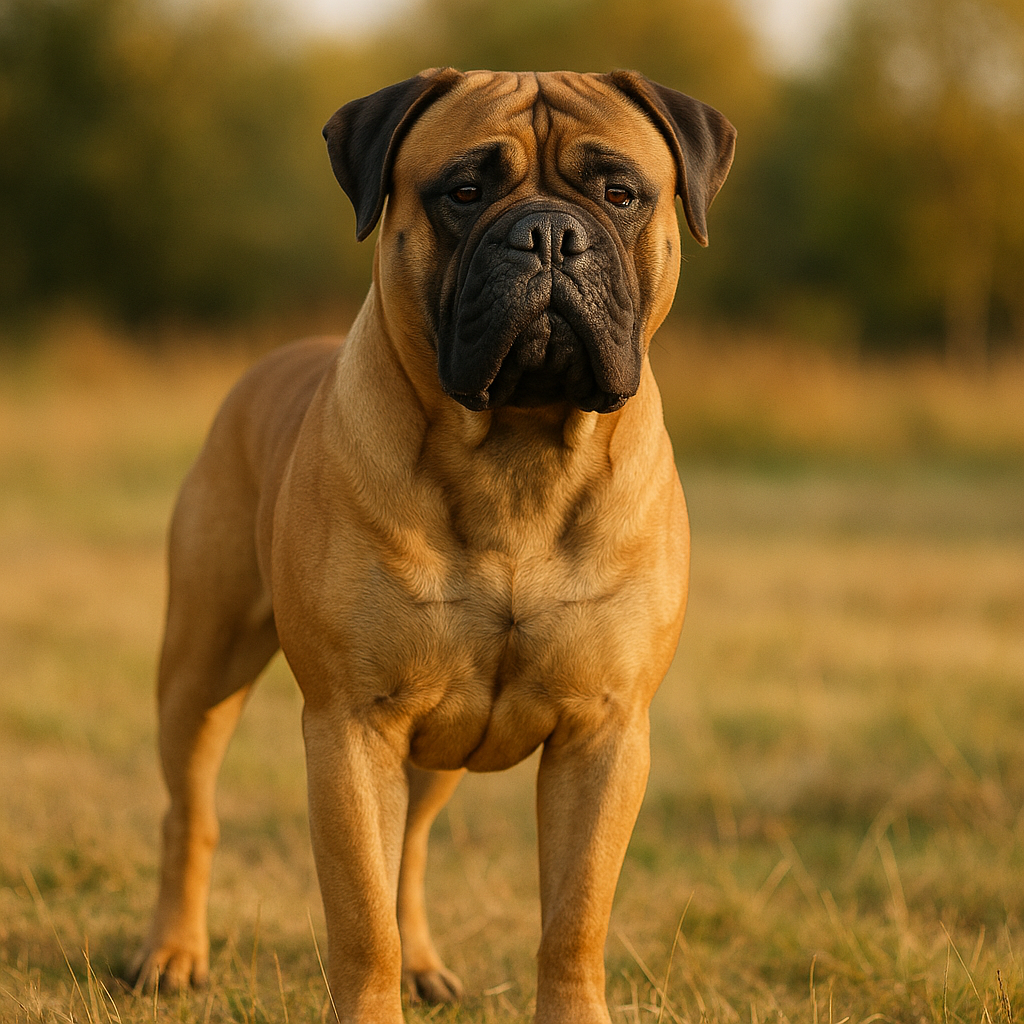
The Bullmastiff’s silhouette impresses: broad neck, massive shoulders, and solid bone structure compose a harmonious whole. Its coat, often brindle, fawn, or red, has short and dense hair; it cleans easily and requires little maintenance.
| Characteristic | Male | Female |
|---|---|---|
| Height at withers | 65 – 70 cm | 61 – 66 cm |
| Average weight | 50 – 59 kg | 45 – 55 kg |
| Life expectancy | 8 – 10 years | |
- Wide head with a marked stop and a relatively short muzzle.
- Dark eyes with a gentle gaze, distant cut ears shaped like a V.
- Compact body without heaviness, combining solidity and surprising agility for its size.
Temperament and Behavior
Contrary to the image of the “brute dog,” the Bullmastiff surprises with its attentive stance: it observes, gauges, then reacts. Its physical strength is tempered by great emotional intelligence: it knows how to discern an emergency from a simple play solicitation.
Sense of Protection
The loyalty of the Bullmastiff is not acquired lightly. A close bond, built on trust and firm education, triggers in it a vigilant guardian instinct. It does not bare its teeth indiscriminately: before barking or placing itself on the front line, it gauges the stranger. This analytical ability reduces the risk of excessive reactions.
Adaptation to Family Life
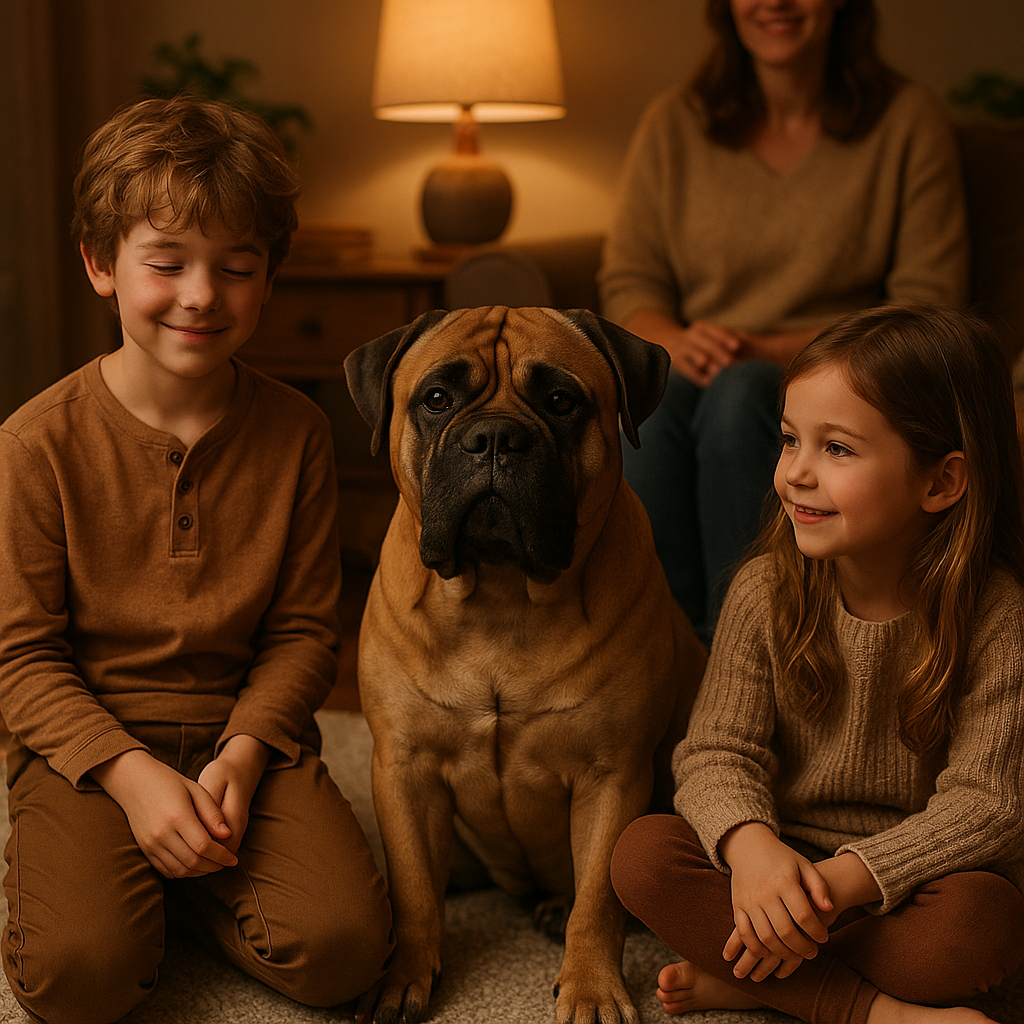
With children, it becomes a gentle giant: patience, tolerance, and peaceful play illustrate its relationship with the youngest. Indoors, it tolerates solitude well, provided it is not left to itself for too long. Generally not a frequent barker, it favors silent observation over vocal panic.
Care and Health
Exercise and Diet
The Bullmastiff is not a marathon runner, but it requires daily walks and some moderate play sessions to maintain a balanced figure. Watch its calorie intake: with a rather moderate metabolism, it can easily gain weight, which would put strain on its joints.
Medical Predispositions
- Hip and elbow dysplasia: caution with jumps and slippery surfaces.
- Stomach torsion: split meals and avoid intense exercise just before or after dinner.
- Eye problems (entropion, ectropion): regular veterinary checks recommended.
Training and Socialization
To channel its energy, consistent and kind education is essential. More than firmness, it is the consistency and clarity of rules that guarantee a harmonious relationship: a Bullmastiff learns quickly once it understands limits and rewards.
- Start socialization early (noises, varied places, encounters).
- Set landmarks from the kennel or bed: a space of its own, respected by all.
- Use positive reinforcement (treats, petting) rather than systematic reprimand.
Ideal Environment
Life in a house with a fenced garden is perfect: the Bullmastiff likes to see far, resting in the shade of a tree between patrols. In an apartment, it can adapt if it benefits from frequent outings and enough space to relax, without remaining confined.
Frequently Asked Questions
Does the Bullmastiff bark a lot?
No, this dog favors silence: it approaches each new situation with caution and only barks in case of real threat or to attract attention.
Is the Bullmastiff suitable for beginners?
It can suit a novice owner, provided they are determined and ready to invest in consistent education. Its calm temperament helps, but its power and size require firm management.
Advice for Future Owners
- Favor a responsible breeder, checking health history.
- Invest in obedience sessions or a dog club to channel its potential.
- Establish rituals (walk, meals) to structure its daily life.
- Plan regular veterinary follow-up, especially for dysplasia and stomach torsion.