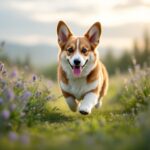
The Tibetan Spaniel, often nicknamed the « little temple guard », fascinates with its aristocratic appearance and character that is both alert and affectionate. Originating from the Tibetan highlands, it long watched over monasteries before conquering the world as a family companion. Its mischievous gaze and proud head carriage hide a sensitive dog that demands attention and understanding. In this article, we explore its millennia-old history, distinctive traits, ideal lifestyle, and the keys to making it a fulfilled companion.
🔰 Tibetan origins: Silent guardian of Buddhist monasteries, discreet hero of a tradition several centuries old.
🐾 Small size: Between 20 and 23 cm at the withers, it slips everywhere while retaining a true watchdog character.
❤️ Contrasting temperament: Independent but affectionate, vigilant yet playful, it enjoys serenity as much as the attention of those around it.
⚕️ Specific care: Regular coat maintenance, screening for some genetic predispositions, and stimulating activities: the key to a long life.
Origins and history
A distant companion of monks
In the heart of the Tibetan plateaus, more than a thousand years ago, a breed of dogs reserved for Buddhist monks was born. Unlike massive mastiffs, Tibetan Spaniels were appreciated for their liveliness and modest size, ideal for moving around temples and guarding inner courtyards. They silently warned of a foreign arrival thanks to their keen hearing, without frightening the surrounding wildlife. Some accounts even mention diplomatic exchanges where these dogs were offered as tokens of friendship between spiritual leaders.
Evolution towards the West
It was not until the early 20th century that a few specimens made their way to Europe, given to explorers or nobility fascinated by the East. The first breed clubs appeared in the 1920s in the United Kingdom, then in America. Despite selective breeding, the independent character of the Tibetan Spaniel remains intact, making its breeding demanding and exciting for enlightened enthusiasts.
Physical characteristics
Size and appearance
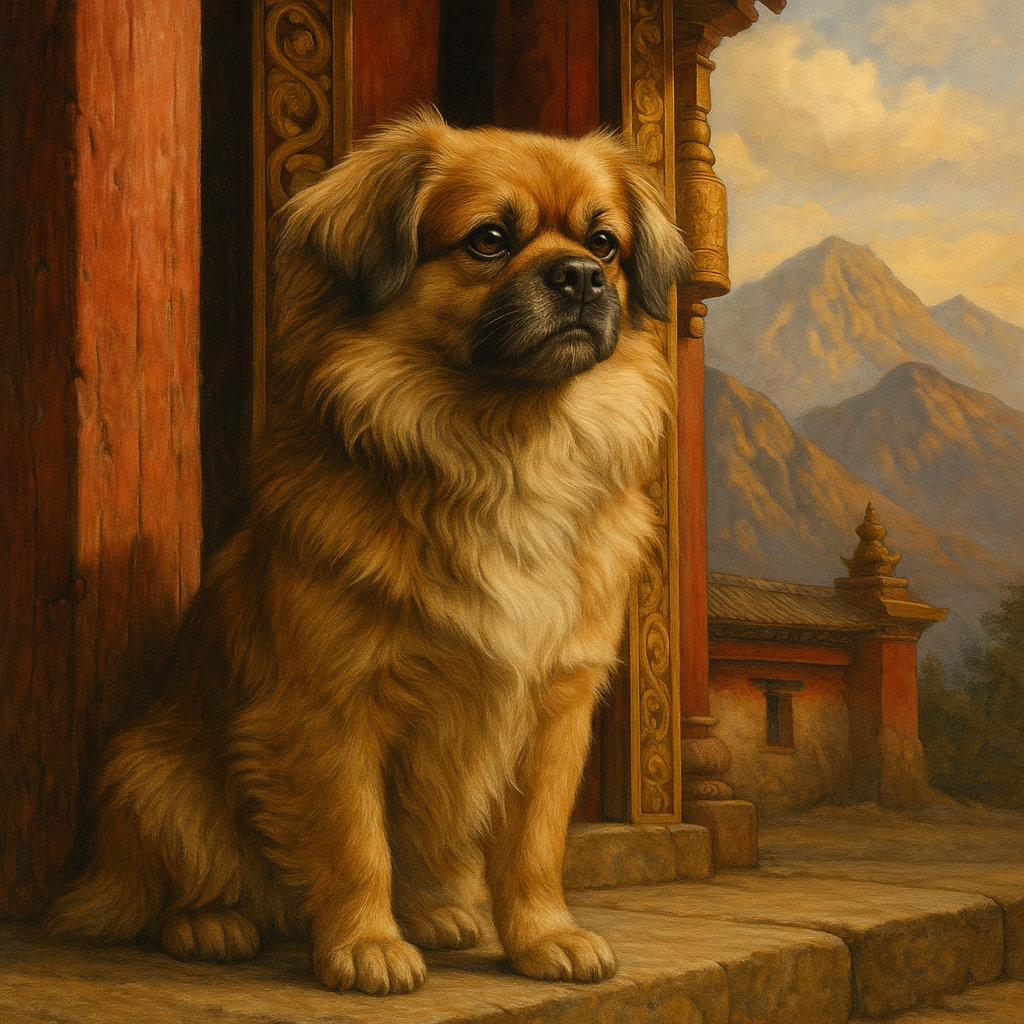
With a compact build measuring between 20 and 23 cm at the withers and generally weighing from 4.5 to 7 kg, the Tibetan Spaniel does not exceed the palm of a hand, yet its appearance is noble. Its slightly flat head, almond-shaped eyes, and raised tail carriage offer an elegant, almost proud silhouette. One clearly perceives the heritage of a court dog that once watched over sacred monasteries.
Coat and color
The Tibetan Spaniel’s coat is double: a dense undercoat protects against the cold and a rather silky outer hair resists moisture. Colors range from light fawn to brindle, including black and white. The fringes on the ears and the feathers on the tail form a typical « cuff », reminiscent of the robes worn by Tibetan monks.
| Characteristic | Tibetan Spaniel | Small (medium) dog |
|---|---|---|
| Height at withers | 20–23 cm | 25–30 cm |
| Weight | 4.5–7 kg | 6–9 kg |
| Life expectancy | 12–15 years | 10–14 years |
Temperament and behavior
An alert and independent dog
Endowed with a true sense of watchfulness, the Tibetan Spaniel reacts sharply to unfamiliar noises, without barking endlessly. Its independence is shown by a certain nonchalance: it does not wait for the slightest petting to go about its business, but appreciates the moments of complicity offered by its owner.
Relationship with the family
In a household, it is gentle and playful, especially with children who know how to respect it. It tolerates apartment living well, provided it benefits from daily walks. It seeks less confrontation than to establish a bond of trust: reward and encouragement will be much more effective than firmness.
Socialization with other animals
With its peers, it can show a hint of mistrust if socialization was not early. Introduced young, it will live peacefully with cats or other small dogs. It does not have the hunting instinct of terriers, which makes it a rather peaceful companion, provided it is given its place.
Training and exercise
The challenge of training
Training a Tibetan Spaniel requires patience and creativity. Its formidable memory allows it to learn quickly, but its independence can turn into distraction. Positive methods, based on play and treats, will yield better results than authoritarian approaches.
Recommended activities
- Daily walks: ideally 30 to 45 minutes, to stimulate its scent and senses.
- Thinking games: food puzzles or hide-and-seek, to channel its intelligence.
- Light canine sport: gentle agility or obstacle courses adapted to its size.

Health and care
- Coat maintenance: bi-weekly brushing to prevent knots and stimulate skin circulation.
- Dental monitoring: tendency to tartar, regular brushing recommended.
- Possible eye fragilities: screening for keratoconjunctivitis before 2 years old.
- Vaccinations and deworming: follow the veterinary protocol in force according to age and lifestyle.
Feeding
Favor a balanced diet, adapted to its size and activity level. Premium kibble with a moderate fat content will help maintain an ideal weight. Be sure to split meals to avoid digestive problems and do not hesitate to vary with cooked vegetables or lean chicken as a supplement.
Ideal environment
The Tibetan Spaniel thrives in a calm setting; a garden is not mandatory, but it will love a small secure space to play. On the other hand, proximity to the family is essential: it hates prolonged solitude. If you work outside, plan for a dog-sitter or a doggy daycare to avoid boredom.
FAQ
Does the Tibetan Spaniel tolerate cold temperatures?
Yes, its double coat effectively protects it from moderate cold. In case of severe cold and icy wind, a dog coat can be useful, especially for extended walks.
Is it possible to leave it alone all day?
Not ideally: its sociability makes it vulnerable to separation anxiety. If you have to leave it for more than 4-5 hours, plan for playmates or stimulating activities.
What monthly budget should be planned?
About 50–70 € for food, basic care, and accessories. Veterinary costs vary depending on age and region.
Is it noisy?
Rather reserved, it only barks in case of a real alert. Good training for “silence” from a young age will reinforce this quality.
How to care for its teeth?
Regular brushing with a soft brush and suitable paste, anti-tartar chew toys, and annual veterinary check-ups reduce the risk of periodontal diseases.