
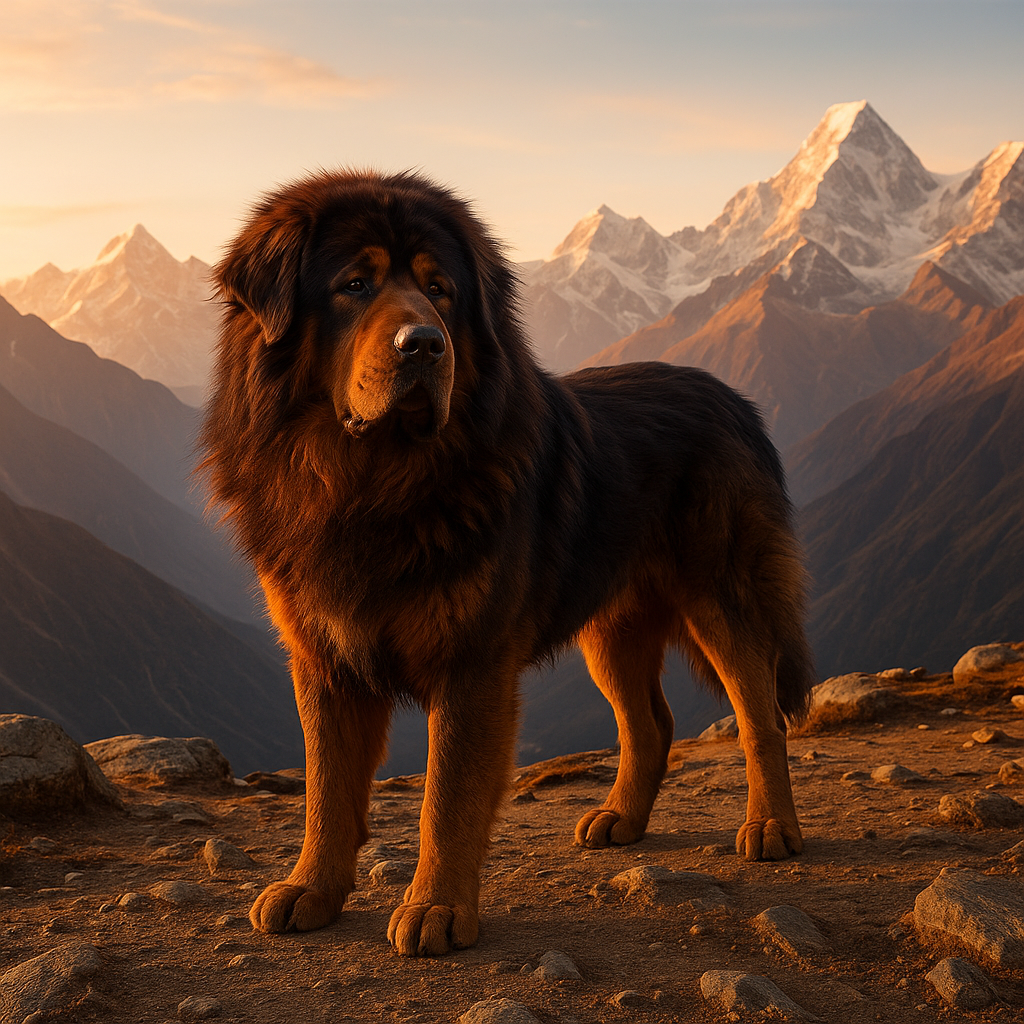
At first glance, it is not just an imposing appearance that strikes: it is an almost mystical aura. The Tibetan Mastiff, or Tibetan mastiff, has roamed the high plateaus of the Himalayas for millennia, guarding monasteries and herds with a presence as majestic as it is silent. Today, it captivates passionate breeders and lovers of large dogs, oscillating between legend and everyday reality.
🐾 Millennial origins: guardian of Tibetan monasteries for over 2,000 years, it embodies a tradition of Andean protection.
💪 Imposing size: males up to 80 cm at the withers, weight can exceed 70 kg, massive but elegant silhouette.
🧠 Thoughtful temperament: highly developed guarding instinct, requires socialization and patient training.
🛁 Specific maintenance: dense double coat, frequent brushing and special attention during shedding periods.
Origins and history
Tibetan roots
On the high plateaus, where oxygen becomes scarce, the Tibetan Mastiff evolved as a sentinel of Buddhist monasteries. The monks saw in him a loyal companion, capable of challenging wolves and bandits. His role went far beyond simple guarding: he marked the boundary between the sacred world and external threats, almost like a living symbol of protection.
Spread to the West
At the end of the 19th century, British explorers and colonists brought some specimens to Europe. Initially reserved for very closed circles, it truly conquered Western homes only after the 1990s. Today, despite its image as a prestigious dog, it remains a demanding companion, far from the size and temperament standards of more common breeds.
Physical characteristics
Size, weight, and bone structure
The Tibetan mastiff stands out for its stature that is both massive and balanced: a solid bone structure without excessive heaviness. Males measure between 66 and 80 cm at the withers, while females range between 61 and 71 cm. Weight generally varies from 45 to 75 kg depending on sex and lineage.
Coat colors
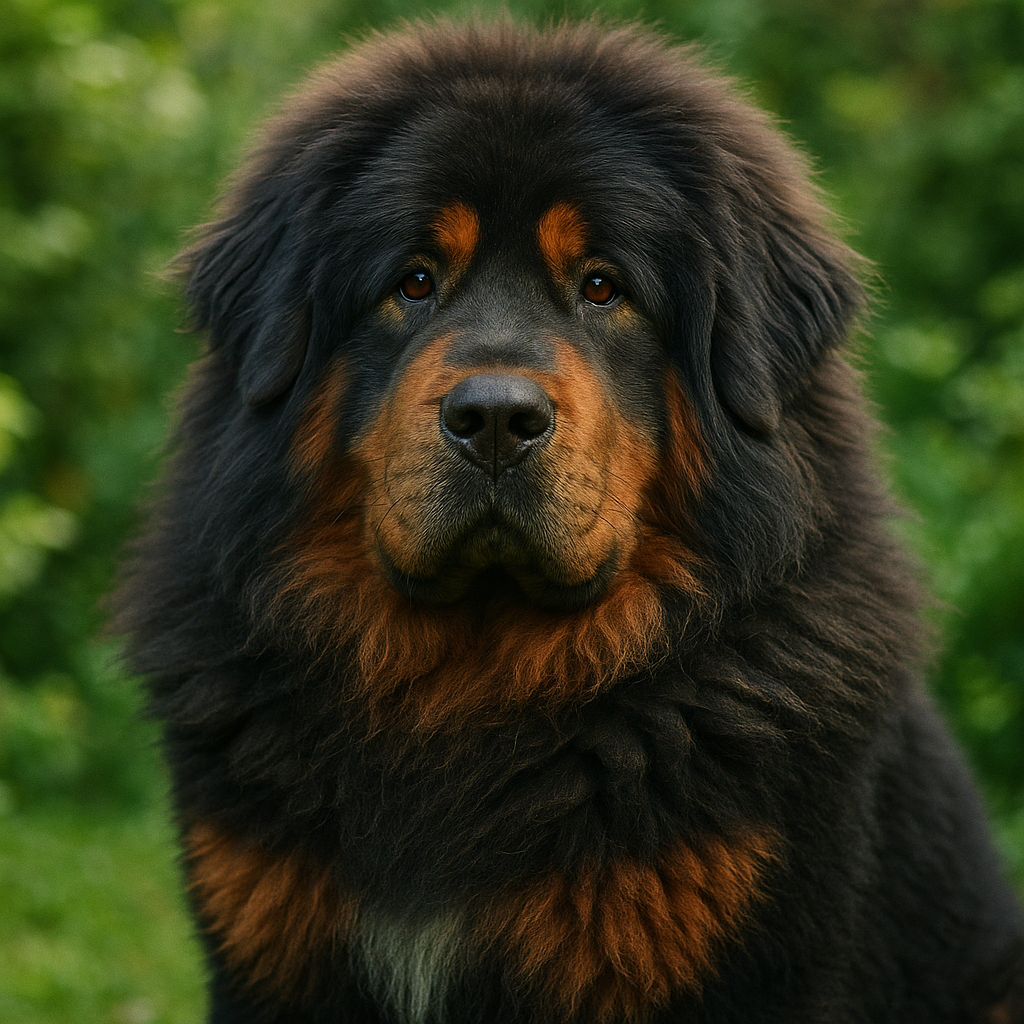
The Tibetan Mastiff’s fur consists of a dense undercoat for insulation, topped with longer hairs repelling water and dust. Colors range from coal black to rich brown, including wolf-gray felted and fawn. Some individuals bear well-contrasted tan markings, notably above the eyes and on the legs.
| Characteristic | Male | Female |
|---|---|---|
| Height at withers | 66 – 80 cm | 61 – 71 cm |
| Average weight | 50 – 75 kg | 45 – 60 kg |
| Life expectancy | 10 – 12 years | |
Temperament and Behavior
Guarding Instinct
The Tibetan Mastiff has a natural instinct to detect threats. It does not bark for pleasure, but to signal danger. This discreet alertness, although valuable, can surprise those who expect a constantly vocal dog. Its energy is devoted to observation and prevention rather than demonstration.
Essential Socialization
Due to a tendency toward independence, the Tibetan Mastiff must be exposed early to various stimuli: children, other animals, urban noises. Without this phase, it risks remaining wary or developing excessively protective behaviors. Each meeting session must be positive and gradual.
Daily Needs and Care
Exercise and Space
Despite its size, this mastiff does not demand a daily marathon. Dynamic walks, access to a secure garden, and scent-tracking games are often enough to satisfy its intelligence. In an apartment, it should have at least one long outing per day to avoid boredom.
Coat Maintenance
Shedding occurs twice a year, during which daily brushing is necessary. The rest of the time, bi-weekly maintenance is sufficient to prevent tangles and distribute natural oils.
- Metal brush with soft bristles for the undercoat
- Comb with closely spaced teeth to remove dead hair
- Regular checks of ears and paw pads
Training and Education
The Tibetan Mastiff responds better to calm firmness than harshness. Positive methods, reinforcing each success, produce impressive results. The key is to remain consistent: a keyword or a systematically given reward will strengthen the bond and mutual respect.
Health and Longevity
To prevent common pathologies in large breeds, regular veterinary follow-up is essential:
- Hip dysplasia: radiographic screening before breeding.
- Gastric torsion: divide meals and avoid exertion after eating.
- Eye problems: annual checks to detect cataracts or keratitis.
Adopting a Tibetan Mastiff: How-To
Before taking the step, it is better to assess your ability to provide appropriate space, time, and care. Specialized shelters are rare: most registered breeders require validation of the future home. Several points deserve clarification:
- Presentation of the living environment: enclosed garden, calm surroundings.
- History of training and socialization.
- Long-term commitment (10 to 12 years of expected lifespan).
FAQ
- What budget should be planned for a Tibetan Mastiff?
- The purchase price ranges between €2,000 and €5,000, depending on the lineage. Veterinary fees, premium food, and health insurance must be added.
- Is this dog suitable for families with children?
- Yes, provided that education and socialization have been done early. It is very gentle with the youngest.
- How to manage seasonal shedding?
- Daily brushing during shedding, combined with omega-3 supplementation, helps limit hair loss and strengthen the skin.
- Is it possible to live in an apartment with a Tibetan Mastiff ?
- Theoretically possible, but not recommended. Ideally, a house with a secure garden is best to limit stress and boredom.