The Schipperke, often nicknamed the « little Belgian black devil », fascinates with its modest size and fierce appearance. Despite its look as a clever guardian, it remains a loyal companion, quick-witted and full of spirit. Between a history rooted in Flanders and a strong character, this Belgian spitz leaves no one indifferent.
In brief
🔍 Origin catalyst: born in Flemish carriages, the Schipperke was used to chase rats and pests, hence its nickname of « six-legged guardian » thanks to its thick collar of fur.
🏃 Overflowing energy: this 25 cm tall spitz at the withers loves to explore and demands regular walks, mixing play, scenting, and vigilance.
🛁 Simple grooming: its dense black coat requires weekly brushing, but not frequent baths. Light maintenance is enough to keep its shine.
👨👩👧 Versatile companion: affectionate with its family, wary of strangers, it adapts well to both cities and countryside as long as its temperament is channeled.
Origins and history of the Schipperke
Roots in Flanders
The cradle of the Schipperke is found in the Antwerp region in the 18th century, where it played a key role aboard boats and barges. Flemish boatmen appreciated its small size for transport and its infallible nose for tracking rodents that threatened the cargo. It is said that its name derives from the Flemish word schip, meaning « boat », with the suffix -ke to indicate small size.
From barriers to salons
Gradually, the Schipperke left the docks to enter city homes and enthusiast circles. Its miniature fox-like appearance, enhanced by a mane of longer hair around the neck, won over aristocratic salons. In 1888, the first Belgian dog show gave it official recognition and crystallized the first breed standards.
Physical characteristics
Size and coat
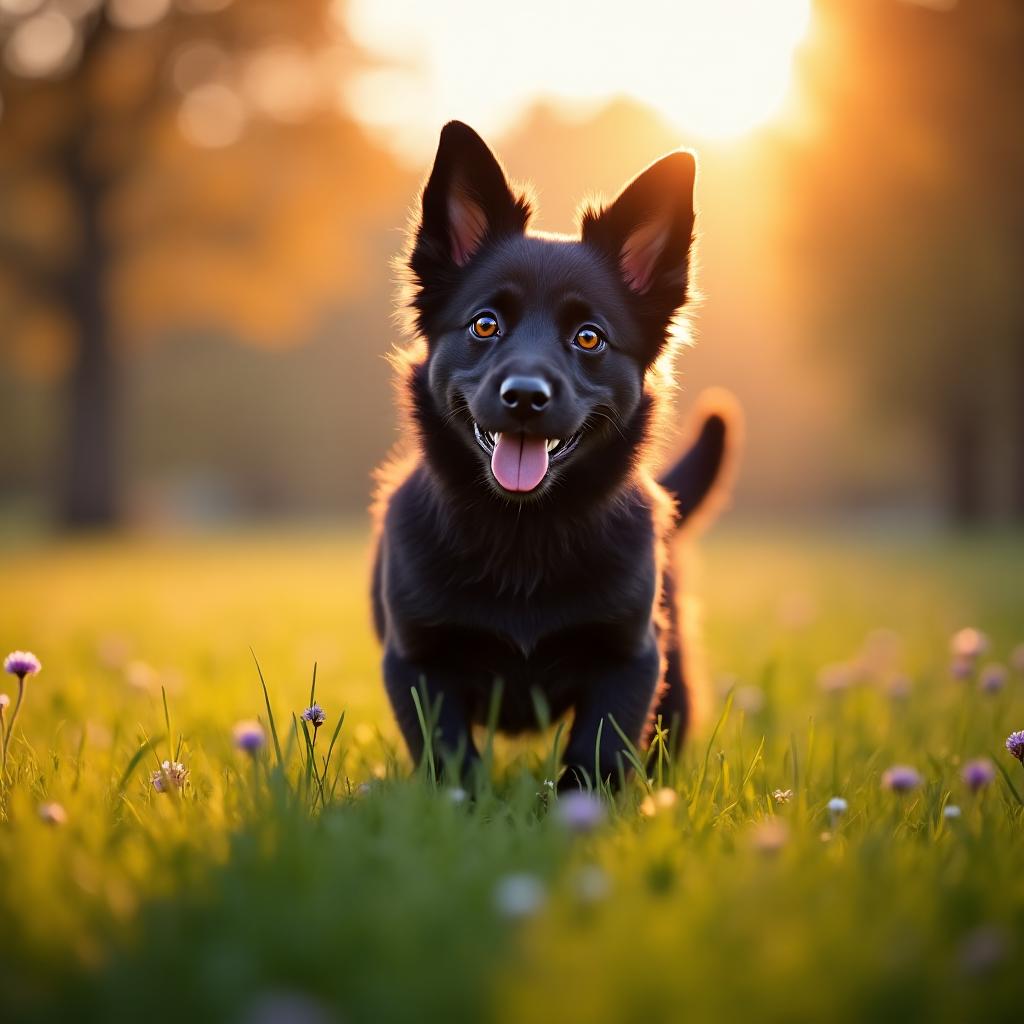
Compact and sturdy, the Schipperke measures on average 23 to 26 cm at the withers. Its weight ranges between 3 and 6 kg, correlated with dense musculature hidden under a double coat: a soft, tight undercoat protected by a short, straight, and shiny outer coat. Solid black is the only coat accepted by the standard, giving the « little devil » an almost mysterious silhouette.

Distinctive morphology
The Schipperke’s ears, small and erect, accentuate its lively expression. Its tail, traditionally docked in some countries, can also remain natural, forming a plume that highlights the dynamism of its movements. The eyes, generally dark, reflect keen intelligence and an ever-awake curiosity.
Temperament and behavior
An endearing little devil
Despite its sometimes fierce appearance, the Schipperke shows deep affection towards its own. Like a mischievous elf, it can trigger a real festival of capers to attract attention. Its temperament is often compared to that of a large dog trapped in a miniature body, which makes it surprising both for its energy and its courage.
Sociality and Vigilance
Sociable but wary, he makes an excellent natural guard dog, barking to alert at the slightest intrusion. However, early socialization is essential to temper his sometimes excessive reactions to strangers. Exposing the puppy to various situations – noises, encounters, vehicles – helps him develop a calm balance and a more flexible sense of obedience.
Training and Care
Exercise Needs
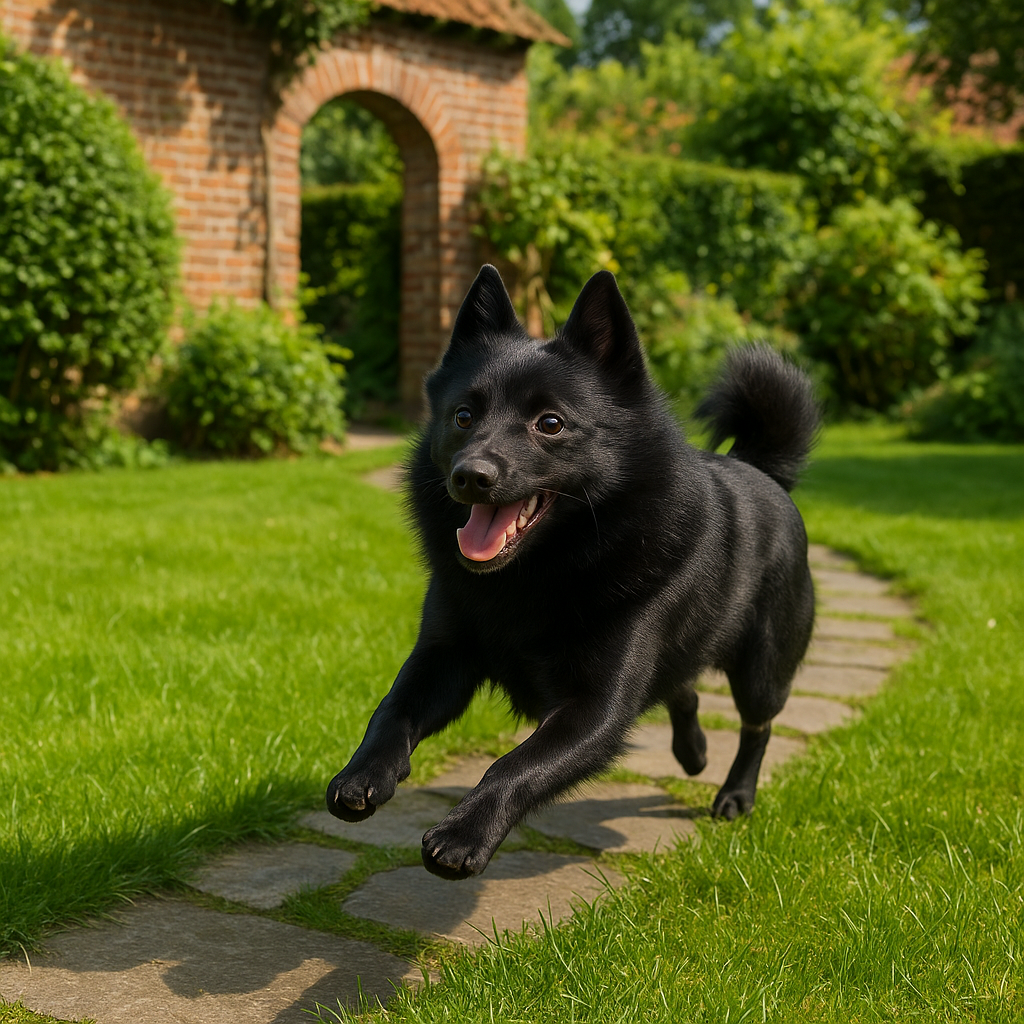
Do not be fooled by his small size: the Schipperke requires a solid amount of activity. Daily walks, play sessions, olfactory stimulations, or intelligence challenges are necessary to prevent boredom and destructive behaviors. Incorporating tracking or agility exercises allows him to make use of his legendary scenting ability and agility.
Grooming and Health
The Schipperke’s coat requires weekly brushing to remove dead hair and preserve the quality of the outer coat. No special care for the ears or folds is required, making grooming quite simple. Health-wise, this breed is robust: however, plan check-ups to prevent predispositions to the legendary Legg-Calvé-Perthes disease or dysplasia. A balanced diet, rich in quality proteins, and regular veterinary follow-up are generally sufficient to keep the Schipperke in great shape.
The Schipperke Today
In Family Life
His modest size facilitates apartment living, provided he can exercise regularly. He generally gets along well with curious and energetic children, as long as they learn to respect his spirited nature and need for independence. In active families, he will thrive with varied outings and moments of bonding indoors.
Shows and Competitions
Enthusiasts and breeders often present the Schipperke in canine competitions, where his presence and well-proportioned silhouette are highlighted. Judges then scrutinize the purity of the coat, the balance of ear carriage, and the general expression, all very characteristic of the breed. Far more than a simple appearance contest, these events also celebrate the agility, obedience, and dynamic temperament of these little pranksters.
Summary Table
| Criterion | Description |
|---|---|
| Origin | Flanders, 19th century |
| Size | 23–26 cm at the withers |
| Weight | 3–6 kg |
| Life Expectancy | 13–15 years |
| Character | Lively, vigilant, mischievous |
| Activity Needs | High (play, walks, stimulation) |
FAQ
- How old can a Schipperke get?
On average, 13 to 15 years, with good hygiene and appropriate veterinary care. - Is the Schipperke noisy?
It is a vigilant guard dog: it barks to signal danger, but early training can limit excesses. - Can it be left alone?
It tolerates short absences, but a human companion or an occupation toy is recommended to avoid boredom. - Is it easy to train?
Intelligent and willing, it responds well to positive methods, but some habits can be stubborn without gentle firmness. - Is it suitable for beginners?
Yes, provided time is invested in its exercise and socialization to channel its energy.