
The Thai Ridgeback, with its reversed dorsal line and proud bearing, intrigues as much as it fascinates. Originating from the rural provinces of Thailand, this dog has a unique character: independent, athletic, and extremely loyal. By diving into its world, one discovers a demanding but deeply endearing companion, capable of adapting to family life provided its physical and mental needs are met.
🦴 Millennial history: companion of Thai tribes, the Ridgeback is one of the few dogs in the world endowed with a unique genetic ridge.
🏃 Notable energy: a seasoned athlete, it requires 1 to 2 hours of daily exercise to avoid boredom and destructive behaviors.
🧠 Balanced temperament: at the crossroads of independence and affection, it forms strong bonds but remains reserved with strangers.
🛡️ Targeted care: short coat, minimal brushing, but special attention to the ridge and veterinary follow-up to prevent dermoid sinus.
Origins and history
In Thailand, the first traces of the Thai Ridgeback date back several centuries, when nomadic tribes used it to hunt wild boars and protect their homes. Like ancient Asiatics, these dogs passed down their “dorsal ridge” by heredity, an attribute that leaves no one indifferent. When Western explorers set foot in Southeast Asia, they were struck by the unique appearance of this animal and named it “Ridgeback,” recalling the inverted cortical collar that adorns its back.
Physical characteristics
The dorsal ridge: a unique feature
The distinctive trait of the Thai Ridgeback is this strip of hair that grows in the opposite direction on the back, forming a visible and well-marked ridge between the shoulder blades. The result of a very rare genetic mutation, it is both an emblem of the breed and a subject of fascination. Several folds can draw a more or less complex pattern, varying from one dog to another. This ridge does not require special care, but it is better to regularly check the underlying skin to avoid irritations and dirt accumulation.
Body and general appearance
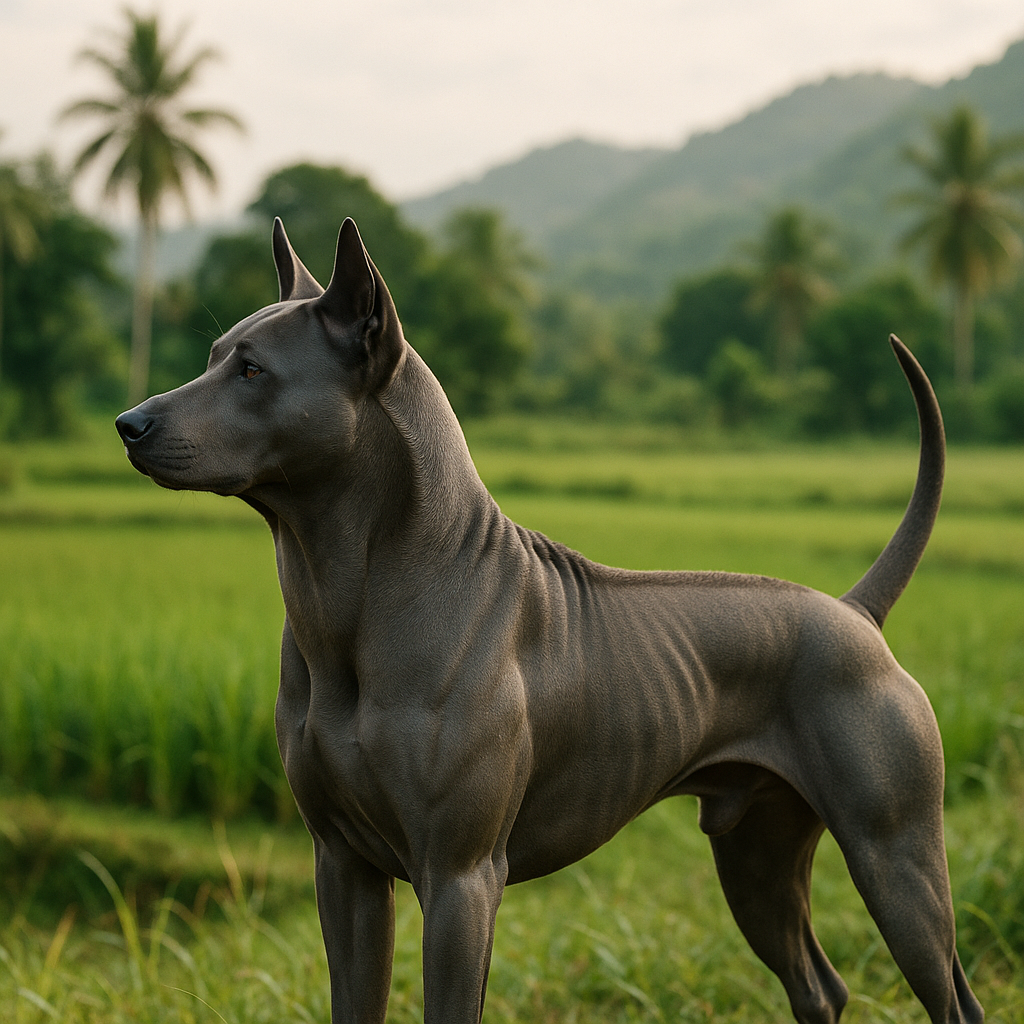
Beyond the ridge, the Thai Ridgeback displays an athletic, almost sculpted silhouette. Its well-proportioned body rests on strong and straight limbs, while the short coat highlights every muscle. Its triangular head, ending with erect and mobile ears, gives it an expression both alert and thoughtful.
| Characteristic | Female | Male |
|---|---|---|
| Height at the withers | 51–56 cm | 56–61 cm |
| Average weight | 16–23 kg | 23–30 kg |
| Coat colors | Fawn, black, blue, chocolate | Same shades |
Temperament and Behavior
The Thai Ridgeback combines independence and great sensitivity. One might think it is content with little, but in reality, it forms a subtle bond with its owner: it likes to be guided without being constantly solicited.
- Independent: it often thinks for itself and appreciates some solitude.
- Loyal: once adopted, it defends its family with astonishing determination.
- Reserved: wary of strangers, it requires early and careful socialization.
- Intelligent: capable of understanding quickly, but challenges its hierarchy if the approach is too harsh.
“The Ridgeback is a bit like a cat: it comes to you when it wants, and reminds you to behave if you go too far.” – Thai breeder
To maintain balance, consistency in training is paramount. Positive reinforcement, variety in exercises, and a clear framework will work wonders to channel this distinctive personality.
Living Conditions and Needs
Exercise and Mental Stimulation
Worthy of its hunting ancestors, the Thai Ridgeback demands intense activity and variety. Running, hiking, tracking games, or canine puzzles: it’s best to vary to avoid routine and demotivation.
Grooming and Care
Its short coat only requires weekly brushing to remove dead hair and stimulate the skin. However, the ridge deserves a small regular inspection to prevent dirt buildup between the tufts and anticipate any irritation.
Health and Life Expectancy
Robust, the Ridgeback lives on average 12 to 13 years. However, the breed can be prone to dermoid sinus, a congenital malformation sometimes located under the ridge. Early screening and, if necessary, surgical intervention prevent most complications.

Frequently Asked Questions
Is the Thai Ridgeback easy to train?
Its independent nature requires patient and consistent training. Positive reinforcement, a clear framework, and short but frequent sessions are the key to gaining its cooperation.
What diet is best for a healthy Ridgeback?
Choose a quality diet, rich in protein and adapted to its activity level. Split meals into two daily portions to optimize digestion.
Is living in an apartment feasible?
Possible if you meet its exercise needs and provide regular mental stimulation. However, a secure garden remains ideal for its well-being.