
With its noble bearing, shiny coat, and lively gaze, the Manchester Terrier exudes a rare elegance in the world of small dogs. Originally designed to hunt rats in British warehouses, it has retained this intrepid temperament while gaining entry into salons and canine beauty rings. Today appreciated for its intelligence and loyalty, it appeals to enthusiasts of pedigreed dogs seeking a companion who is both active and refined.
💎 Industrial origin: Born in 19th-century Manchester, this rat terrier was selected for its ability to flush out rodents with speed and agility.
⚡ Slender silhouette: Between 15 and 18 cm at the withers for 4–5 kg, its slender body and short coat create a visual effect of great liveliness.
🐾 Lively temperament: Curious and affectionate, it thrives thanks to stimulating games and agility courses.
🗒️ Easy maintenance: A simple brush stroke is enough, but watch the ears and teeth to avoid health issues.
History and Origin of the Manchester Terrier
Roots in Industrial England
At the beginning of the 19th century, the warehouses and slaughterhouses of Manchester were teeming with rats, true scourges for food stocks. Local workers and breeders then established a selection of terriers lighter and faster than their stockier counterparts. The result: a dog capable of slipping into holes, catching its prey, and bringing it back safely. This ratting vocation shaped its character and morphology, combining fine bone structure and nervous musculature.
Selection and the Modern Standard
Like other breeds, the Manchester Terrier saw its standard refined through dog shows. Judges valued the slender profile, wedge-shaped head, chiseled muzzle, and erect ears. Despite a decline in popularity around the turn of the 20th century, enthusiasts revived breeding, both in France and England. Today, two varieties coexist: the English Manchester Terrier and its American cousin, larger and sometimes with cropped ears, symbolizing another style of rat terrier.
| Characteristic | English | American |
|---|---|---|
| Height at withers | 15–18 cm | > 33 cm |
| Weight | 4–5 kg | 9–11 kg |
| Ear cropping | Natural | Sometimes cropped |
Physical Characteristics and Temperament
A slender physique and clean lines
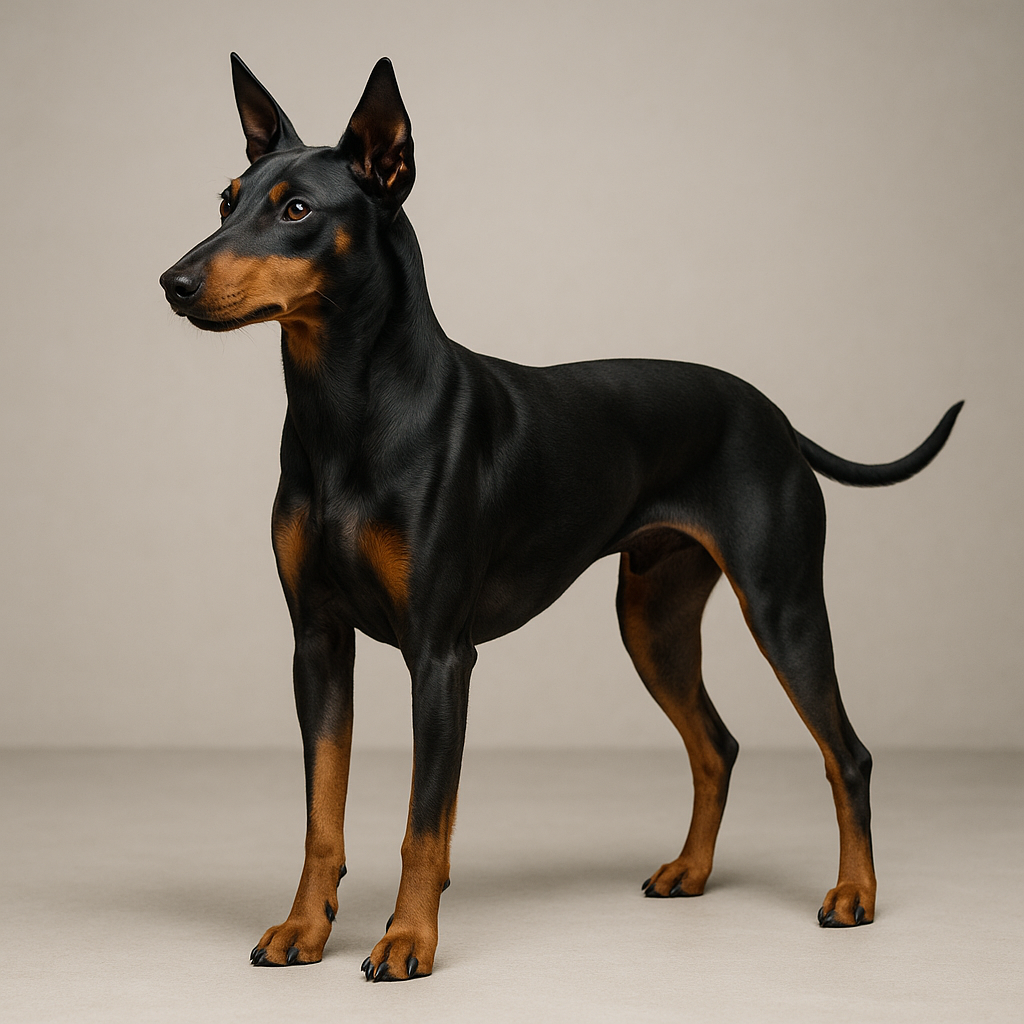
When you see it, you first notice its fine, almost triangular head, extended by a straight muzzle. The coat, always bicolor, comes in black and tan or chocolate and tan, with well-defined markings above the eyes, on the chest, and limbs. The hair is short, close, and glossy, without a dense undercoat, giving it a silky feel. In profile, its almost horizontal tail carriage emphasizes its alert demeanor, ready to leap.
A lively and endearing temperament
Don’t be fooled by its appearance as a fragile little dog: beneath this refined coat lies a determined temperament. The Manchester Terrier is loyal, sometimes a bit stubborn, but always eager for intellectual challenges. Tracking games, treat-dispensing toys, and agility courses are all activities where it excels. Socialization and gentle firmness are essential from a young age to channel its energy and prevent separation anxiety.
Training and life needs
Physical activity and mental stimulation
With at least 45 minutes to 1 hour of daily exercise, it remains calm once back home. Interactive play sessions, light canicross, or even fun obedience classes help strengthen your bond. Long brisk walks help it burn off excess energy without stressing its delicate joints.
Care and health
Its coat requires weekly brushing to remove dust and dead hair. Regularly check:
- Ears: no redness or odor.
- Teeth: regular brushing to prevent tartar buildup.
- Weight: an overweight Manchester loses vitality and develops joint pain.
| Veterinary check | Frequency |
|---|---|
| General check-up | Annual |
| Cardiac exam | Every 2 years |
| Patellar check | Recommended every 2 years |

The Manchester Terrier in family life
Compatibility with children
Sensitive to emotions, it loves the company of slightly older children who can respect its delicate size. Provided the games are calm and supervised, it proves to be a patient companion, sometimes ready to trigger a chase in the garden.
Relationship with other animals
Its hunting instinct may lead it to see small rodents and birds as prey. However, it coexists well with other dogs or socialized cats, especially if introductions are gradual and controlled.
Adopting a Manchester Terrier: practical advice
Choosing a responsible breeder
To avoid genetic issues, favor a breeder who is a member of a breed club and performs mandatory health tests. Ask to visit the breeding facility, meet the parents, and review their medical certificates.
Budget and maintenance costs
Beyond the purchase price (between €1,000 and €1,500), plan for:
- Quality food (€20–30/month).
- Annual veterinary care (€100–200 per visit).
- Appropriate accessories (toys, harness, bed).
FAQ
What is the average age of a Manchester Terrier?
Its life expectancy is around 14 to 16 years, provided it maintains a good level of activity and a balanced diet.
Should its nails be cut often?
Filing or clipping every 3 to 4 weeks is generally sufficient, depending on its lifestyle.
Is it noisy?
It is not particularly barky but will alert you in case of intrusion or unusual noise.
Can it live in an apartment?
Yes, if you provide enough daily exercise and stimulating playtime.