
Originating from the Magyar plains, the Pumi stands out with its dynamic silhouette, curly coat, and large erect ears that give it a unique expression. Used for centuries as a herding dog, it has now evolved into a versatile companion, capable of excelling in agility as well as family life. Beneath its mischievous appearance, it hides boundless energy and constant curiosity, two essential traits to understand this small herder with a big temperament.
In brief
🐾 Pumi: Hungarian herding dog, agile and alert, endowed with a wavy coat and very photogenic erect ears.
🔍 Origins at the heart of Hungary, the result of crossing the Puli with German shepherds in the 17th century.
⚖️ Medium size: 38–47 cm, weight around 8–15 kg, average lifespan between 12 and 14 years.
🎓 Lively, intelligent, and sometimes stubborn character: it requires mental stimulation and regular exercise.
Origins and history of the Pumi
From the Magyar plains to today
Over the course of the great transhumance of herds along the Silk Road, Hungarian shepherds selected dogs capable of herding sheep and cattle schematically. 17th-century archives already mention an agile dog, medium-short-legged, with wavy fur. Like the Puli, its coat texture allowed it to resist moisture, but farmers wanted a dog with higher ears to better perceive distant orders and alert the herd.
Recognition and standardization
The International Cynological Federation officially recognized the Pumi standard in 1924, highlighting its elegant head, straight back, and fringes of hair under the belly. In Hungary, it remains a symbol of national heritage, while internationally it has gradually won the hearts of dog sport enthusiasts. Today, it can be found both in agility rings and alongside families looking for a dog with character.
Morphology and characteristics
Silhouette and proportions
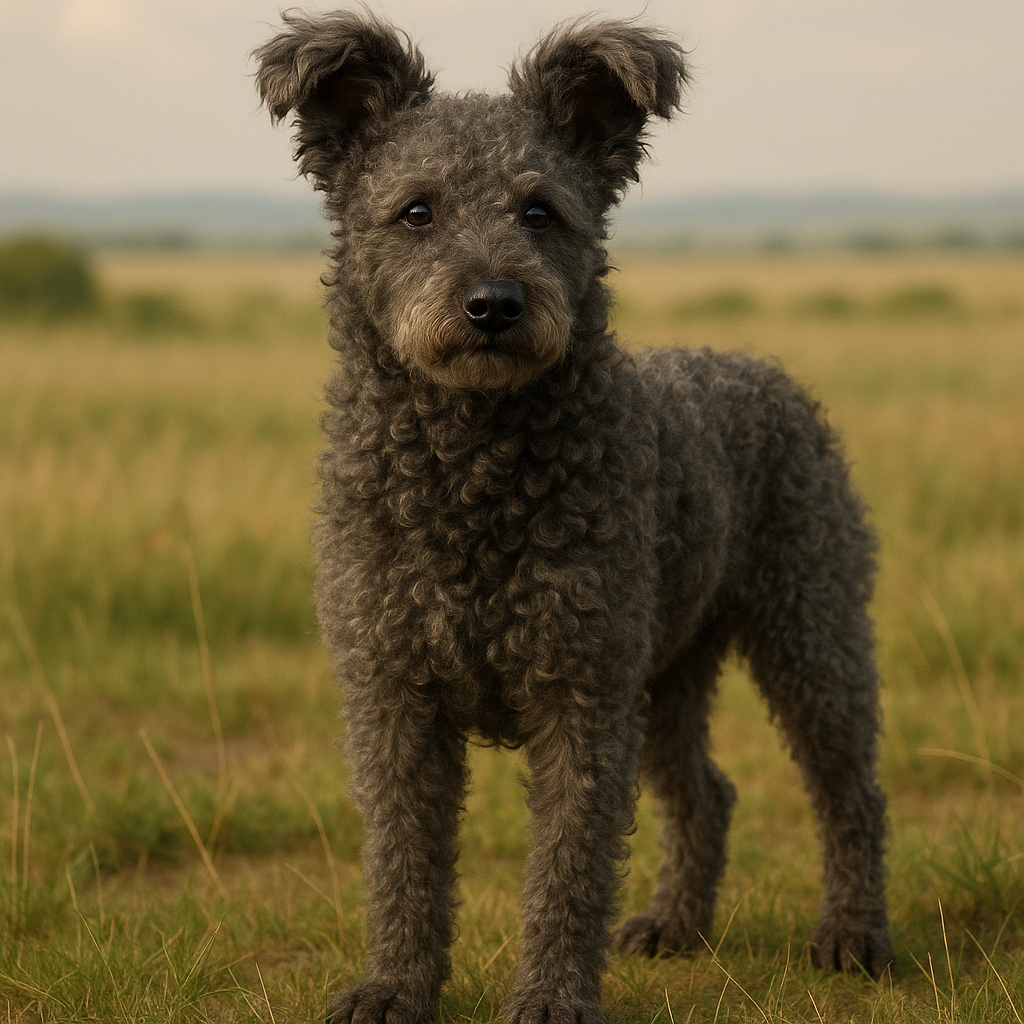
Neither too massive nor slender, the Pumi presents a balance between power and lightness. Males range between 42 and 47 cm at the withers; females, 38 to 43 cm. Its fine bone structure pairs with a medium-long, dense coat forming tight waves that give it an almost “punk” style.
Erect ears and alert expression
The most striking feature is its ears, which naturally tilt forward, forming a very distinct V. They play a role in communication: at the slightest noise, they move, reflecting curiosity or alertness. Not to mention that they contribute to the Pumi’s inimitable look, which always seems to be in full questioning.
| Characteristic | Detail |
|---|---|
| Height at withers | 38–47 cm |
| Weight | 8–15 kg |
| Coat | Wavy, dense, waterproof |
| Colors | Gray, black, fawn, merle |
| Life expectancy | 12–14 years |
Temperament and Aptitude
An Energetic and Playful Companion
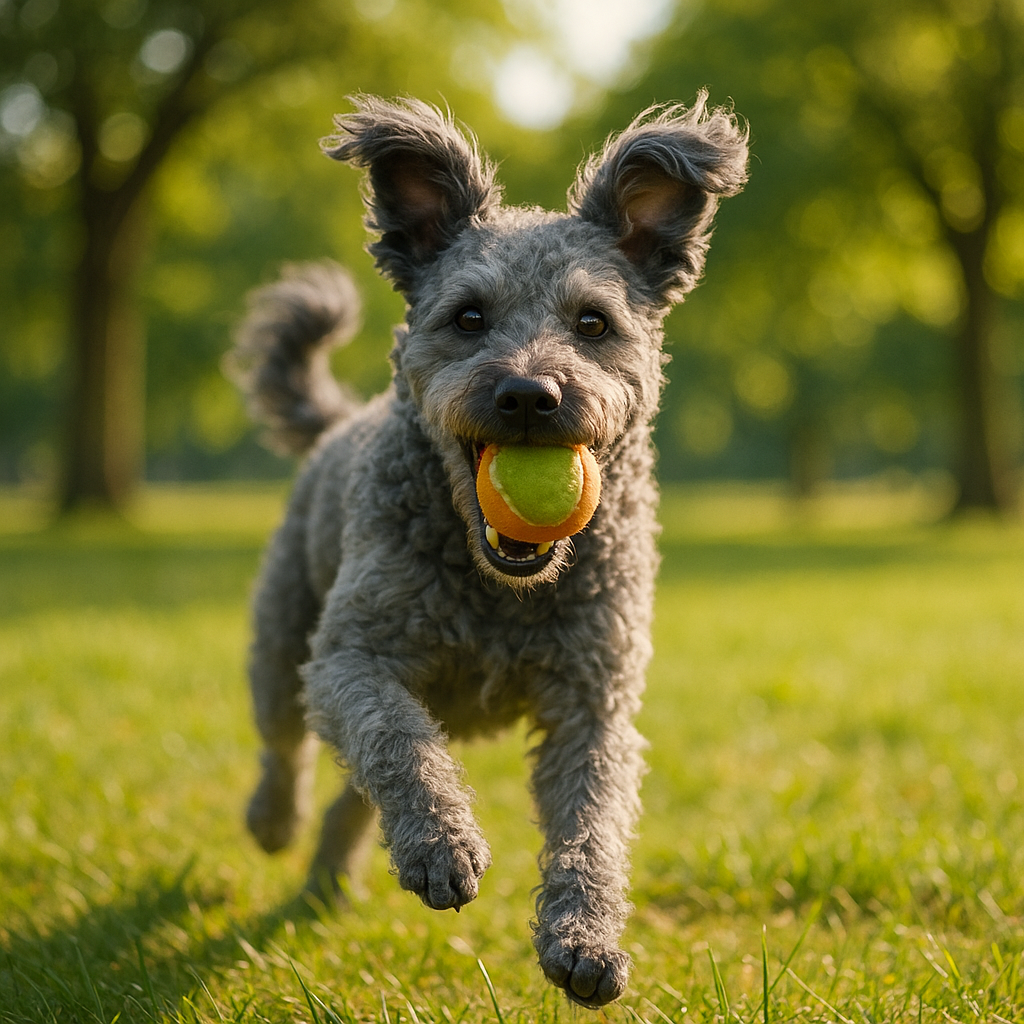
Introducing yourself to the daily life of a Pumi means accepting a daily dose of vitality. Its natural tendency to leap, sniff every corner, and interact with its environment makes it hard to ignore. This liveliness, often filmed on social networks, reveals a dog always ready to turn a simple walk into a true playful adventure.
Intelligence and Creative Training
The Pumi stands out for its remarkable learning ability. Faced with commands, it enjoys as much solving an agility course as focusing on a game of hide-and-seek. Classic training, acrobatic tricks, or object searches are all ways to channel its alert mind. Neglecting this stimulation results in barking for no reason or escapes at the slightest opportunity.
Breeding and Care
Physical Activity and Health
To stay balanced, a Pumi requires at least 1 hour of daily exercise: jogging, agility courses, long walks in the forest. Naturally robust, it does not fear severe cold thanks to its undercoat, but a diet adapted to its fast metabolism is essential to prevent overweight and digestive disorders.
Grooming and Maintenance
Unlike a classic long-haired dog, the Pumi does not require regular clipping. Weekly brushing to remove knots and control cleanliness is sufficient. Watch out for the fringes under the paws that can accumulate debris and mud: a little massage with lukewarm water, thorough drying, and the job is done.
The Pumi in Daily Life
- Suitable for active households: provide space and playtime.
- Early socialization essential: tolerance towards children and other animals.
- Be vigilant about garden fencing: adventurous scent guaranteed.
- Participation in canine activities: agility, obedience, dog dance.
FAQ
Is the Pumi suitable for apartment living?
Theoretically yes, if you compensate for its exercise needs. It will require several outings per day and mental stimulation sessions to avoid boredom and its consequences (barking, digging).
How often should it be groomed?
Weekly brushing is sufficient to avoid knots and maintain coat cleanliness; remember to regularly check the fringes on the paws and ensure complete drying after wet walks.
Can it live with a cat?
Yes, provided there is progressive socialization from a young age. The Pumi, naturally curious, enjoys sharing the home with other four-legged companions.
What health problems should be monitored?
Generally robust, the Pumi may have skin or eye sensitivities. Annual veterinary visits and a balanced diet will reduce these risks.