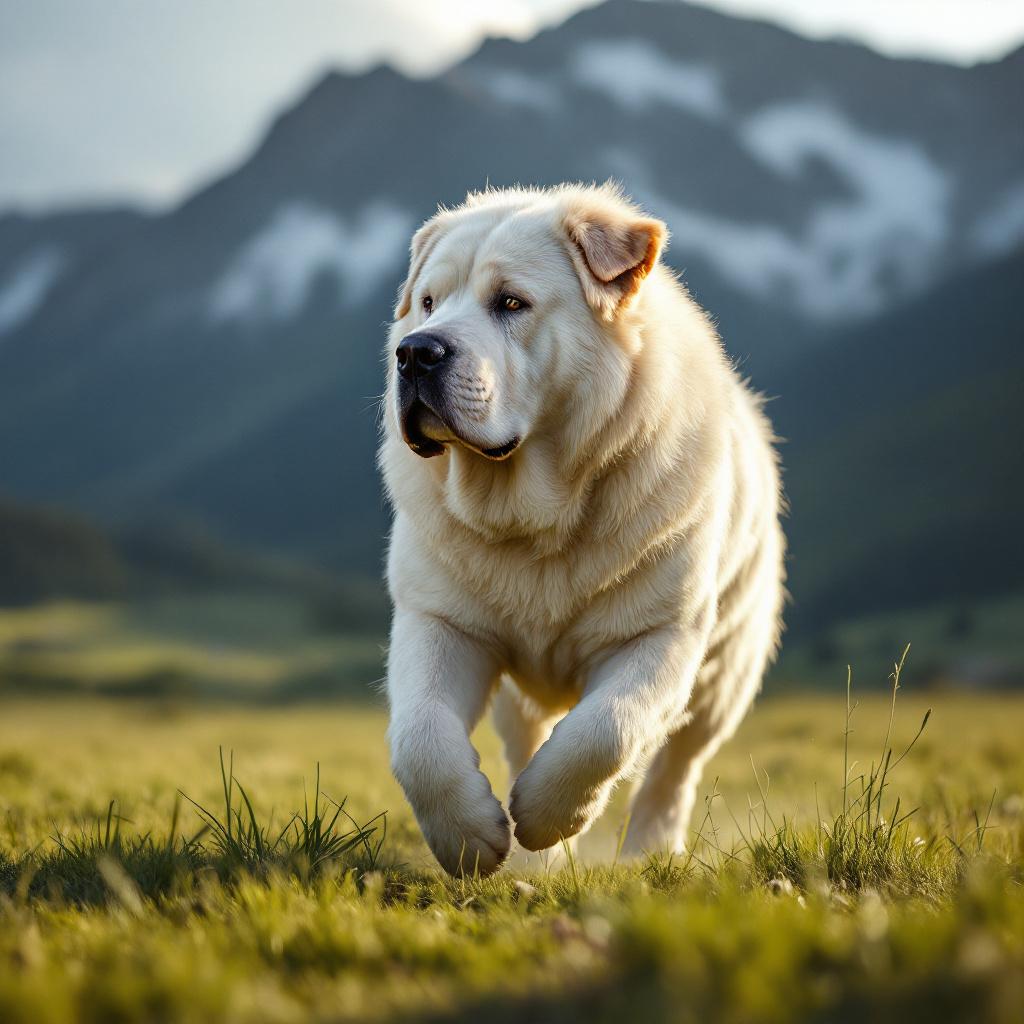
The Pyrenean Mastiff, better known as the Mastín Español, stands out for its monumental build and gentle gaze. Raised over the centuries in the rugged valleys of the Pyrenees, it has watched over herds against predators and earned the trust of shepherds thanks to unwavering loyalty. Beyond its impressive physique, this dog reveals a surprisingly balanced character, combining courage, patience, and sensitivity. Whether you are a fan of alpine hiking or simply looking for a protective companion, the Pyrenean Mastiff has much to surprise you. In this dossier, we explore its history, morphology, temperament, needs, and the keys to a successful adoption.
🐶 Spanish origin: this mastiff takes root in the Pyrenees, where it ensured the protection of herds against wolves and bears.
🏔️ Imposing size: between 65 and 80 cm at the withers, weighing up to 75 kg, its stature commands respect.
🛡️ Vigilant guardian: a subtle balance between natural calm and keen sense of watchfulness, it defends its home without unnecessary nervousness.
Origins and History
Pyrenean Roots
In the Middle Ages, shepherds from central-northern Spain selected robust dogs to accompany herds across passes and peaks. The Pyrenean Mastiff was born from this necessity: increased endurance, solid bone structure, and serene temperament. Its ancestors, often crossed with neighboring mountain dogs, forged its unique profile, capable of thriving under harsh climates, between icy winds and scorching summers.
Transmission to Modern Breeders
The mechanization of farming in the 20th century nearly condemned the breed to oblivion, before a small group of enthusiasts revived the selection in the 1970s. Thanks to them, the Pyrenean Mastiff obtained official recognition and preserved its pure lines, while gradually adapting to the role of companion and guard dog.
Morphology and Physical Characteristics
Size and Weight
With a withers height measured between 65 cm (females) and 80 cm (males), this dog impresses with its wingspan. The weight generally ranges from 60 to 75 kg, depending on sex and lineage. Such a size allows it to impose its presence while offering remarkable stability on rough terrain.
Coat and Particularities
The coat, dense and slightly wavy, combines shades of off-white and tawny or charcoal markings. This double layer protects against cold and brambles. The skull is broad, the muzzle square, and the dark eyes reveal a gentle, almost meditative expression.

Temperament and Sociability
Faithful Guardian
The reputation of the Pyrenean Mastiff as a protector is well deserved. Without gratuitous aggression, he analyzes each situation before intervening. His instinct, inherited from his shepherd ancestors, detects the slightest danger, alerting his owner with a discreet growl or a tense posture.
Relationship with Family and Other Animals
In a close circle, he is tender and attentive, especially towards children. Socialized early, he accepts living with other dogs and even cats, provided everyone respects each other’s space. His patience often earns him the nickname of the domestic “teddy bear.”
Needs and Care
Feeding
To support his muscular mass, this giant requires a ration rich in proteins and balanced in fats. Premium kibble or a homemade diet approved by a veterinarian will help prevent obesity and joint problems.
Exercise and Living Space
Despite his stoic appearance, he retains a strong taste for moderate exercise. Two to three daily walks of half an hour, enhanced with fetch games, are enough to maintain his mental and physical balance. A fenced garden remains ideal for him to stretch his legs freely.
Care and Grooming
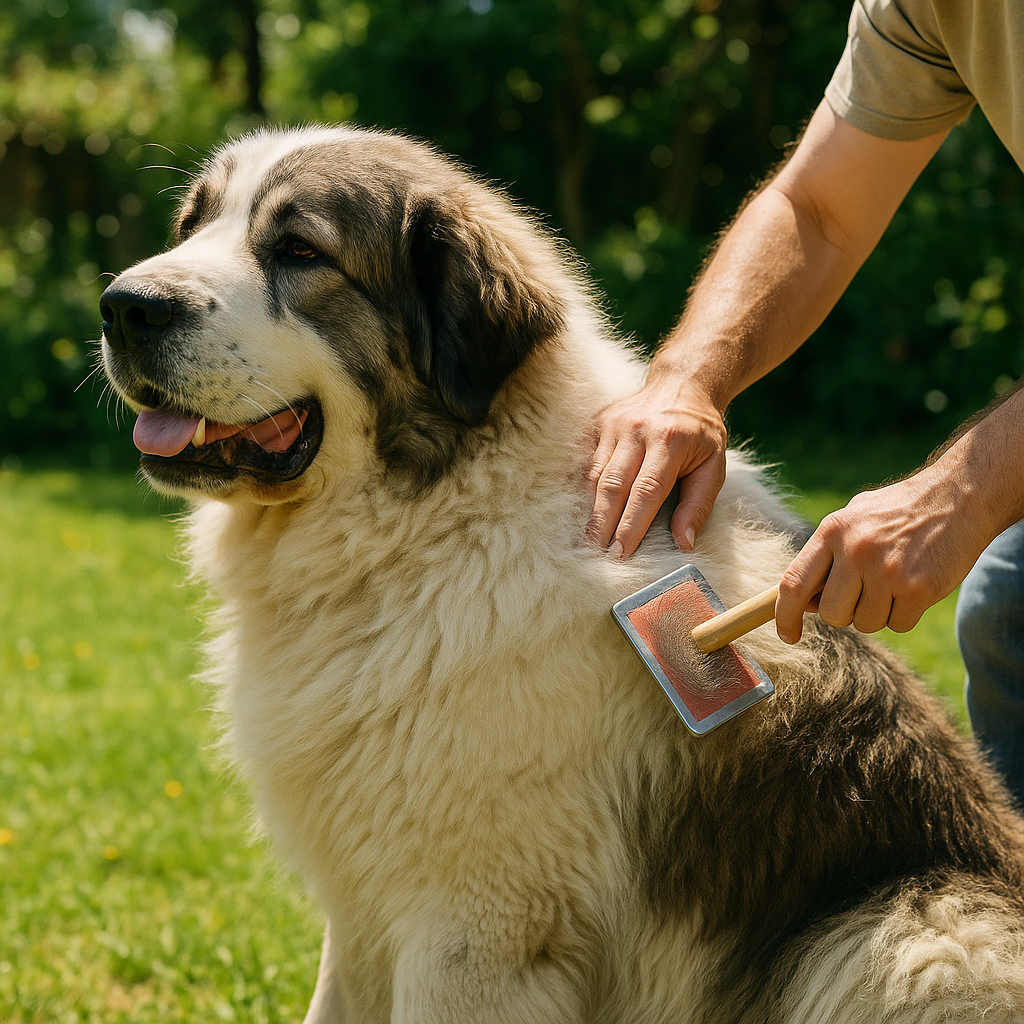
Weekly brushing limits hair loss and prevents the formation of knots in the undercoat. Shedding periods, in spring and autumn, require more sustained, even daily, maintenance to effectively remove dead hair.
Health and Longevity
Robust, the Pyrenean Mastiff has an average life expectancy of 10 to 12 years. However, certain conditions require increased vigilance:
| Health Issue | Frequency | Preventive Measures |
|---|---|---|
| Hip Dysplasia | High | Screening X-rays and maintaining an ideal weight |
| Gastric Torsion | Moderate | Fractioned meals and rest before exercise |
| Joint Sprains | Variable | Regular exercise and soft surfaces for running |
Adoption and Cost
Choosing a Serious Breeder
- Examine the health history of the breeding dogs.
- Visit the facilities and observe the behavior of the adults.
- Favor written guarantees (contract, veterinary certificates).
Budget and Investment
The price of a puppy ranges between €1,200 and €2,500, depending on the lineage and prestige of the breeding. Added to this are equipment (kennel, harness, bowl), food, and veterinary fees (vaccines, sterilization) which can represent several hundred euros annually.
Final Tips for Welcoming a Pyrenean Mastiff
Integrating this gentle giant into your home requires early socialization and patient learning of the rules of life. His strength demands firm and caring guidance from a young age. Finally, keep in mind that his loyalty is maintained through respect: a consistent and attentive owner will gain a companion as protective as he is affectionate.
FAQ
What is the character of the Pyrenean Mastiff?
The Pyrenean Mastiff combines a gentle nature with constant vigilance. He is affectionate with his family while remaining alert to external threats.
What living space is suitable for this dog?
A spacious and fenced garden allows it to stretch its legs freely. In an apartment, frequent and extended outings are essential.
How to prevent common health problems?
Maintain its joints by controlling weight, split meals to avoid gastric torsion, and carry out regular veterinary check-ups.