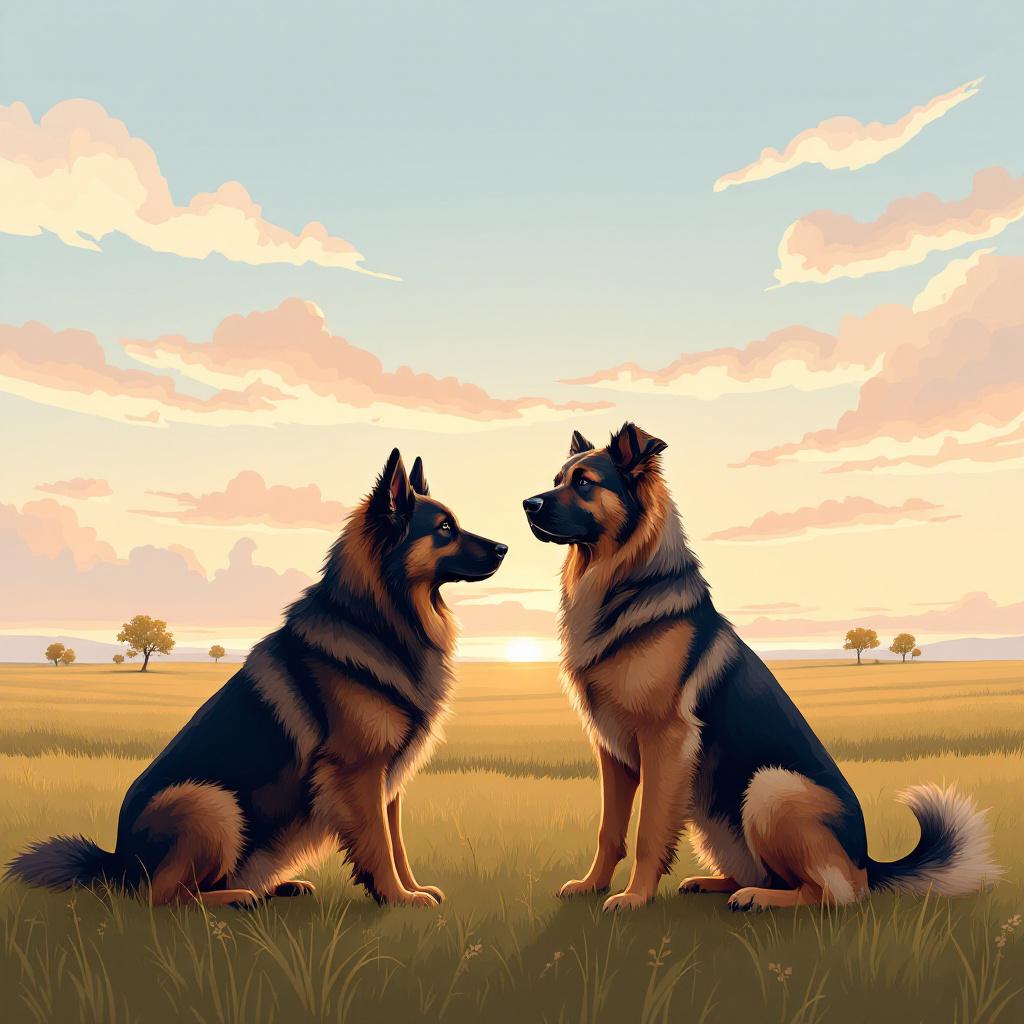
For over a century, dog lovers have debated: does the Old German Shepherd, this “ancient German shepherd,” possess a more marked canine wisdom than its modern counterpart, shaped by standards of beauty and performance? A dive into the origins, cognitive abilities, and bone structure to distinguish these two icons of the canine world.
🐾 Distinct origins: the Old German carries a more utilitarian, rustic past, while the modern Shepherd reflects a selection focused on show and sport.
🧠 Cognitive abilities: intuitive and sometimes stubborn, the older breed is not necessarily less intelligent, but it responds differently to stimuli compared to the contemporary version.
💪 Physical robustness: stocky body, massive bone structure on one side; sleek conformation, refined musculature on the other; each lineage shines according to the effort required.
Origins and Evolution
At the turn of the 19th century, the German Shepherd was not yet a single standard: it was a collection of peasant lines selected for guarding and herding livestock. Around 1899, the creation of the German Shepherd Club unified these lines around one standard. The Old German Shepherd today groups specimens prior to this standardization, preserved by enthusiasts for their rusticity and versatility.
Unlike modern breeding that emphasized silhouette and piercing gaze, the old lines primarily valued the primary function: work in agricultural environments, protective instinct, and endurance under harsh conditions. This historical divergence largely explains the differences in character and morphology observed today.
The Old German Shepherd
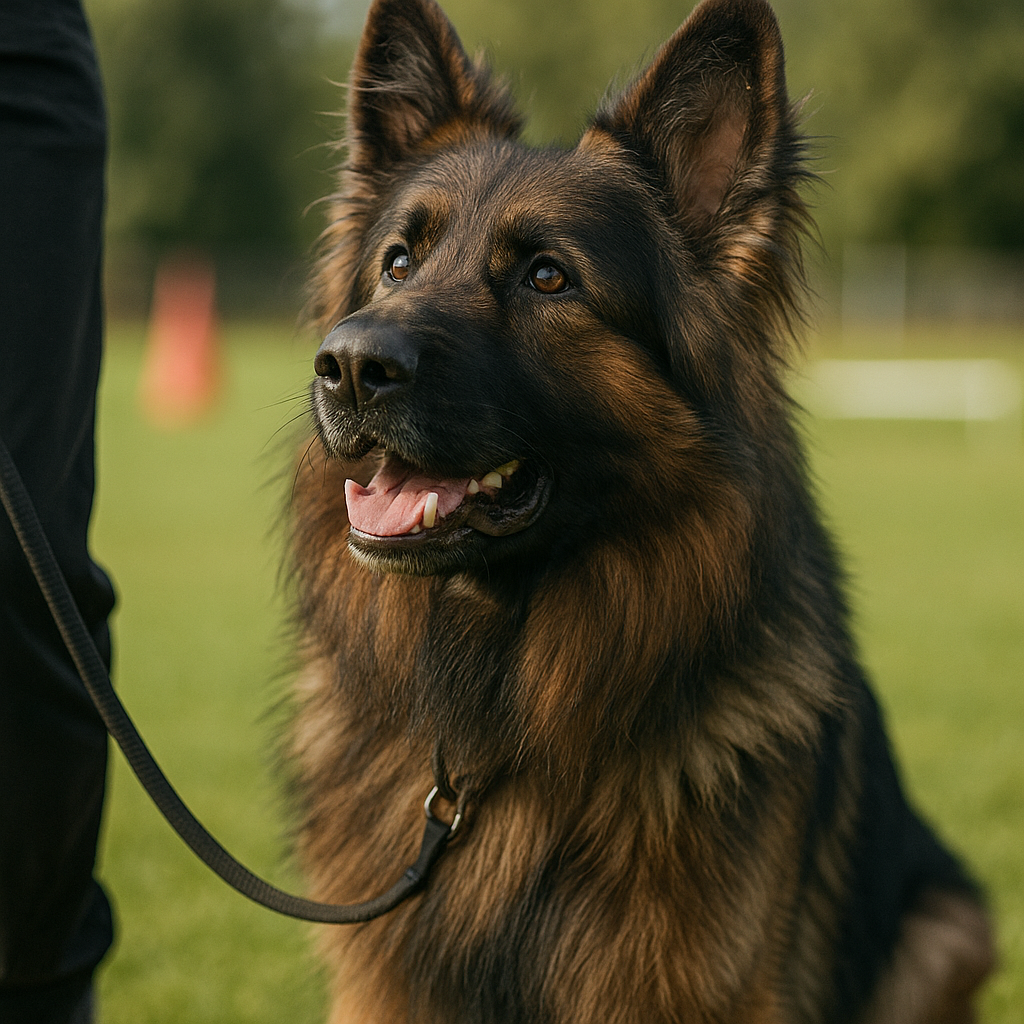
Stockier, endowed with a broad chest and sometimes longer coat, the Old German often lives in family breeding environments where selection is based on raw working ability. It may seem less obedient in salon training, but it displays superior resilience against bad weather and long watches.
The Rise of the Modern German Shepherd
Conversely, the contemporary shepherd has seen its physique refined to appeal to judges in shows. Buyers seek an aesthetic standard more than an unbreakable robustness. However, studies by the American Kennel Club show that well-managed selection also monitors joint health and genetic mutation of certain pathologies.
Compared Intelligence
Canine intelligence is not limited to the number of tricks learned but encompasses the capacity for adaptation, working memory, and problem-solving. Two main axes dominate evaluation: guided obedience and intuition in non-directed situations.
Intuition and Learning
Owners of Old German Shepherds frequently mention a kind of “sixth sense”: their dog anticipates the movements of the herd or detects body signals even before a command is given. Conversely, the modern Shepherd excels in codified exercises, chaining orders without hesitation, like a metronome under pressure.
Adaptability in the workplace
When placing an Altdeutscher in an unfamiliar environment, it often takes time to analyze every detail before acting. This pragmatism can be mistaken for slowness, whereas the standard Shepherd charges ahead headlong, sometimes at the risk of making mistakes. In a study published by the Munich veterinary faculty, these nuances of adaptability determine the choice of dog according to the intended use.
Robustness and health
Beyond character, it is often physical resilience that distinguishes these two lineages. The skeleton, muscle mass, and bone density determine the dog’s active longevity.
Physical structure and musculature
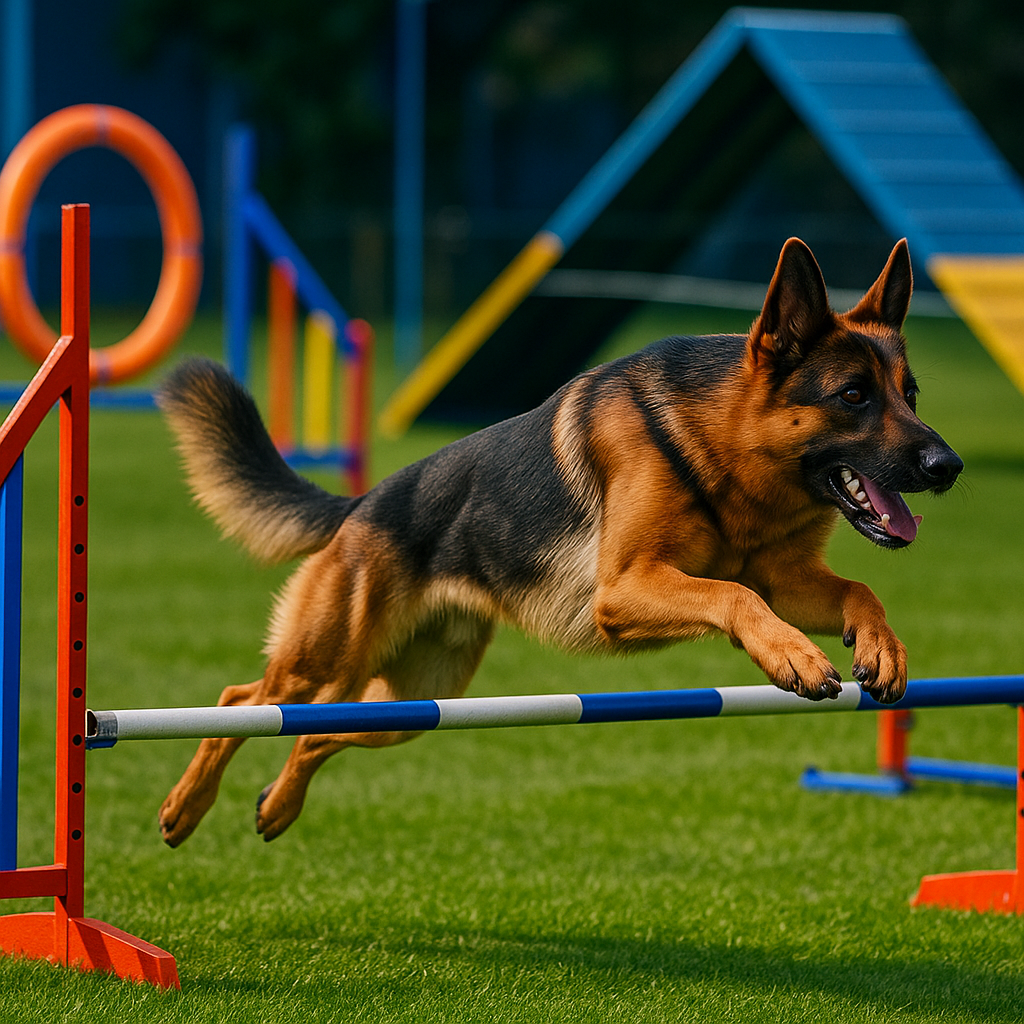
The Altdeutscher’s conformation favors a more closed joint angle and marked bone thickness. In practice, this translates to a dog less prone to elbow or hip dislocations, but sometimes described as “less fast.” The modern Shepherd, on the other hand, relies on straighter lines and balanced limbs: as a result, it displays a more amplified gallop and spectacular jumps in agility.
Genetic predispositions
HOFA (Hereditary Orthopedic Foundation for Animals) reports a hip dysplasia rate close to 15% in the standard Shepherd, compared to about 10% in the old shepherd. However, this slight advantage does not exempt the serious breeder from radiographic tests and biomarkers, regardless of the variety used.
| Criterion | Altdeutscher Schäferhund | Modern German Shepherd |
|---|---|---|
| Height at withers | 57–63 cm | 60–65 cm |
| Average weight | 28–34 kg | 30–40 kg |
| Life expectancy | 11–13 years | 9–12 years |
| Coat type | Double, sometimes long | Short to medium-length |
| Climate resistance | ++ | + |
Temperament and socialization
Between vigilance and loyalty, these dogs share a protective instinct. Yet, a few details distinguish one from the other.
- Pack sense: the Altdeutscher lives almost permanently in a group, it adapts poorly to solitude.
- Socialization: sociable with children, the modern Shepherd often appears more easily relaxed in an urban household.
- Reactivity: a sudden noise triggers a more marked guarding reflex in the old shepherd.
Training and performance
“For an effective pair, I choose according to the mission: for herd surveillance, I aim for the Altdeutscher; for agility competitions, I lean towards the modern Shepherd.” — Émilie Laurent, experienced trainer.
In an obstacle course, it is the compactness of the modern Shepherd that gives it a speed advantage. The Altdeutscher, with more deliberation, executes a reliable movement, sometimes slower, emphasizing precision over raw speed. The choice really depends on the goal: endurance for hunting or sprint on a timed circuit.
Verdict: Who wins?
If we prioritize physical resilience and a primary protective instinct, the Altdeutscher Schäferhund maintains a clear advantage. It withstands prolonged effort and adapts without flinching to extreme conditions. On the other hand, for tasks requiring quick execution and good socialization skills in an urban environment, the modern German Shepherd unquestionably becomes a star of agility and police work.
Ultimately, neither can claim absolute superiority: the intended use and the owner’s personality determine the “winner.” In the hands of an alpine hiking enthusiast, the rustic dog will find its full potential. In a ring or on a police field, the refined silhouette and obedience of the modern shepherd will make the difference.
FAQ
What is the average training duration for each variety?
Generally, the modern Shepherd learns basic commands in 4 to 6 weeks, while the more analytical Altdeutscher may require 6 to 8 weeks to master the same routine.
What are the comparative veterinary costs?
The lower rate of dysplasia in the Altdeutscher can reduce long-term orthopedic costs, but each lineage requires annual monitoring with X-rays and ultrasounds to preserve joint health.
Can these two lineages be crossed?
Yes, some breeders offer crossbreeds to combine robustness with urban adaptability. However, inbreeding must be monitored and genetic testing continued.