
When an Altdeutscher Schäferhund puppy is rescued after experiencing abandonment, one might fear a temperament irreparably marked by fear. Yet, behind those first days of uncertainty lies the potential of an outstanding working companion. This article traces every step of his rebirth: from discovering trust to the specialized missions he now accomplishes.
🐶 Initial Rescue: taken from a distressing situation, the puppy benefits from an initial behavioral assessment and a secure environment to overcome his anxieties.
🎓 Targeted Socialization: through gradual encounters and trust-building exercises, the foundations of a solid human-dog relationship are laid.
💼 Personalized Training: thanks to positive methods, the young Altdeutscher learns various tasks, from object retrieval to working in specific environments.
🚀 Final Versatility: having become a working dog, he excels in security, scent detection, or assistance, demonstrating that any difficult past can be transformed into strength.
The Roots of Rescue and Rehabilitation
At first contact, the Altdeutscher Schäferhund often displays palpable tension: ears back, stiff posture. A gentle move to a calm space, free of aggressive stimuli, allows him to understand he is no longer in danger. In this phase called the «observation period», his appetite, sleep, and first signs of learning trust are monitored.
A canine behavior professional writes a detailed report: medical history, reactions to loud noises, social interactions. This individual file becomes the reference throughout the rehabilitation process.
Initial Assessment and Gradual Care
The puppy is placed in a confined area with familiar objects (blanket, toy). This secure bubble limits stress. Each 10 to 15-minute session allows observation of behavioral evolution: approach, curiosity, or withdrawal. The first encouragements come through voice, never forcing contact.
The Education and Socialization Phase
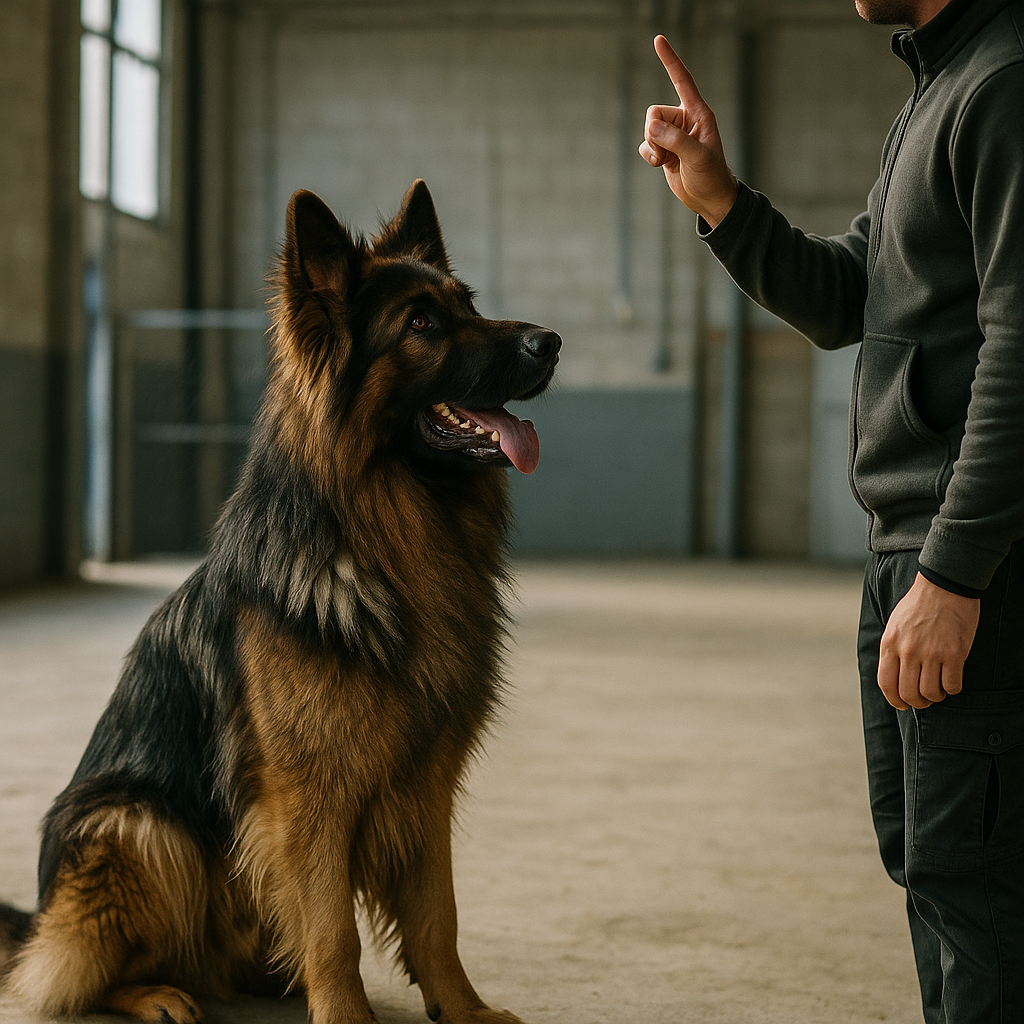
After the adaptation phase, the goal becomes to broaden his world. Other dogs, urban stimuli (cars, scooters), and different surfaces (grass, gravel) are gradually introduced. Thus, the puppy learns to remain in control of himself, even in an unpredictable environment.
The Trainer’s Role in Psychological Balance
With gentleness and consistency, the trainer uses appropriate rewards: petting, treats, or toys. Positive reinforcement based on stimulus-reward association facilitates memorization and establishes a pleasant working dynamic for the animal.
Learning Techniques and Key Exercises
- Sit/Stay Calm: reinforcement of motor inhibition.
- Recall: an essential safety exercise outdoors.
- Object Retrieval: preparation for search and detection missions.
Advanced Training and Operational Versatility
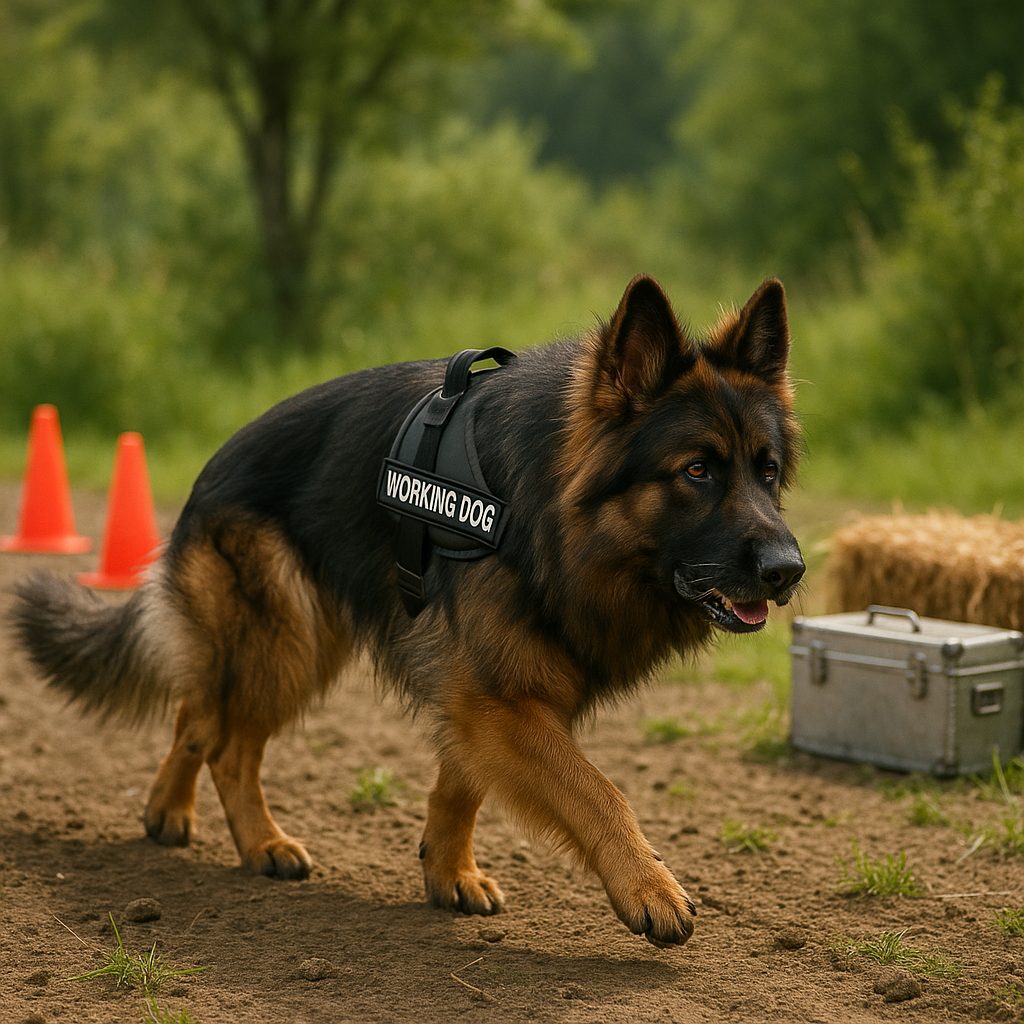
Once the basic commands are mastered, specialized training begins. For example, scent detection requires a structured protocol: learning the olfactory target, discriminating between multiple scents, working in real situations. This meticulous work transforms the Altdeutscher into an expert capable of demanding missions.
Missions and Responsibilities of the Working Dog
Depending on its temperament and abilities, the Altdeutscher Shepherd Dog can specialize in:
- Security & surveillance (patrol, passive defense).
- Assistance to People (guiding, emergency alert).
- Search and rescue (victim search, avalanche, ruins).
Each mission is supported by a program to maintain physical and mental condition, ensuring performance and well-being.
Table of Key Stages
| Phase | Estimated Duration | Main Objective |
|---|---|---|
| Admission | 2–3 weeks | Emotional stabilization |
| Socialization | 1–2 months | Trust & obedience |
| Basic training | 2–3 months | Essential commands |
| Specialization | 3–6 months | Professional skill |
In Brief
🐾 From trauma to strong bond: the initial behavioral assessment allows diagnosing fears and establishing a reassuring framework.
🎯 Positive methods: encouragement and rewards promote lasting learning, adapted to the Altdeutscher.
🏅 Professional specialization: detection, security or assistance, each task highlights the natural abilities of this breed.
🤝 Human-dog partnership: mutual trust results from progressive and demanding support.
Frequently Asked Questions
- What is the average duration of a rehabilitation program?
- Generally, it takes 6 to 12 months to bring an abandoned puppy to the status of a working dog, depending on its past and abilities.
- Can this path be adapted to an adult dog recovered late?
- Yes, but adults sometimes need more time to overcome old fears. The approach remains similar, with more patience.
- Which breeds are best suited for this type of training?
- Shepherd and intelligent molosser breeds (Malinois, German Shepherd, Rottweiler) have similar aptitudes.
- Does the training require specific equipment?
- A lightweight pulling harness, search toys, and an auditory support (clicker) are often recommended.