
| Key Points | Details to Remember |
|---|---|
| 🐶 Definition | Understand the BARF diet and its origins |
| 🍗 Main Benefits | Optimize joint and digestive health |
| ⚖️ Nutritional Balance | Combine proteins, bones, and vegetables |
| 📅 Weekly Menu | Offer varied meals over 7 days |
| 🔍 Adjustments | Monitor weight, appetite, and general condition |
| ⚠️ Common Mistakes | Avoid imbalances in calcium or proteins |
Switching to BARF means choosing to feed your dog like its ancestors, with raw meat, bones, vegetables, and targeted supplements. More than just a trend, this raw diet requires strict balance to meet the physiological needs of your adult dog. Here, we explore in detail a typical menu, day by day, while decoding the main principles of this nutritional approach. You will also find tips to adjust portions based on activity, size, and individual tolerances.
Understanding the BARF Diet
The acronym BARF stands for “Biologically Appropriate Raw Food,” meaning a raw diet adapted to the biology of the carnivore. The idea, popularized by Australian veterinarian Dr. Ian Billinghurst, is based on the fact that our canine companions remain primarily predators capable of digesting whole carcasses (muscles, bones, organs).
Unlike industrial food, often rich in carbohydrates and additives, the BARF diet aims to resemble what a dog would naturally find in the wild. However, this “back to basics” approach cannot be improvised: protein, mineral, and vitamin intakes must be meticulously balanced to avoid deficiencies or overdoses.
In practice, it combines:
- Animal proteins (lean meats, offal),
- Meaty bones (brains, poultry necks, chicken wings),
- Vegetables and fruits blended for fiber and antioxidants,
- Supplements targeted according to age, activity, or health status.
Balancing the Typical Menu
The goal is to compose each meal with the right ratio: about 70% meat and bones, 15% offal, and 15% vegetables. This breakdown varies slightly depending on the individual: a very active dog will require more protein, a senior more quality fats.
Animal Proteins
Choose lean meats, such as beef or chicken, favoring variety to limit allergy risks. Alternate muscle and offal (liver, heart, kidneys) to cover the spectrum of vitamins A, D, and B. Generally, about 5% offal is counted, half of which should be liver.
Meaty Bones and Minerals
Meaty bones provide calcium and phosphorus at an ideal ratio of 1.2:1. Some weeks, replace hard bones (duck necks, rabbit backs) with fine bone powder if your dog has difficulty chewing.
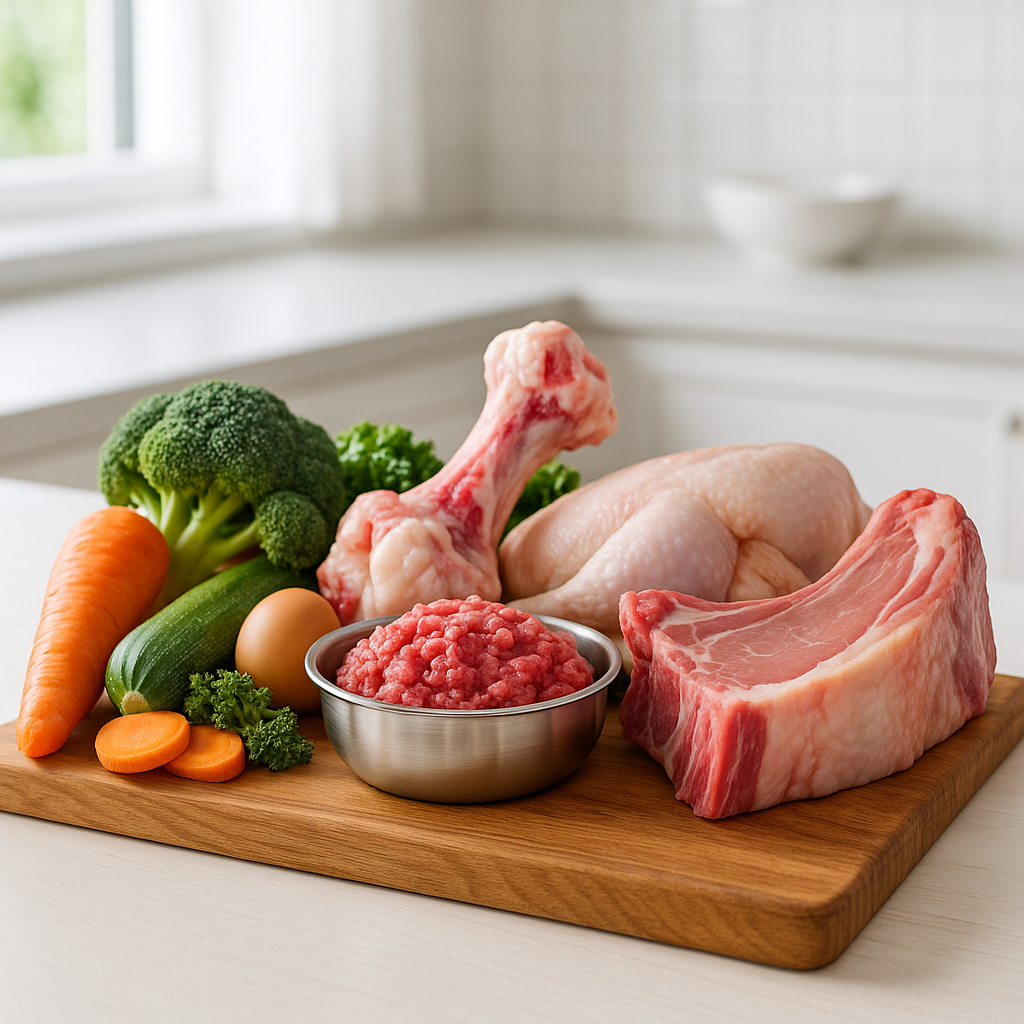
Meaty bones remain crucial but must always be raw to preserve nutrient content and avoid sharp fragments caused by cooking.
Vegetables, fruits, and supplements
Broccoli, carrot, zucchini, or squash — do not cook, blend instead. Crushed raw vegetables release vitamins and phytonutrients. A few red berries or a handful of blueberries provide additional antioxidants. Finally, add:
- Rapeseed oil or fish for omega-3s,
- Brewer’s yeast or spirulina depending on deficiencies,
- Green-lipped mussel extracts for joints if needed.
Example of a weekly menu
| Day | Morning | Evening |
|---|---|---|
| Monday | 150 g ground beef + 20 g liver + 30 g mixed vegetables | 200 g duck neck + 25 g kidney + 30 g zucchini |
| Tuesday | 160 g whole deboned chicken + 15 g heart + 25 g carrot | 180 g rabbit back + 30 g broccoli + 5 ml rapeseed oil |
| Wednesday | 170 g turkey + 20 g liver + 30 g mixed vegetables | 200 g ground duck + 20 g heart + 30 g squash |
| Thursday | 150 g beef + 25 g kidney + 25 g spinach | 190 g chicken + 20 g liver + 30 g red berries |
| Friday | 160 g lamb + 20 g heart + 30 g zucchini | 180 g white fish + 25 g mixed offal + 30 g broccoli |
| Saturday | 170 g duck + 15 g liver + 30 g vegetables | 200 g beef + 20 g kidney + 30 g carrot |
| Sunday | 180 g chicken + 20 g heart + 30 g squash | 210 g turkey + 25 g offal + 30 g spinach |

Practical advice and mistakes to avoid
- Never mix cooked bones, which become brittle and dangerous.
- Weigh each portion precisely during the first week to adjust according to weight gain.
- Introduce raw meat gradually if your dog was previously on kibble only.
- Vary protein sources to avoid intolerances.
- Monitor the condition of the skin and coat as indicators of deficiency.
Monitoring and adjustments
Observe your dog’s energy, digestion, and coat condition daily. Record your dog’s weight once a week in a notebook or an app. If you detect excessive weight gain, reduce the amount of animal fat or increase activity. Conversely, if your dog loses weight, add a few grams of fatty meat or fish oil.
Consulting a veterinarian or canine nutritionist to validate the calcium-phosphorus ratio and supplements is always a good idea. Some laboratories even offer blood tests dedicated to dogs on BARF.
FAQ
What is the BARF diet for dogs?
It is a diet based on raw meat and bones, supplemented with vegetables, fruits, and supplements, aiming to replicate the original diet of the canid.
Can my dog digest bones?
Yes, if they are raw and meaty: they provide calcium and phosphorus. Never cooked bones that splinter.
How to avoid deficiencies?
By respecting the proportions (70% meat/bones, 15% offal, 15% vegetables) and adding oils or supplements if necessary.
Is a veterinarian necessary to start?
It is not mandatory, but an initial assessment and personalized advice make the transition safer.