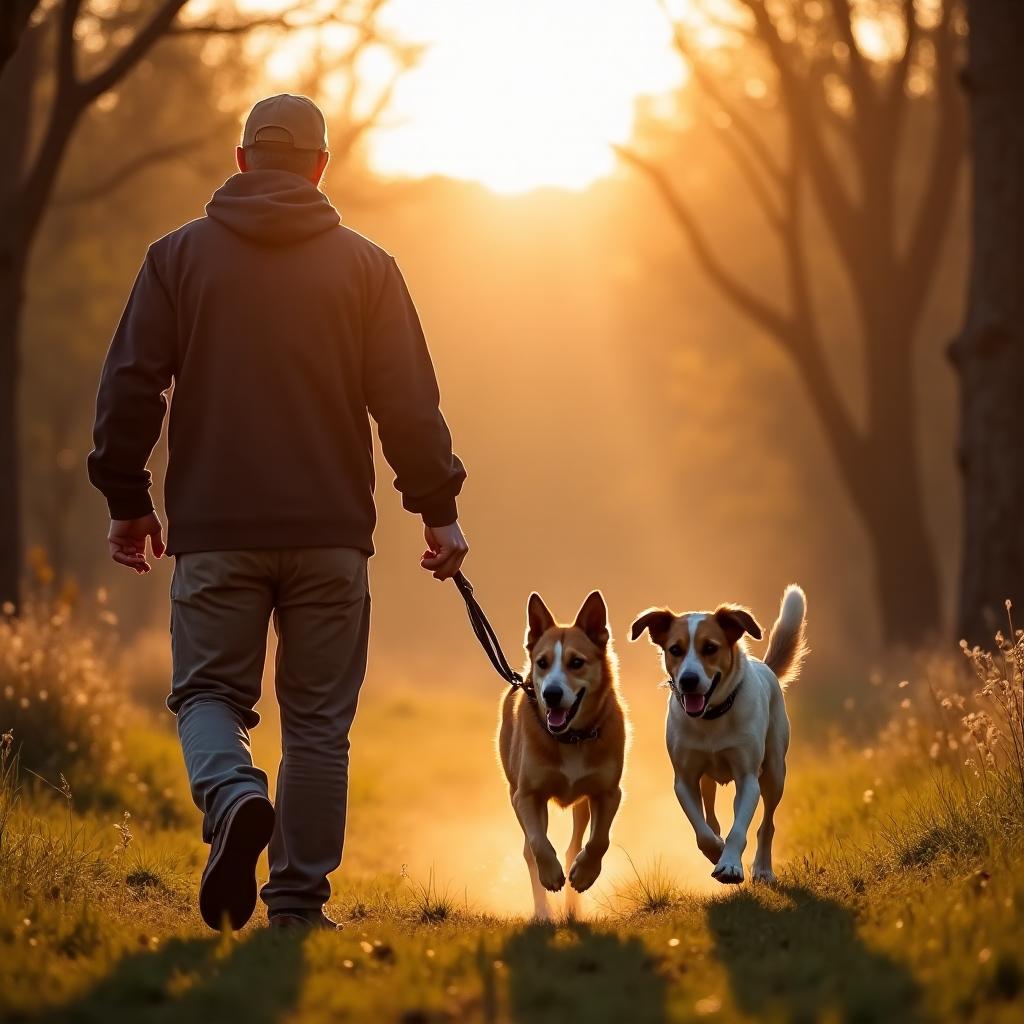
Teaching your dog recall is much more than a simple trick: it is about building a bond of trust, ensuring their safety, and making your outings more peaceful. Whether in the garden, park, or on a trail, knowing that your companion will come back when called transforms every walk into a moment of sharing. In this guide, we explore in detail the steps to establish this essential behavior permanently.
🐾 Main goal: make recall a natural response for your dog, thanks to progressive and coherent learning.
⚙️ Careful preparation: create a reassuring environment, choose appropriate rewards, and establish clear signals.
🎯 Three-phase method: capture attention, associate the keyword, and positively reinforce each return.
🔄 Generalization: vary locations, distractions, and adjust difficulty to firmly anchor recall.
Why recall is essential
A lack of reliable recall can quickly become a headache, especially if your dog wanders out of sight. Beyond safety, recall structures your relationship: the dog understands that coming back always means reward and attention. Like a keystone, this behavior strengthens your benevolent leadership and fosters daily bonding.
Studies in animal behavior show that positive reinforcement, applied regularly, consolidates learning more effectively than a coercive approach. Here, we rely on the dog’s desire to join you rather than fear.
Prepare the environment and your equipment
Choose the training space
First of all, prioritize a secure place: a fenced garden or a dog park without too many walkers. The goal is to limit surprises so the dog can focus. It is preferable to start where they have not yet developed habits of running away or frantic exploration.
Select motivating rewards
Each dog reacts differently: some love special kibble, others prefer a small toy or even petting. You can create a positive reinforcement kit including:
- Soft-textured treats (easier to chew quickly).
- A noisy or chew toy.
- A clicker to precisely mark the moment of good behavior.
Diversity prevents saturation: alternate treats and toys to maintain motivation.
Step-by-step method to establish recall
Step 1: capture attention
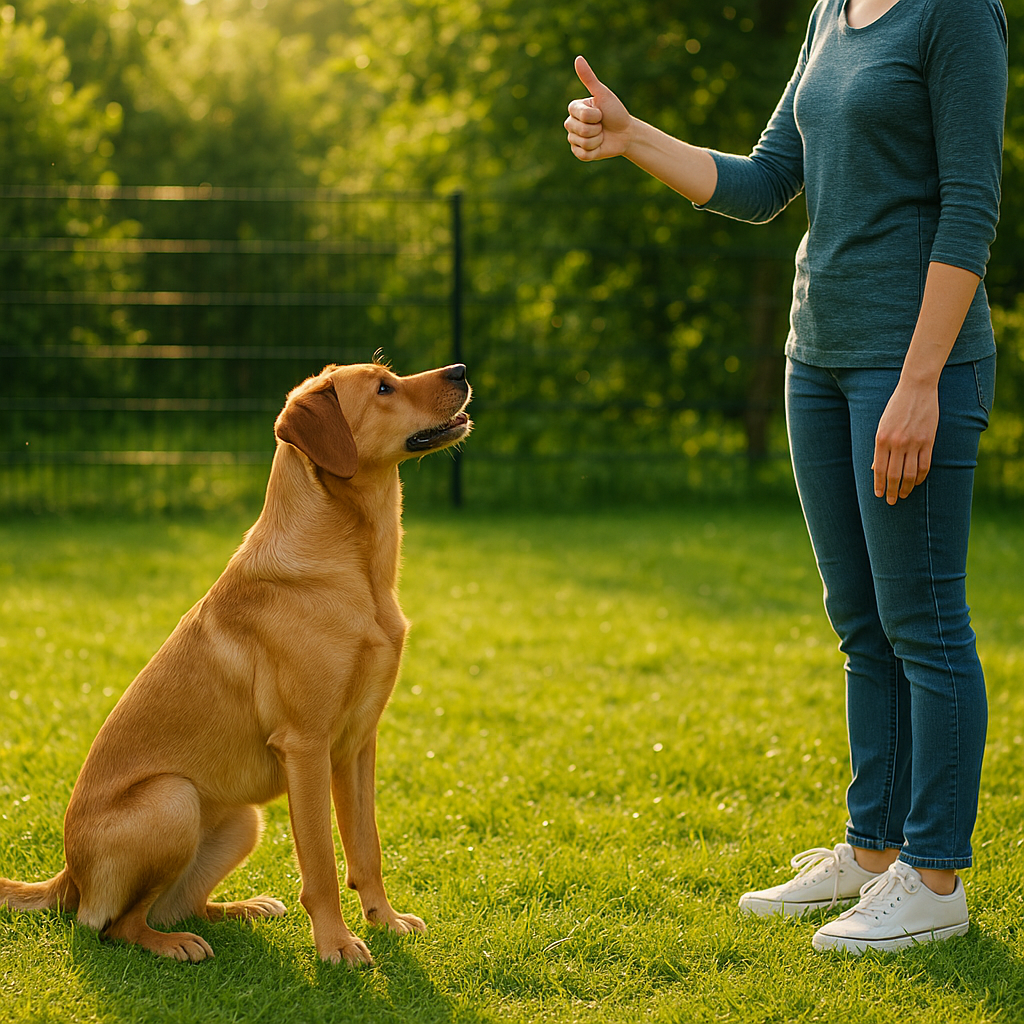
At the start, keep your dog on a leash. Make a small noise, whistle, or call word (e.g., “Loulou!”) that they already respond to, and reward immediately. This creates the association between the signal and turning towards you.
Step 2: introduce the keyword “here”
Once your dog looks at you systematically, associate “here” with your call. As soon as they take a step towards you, say “here” in a cheerful voice. The goal is for “here” to become a true mental trigger.
Step 3: Reinforce the recall
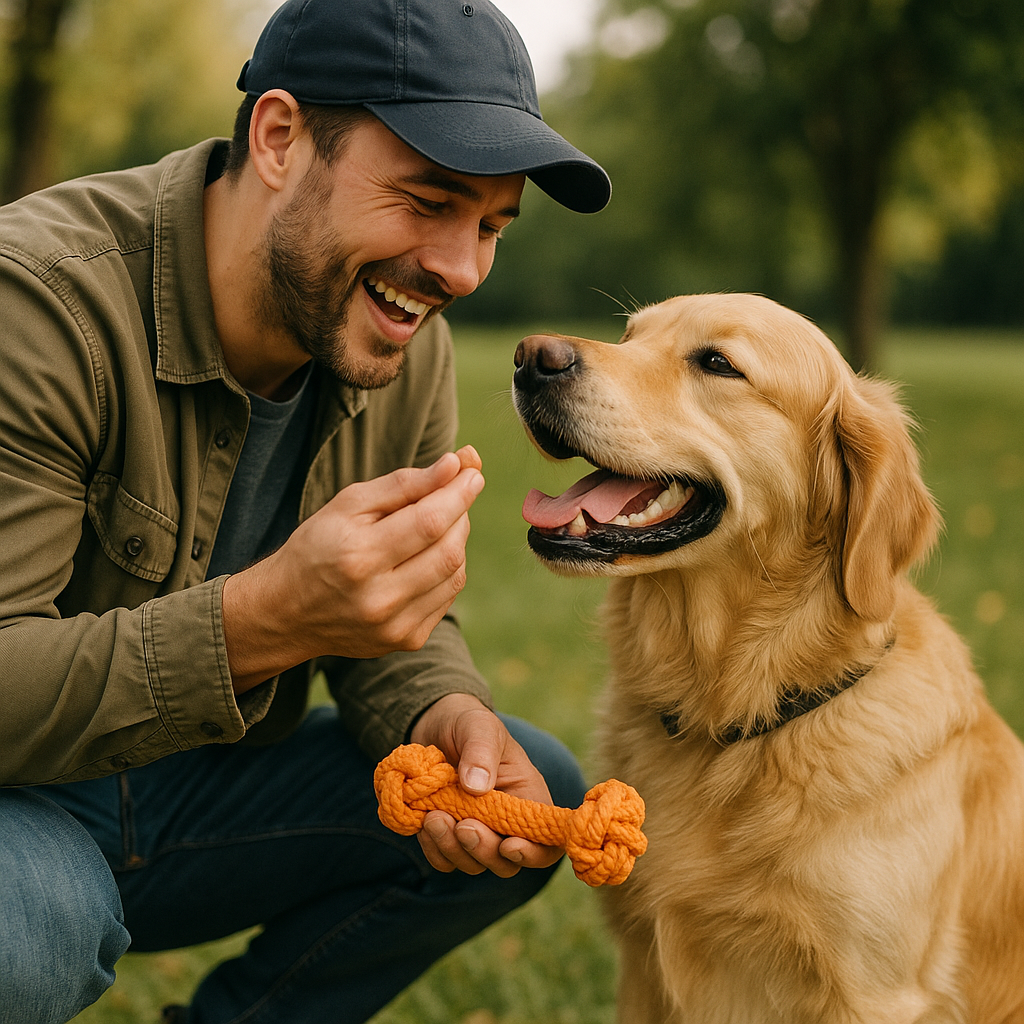
When your dog comes, praise enthusiastically and offer the reward. The reinforcement must be immediate so that the connection is clear. You can also greet them with a gentle pet, or even a play reminder: for example, throwing their favorite toy.
- Taste reward: 1 to 2 treats.
- Play reward: 30 seconds of play.
- Social reward: pets and verbal praise.
Reinforce and generalize the recall
Vary the contexts
Once the behavior is acquired in your garden, gradually move to more stimulating places: park, forest trail, seaside. Increase distances then distractions (other dogs, bicycles, joggers). Each new context is an opportunity to consolidate learning.
Manage distractions
At first, a ball thrown ten meters away will capture all your dog’s attention. If the recall weakens, reduce the distance or offer a counter-motivation (a more tempting treat). The idea is to always be more interesting than what is happening around.
Common mistakes to avoid
- Calling to punish: the dog associates the call with a negative moment.
- Repeating the signal 10 times: it loses its value, better to curb the excess enthusiasm and require only one “here”.
- Going straight to a crowded environment: each progression must be controlled.
- Omitting the reinforcement phase: without reward, the recall remains fragile.
FAQ
At what age should recall training start?
You can start from 8 weeks old, provided the environment is safe and the sessions are very short (5 minutes maximum). Puppies have a limited attention span.
What to do if my dog doesn’t come back the first time?
Don’t run after them, this can trigger a chase game. Stop, turn around, and call them calmly. When they come back, reward them doubly.
Can I go straight to off-leash recall?
No: the long line is a valuable intermediate tool. It guarantees safety while offering enough freedom to let them gradually move away.
How many repetitions per day?
3 to 5 short sessions (2 to 3 minutes each) are enough. The goal is not quantity, but quality and regularity.