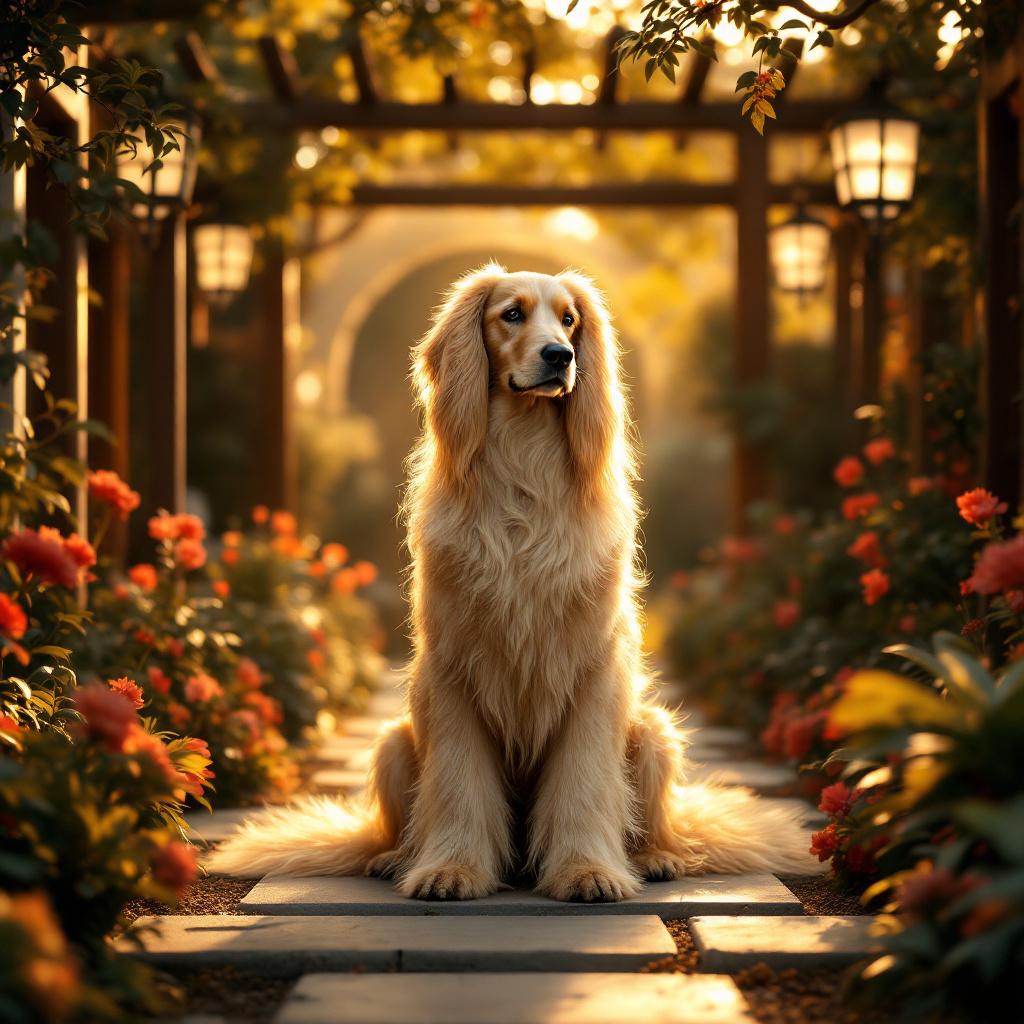
At the edges of the mountains of Central Asia, a sighthound with a queenly bearing was born: the Afghan Hound. Its sophisticated appearance, long silky flanks, and mysterious gaze fascinate those who cross its path. But behind this almost aristocratic beauty lies a fiercely free temperament, sometimes puzzling for an unprepared owner. Let’s dive into the world of this dog that is both powerful, graceful, and of legendary independence.
🌟 Millennial origins: originating from the Afghan plateaus, this sighthound was used to hunt gazelles and antelopes, demonstrating unparalleled endurance.
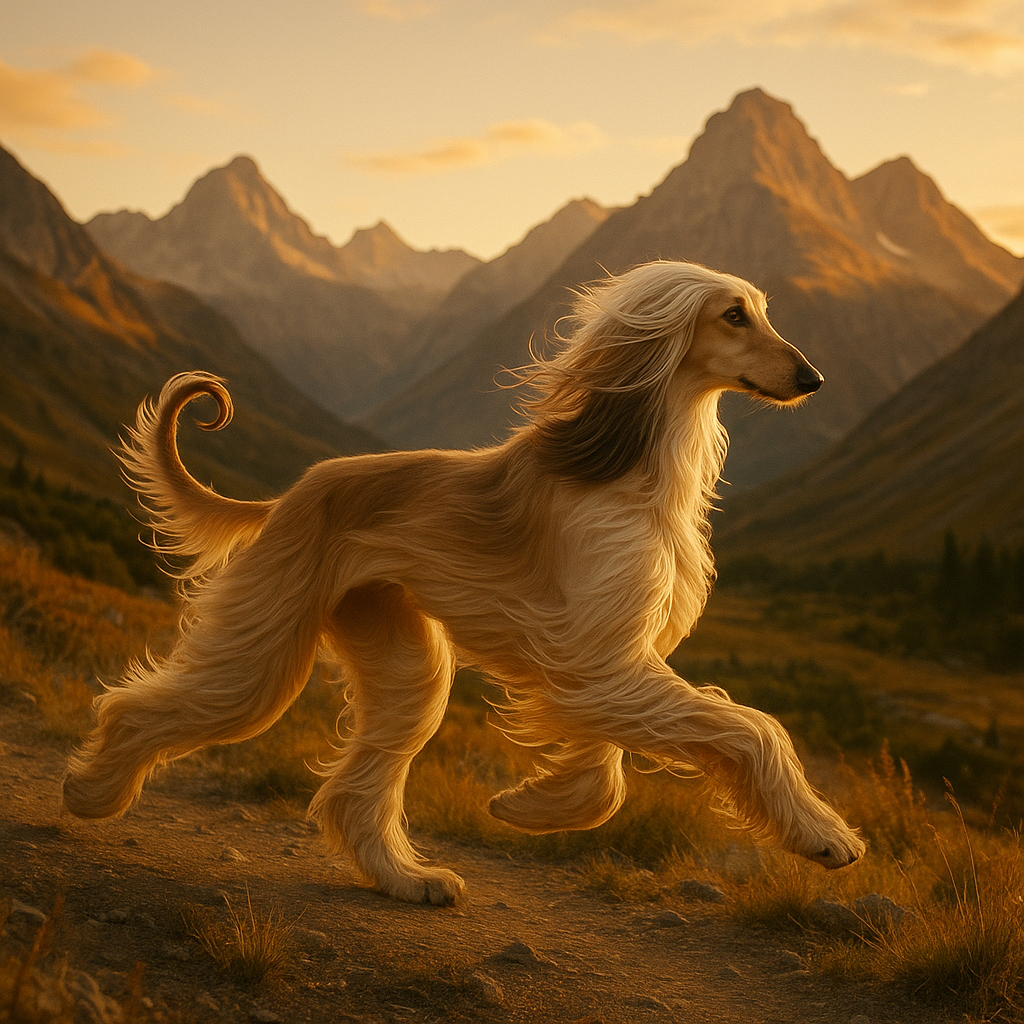
🧐 Unique physique: long coat, slender silhouette, tapered head, and sharp gaze, the Afghan Hound embodies oriental elegance like no other.
🧩 Asserted independence: endowed with a strong character, it makes its decisions solo. Patience and mutual respect are essential to build a strong bond.
🛁 Meticulous care: daily brushing, skin care, and regular baths ensure the silky shine of its coat.
Origins and history of the Afghan hound
The footsteps of the Afghan Hound are lost in the sands of time, resurfacing in ancient tapestries and manuscripts. Considered a direct heir of Persian sighthounds, it hunted for centuries in rugged terrain, tracking the fastest prey. Its name and features were passed down orally until, at the beginning of the 20th century, European explorers brought it back to the West. There, it charmed aristocrats and enthusiasts with its aristocratic appearance and bold temperament.
Physical appearance: silhouette and coat
A slender stature
Equipped with a fine but robust bone structure, the Afghan Hound stands out by its size: generally between 61 and 74 cm at the withers. This build, combined with muscles adapted for running, gives it an airy, almost floating gait. Its high head carriage recalls that of a gazelle, and when it moves, it seems to glide on a cloud of grace.
Coat and colors
Its fur is often described as a cascade of silk: long, dense, and slightly wavy. The shades range from golden fawn to black, including charcoal and creamy white. Each color has its charm: the charcoal adds a mysterious depth to the gaze, while the fawn highlights the slender silhouette.
| Sex | Average height | Average weight |
|---|---|---|
| Male | 66–74 cm | 23–27 kg |
| Female | 61–69 cm | 20–25 kg |
Character and temperament
Far from being a mere aesthete, the Afghan Hound cultivates a deep and independent personality. It is a champion of autonomy: on walks, it will not always respond to an impulsive recall. Its curiosity, coupled with intact pride, pushes it to analyze each situation before acting. Unlike some small dogs like the Cavalier King Charles Spaniel, which constantly seeks emotional connection at all costs, the Afghan Hound chooses its moments of complicity, valuing respectful exchange more than blind obedience.
Socialization and Relationships
- With humans: affectionate, but reserved. They are not obsessed with petting, preferring calm conversations.
- With other animals: predation may appear towards small companions; cohabitation requires gentleness and supervision.
Care and Maintenance
Maintaining the sumptuous coat of the Afghan Hound requires rigor and regularity. Daily brushing prevents the formation of knots and stimulates the skin. A brushing session lasts on average twenty minutes, during which each strand is patiently detangled. A bath every six to eight weeks, accompanied by a gentle shampoo, preserves the natural balance of the coat without weighing it down.
- Soft-bristle brush and metal comb
- Targeted care for ears and paw pads
- Moderate to intense physical activity, depending on age
Choosing and Welcoming Your Afghan Hound
Before you start, ask yourself about your capacity to accommodate: space, time to devote to care, and desire to understand an atypical character. A serious breeder values genetics, early socialization, and well-being: do not hesitate to visit, ask questions about health tests (dysplasia, eye screening), and observe the puppies’ behavior.
Ideal Environment
The Afghan Hound appreciates a secure garden where it can run freely. In an apartment, it requires at least two long daily walks to expend its energy and stimulate its mind. Canine sports, such as agility or lure coursing, offer it a perfect setting to combine speed and thinking.
Frequently Asked Questions
What is the life expectancy of an Afghan Hound?
Their longevity generally ranges between 12 and 14 years, provided there is regular veterinary follow-up and adapted nutrition.
Is the Afghan Hound suitable for families with children?
With early socialization and clear rules, it can adapt. However, it is better that children understand the need to respect its space.
At what age can I start training?
The basics (cleanliness, recall) start from 8 weeks; patience and consistency will replace any harsh authority.