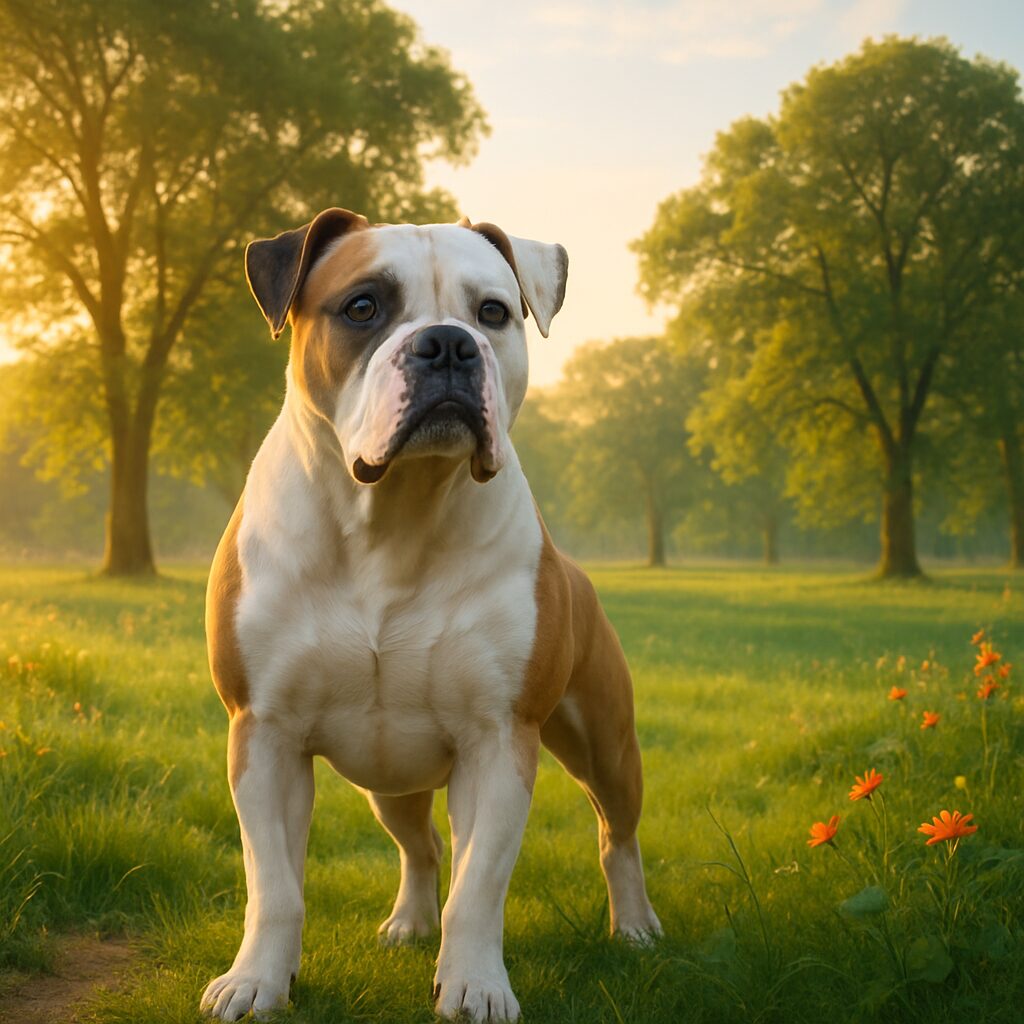
The American Bulldog commands attention as soon as it enters a room: massive stature, straightforward gaze, and a surprising softness beneath its robust appearance. Born to work alongside farmers in the Southern United States, it has maintained remarkable physical strength while developing a deep loyalty to its family. In this article, I break down its history, physical characteristics, temperament, necessary care, and the best methods to train a companion who loves both strength and companionship.
In brief
🦴 American origins: breed derived from working bulldogs of the Southern United States, adapted for protection and agricultural tasks, with remarkable musculature and endurance.
❤️ Loyal temperament: protective, affectionate towards its family, often wary of strangers but rarely aggressive without reason. Very sensitive to the look and tone of its owner.
⚕️ Health & maintenance: lifespan around 10 to 14 years, subject to some specific pathologies — regular check-ups and a suitable diet are essential.
🎯 Required training: early socialization and consistent education: the best results come from gentle firmness, clear routines, and varied physical activities.
Origins and history: from the field to the heart of the family
The American Bulldog descends from working dogs brought from England, but its evolution accelerated in the American rural context. It was not initially bred to be a show dog; it was selected for its robustness, its ability to catch and hold large game, and its capacity to endure long days of labor. Like other utility breeds, its morphology adapted to environmental demands: attacking power and endurance. Over time, many lines have shifted toward a more family-oriented temperament, without losing the musculature or imposing presence that characterize the breed.
The lines and their particularities
Today, several types of American Bulldogs are distinguished: some retain a very muscular silhouette and a broad head, others present a somewhat lighter, more athletic version. These differences reflect diverse breeding goals — work, canine sports, or companionship. Choosing one line over another will mainly depend on your project: an active household will favor an athletic line, while an owner seeking the presence of a guardian will opt for a line with a more massive build.
Physical characteristics: power visible at first glance
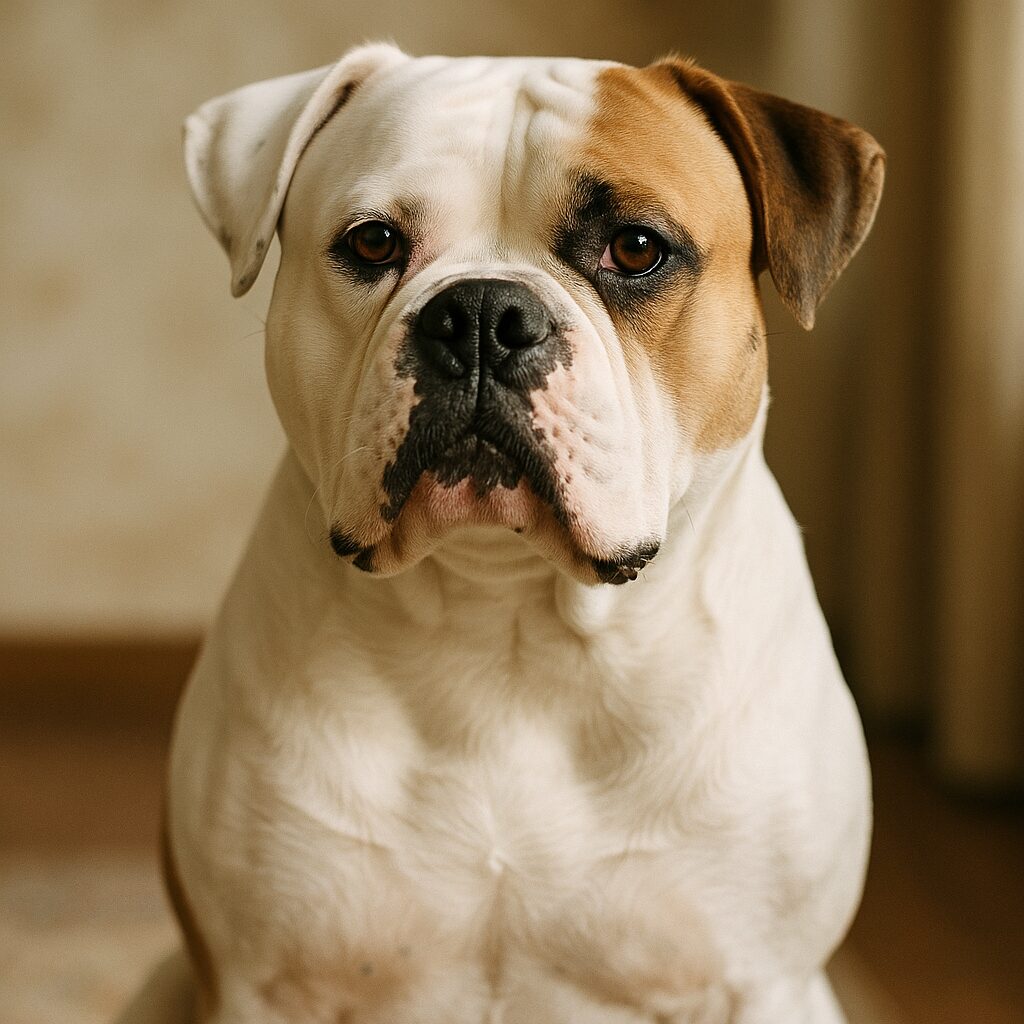
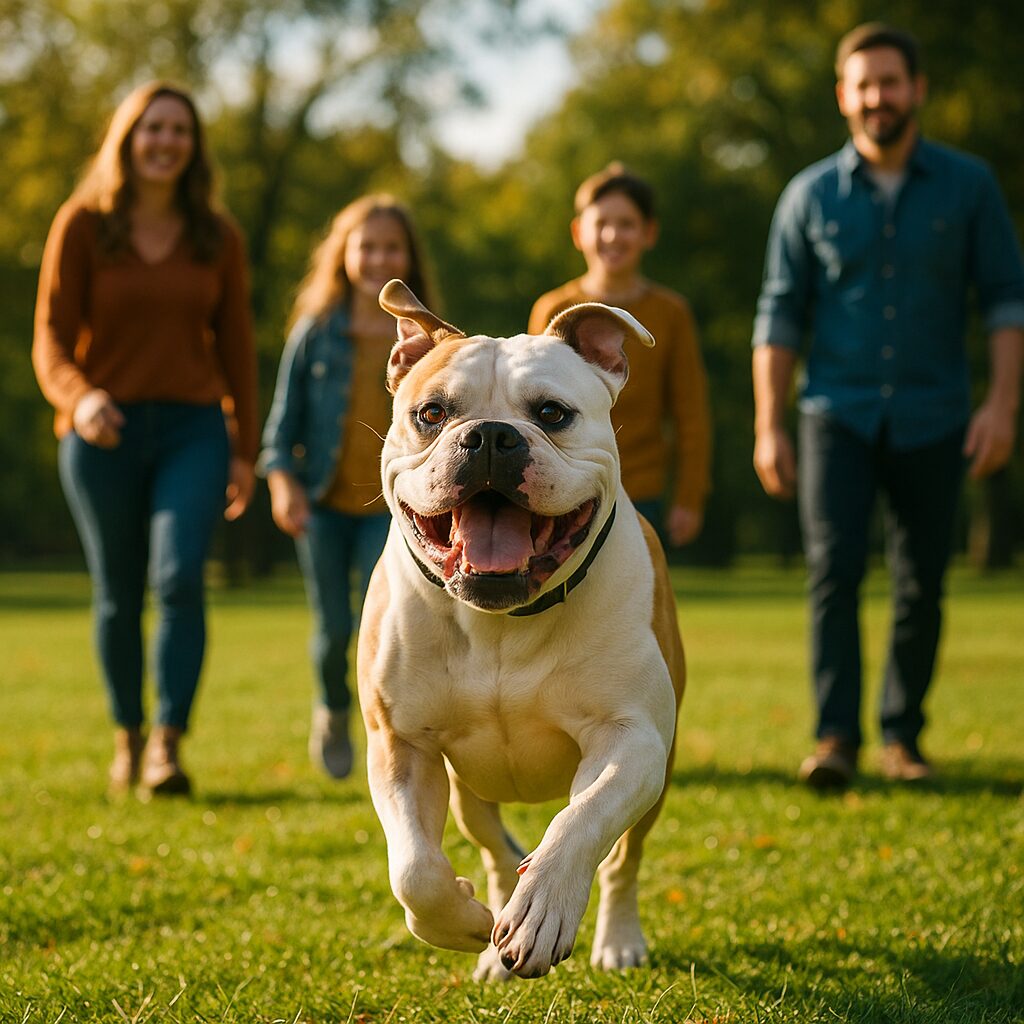
The silhouette of the American Bulldog leaves no doubt: muscular hindquarters, broad chest, solid limbs. Its coat is short, often white mixed with fawn, brindle, or black patches; it requires little maintenance but highlights every muscle. The face, sometimes a bit angular, displays a powerful jaw — a legacy of its original functions. Despite this impression of strength, its gait can be surprisingly supple and agile when in motion.
| Characteristic | Average value |
|---|---|
| Weight | 25–45 kg (depending on the lineage) |
| Height at withers | 48–60 cm |
| Life expectancy | 10–14 years |
| Coat | Short, smooth, easy to maintain |
Temperament: loyalty, courage and need for affection
To say that the American Bulldog is only a guard dog would be reductive: it is a companion who shows fierce loyalty, ready to defend its family, but who also demands a lot of attention and complicity. Contrary to the image of the indifferent giant, it loves to play, cuddle, and respond to affectionate solicitations. This paradox — outward strength, tender heart — explains its success with active households looking for a protective yet close dog.
Behavior with children and other animals
With children, it can be a patient and playful guardian, provided that the encounters have been properly supervised and that education from a young age has established rules. On the other hand, cohabitation with other animals largely depends on socialization: a well-socialized American Bulldog from puppyhood often accepts canine companions, while a lack of exposure can encourage dominance or fear.
Health and care: prevention for better enjoyment
Its general robustness hides some vulnerabilities to watch. Among the most frequently observed problems: hip dysplasia, eye problems (clarify with a veterinarian depending on the lineage), and in some cases respiratory issues related to facial conformation in subjects with very broad heads. Obesity is a real risk if physical activity is lacking; excessive weight increases joint strain and shortens active lifespan.
- Feeding: favor a diet rich in quality proteins, adjusted to age and activity level. Divide meals to limit the risk of stomach torsion in dogs with deep chests.
- Exercise: at least one hour per day of sustained physical activity (games, running, brisk walks), complemented by phases of mental stimulation.
- Veterinary checks: complete annual check-ups and screening for dysplasia if you plan to breed.
- Grooming: weekly brushing, ear care and nail trimming according to wear.
Education and socialization: calm firmness and consistency
With an American Bulldog, education must combine consistency, clear boundaries, and positive reinforcement. It is not a dog for improvisation — it appreciates rules and complies when they are consistent. The use of force or aggressive methods is not only ineffective, but it weakens the relationship: prefer reward, a firm voice, and quick, proportionate corrections.
Practical advice
- Start socialization from the first weeks: noises, people, children, other animals.
- Work on basic obedience (sit, lie down, recall) in varied contexts to strengthen reliability.
- Use structured games to channel energy: controlled tug, agility courses, search games.
- For novice owners, surrounding yourself with a professional dog trainer facilitates adaptation and prevents common mistakes.
Recommended Activities: Channeling the Power
A well-exercised American Bulldog is a calm companion. It excels in activities that require strength and intelligence: tracking, adapted agility, light pulling, or muscle strengthening training. Long and varied walks are a must. For more athletic spirits, including the dog in bike outings (with precautions) or hiking offers an incomparable mutual satisfaction.
Choosing and Adopting: Points of Caution
If you are considering adopting an American Bulldog, prioritize serious breeders or shelters where the dog’s health and behavior have been evaluated. Ask for health history, screening tests (dysplasia, eye exams), and observe the behavior of the puppy or adult in its environment. Avoid breeders who deny known health problems or do not allow you to see the parents.
Questions to Ask the Breeder
- What health tests have been performed on the parents?
- What socialization has been implemented with the puppy?
- Is there post-adoption follow-up or advice for integration?
Summary Table — Key Takeaways
| Aspect | Key Points |
|---|---|
| Temperament | Loyal, protective, playful, affectionate with family |
| Exercise Needs | High — at least 60 active minutes per day |
| Health | Hip monitoring, weight control, regular check-ups |
| Training | Early socialization, consistency, positive reinforcement |
FAQ
Is the American Bulldog suitable for apartment living?
Not ideally. It can tolerate small spaces if its exercise needs are met daily, but it thrives much better with a garden and an environment where it can move freely.
What is the best age to start training?
Socialization should begin from the first weeks, ideally between 6 and 16 weeks for exposure to stimuli. Formal training can start as soon as the puppy arrives home: the puppy learns quickly if consistency is maintained.
Is this dog dangerous?
No, not by nature. As with all powerful breeds, risk appears without education or supervision. With appropriate socialization and training, it becomes a reliable guardian and a gentle companion.
How much does annual maintenance cost?
Expenses vary depending on the region and level of care, but budget for quality food, vaccinations and veterinary check-ups, and possibly sessions with a behaviorist or trainer. For a pragmatic estimate: several hundred to a few thousand euros per year depending on services.