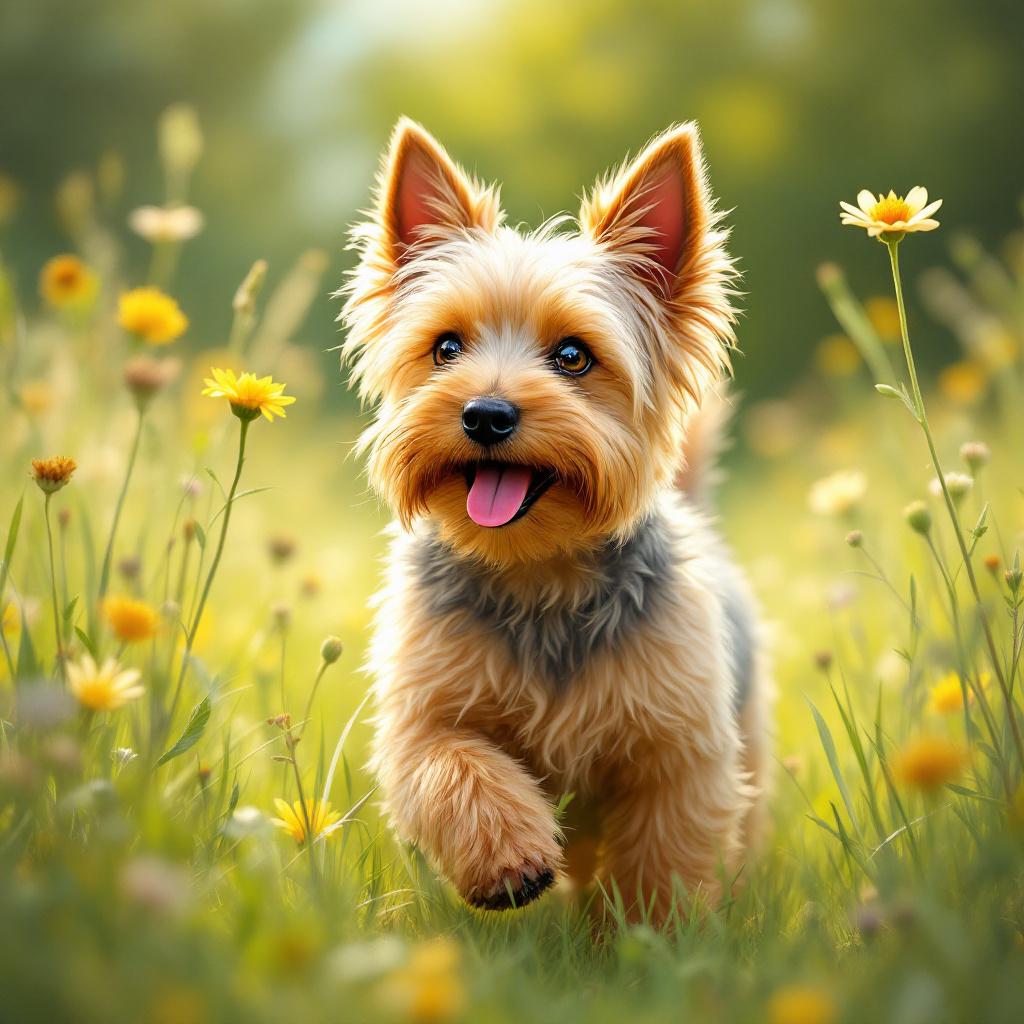
Small in size, big in personality: the Australian Silky Terrier attracts as much by its shiny coat as by its lively temperament. It is not simply a decorative companion dog — it combines energy, curiosity, and remarkable loyalty. Here, we break down its history, silky appearance, behavior with humans and other animals, as well as everything you need to know to care for it daily. If you are considering adopting this miniature terrier, consider this article as a practical and straightforward roadmap.
In brief
🐾 Origin: Small terrier from Australia, resulting from English and Australian crosses, recognized for its silky coat and compact silhouette.
✂️ Grooming: Regular maintenance required: frequent brushing and trims according to style, but no systematic clipping if you want to preserve the silky texture.
💡 Character: Intelligent, lively, sometimes stubborn, ideal for an active owner ready to channel its energy and socialize early.
📏 Size & health: Miniature but robust: 9–11 kg on average, life expectancy often between 12 and 15 years, with some genetic predispositions to monitor.
History and origin: a terrier born under the Australian sun
One might think that the Australian Silky Terrier is a recent creation, born from a simple aesthetic desire. In reality, it results from a thoughtful mix between small British terriers and dogs imported to Australia at the end of the 19th century. Breeders sought an alert companion, adapted to Australian climates, but with a finer and shinier coat than traditional terriers. The result: a dog with a compact body, an expressive head, and a well-groomed coat. Over the decades it has been standardized, while keeping that playful character that makes it immediately recognizable.
Appearance and standard
Where the Australian Silky Terrier first charms is its fur: long, straight, silky, often blue and tan in color. No thick undercoat like other breeds, which gives a light feeling to the touch. The head is proportioned, with bright eyes and erect or semi-erect ears, depending on the lines. Despite its fragile showcase appearance, its conformation is muscular and agile — it is a little athlete.

Summary table: size, weight, life expectancy
| Characteristic | Value |
|---|---|
| Height at withers | 23–26 cm |
| Weight | 4–6 kg (often 4.5–6 kg in adults) |
| Life expectancy | 12–15 years |
| Coat | Blue and tan (classic), silky, without thick undercoat |
Character: small terrier, big personality
The character of this terrier mixes liveliness, curiosity, and affection. It gets along well with people and often shows a strong bond with its home; however, it retains the “small vermin hunter” instinct typical of terriers. It is described as confident rather than shy, sometimes bossy towards other dogs if socialization has been neglected. In other words, it is a small dog that needs clear boundaries and mental exercises to avoid boredom.
Family / Apartment Compatibility
- Excellent companion for an active person or a couple.
- Suitable for apartment living provided it is taken out regularly and mentally stimulated.
- Can live with children, but interactions should be supervised to prevent the dog from adopting abrupt behavior with younger ones.
Training and Socialization
Training a Silky Terrier requires consistency and kindness. Its small size can sometimes be misleading: it needs to learn the rules from the start so as not to believe it is more dominant than it actually is. Methods based on positive reinforcement work very well, especially when incorporating short but frequent games and obedience exercises. Mental stimulation — food puzzles, tricks, basic agility — provide excellent outlets for intellectual energy.
Practical Tips
- Start socialization before 4 months: people, noises, other animals.
- Introduce basic commands: sit, recall, leave it.
- Vary rewards: treats, petting, toys.
Health and Veterinary Care
Overall robust, the Australian Silky Terrier nevertheless has some genetic predispositions such as certain eye conditions, patellar luxation, or dental problems common in small dogs. Regular check-ups, an ophthalmological exam by a specialist, and active dental care (brushing, scaling if needed) help prolong its good health. A diet adapted to its size and activity level completes this prevention plan.
Coat Maintenance: The Art of Silkiness
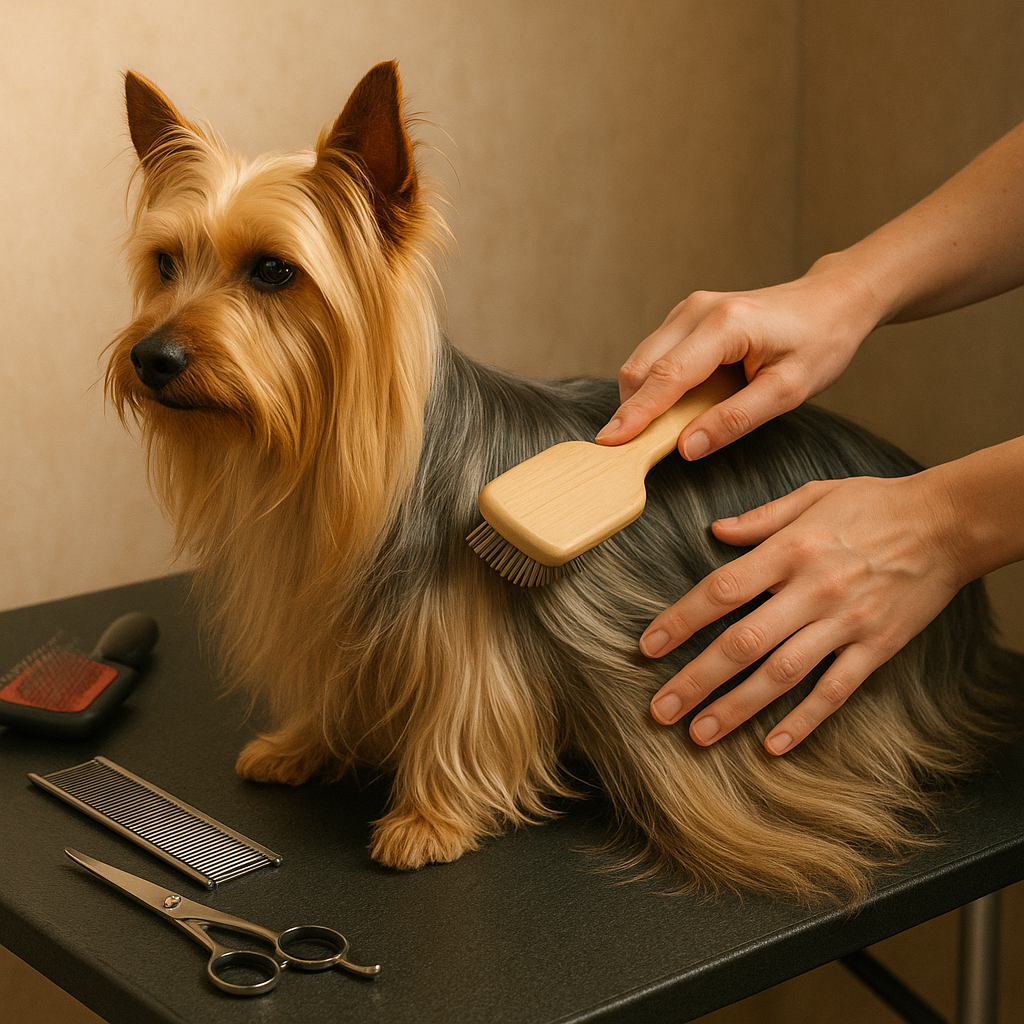
Its fine, long coat requires sustained attention to remain shiny and tangle-free. Contrary to popular belief, this does not necessarily involve regular clipping: many enthusiasts prefer to keep the long coat, which requires daily brushing and infrequent but quality shampoos. For a more practical look, the so-called “puppy” cut or a short style reduces grooming time while remaining elegant.
Recommended Maintenance Routine
- Brushing: daily or at least 3 times a week to prevent tangles.
- Baths: every 4 to 8 weeks depending on activity and coat type.
- Haircuts: on demand — aesthetic or practical.
- Eyes and ears: weekly check and gentle cleaning if necessary.
Physical and Mental Activity
It is not a powerhouse of energy, but it needs daily walks and playtime. An hour of varied exercise (walk, games, training) is often enough to calm its enthusiasm. Boredom quickly results in barking or small chewed-up debris — so it is better to prevent than to repair. Fun canine sports, like amateur agility, suit it perfectly and strengthen the owner-dog bond.
Choosing a Puppy or Adopting: Points of Attention
Whether you choose breeding or adoption, several criteria are non-negotiable: transparency about health history, puppy socialization, breeding conditions, and post-sale follow-up. Prefer a breeder who performs health tests (eye, hip, patella) and allows you to see the mother and the environment. If adopting, ask for behavioral and medical history: many silkies find a wonderful second life in shelters or specialized associations.
Projected Budget
Purchasing a purebred puppy can represent a significant initial investment, but beyond the purchase price, you should consider:
- Annual veterinary fees (vaccinations, antiparasitics, check-ups);
- Grooming or grooming supplies if you do it yourself;
- Quality food, accessories, training, and possible health insurance.
Also plan a budget for medical emergencies: small dogs live a long time, so long-term financial preparation is a wise decision.
Table of Strengths vs Constraints
| Strengths | Constraints |
|---|---|
| Very aesthetic silky coat | Regular maintenance required |
| Lively and endearing personality | Tendency to bark if bored |
| Good adaptability to apartment living | Needs socialization and daily exercise |
FAQ
- Does the Silky Terrier shed a lot?
- No, it does not shed excessively thanks to the absence of a dense undercoat, but regular brushing prevents the accumulation of dead hair and mats.
- Is it a dog suitable for a first-time owner?
- Yes, if the owner is willing to learn to train with consistency and enthusiasm; however, it may prove less simple for someone who wants a very passive dog.
- Can it live with other animals?
- With early socialization, it can live harmoniously, but it will retain a terrier instinct that sometimes pushes it to dominate small animals.
- What is the best type of food?
- A balanced diet, adapted to size, age, and activity, rich in quality proteins; small kibble sizes facilitate eating.
- Should it be clipped with a clipper?
- It is not mandatory. Clipping makes maintenance easier but alters the silky appearance. Many choose a short cut for practicality, others keep the long coat and invest in brushing.