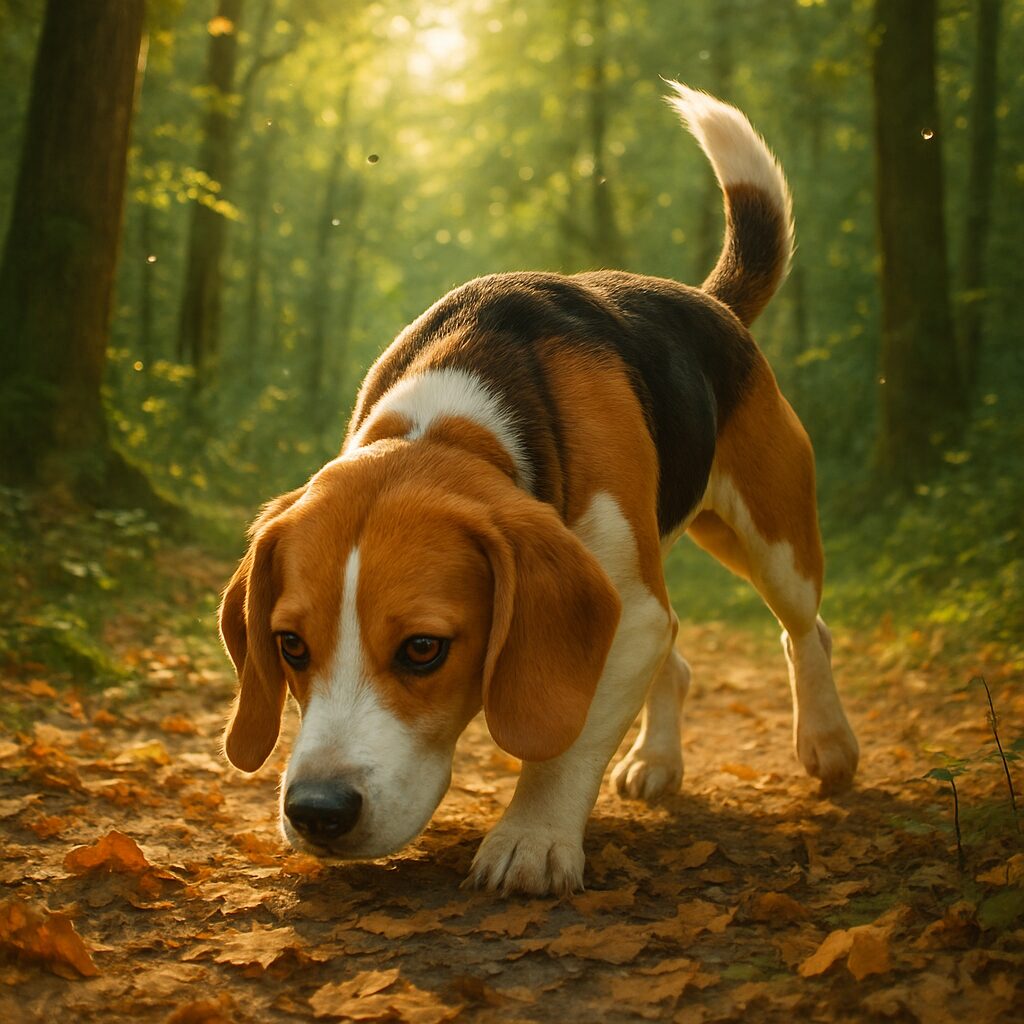
The Beagle fascinates with its mischievous look and a nose capable of rivaling the best sniffers in the canine kingdom. Halfway between a family companion and a hunting partner, it displays contagious energy and an appetite for discovery that drives it to explore every nook and cranny. In this article, we dissect its history, highlight its olfactory prowess, and provide practical keys to welcome it into your home.
In brief
🐾 English origins: descended from hunting lines of the 18th century, the Beagle was selected for its agility and sense of smell, qualities that make it an expert detector.
👃 Olfactory system: with nearly 220 million sensory receptors, its nose detects a trail several hundred meters away, even underground or in thickets.
🏡 Sociable temperament: curious and playful, it loves pack life and adapts perfectly to families, provided it is offered stimulation and regular exercise.
🔍 Multiple applications: hunting dog, customs detector, partner in search and rescue, it stands out for its versatility and formidable sense of smell.
Origins and specificities of the Beagle
A history linked to English hunting
In the 18th century, in the southern counties of England, small pack dogs were used to track hares and rabbits. British breeders gradually refined these lines to obtain a medium-sized dog capable of following a trail at a steady pace for hours. Far from the image of a simple “pack dog,” the Beagle was already appreciated for its endurance, intelligence, and lively character. It is this dual skill – hunting ability and affectionate temperament – that ensured its growing popularity over time.
Physical traits and incomparable nose
The Beagle is recognized at first glance: drooping ears, gentle eyes, and a nose always alert. Its square head and short muzzle favor the capture of scents, while its compact and muscular body guarantees an agile stride. Coats vary (tricolor, lemon and white, brown and white), but are always typical. More than just a “look,” these physical characteristics enhance its extraordinary olfactory sense. It is said that it can “snuffle” under a bush or plunge its nose into the water, searching for a trail, without letting go until it has located its prey.
Olfactory abilities: an extraordinary nose
How the olfactory system works
Compared to humans, who have about 6 million receptors, the Beagle has nearly 220 million. Its olfactory bulbs represent nearly 40% of its cranial cavity, concentrating most of the neurons dedicated to odor detection. This anatomy allows it to distinguish molecules in minute concentrations, follow a trail several days old, and even detect substances hidden underground or in vehicles. Scientifically, this is called “olfactory memory”: once it has recorded a scent, it can recognize and follow it with astonishing perseverance.
Applications of the Beagle’s Scenting Ability
- Search and Rescue: locating people buried after a collapse or missing in natural environments.
- Customs and Police: detection of drugs, smuggled goods, or foods prohibited from importation.
- Canine Leisure and Sports: scent trials (nose work), agility, or tracking sports, where the Beagle excels due to its endless motivation.
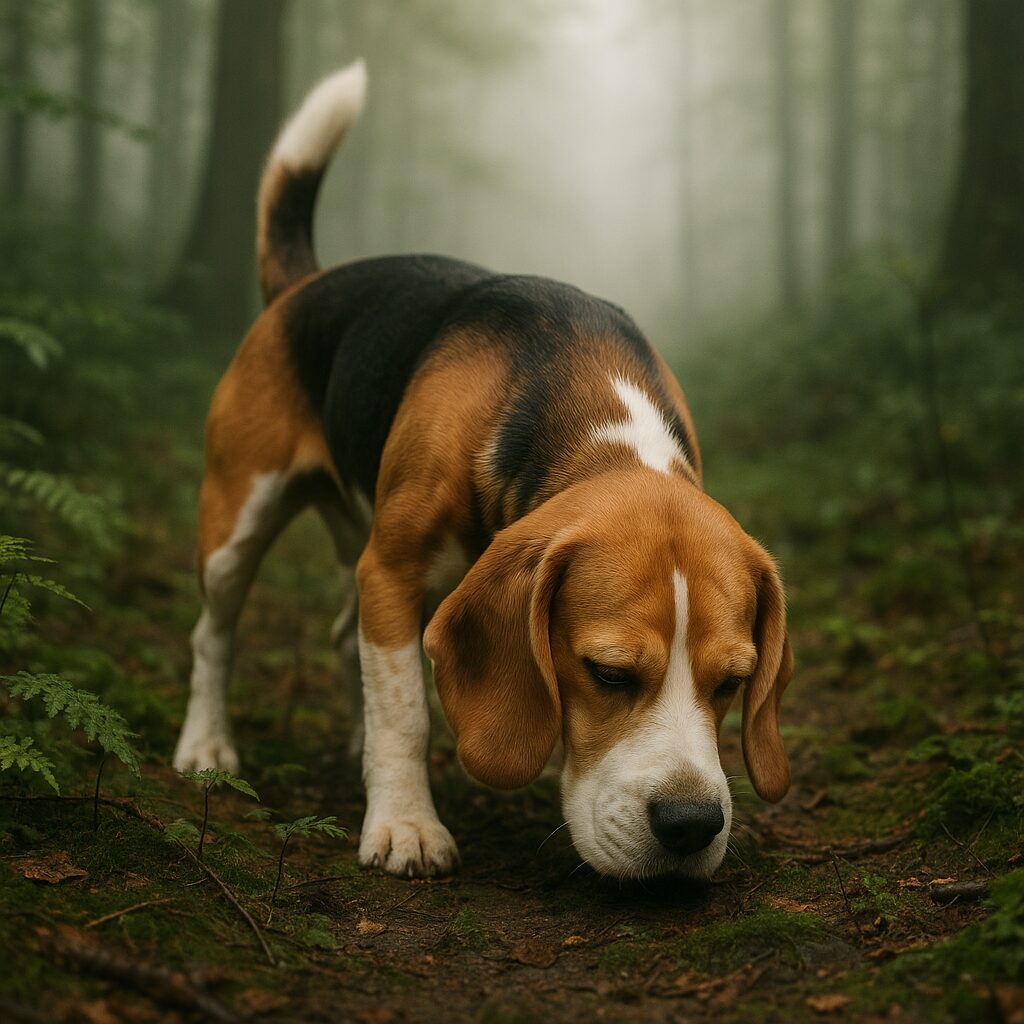
“I had never seen such a determined dog: he follows a scent right under the rock and doesn’t let go until he has found the source.” – testimony of a canine tracker.
| Breed | Olfactory Receptors | Common Use |
|---|---|---|
| Beagle | ~220 million | Tracking, customs, search |
| German Shepherd | ~225 million | Security, rescue |
| Labrador Retriever | ~220 million | Therapy, detection |
| Human | ~6 million | Domestic use |
The Beagle in Daily Life: Temperament and Needs
Training and Socialization
The Beagle is naturally welcoming: it loves children, gets along with its peers, and is hardly wary of strangers. Its small vocal humming (the famous “baying”) appears when it follows a trail or gets excited. Rather stubborn, it responds better to positive reinforcement than to coercive methods. Games, treats, and praise stimulate its cooperation. Learning to walk on a leash is essential to channel its enthusiasm and prevent it from running off at the first enticing scent.
Exercise and Mental Stimulation
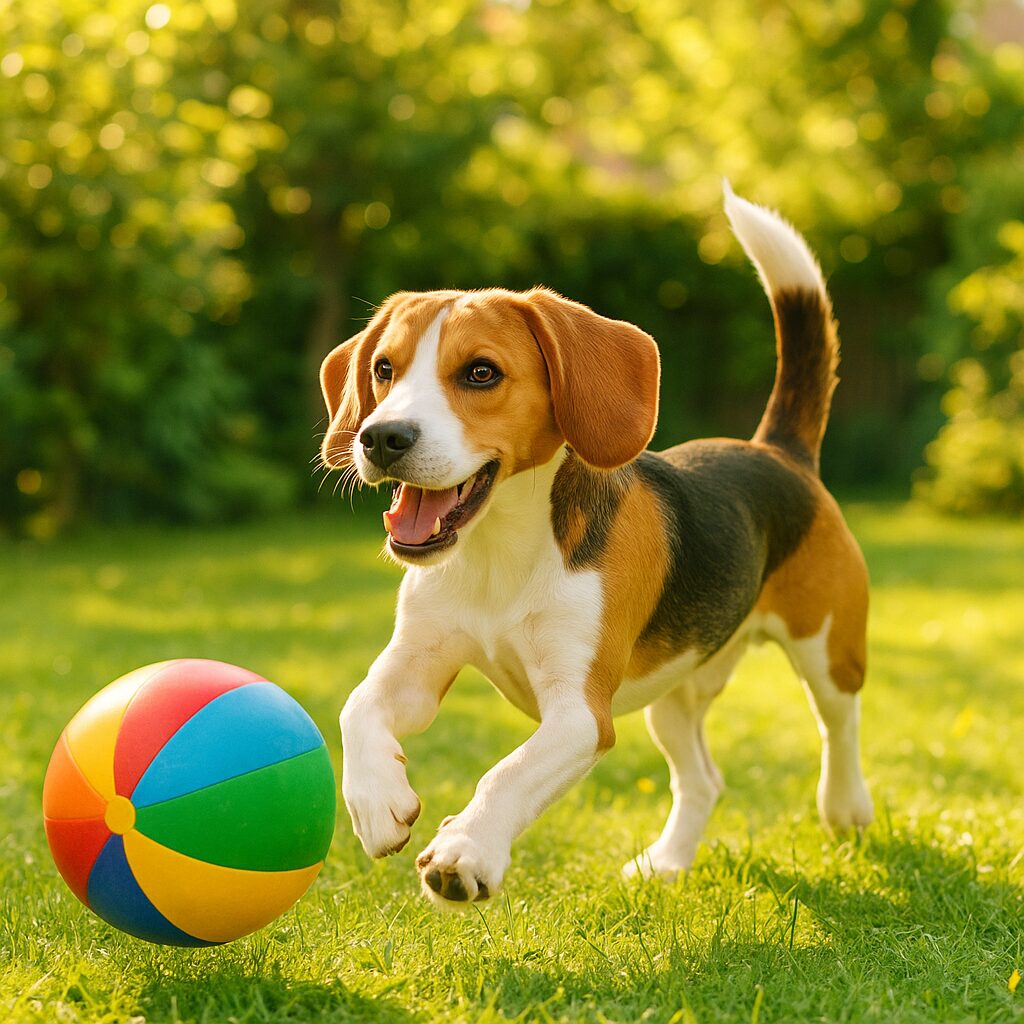
Confined indoors, the Beagle quickly gets bored. To avoid escapes and destruction, it needs to go out at least an hour a day, ideally in a natural environment. Sessions of nose work (tracking games) exhaust its scenting ability while stimulating its intelligence. The icing on the cake: these activities strengthen your bond and reduce indoor restlessness.
Choosing a Beagle: Advice and Criteria
What to Observe in a Puppy
When you meet a litter, check the general condition: shiny coat, clean ears, confident gait. Listen to each puppy vocalize: a confident Beagle explores its environment, while a too fearful subject deserves to be excluded if you are looking for a dynamic companion. Sociability towards humans and the pack is a reliable indicator of temperament in adulthood.
Questions to Ask the Breeder
- Health history: history of dysplasia or heart malformations.
- Genetic tests: screening for hereditary diseases (epilepsy, hypothyroidism).
- Socialization model: interactions with children, domestic noises, outdoor outings.
FAQ
- Does the Beagle shed a lot?
- Yes, it is a double-coated dog. Weekly brushing is generally enough to limit shedding.
- Is it compatible with apartment living?
- The ideal remains a daily outing in nature. In an apartment, it must be compensated with scent activities and regular exercise.
- What is the lifespan of a Beagle?
- On average 12 to 15 years, provided it has a balanced diet and good hygiene of life.