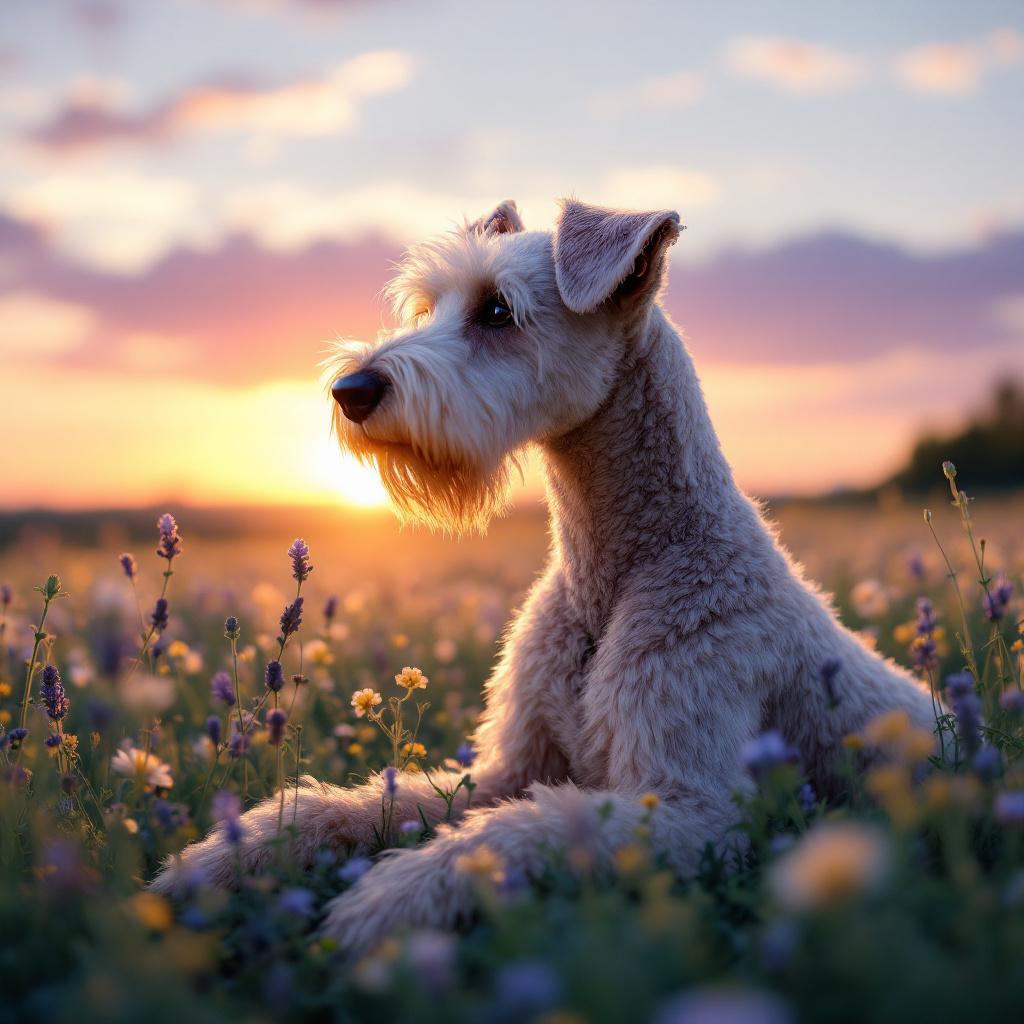
The Bedlington Terrier surprises at first glance: slender silhouette, arched head and curly coat that give it the appearance of a lamb. Yet behind this elegant bearing hides a frank, lively and sometimes stubborn terrier temperament. This article offers a detailed overview — history, behavior, coat care, health and practical advice — for those considering welcoming this unique dog or wishing to better understand it daily.
In brief
🐑 Appearance: slender silhouette and pear-shaped head, woolly **hypoallergenic** coat requiring regular grooming to maintain its “lamb” look.
🧠 Character: mix of **gentleness** and hunting instinct — sociable with family but often wary of strangers; excellent companion for those who enjoy interaction.
🛠️ Maintenance: professional clipping every 8–12 weeks, frequent brushing and ear checks; **does not shed much** but requires time and technical care.
⚕️ Health: life expectancy generally **11–14 years**, with genetic predispositions (including liver and eye conditions); recommended tests before breeding.
A bit of history: how the lamb became a terrier
The Bedlington appeared in the 19th century in the northeast of England, in the Bedlington region, where it was initially bred for rodent hunting and capturing small prey. Successive crossings with breeds such as the Whippet refined its appearance, giving this slender body and almost “runner” gait. This mix of function and aesthetics explains its paradoxical character: a dog both robust in action and delicate in bearing.
From work to show: evolution of roles
Over time, the Bedlington has entered homes as a companion and show dog, without losing its liveliness. It remains capable of great energy during walks, enjoys scent work and can thrive in canine sports that challenge its intelligence. One might think its appearance prevents any toughness: in truth, it retains a strong territorial instinct and a hunter’s grit.
Character and temperament
The main nuance of the Bedlington is its duality: inner gentleness and terrier temperament outwardly. With its family, it often shows affection, protectiveness and playfulness; towards strangers, it can be reserved or even wary. This dog needs clear boundaries and early socialization to temper its reactions and prevent developing bothersome hypervigilance.
Family compatibility
- Child: generally a good companion, but rough play should be supervised — its slender body is not made for vigorous handling.
- Other animals: possible cohabitation if socialized early; beware of predation towards small mammals.
- Apartment living: compatible if daily walks and sufficient mental stimulation are provided.
Coat care: the illusion of not shedding
The Bedlington does not “shed” like long-haired dogs; its coat is close to wool, not fluffy, making it attractive for people sensitive to hair. In practice, maintenance is technical: the texture requires regular brushing to avoid mats, professional grooming to maintain the characteristic cut, and ear and eye care to prevent infections.
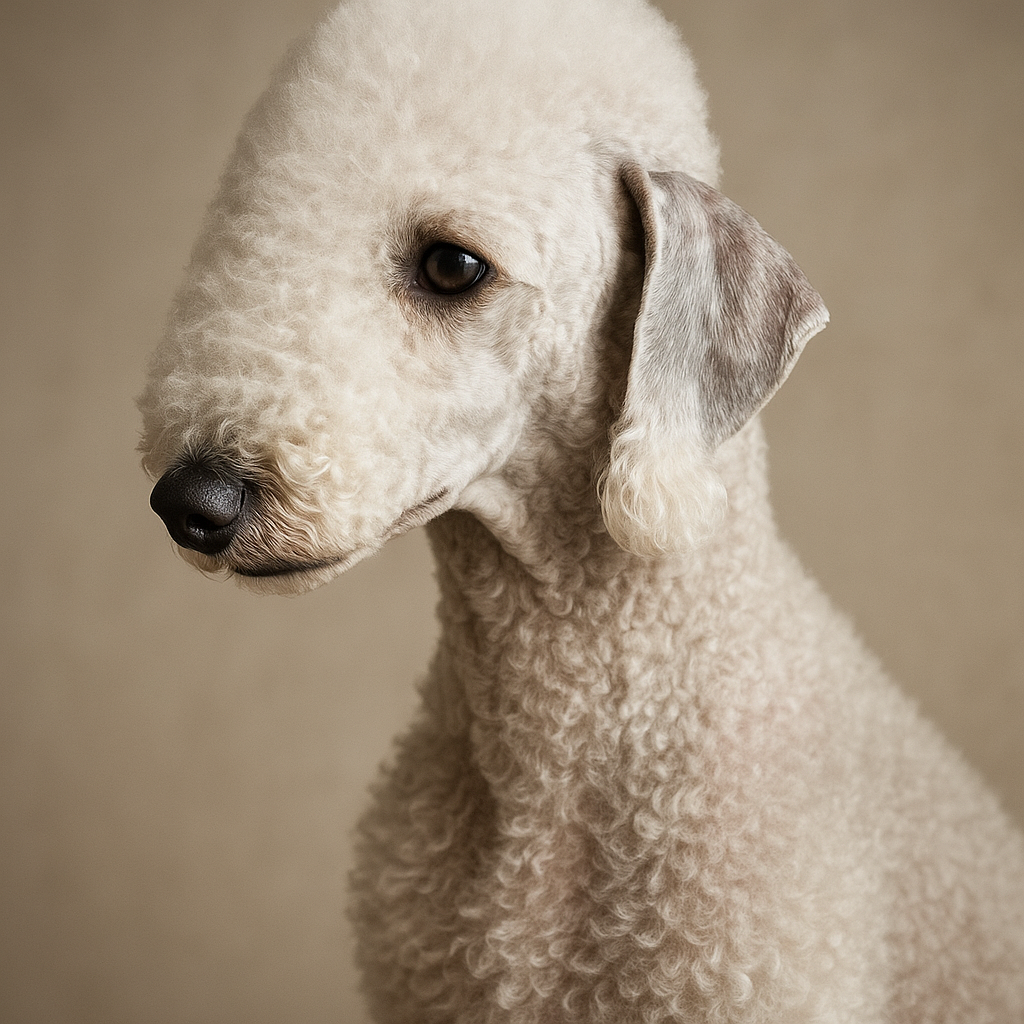
Recommended Grooming Routine
- Brushing 2–3 times a week with a soft-bristle brush and a fine-toothed comb.
- Professional grooming every 8 to 12 weeks depending on the desired style (show cut or practical cut).
- Weekly ear checks and cleaning if necessary to avoid moisture trapped by the coat.
- Infrequent baths (every 6–8 weeks on average) with a mild dog shampoo to avoid drying out the skin.
Health and Longevity
The Bedlington is generally robust, but certain issues recur in the breed. Among them, a genetically based liver disease (copper disease) and eye disorders are prominent. Responsible breeders perform genetic and clinical tests before breeding; for the buyer, requesting these results is an essential step.
| Parameter | Detail |
|---|---|
| Size | Female: 38–42 cm, Male: 39–43 cm (at the withers) |
| Weight | Approx. 8–10 kg |
| Life Expectancy | 11–14 years |
| Common Issues | Hereditary liver diseases, progressive retinal atrophy, sensitivity to dental cavities if hygiene is neglected |
Prevention and Veterinary Follow-up
Prevention involves regular check-ups: annual blood tests, dental checks, and ophthalmologic exams according to the veterinarian’s recommendations. The diet must be balanced and monitored to avoid overweight, which particularly harms this dog with an elegant back but fine limbs.
Training and Activities
Training a Bedlington requires gentle firmness: he appreciates positive methods and intellectual challenges. His curious nature responds well to positive reinforcement and search games. Activities combining physical exercise and mental stimulation are ideal: agility, tracking, object search games.
Practical Training Tips
- Start socialization before 4 months: controlled exposure to noises, people, dogs.
- Require basic obedience (sit, lie down, recall) with short and varied sessions.
- Offer intelligence toys to channel energy and limit digging / impulsive hunting.
“The Bedlington likes to understand what is expected of him; consistency takes precedence over severity.” — advice gathered from a specialized dog trainer.
Choosing Your Bedlington: Adoption or Breeding?
Choosing between breeding and adoption depends on priorities: if you are looking for a puppy with health guarantees and known lineage, a responsible breeder is preferable. Adoption can be a generous and often suitable option, but it may sometimes take more time to understand any pre-existing behaviors.
Questions to Ask the Breeder
- What health tests have been performed on the parents?
- Can we see the breeding conditions and meet the mother?
- What is the temperament of the parents (sociability, energy level)?
- Is there post-adoption follow-up or recommended advice?

Adopting a Balanced Daily Routine
The ideal daily routine combines energetic walks, smart play sessions, and quiet rest moments. A simple rule: provide varied stimulation to avoid boredom, which often results in destructive behavior or vocalizations. The Bedlington loves human presence; it thrives in homes where it is not left alone for long hours.
FAQ
Is the Bedlington suitable for allergic people?
Its woolly coat produces fewer loose hairs, but no breed is completely hypoallergenic. Sensitive individuals should spend time with a Bedlington before adoption to test their reaction.
What budget should be planned for maintenance?
Consider the purchase or adoption fees, quality food, annual veterinary care, and regular professional grooming. In practice, the average annual budget can vary between €1,000 and €2,500, depending on care and unforeseen expenses.
Is it a noisy dog?
It is not particularly vocal, but may bark in case of alert or boredom. Good training and regular stimulation limit this behavior.