
The Canaan Dog, often called the « Canaan dog », is a breed that seems to have come out of a historical film: rustic, alert, deeply attached to its territory. Yet behind this wild profile hides a reliable companion for those who understand its needs. This article explores its origin in the Middle East, its physical and behavioral characteristics, as well as the concrete requirements related to its breeding and training — without romanticizing or dramatizing: a precise and useful portrait for curious and demanding owners.
In Brief
🟢 Ancient origins: aboriginal dog of the Middle East, adapted to arid environments, with a history spanning hundreds or even thousands of years.
📏 Morphology: medium size (40–55 cm), robust bone structure, erect ears, and short coat often sandy to brindle.
🧠 Temperament: independent but loyal, vigilant and sometimes reserved with strangers — requires early socialization.
🛠️ Practical care: needs regular exercise, low coat maintenance, vigilance regarding socialization and cleanliness management in urban environments.
Origins and History
A Dog of Ancient Origin
The Canaan Dog is the domesticated form of a group of dogs that inhabited the Levant since Antiquity. Archaeological excavations and local traditions attest to its presence in territories that today correspond to Israel, Jordan, and the surrounding areas. One might think it descends from a single organized lineage; in reality, it rather represents the continuity of a robust dog type, selected by the environment and by successive nomadic and sedentary human life.
Traditional Role in the Middle East
This dog long held versatile roles: guardian of herds, sentinel for camps, hunter of small pests. Its ability to survive in sometimes harsh conditions — sporadic food, high temperature, rocky terrain — shaped an energy-efficient, vigilant animal capable of fending for itself. When human populations changed their social organization, some individuals integrated into households, others retained a semi-wild lifestyle, hence the great behavioral variability still observed today.
Morphology and Physical Characteristics
Size, Bone Structure, and Appearance
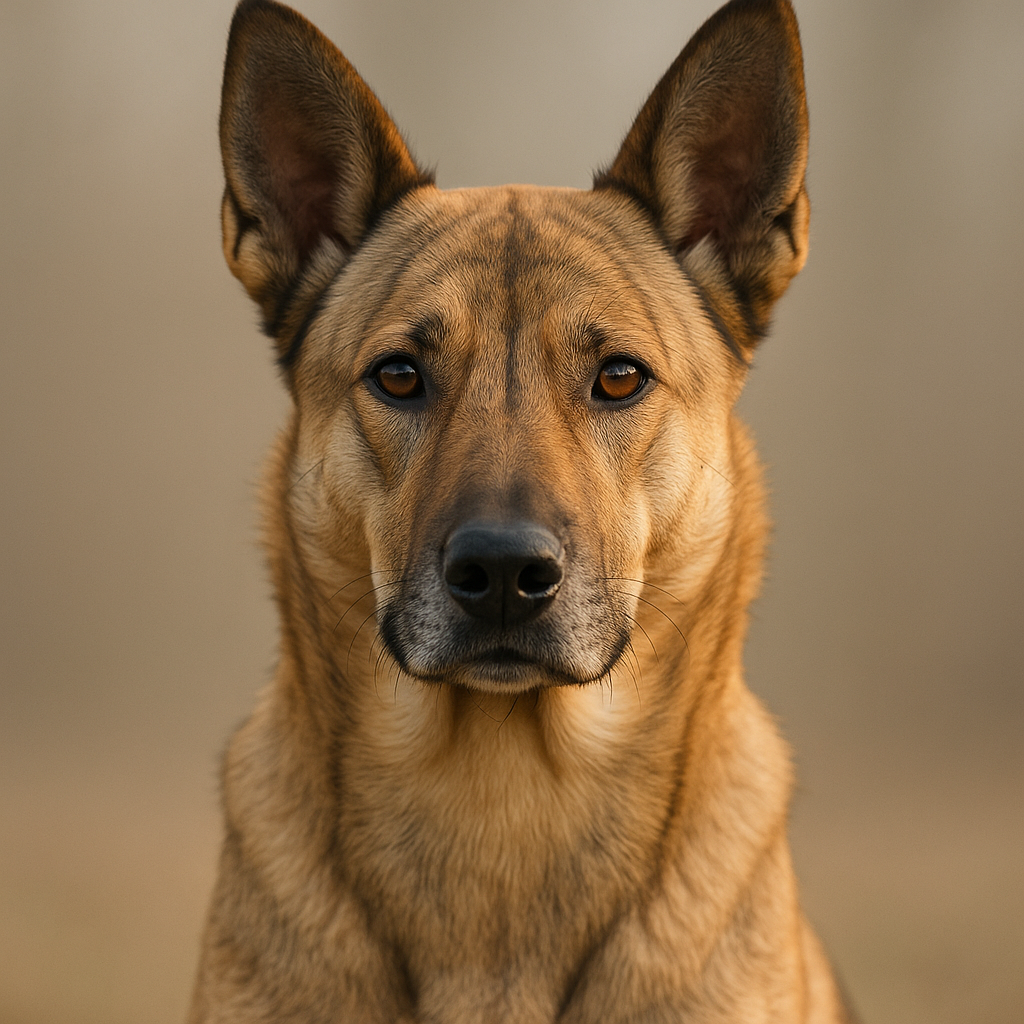
The Canaan Dog is medium-sized, well-proportioned: neither heavy nor frail. The silhouette is agile, the chest sufficiently deep to ensure good endurance. Males generally reach between 50 and 55 cm at the withers, females between 40 and 50 cm — figures that vary according to lineages and local selections.
Coat, Colors, and Particularities
The coat is short, dense, and resistant to the elements. Colors range from light sandy to brindle, including fawn and dispersed black. The ears are high and erect, giving an alert expression, while the tail, often carried in a sickle or curled, serves as a mood indicator. The eye carriage and skull conformation give an impression of liveliness rather than passive softness.
| Characteristic | Details |
|---|---|
| Size | Females 40–50 cm, males 50–55 cm |
| Weight | 10–20 kg depending on build |
| Coat | Sand, fawn, brindle, sometimes black |
| Life expectancy | 10–14 years |
Temperament and behavior
The Canaan Dog has a nuanced personality: independent, but capable of deep attachment to its family. It is neither clingy nor distant in a caricatural way; it chooses whom to trust and expects a consistent and respectful presence from its human.
Dominant traits
- Vigilant: very reactive to new situations, a good natural guard dog.
- Independent: thinks for itself, does not blindly follow orders without reason.
- Intelligent: learns quickly but may test limits if not interested.
- Reserved: often wary of strangers and unexpected situations.
Socialization and family life
For a Canaan Dog to thrive, early socialization is essential: varied encounters, positive experiences with humans and other animals. Without this, its protective instincts can turn into anxiety or defensive aggression. With training based on trust and consistency, it is affectionate, playful, and very loyal — often closer to calm children than to very young ones who still lack boundaries.
Health and longevity
The Canaan Dog is generally robust, the result of natural selection rather than intensive breeding. Nevertheless, like any breed, it has specific vulnerabilities and deserves appropriate veterinary care.
- Eye problems: some lines may have a predisposition to eye diseases — screening recommended.
- Dysplasias: rare but possible; hip x-rays for breeding dogs is a useful precaution.
- General health: good resistance to infections and high thermal adaptation.
Breeding, care, and training
Raising a Canaan Dog is not dramatic, but requires consistency, knowledge, and suitable conditions. It is not an apartment dog for a beginner seeking a passive companion.
Practical care advice
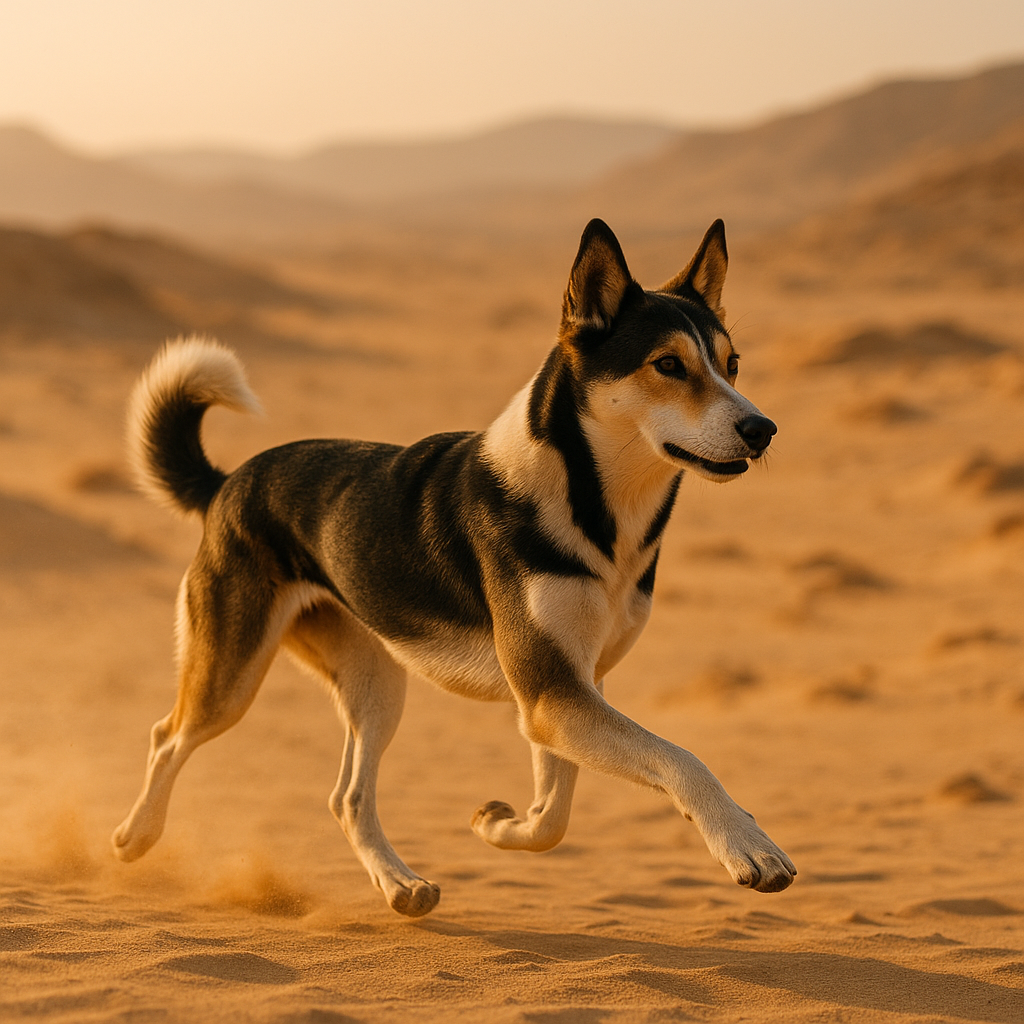
- Exercise: needs daily sustained walks and a fenced area to run freely.
- Grooming: low maintenance; weekly brushing is generally sufficient, more during shedding periods.
- Feeding: quality rations, adapted to age and activity; this breed poorly tolerates dietary sedentary lifestyle.
Training and recommended methods
The approach should remain firm but respectful. The Canaan Dog responds well to positive reinforcement and exercises that stimulate its intelligence (tracking games, agility courses, varied learning). Coercive methods are counterproductive: they close communication and alarm an animal naturally wary.
Who is the Canaan Dog suitable for?
Choosing a Canaan Dog means accepting a dog that demands common sense as much as patience. It is ideal for active people, familiar with dogs or wishing to invest in a relationship based on respect and consistency.
- Suitable for: active households, experienced owners, families with responsible teenagers.
- To avoid: people absent for long periods, beginners looking for an “easy” dog, apartments without regular outings.
Summary Table — Key Points
| Aspect | Summary |
|---|---|
| Origin | Middle East, aboriginal breed |
| Temperament | Alert, independent, loyal |
| Care | Regular exercise, low grooming |
| Health | Robust, recommended eye screening |
FAQ
Is the Canaan Dog suitable for city life?
It can adapt to urban life if its exercise and stimulation needs are met: long daily walks, varied outings, and access to a secure space. Without this, it risks developing boredom and undesirable behaviors.
Is it easy to train?
It learns quickly but requires consistent pedagogy: positive reinforcement, short and varied sessions, no forced dominance. Its independent nature demands patience and creativity.
What type of owner suits it best?
An active, patient owner willing to invest in socialization and physical activity. Experienced families and households with large spaces will be favored.
Does the Canaan Dog bark a lot?
It is naturally alert and will warn in case of anomalies, but a well-socialized Canaan is not necessarily a heavy barker; education can moderate this tendency.