
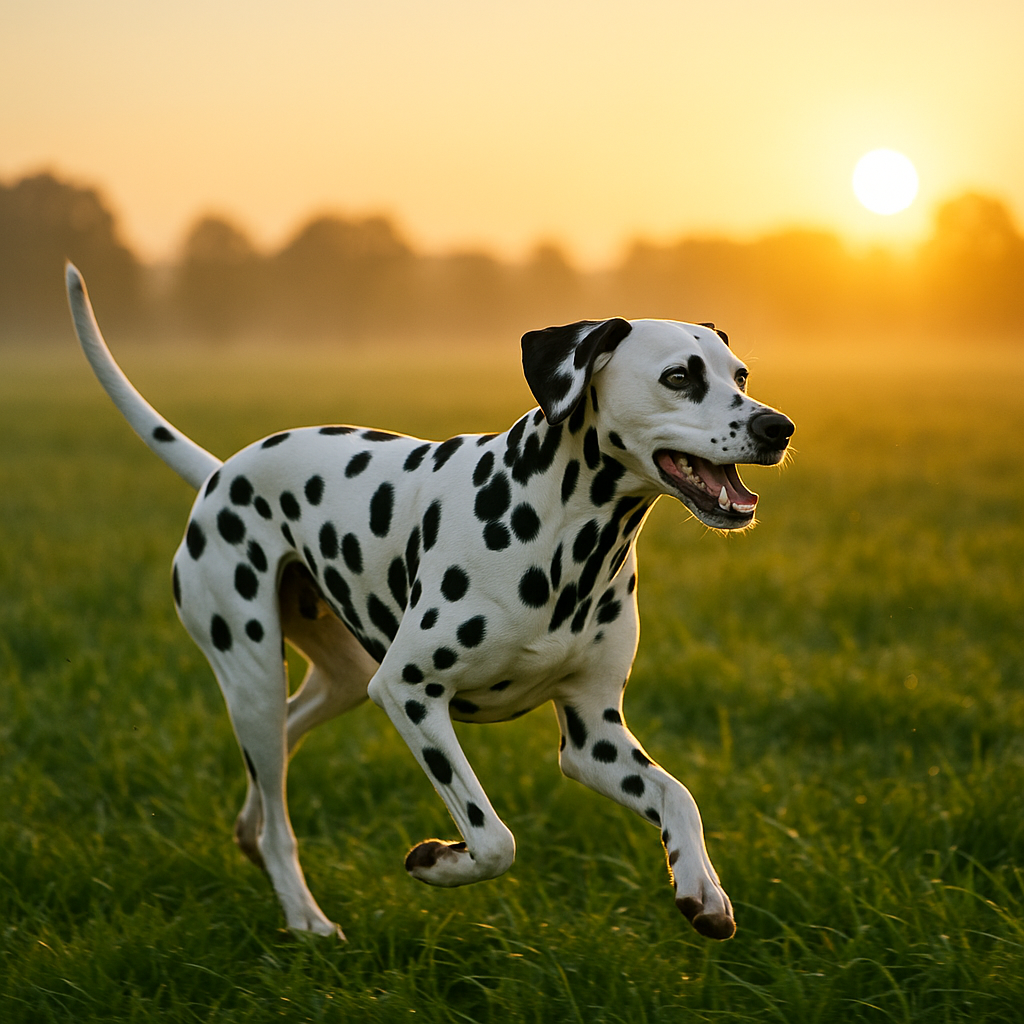
The Dalmatian fascinates with its white coat dotted with black or liver spots, an instantly recognizable visual palette. This companion, both elegant and resilient, hides boundless energy behind its aristocratic appearance. Between sporting feats, family life, and strong character traits, it establishes itself as a unique breed in the canine world.
😊 Iconic coat: white coat striped with black or liver spots, each Dalmatian is unique.
🏃♂️ Overflowing energy: daily needs for long outings and stimulating activities to channel its dynamism.
🧠 Sharp intelligence: quick learning but can be stubborn without proper socialization.
💬 Health and care: prone to skin allergies, ear screenings and regular eye exams are essential.
Origin and History of the Dalmatian
Mysterious Roots
The cradle of the Dalmatian remains shrouded in mist: some place its ancestors in Croatia, the historical region named Dalmatia, while others mention Egypt or ancient India. The first written record dates back to the 17th century in England, where it accompanied horse-drawn processions, protecting carriages and stables from predators. Its equestrian appearance and endurance quickly earned it the role of coach dog.
A Status in Popular Culture
Like the Cavalier King Charles Spaniel, praised for its gentleness, the Dalmatian has won hearts with its unique style. In the 19th century, it adorned the coats of arms of aristocratic families before entering more modest households. In cinema, its image exploded with “101 Dalmatians,” giving this breed worldwide fame. This feature film revolutionized public perception, associating its spots with joyful whimsy.
Character and Temperament
Playful and Protective Spirit
The Dalmatian combines alacrity and devotion: it eagerly participates in lively games, challenges its peers, and watches over the younger ones. Its guardian nature is expressed through a keen sense of observation and a clear bark in case of danger. However, far from aggressive, it prefers to impress by presence rather than force.
Stimulate to Channel
In truth, this dog cannot tolerate prolonged solitude: without occupation, it may express boredom through destruction or howling. It therefore requires several hours of daily exercise — running, hiking, or even agility sessions. These routines strengthen the owner-animal bond and prevent frustration linked to a brain too alert to remain inactive.
Care and Health
Regular Maintenance
- Simple grooming: weekly brushing to limit dead hair.
- Ear check: prevent infections with appropriate cleaning.
- Infrequent baths: the Dalmatian’s thin skin poorly tolerates frequent shampoos.
Medical predispositions
The breed has a certain prevalence for urinary stones, a consequence of a particular metabolism. Constant hydration and a balanced diet, with an adapted mineral content, reduce the risks of crystallization. Furthermore, hearing screenings (BAER) are recommended: up to 10% of puppies are born unilaterally or completely deaf.
Education and socialization
The keys to success
Trust is established from the first months: positive training, based on reward and patience, will produce a balanced dog.
Gradually introducing new situations — children, urban noises, other animals — prepares the Dalmatian to react calmly. Its learning abilities are remarkable, provided that exercises are varied and monotony avoided.
Practical advice
Some owners combine morning walks and obedience games: the mind expends as much energy as the body. Canine sports such as agility or flyball are particularly suitable, offering cognitive and physical challenges.
Dalmatian and family life
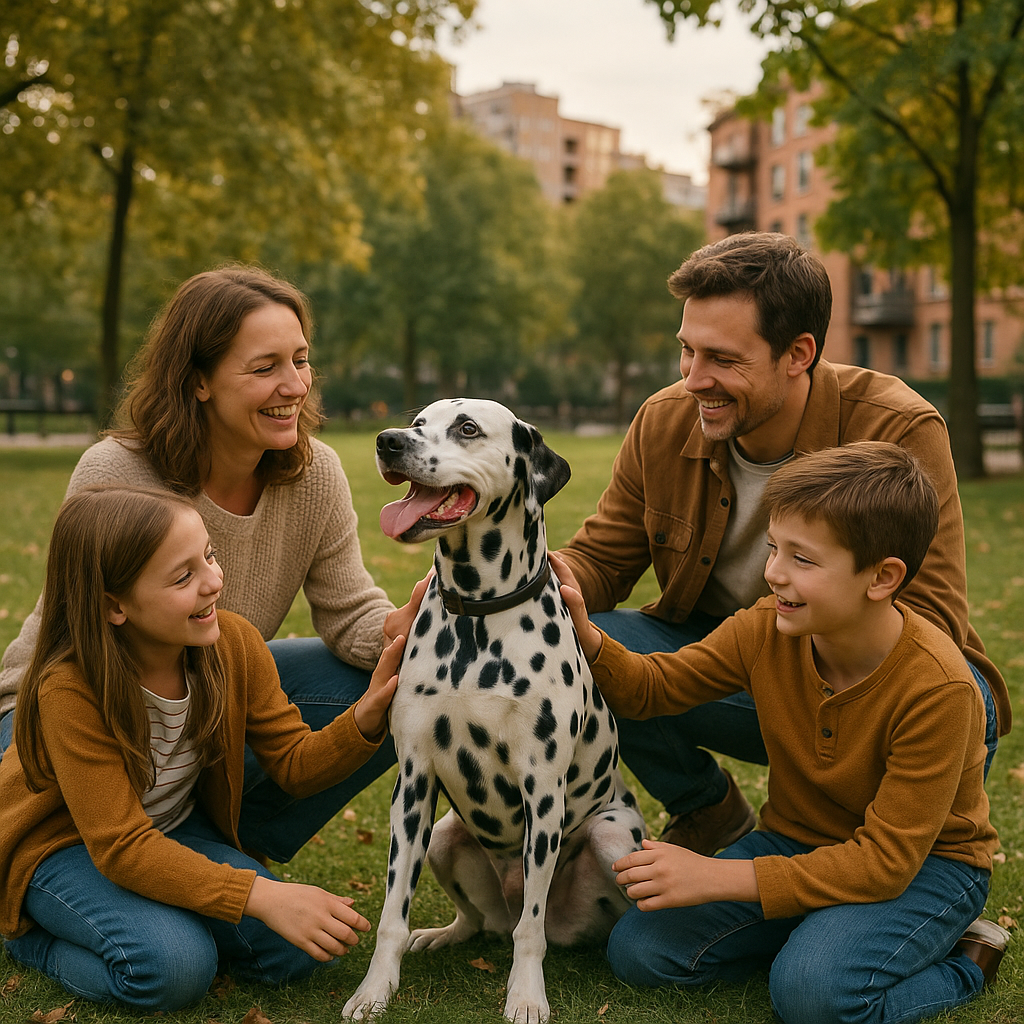
Endowed with a fine sensitivity, the Dalmatian forms strong bonds with each family member. It shows gentleness with children and keeps a watchful eye on the elders. Its adaptability allows it to live in a house or an apartment, provided its need for exercise is not neglected.
Strengths and challenges
| Aspect | Asset | Attention |
|---|---|---|
| Socialization | Very affectionate | Gets bored easily |
| Activity | Born athlete | High needs |
| Health | Robust | Urinary stones |
FAQ
1. Is the Dalmatian suitable for beginners?
It can suit a first-time owner, provided there is strong involvement in daily exercise and education from a very young age.
2. How to limit the formation of urinary stones?
Provide a diet low in minerals, encourage sufficient hydration, and schedule regular veterinary check-ups.
3. What is the average life expectancy?
Between 11 and 13 years, with preventive care and an active lifestyle.
4. Does the Dalmatian tolerate solitude well?
Not really: it prefers human presence and can develop anxiety if left alone too long.