The Dandie Dinmont Terrier remains one of the best-kept secrets in the canine world: a small terrier with an old-fashioned look, a long back, and a surprisingly expressive head, but one that is rarely seen outside. Originating from the Scottish Lowlands, this breed combines terrier instinct, a gentle character, and an almost aristocratic charm. Here, we break down its history, its standard, its real needs, and the reasons why it remains so uncommon — without unnecessary jargon, but with concrete details for those considering adoption or simply wanting to know more about this rare breed.
In brief
🐾 Origin: Scottish breed created to hunt badgers and weasels, with a history rooted in the early 19th century and a name taken from literature.
📏 Size: Small to medium — generally between 20 and 28 cm at the withers — but endowed with a solid bone structure and a long back that immediately distinguishes it.
🧴 Care: Harsh and distinctive coat: light clipping and head hair maintenance necessary, but little daily shedding.
🔎 Rarity: Modest numbers in breeding, which implies higher purchase cost and rigorous selection for health and temperament.
A terrier apart: history and origins
The Dandie Dinmont was not born from a canine fad but from a specific need: clearing out burrows and standing up to predators attacking small game and poultry houses. Its low silhouette, long back, and narrow chest make it particularly suited for underground actions, while its head — gentle and almost comical — reveals an astonishing patience when at home. Unlike other more aggressive terriers, the Dandie was bred to accept domestic life while retaining a strong hunting instinct.
From literature to reality
Its name comes from a literary character who immortalized the breed in the early 19th century; this passage in a novel contributed to the public recognition of the dog. But don’t be mistaken: behind the romantic figure lie bloodlines selected for their working ability and stable temperament — qualities that explain why numbers have remained modest even after several decades of official recognition.
Appearance and standard: what makes it unique
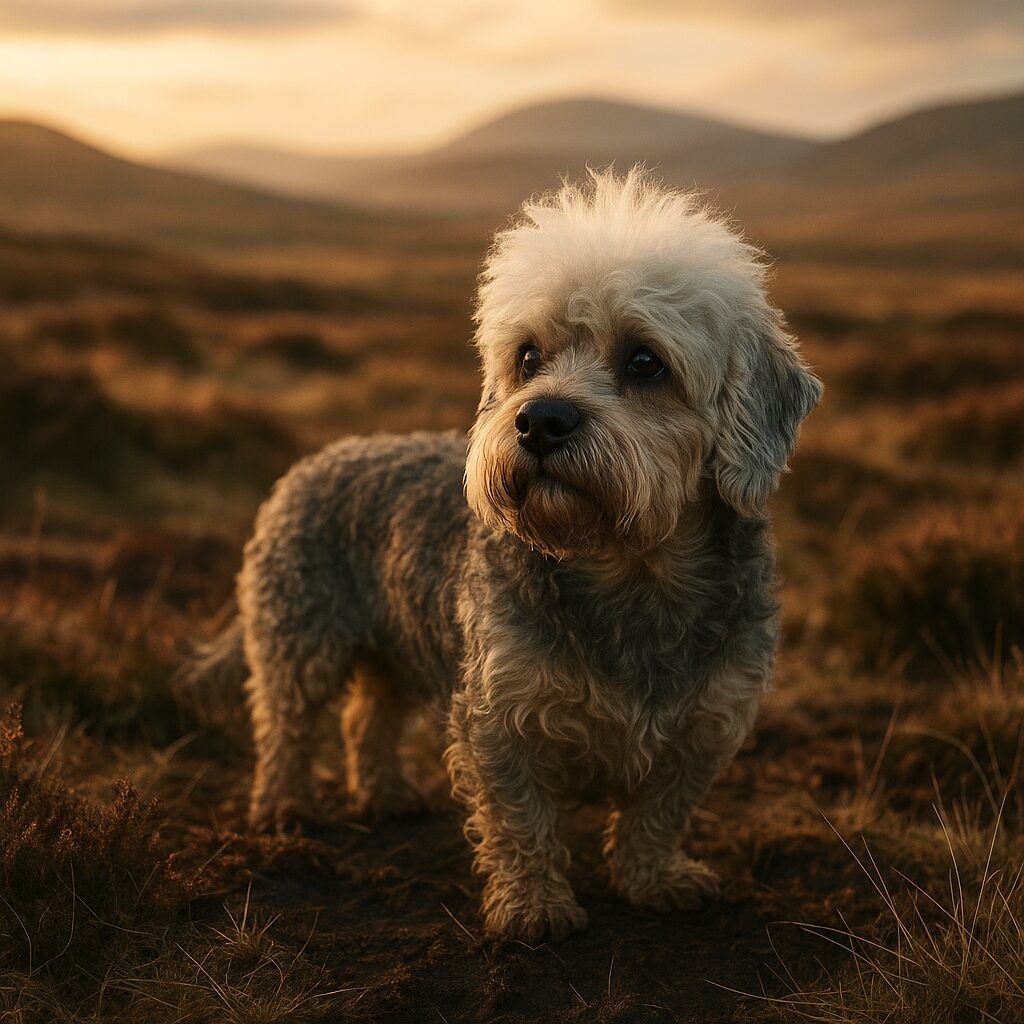
The Dandie Dinmont Terrier catches the eye with its combination of traits: long and bushy head, bushy eyebrows, drooping ears, and a body longer than tall. The classic coats are “pepper” (bluish gray) or “mustard” (beige-brown), often with delicate shades that enhance the breed’s old and rustic side.
| Characteristic | Typical Data |
|---|---|
| Height at withers | 20–28 cm |
| Weight | 8–11 kg |
| Coat | Pepper (gray) or Mustard (beige-brown) |
| Life expectancy | 12–15 years |
Coat and Maintenance
The hair is hard and tight on the body, softer and denser on the head. It requires regular brushing to avoid tangles and occasional stripping (removal of dead hair) if aiming for a show-quality coat. Many owners opt for a “functional” cut: reducing thickness without altering the natural texture. In short, maintenance requires some investment but not hours daily.
Temperament: Between Courage and Gentleness
Behaviorally, the Dandie is surprising. It has the courage worthy of a terrier when it comes to defending its territory or following a trail. At the same time, it is affectionate, almost reserved, with people it knows. This mix makes it excellent for family life: it is playful but not destructive, vigilant without being anxious. Its good mood is often described as calm rather than exuberant.
Relationship with Children and Other Animals
It is not a “baby” dog, but it tolerates the presence of reasonable and respectful children very well. With other animals, the hunting instinct can awaken: early socialization is therefore essential to learn coexistence with cats and small mammals. However, with other dogs, it generally remains diplomatic, provided it has been accustomed early to meetings.
Health and Longevity: Points of Attention
The breed is generally robust, but some sensitivities exist. Among the most frequently mentioned concerns: genetic eye problems, a predisposition to obesity if diet is not controlled, and sometimes joint issues related to the elongated morphology. Rigorous selection by the breeder, with health tests, minimizes these risks.
- Eye exams recommended before breeding.
- Weight control essential to spare the joints.
- Dental care: prophylaxis and tartar monitoring.
Feeding and Exercise
It does not require prolonged sporting efforts: daily walks and moderate play are sufficient. The key is regularity and quality of food. Balanced kibble, adapted to size and age, and attention to treats prevent excessive calorie intake. Mental activity (scent games, small courses) will satisfy its curious mind without pushing it to excess.
Breeding and Availability: Why So Rare?
Several factors explain the rarity of the Dandie Dinmont. First, the standard is strict, and responsible breeding requires health tests and character selection — costly steps that limit the number of litters. Next, demand remains limited: few households truly know the breed and many prefer more publicized breeds. Finally, some lines remain family-owned and not commercialized, which reduces the visible supply on the market.
How to Choose a Breeder
Favor a breeder transparent about health history, who allows visits, shows the parents, and provides post-adoption follow-up. Waiting times can be long; it is better to register on waiting lists and accept that adoption takes time rather than rush toward a puppy from a dubious breeder.
Practical Tips for Future Owners
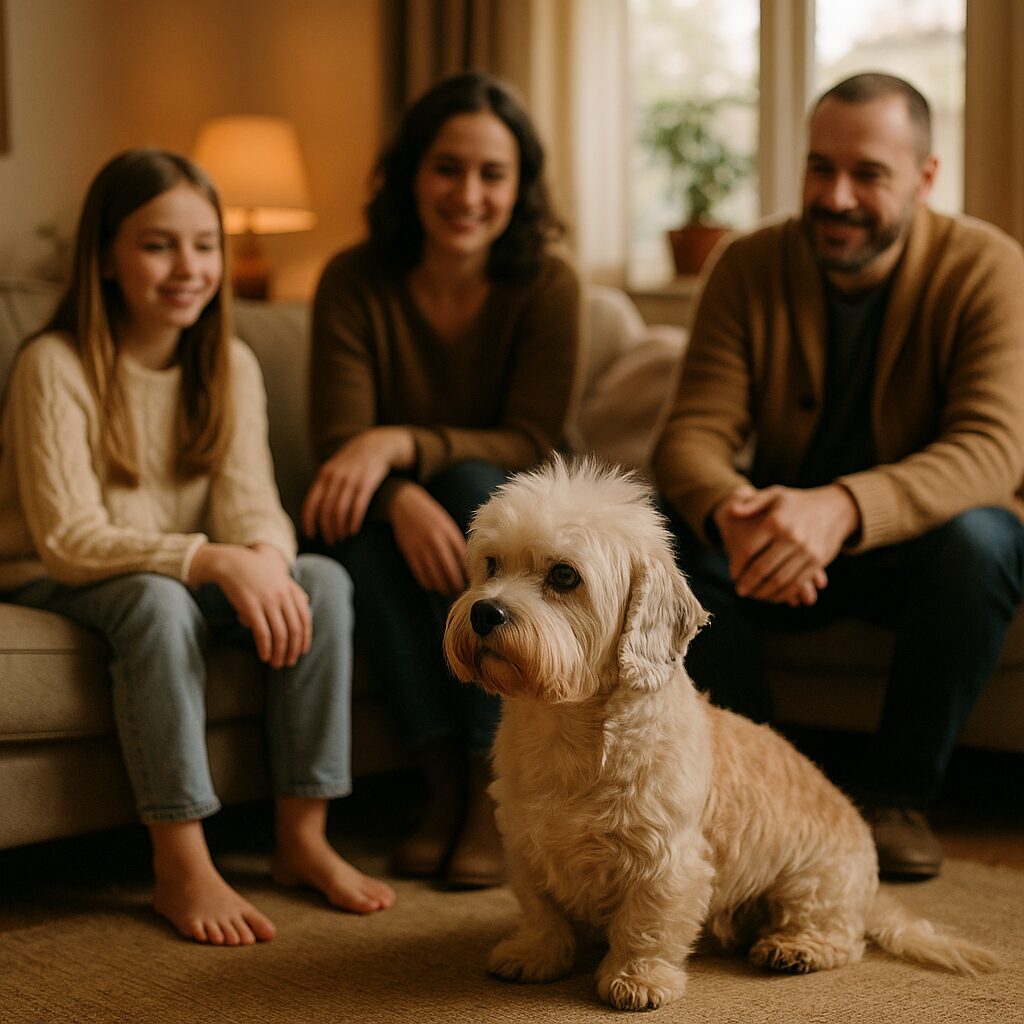
Before welcoming a Dandie, evaluate your lifestyle: he loves human presence and hates prolonged isolation. Prepare varied socialization times, invest in a positive trainer to reinforce obedience without harshness, and schedule regular veterinary check-ups. Finally, accept the cost: a quality puppy, responsibly bred, is rare and therefore relatively expensive.
Checklist Before Adoption
- Visit the breeder and meet the parents
- Check health tests (eyes, hips if available)
- Request a health record and vaccination follow-ups
- Plan gradual socialization (children, cats)
- Budget for grooming and prevention
Quick Comparisons
Compared to other British terriers, the Dandie stands out for its relative gentleness and “old-fashioned” look. It is less energetic than a Jack Russell, less imposing than an Airedale but more reserved than a Westie. If you are looking for a village companion, capable of being active in the morning and peaceful for the rest of the day, it ticks many boxes.
“A small dog with great courage” — often summarized and heard among breeders and longtime enthusiasts.
FAQ
Is the Dandie Dinmont suitable for apartment living?
Yes, provided daily outings and mental enrichment are ensured. Its size and temperament make it suitable for city life, as long as solitude is limited.
Does it shed a lot?
No, it is not a breed that sheds particularly: the hard coat requires maintenance but does not leave clumps of hair everywhere like some dogs with abundant undercoat.
What is the average price of a puppy?
Variable depending on the country and the quality of the breeding, but expect a price higher than the average for small non-rare dogs, especially for tested lines that conform to the standard.
Is this dog noisy?
It can alert and bark at a stimulus, but it is not known to be vocally hyperactive. Early training for calmness is nevertheless useful.
Learn More and Recommended Resources
To deepen your knowledge, prioritize breed clubs and recognized associations that provide standards, health recommendations, and lists of reputable breeders. The knowledge passed on by experienced breeders remains the best source to understand the subtleties of character and specific care.