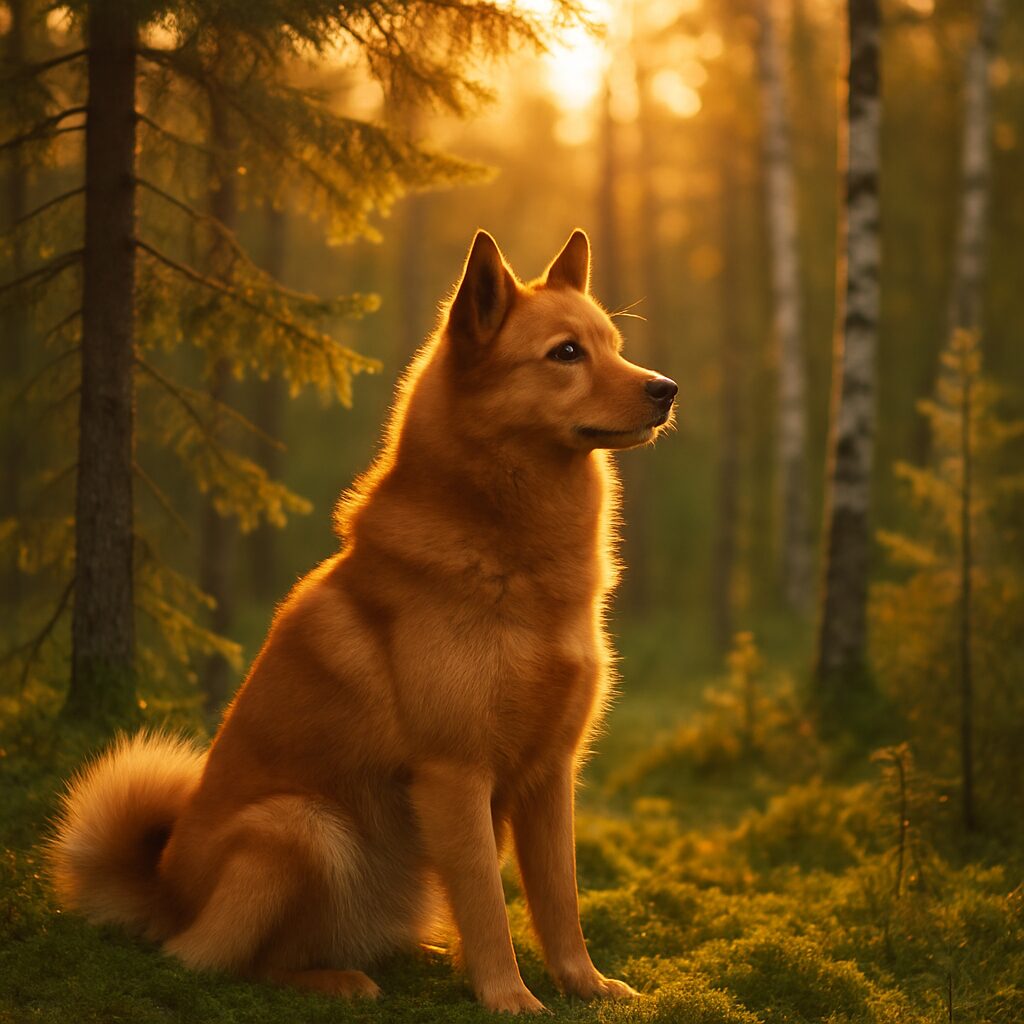
With its appearance like a little fox and its melodious bark, the Finnish Spitz fascinates as much as it intrigues. Born to hunt small birds in the forests of Finland, it has become, over time, a faithful and lively companion. Let’s explore the origins, temperament, care, and tips for living well with this lively Nordic barker.
🦊 Reddish coat » and insulating double fur: perfect for harsh winters, this “fox” can withstand negative temperatures while sporting an elegant silhouette.
🔊 Distinctive bark » inherited from bird hunting: it signals the catch and guides the owner without stopping, hence its nickname “barking fox.”
🏡 Independent but sociable »: it thrives in a family, enjoys long walks, and requires firm training to temper its natural autonomy.
🩺 Life expectancy of 12 to 15 years » and good general health: some predispositions (dysplasia, dental problems) require vigilance and regular monitoring.
Origins and history of the Finnish Spitz
The first traces of the Finnish Spitz date back several centuries in Finland, where it accompanied hunters in dense forests populated by small game. Descended from Nordic-type dogs, it carries the imprint of a true bond between man and wild nature. Its piercing voice was precious: as soon as it located a perched bird, it would stay put and bark to attract the hunter’s attention, never letting go.
From small game hunter to modern companion
In the 20th century, the Finnish Spitz almost disappeared with the evolution of hunting methods. Yet, its charm won over the Finns who, in 1979, designated it as the “national dog.” Even today, it proudly holds this role, a symbol of national pride and independence. While its missions have changed, its energy and tracking instinct remain intact, making it an endearing companion for outdoor lovers.
Physical characteristics and appearance
The charm of the “barking fox”
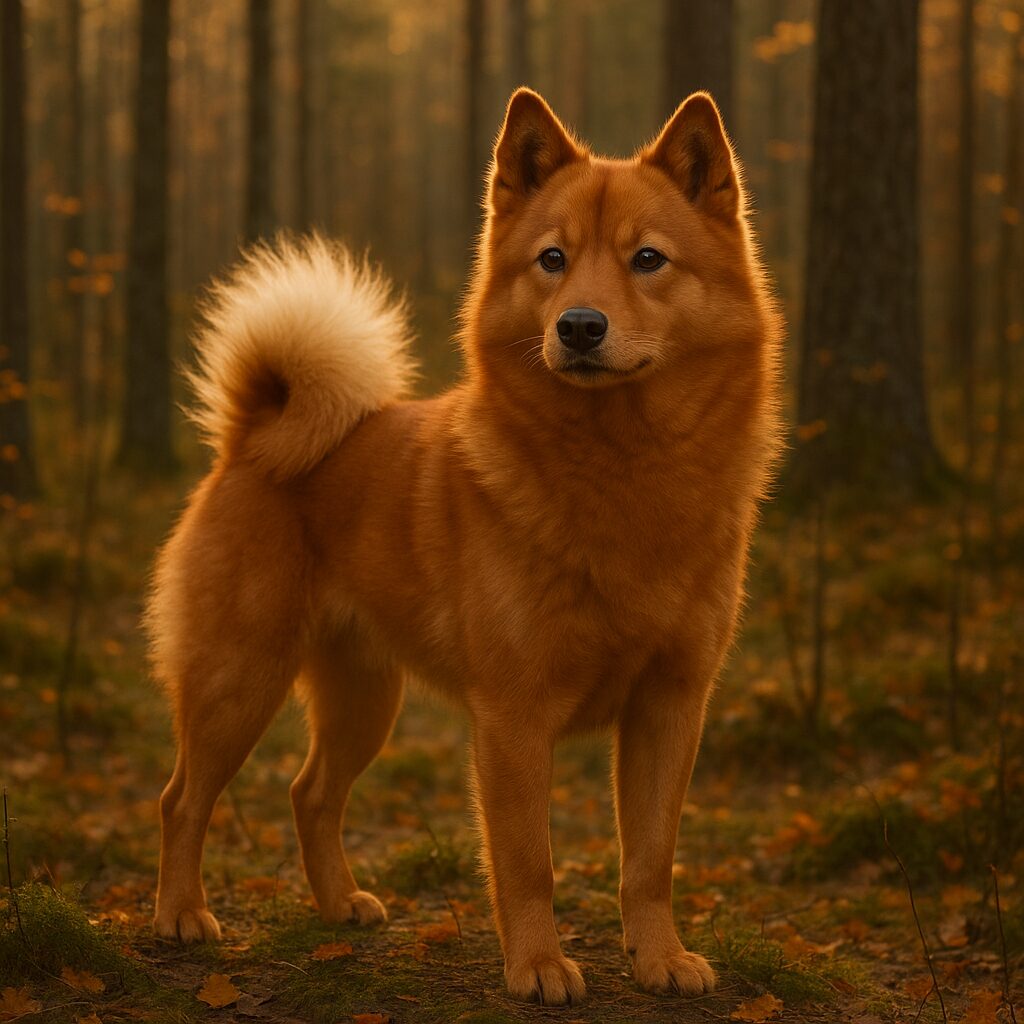
At first glance, the Finnish Spitz seduces with its dense and bright red fur, almost flamboyant. Its tail, carried curled over the back, adds a touch of elegance. Males generally measure between 48 and 53 cm at the withers, while females often reach 44 to 49 cm. Their almond-shaped brown eyes and erect triangular ears highlight an always attentive expression.
Structure and proportions
Compact and muscular, it does not show unnecessary heaviness. Its well-proportioned limbs guarantee unparalleled agility, whether climbing rocks or leaping between trunks. Its chest is broad, offering good lung capacity to support long activity sessions.
Temperament and behavior
The Finnish Spitz combines liveliness and independence. Very curious, it loves to explore its environment and sometimes keeps a pack spirit, appreciating the company of other dogs. But beware: its pride can make it stubborn if its habits are not framed early enough.
- Socialization »: warm with family, he can be reserved with strangers, hence the need for good early socialization.
- Energy »: he requires at least one hour of daily exercise, including running, playing, and sniffing.
- Hunting »: the tracking instinct remains sharp, so it is best to avoid areas full of small animals if you don’t want to see him take off towards the horizon.
The famous bark
More than just a signal, his bark is a true tradition. When you listen to it, it sounds like a little hunting dog in conversation with the forest: rhythmic, energetic, almost melodic. It’s fascinating, but it can quickly become intrusive in a shared living environment.
Training and socialization
Ideally, training begins from the first month. Teaching leash walking, basic commands (“sit,” “heel,” “stop”) and exposure to various situations stabilize his temperament. Although he is intelligent, his independent side requires consistency and positive rewards: treats, petting, kind words, anything that reinforces his engagement.
Health and care
Feeding
An adult Finnish Spitz generally weighs 10 to 15 kg. His caloric needs are around 250 to 350 g of quality kibble per day, split into two meals. The quality of proteins is essential to preserve his musculature and energy level.
Exercise and coat maintenance
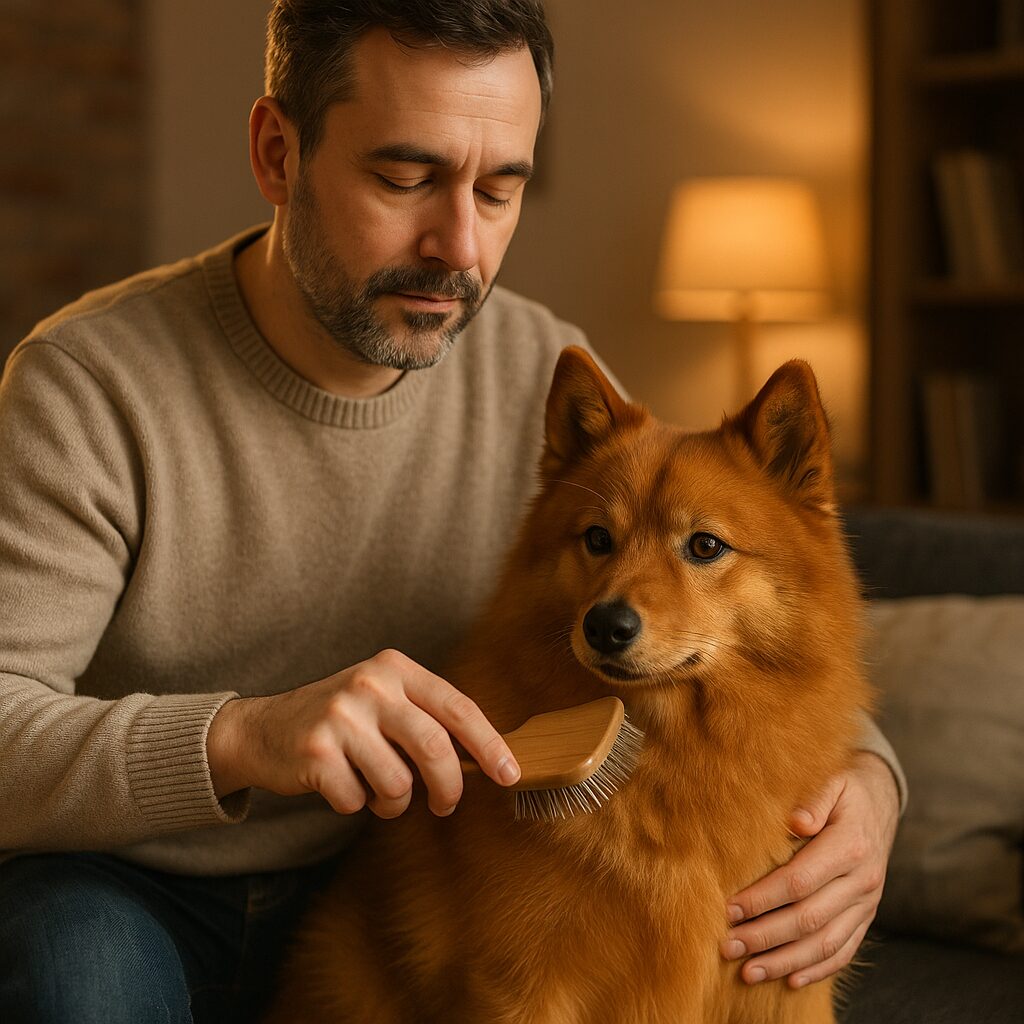
Weekly brushing is sufficient to remove dead hair and prevent tangles, but during shedding season, it can increase to two sessions per week. Using a brush suitable for thick hair ensures a consistently silky coat.
Environment and daily life
In a house with a garden, he thrives easily, provided he can run freely. In an apartment, he will require long walks and access to green spaces. The ideal remains a loving home that respects his need to explore while imposing clear boundaries.
Quick comparison with other Nordic breeds
| Breed | Size | Weight | Temperament |
|---|---|---|---|
| Finnish Spitz | 48–53 cm | 10–15 kg | Lively barker, independent |
| Schipperke | 25–33 cm | 3–5 kg | Curious little devil, full of energy |
| Norwegian Elkhound | 51–56 cm | 20–25 kg | Tenacious hunter, sociable |
“It only takes a frank look and a bark to feel the Nordic soul of this dog.”
– Personal anecdote from a Finnish breeder
FAQ
What is the minimum space needed for a Finnish Spitz?
A fenced garden is ideal, but a spacious apartment works if daily outings are multiplied (minimum 1.5 hours of walking).
Does the Finnish Spitz bark a lot?
Yes, it is his most distinctive trait. Early training helps channel this instinct.
Is this breed suitable for children?
Absolutely, he is gentle and patient, provided that initial meetings are supervised and based on mutual respect.
Are there hereditary diseases to watch for?
Hip dysplasia and dental issues are among the most common; regular veterinary check-ups are necessary.