
The Golden Retriever captivates with its innate gentleness and ability to adapt to many contexts: family, sports, therapy. Halfway between a working dog and a true “heart on paws,” it exudes a kindness that reassures as much as it excites. Whether you are a fan of long forest hikes or a lover of cozy moments in the living room, this versatile dog will accompany you with contagious enthusiasm and a stable temperament.
🐾 Balanced Temperament: sociable and tolerant, it is as comfortable with children as it is in the presence of strangers.
💛 Unmatched Versatility: between canine sports, nature outings, and therapy missions, it juggles roles without ever faltering.
🏆 Intelligence and Training: eager to learn, it responds particularly well to positive reinforcement and cognitive games.
🎯 Care and Well-being: specific dietary needs and joint monitoring are essential to preserve its long-term health.
Origins and Evolution of the Breed
In the 19th century, the Scottish hunting grounds saw the birth of a dog capable of retrieving both waterfowl and migratory birds. The result of crosses between spaniels and setters, the Golden Retriever initially served as an assistant to hunters before becoming popular outside the hunting fields. Its golden coat, from which it takes its name, is actually the result of rigorous selections seeking a coat both resistant to bad weather and easy to maintain. The icing on the cake: its slightly wavy water-resistant fur makes it formidable in swimming, a trait common to many retriever dogs.
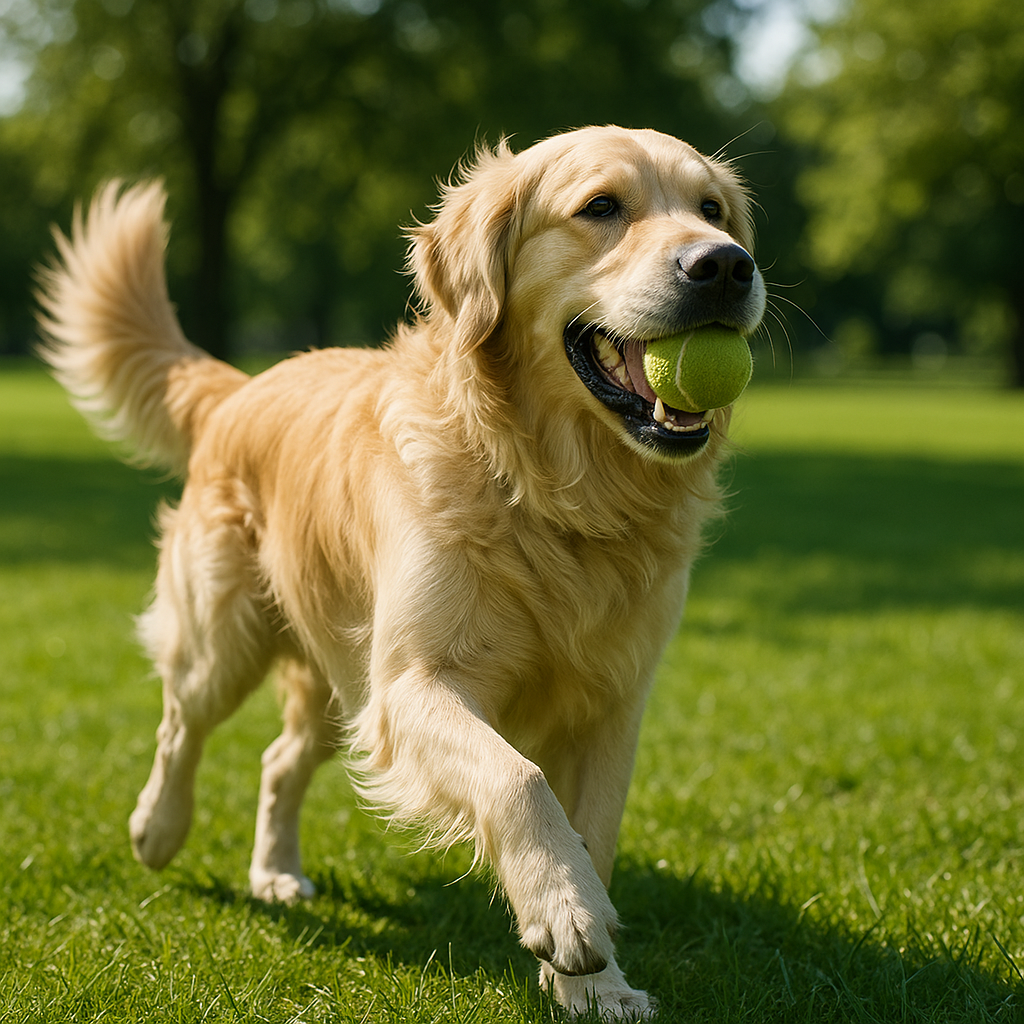
A Companion with a Gentle Temperament
Socialization and Family Bond
The Golden Retriever loves to be at the heart of its household’s life. Neither too independent nor suffocating, it feels comfortable surrounded and knows how to be naturally patient with the youngest. This ability to remain calm in the face of loud voices or noisy displays of affection makes it a valuable ally for dynamic families. Speaking of playmates, there are sometimes similarities with the Cavalier King Charles Spaniel, although the latter favors a lighter build and a softer gait.
Tolerance and Protective Instinct
Contrary to the common idea that kindness equates to weakness, the Golden Retriever knows how to pass through several alert stages in case of danger. Its keen sense of observation allows it to detect discomfort or an unusual presence, while avoiding excessive harshness. It warns rather than attacks, which is why its guardian role often limits itself to barking to signal intrusion, never tipping into aggression.
Versatility in Daily Life
Sports and Outdoor Activities
Capable of covering several kilometers in canicross or excelling in agility, he easily handles moderate workloads. Some disciplines even resemble the pulling trials of the Yakutian Laika, a robust and enduring Nordic dog. Water remains a favorite terrain: diving, retrieving objects, or simply swimming, he transforms into an astonishing aquatic athlete.
Therapy and Assistance Dog
His sensitivity and emotional reliability make him a natural energizer for hospitals, nursing homes, or programs assisting people with disabilities. In school or hospital settings, his mere presence can reduce stress and promote communication. He is a true bridge between the human and animal worlds, a valuable asset for combining interaction and well-being.
Education and Specific Needs
Socialization and Learning
From the moment he arrives home, it is crucial to start socialization: exposure to different environments, meetings with other dogs, and gentle handling sessions. Methods based on positive reinforcement prove most effective, especially using interactive toys and suitable treats. To go further in obedience exercises, you can consult the complete profile.
Nutrition and Health Care
This dog, prone to joint dysplasia and ear infections, requires careful monitoring. The diet must be balanced, often divided into two daily meals to prevent stomach torsion. Favor high-quality protein kibbles, with controlled fat intake to maintain an ideal weight. Ear hygiene, regular coat brushing, and a semi-annual veterinary check-up complete this care plan.

FAQ
What temperament does the Golden Retriever have?
He is distinguished by a gentle, balanced, and extremely sociable nature, with a protective instinct without excessive aggression.
Is the Golden Retriever suitable for apartment living?
In the city, regular access to walks is essential. With enough exercise and mental stimulation, he can adapt to limited living space.
How much exercise should be offered daily?
At least 1 to 2 hours of activity including walking, playing, and training sessions, depending on his age and physical condition.
How to limit the risks of dysplasia?
Controlled growth through an adapted diet, veterinary checks, and moderate activity during the first months are essential.
At what age should education begin?
Ideally from the moment he arrives home (between 8 and 10 weeks), favoring short and playful exercises to establish trust and complicity.