
Born in the wild lands of Scotland, the Gordon Setter captivates with its black and tan coat and a temperament both dynamic and composed. An outstanding pointing dog, it combines the endurance of an athlete with the gentleness of a faithful companion, for whom every outing becomes an opportunity to express all its energy and complicity.
In brief
🕵️ Origin: Originating from the Scottish Highlands in the 19th century, it takes its name from the Gordon family, passionate about hunting.
⚡ Character: Loyal, attentive, and full of zest, it knows how to be calm at home to preserve its balance.
💇 Care: Regular brushing and targeted care are enough to keep its coat shiny and silky.
🎯 Activity: Hiking, tracking, or simple retrieving games: this “born hunter” demands a stimulated mind and a body in motion.
History and origins of the Gordon Setter
The beginnings among Scottish castles
On the estates of the Earls of Sutherland, brown and black pointing dogs coexisted to track pheasants. At the beginning of the 19th century, Sir Gordon of Kinrara paid special attention to these lines, favoring the “black and tan” coat and a docile character. Little by little, the Gordon Setter stood out for its aristocratic appearance and hunting talent.
A preserved and recognized breed
In 1924, the first Gordon Setter club was established in Scotland, formalizing its standard and encouraging breeders to maintain exemplary quality in head, structure, and temperament. Today, this breed enjoys an international reputation, both for hunting and family life.
A temperament combining passion and calm
Controlled energy
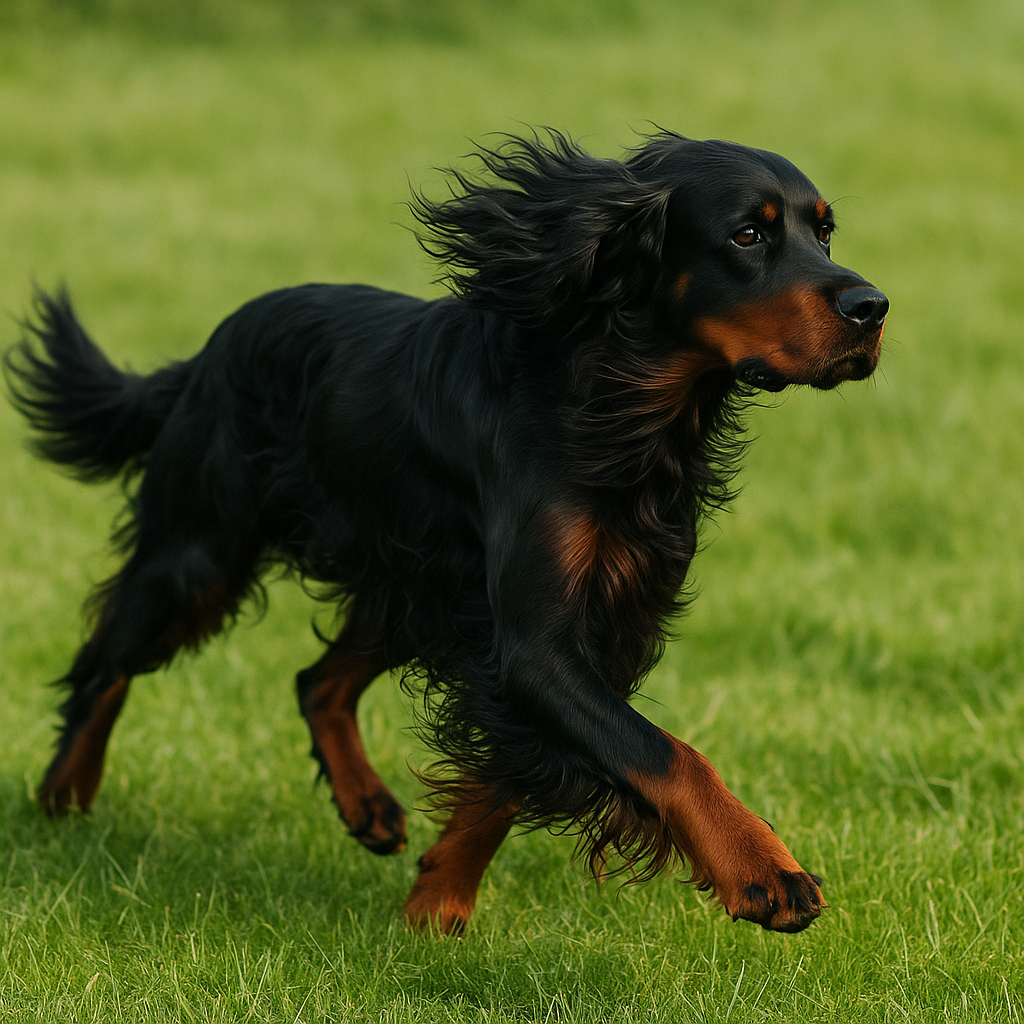
At first glance, one might think this dog never stops: long strides, alert nose, it explores every corner with enthusiasm. Yet, indoors, it transforms into a composed companion, appreciating a soft spot to relax. This ability to switch from intense effort to tranquility is its uniqueness.
Sociality and complicity
The Gordon Setter shows particular attachment to its owner, constantly seeking approval. Its sociability extends to children and other animals, provided early socialization has taken place. Thanks to its intelligence, it quickly understands house rules and willingly engages in thinking games.
Care of the Gordon Setter
Coat care
- Weekly brushing with a soft brush: removes dead hairs and prevents tangles.
- Regular ear checks: prevents infections in dense fur.
- Light trimming of fringes: manages moisture when returning from rain.
Feeding and Veterinary Follow-up
| Aspect | Frequency | Remarks |
|---|---|---|
| Balanced meals | 2 times a day | Quality proteins and omega-3 for the coat |
| Routine visit | Annually | Vaccinations and joint assessment |
| Dental sedation | As needed | Prevent tartar, improve breath |
Recommended Education and Activities
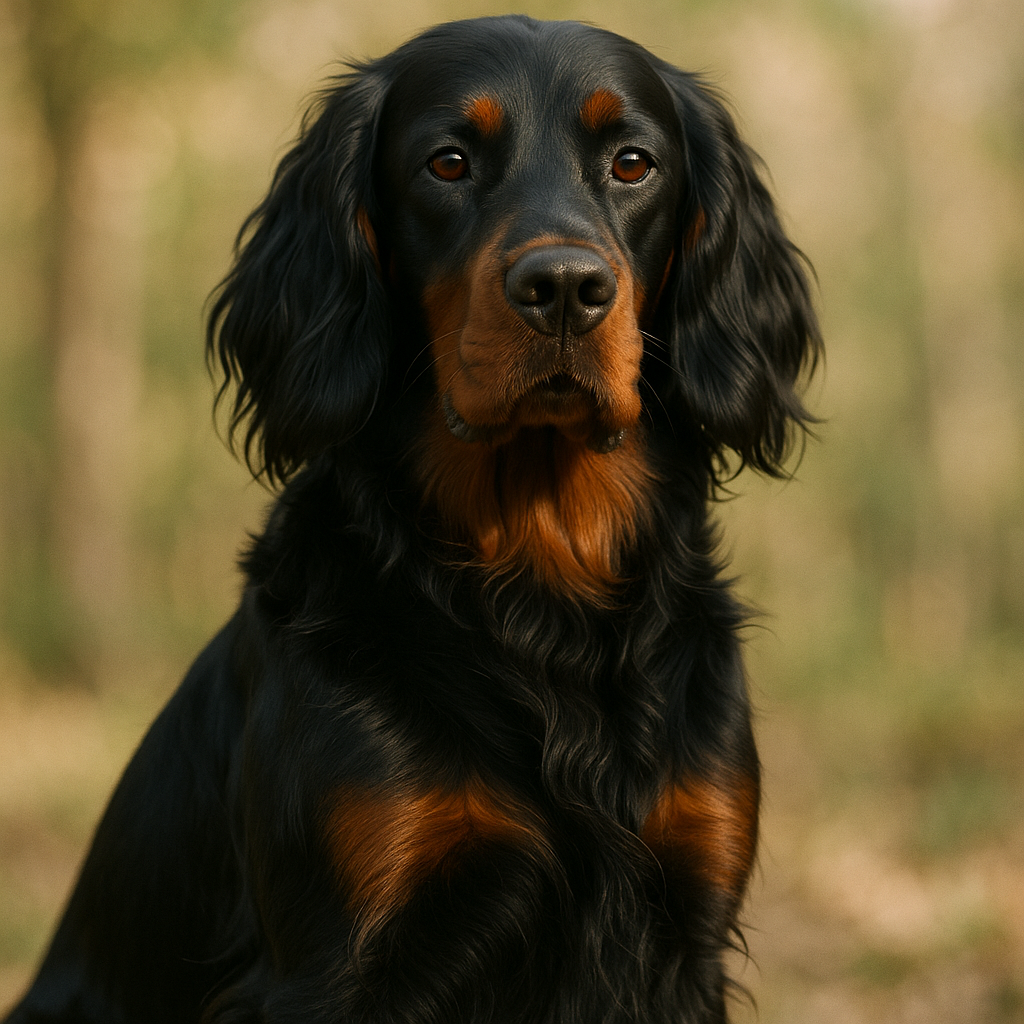
Education of a Gordon Setter must be consistent and positive. He excels in tracking exercises, retrieving in water or on land, but also enjoys clever hide-and-seek games. Agility can be an excellent complementary activity, as it channels his energy and strengthens your bond.
- Basic obedience (sit, lie down, recall) from 2 months old
- Tracking exercises: olfactory awakening and concentration
- Agility or canine sports: to exhaust his dynamism
Ideal Environment for a Setter
City life is not excluded, but the Gordon Setter will truly thrive in a house with a garden, ideally close to natural areas. Parks or hiking trails then become his favorite playground, where he can express his hunting talents and incredible endurance.
FAQ
How tall is an adult Gordon Setter?
The male generally reaches 58 to 69 cm at the withers, while the female measures between 56 and 66 cm.
Is the Gordon Setter suitable for families with children?
Yes, his gentleness and patience make him an excellent play companion, provided the encounters are supervised and respectful.
What is the life expectancy of this dog?
His average longevity ranges between 10 and 12 years, provided he has a suitable diet and regular veterinary care.