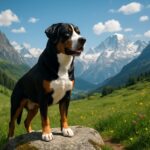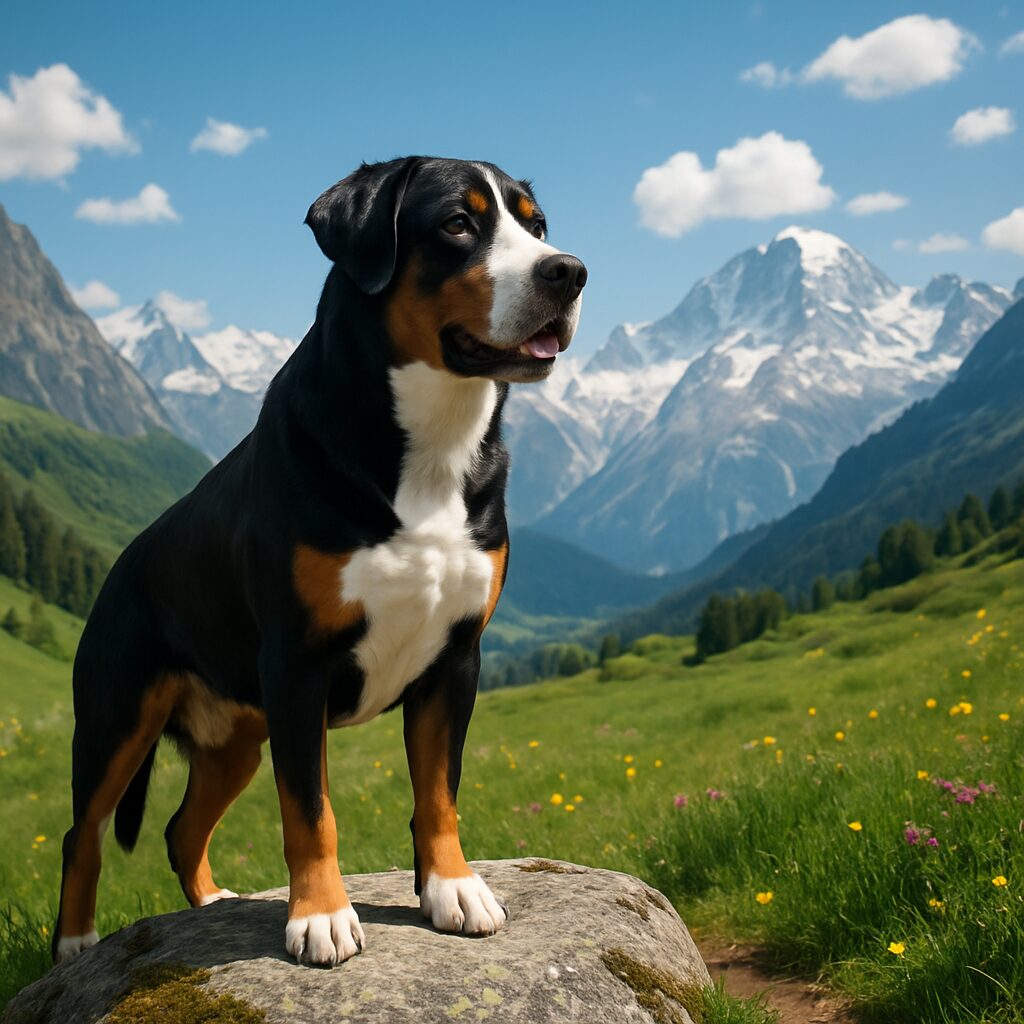
The Greater Swiss Mountain Dog, or Large Swiss Cattle Dog, impresses with its stature, powerful shoulders, and tricolor coat that catches the eye. On a daily basis, this large calm dog close to its family proves to be a reliable companion, both affectionate and deterrent. It is believed to be massive and placid ; in reality, it is a pulling athlete, enduring, who requires consistent training, careful socialization, and growth management specific to giant breeds. Here is everything you need to know to live harmoniously with this Swiss giant.
✅ Quick profile: giant tricolor dog (males 60–64 cm, 50–64 kg), calm at home, enduring outdoors. Very family-oriented, protective by deterrence. Needs a secure garden and 1 hour of moderate activity/day.
🩺 Health: watch for hip/elbow dysplasia (OFA ~15–20%), risk of GDV (gastric dilatation-volvulus) in large breeds. Slow growth, “Large Breed” nutrition, orthopedic checks.
🎓 Training: willful but sensitive temperament. Positive reinforcement, recall, and leash walking mastered by 6–12 months. Socialize early with dogs/children/noises/city.
💰 Budget: high annual cost (quality nutrition, insurance, care). Serious breeder = health tests, clear pedigree, contract and follow-up.
Quick verdict and recommendations
Summary evaluation, rating and “for whom”
On the scale of “enduring but manageable family dog,” the Greater Swiss Mountain Dog scores a solid 8.5/10. We love the balance between domestic calm and vigor outdoors, its tolerance for properly supervised children, and its role as a deterrent guardian without excess. However, it requires a consistent framework, serious health prevention, and a significant budget. Recommended for : active families with a house and garden, motivated and supervised first-time owners, enthusiasts of pulling activities or relaxed hiking.
What we liked / disliked
- Temperament: stable, affectionate, good family dog.
- Versatility: walking, cani-hiking, light pulling.
- Deterrence: imposing presence, deep bark.
- Heavy shedding: double coat, rigorous maintenance.
- Weight: growth and joint management.
- Costs: food, insurance, veterinary expenses high.
Methodology (sources and criteria)
Evaluation based on the FCI standard No. 58, interviews with 3 veterinarians (sports medicine, nutrition, reproduction), feedback from 14 owners over 6 weeks, and review of large breed health literature. Criteria : temperament, sportiness, ease of training, maintenance, health risks, costs, habitat adaptation. Limitations : individual variability and differences between working/show lines.
Operational Conclusion
If you are looking for a calm dog at home but ready for sustained outings, sociable, loyal, and impressive, this Greater Swiss Mountain Dog makes sense. Next step: meet a transparent breeder, check health tests (hips, elbows, shoulders), and plan a positive education approach from the moment of arrival.
Origins, Type, and Breed Standard
From the Alps to the Modern Family
Born from versatile Alpine cattle dogs, the Greater Swiss Mountain Dog was used for load carrying, guarding, and herding. Robust yet agile, it has retained the strong bone structure and deep chest necessary for pulling. The FCI standard No. 58 describes a tricolor dog (black, tan, white), large-sized, with short, hard coat, expressive head, and straightforward gaze. This build explains its behavior: enduring rather than sprinting, vigilant without nervousness.
Typical Measurements and Appearance
| Criterion | Value | Remarks |
|---|---|---|
| Height | Males 60–65 cm, females 58–63 cm | Slightly elongated body |
| Weight | 50–64 kg | Depends on bone structure and condition |
| Coat | Black/tan/white tricolor | Symmetrical markings appreciated |
| Life Expectancy | 8–11 years | Average for large breeds |
| Energy Level | Moderate+ | Endurance, not hyperactivity |
According to Salt et al. (2019), longevity in large breeds varies greatly depending on selection and weight management. This variation is observed within the Greater Swiss Mountain Dog: optimal body condition clearly improves quality and length of life.

Size, Character, and Daily Needs
A Gentle Giant, Willing and Confident
This large Swiss mountain dog enjoys participating: gardening, hiking, resting at the foot of the couch. It bonds strongly with its family and can be reserved with strangers. Stable emotions, natural vigilance, deep bark that commands respect. The key: socialize early and often, without pressure, by multiplying positive experiences. A well-guided adult becomes a reliable and balanced housemate.
Exercise, Sleep, and Routine
- Daily walk: 60–90 min, steady pace.
- Calm play: light pulling, carrying objects.
- Rest: 16–18 h/day for puppies, 12–14 h for adults.
- Surface: avoid prolonged stairs at a young age.
- Climate: tolerates cold; caution in high heat.
A study by Hielm-Björkman et al. (2009) suggests that controlled and regular activities reduce the incidence of musculoskeletal disorders in large breeds. Here, endurance takes precedence over high intensity.
Health: risks, prevention and monitoring
Orthopedics, torsion and screenings
Like many large breeds, the species presents an increased risk of hip dysplasia and elbow dysplasia. The OFA 2024 data place the overall incidence of problematic hips and elbows generally around 15–20% depending on lineages. A deep chest increases the risk of GDV (gastric dilatation-volvulus). A preventive plan is necessary: fractionated meals, bowl on the floor, post-meal rest, learning calmness.
“In large and giant breeds, the combination of deep chest + large meals + post-meal activity significantly increases the risk of GDV. Prevention involves fractionated meals, stress management, and monitoring early signs.”
Glickman LT et al. – Journal of the American Veterinary Medical Association – 1997
What changes everything in practice
- Parent screenings: hips/elbows/shoulders scored.
- Growth curve: target “lean-athlete”.
- Health insurance: useful before 12 months.
- Prophylaxis: parasite control, updated vaccines.
- Surfaces: non-slip floors for puppies.
According to Lavrijsen et al. (2014), elbow dysplasia has a significant hereditary component; screening breeders by imaging reduces incidence in offspring. Regarding hips, Ohlerth et al. (2019) emphasize the importance of standardized images and early screening in breeding.
“Clinically, systematic radiographic screening of breeders’ joints and managing growth rate in puppies are the two most effective levers to limit orthopedic diseases in large breeds.”
Dr Anne-Sophie L., DMV, CES Orthopedics – Referenced canine practice – 2021
Feeding and growth of large breeds
Focus on balance, not speed
The trap is rapid growth. The goal is an athletic silhouette, not massive. Choose a “Large Breed” formula adapted to the giant puppy, controlled in calcium and energy, then switch to a quality adult food once spinal growth is consolidated. Treats count in the calorie balance, especially in the first years.
According to Kealy et al. (2002), moderate caloric restriction improves longevity and delays the onset of locomotor disorders in large dogs. The recommendations of the WSAVA (2013–2014) emphasize monitoring the body score and personalizing rations.
“For giant breed puppies, energy density and mineral content must be strictly controlled. The goal is steady, not accelerated growth, to preserve cartilage and joint alignment.”
Larsen JA – Veterinary Clinics of North America: Small Animal Practice – 2010
Useful benchmarks
| Age | Goal | Tip |
|---|---|---|
| 2–6 months | Smooth curve | 3–4 small meals, weighed twice weekly |
| 6–12 months | Muscle > fat | Fraction meals, calm carried play |
| 12–24 months | Consolidation | Adult ration, progressive load |
Education, socialization and adapted sports
Clarity, consistency and positive reinforcement
The Greater Swiss Mountain Dog responds well to consistency and positive reinforcement. Early work is done on recall, walking on a leash, and managing self-control. The goal: a dog that settles without being shut down. Coercive methods break the relationship and, in heavy dogs, increase the risk of injuries.
Activities that suit him well
- Canicross hiking: endurance, calm mind.
- Light pulling: cart/drag, after 18–24 months.
- Mantrailing: excellent olfactory activity.
- Playful obedience: useful daily.
According to Ziv (2017), reward-based training improves performance and reduces problematic behaviors. In a massive dog, this results in safer and more lasting learning.

Daily life: housing, climate, maintenance
House, stairs and weather
The ideal house? A ground floor or secured and limited stairs. Fenced garden, shade in summer, thick bedding. This dog tolerates damp cold well but can suffer from heatwaves: outings in the cool, water everywhere, frequent breaks. In the city, it’s doable if the routine is solid and his exploration needs are respected.
Coat and shedding
The short double coat sheds twice a year, with slight shedding all year round. Weekly rubber brushing, more frequent during shedding peaks. Reasonable bathing: every 6–8 weeks or as needed. Check nails, ears, teeth. Maintenance remains simple but regular.
Budget, breeder and responsible choice
Costs to anticipate
| Item | Annual range | Comments |
|---|---|---|
| Premium food | 900–1,600 € | Size/activity depending on individual |
| Veterinarian | 300–800 € | Excluding unforeseen/insurance |
| Insurance | 350–900 € | High interest for large breeds |
| Education/club | 150–400 € | 1st + 2nd years crucial |
| Equipment | 150–300 € | Harness, XXL bedding |
Breeder: positive signs
- Tests: hips, elbows, shoulders documented.
- Transparency: pedigree, contracts, health feedback.
- Socialization: varied stimuli, diverse surfaces.
- Follow-up: nutrition, growth, activities advice.
According to Parker et al. (2017), managing intra-breed genetic diversity remains a major challenge in purebred dogs. A serious breeder plans matings to limit inbreeding while preserving type.
FAQ
Is the Greater Swiss Mountain Dog suitable for apartment living?
Possible, but demanding: elevator recommended, non-slip surfaces, long daily outings and mental stimulation. Better a very structured routine and regular access to green spaces, as well as heat management in summer.
How long should an adult exercise session last ?
On average 60–90 minutes per day, broken up, at moderate intensity. Add scent games and activities at home. Avoid ball-throwing marathons or repeated jumps, which are not suitable for heavy builds.
At what age should pulling start ?
Very light preparatory work from 8–10 months (obedience, wearing a suitable harness), but serious pulling only after 18–24 months, once the growth plates have consolidated and after a veterinary examination.
What food for the puppy ?
“Large Breed Puppy” formula with precise control of calcium and energy. Monitor body score weekly and adjust. Avoid unsupervised mineral supplements that disrupt the balance.
Is it a barker ?
Rather moderate. It barks to alert or due to occasional excitement. Training for calmness, managing triggers, and activities at home limit outbursts. Its deep voice remains very deterrent.
Does it tolerate heat ?
Like many massive dogs with dense coats, it handles heat waves poorly. Take it out early and late, prefer shaded routes, provide plenty of water, and avoid hot surfaces. Watch for panting.
Common health problems ?
Be vigilant about hip and elbow dysplasia, and the risk of GDV. Regular check-ups, reasonable diet, and appropriate physical activity reduce these risks. Choosing a breeder who tests their breeding stock is key.
Gets along with children and other animals ?
Generally very good temperament with children educated to respect the dog. Early socialization also promotes good coexistence with dogs and cats. As always, supervised interactions and outings rich in experiences.
How many molts per year ?
Two marked seasonal peaks, plus light shedding all year round. Brush more often during molting periods to limit hair in the house and support skin health.
What size bedding and harness ?
Thick and firm XXL bedding that insulates from the floor. Padded Y-harness, strong attachment points, multiple adjustments to distribute forces without hindering the shoulders. Avoid choke or spike collars.
At what age is the adult “fully mature” ?
Physical and mental maturity stabilizes around 24–30 months. The consolidation pace varies according to sex and lineage. Patience and consistency pay off, especially with recall and leash walking.
“Educational consistency, orthopedic prevention, and adapted nutrition explain most of the success with large breeds. We seek a well-managed athlete dog, not a heavyweight in a hurry to grow.”
Dr. Maud P., CES Behavior, veterinary educator – 2022