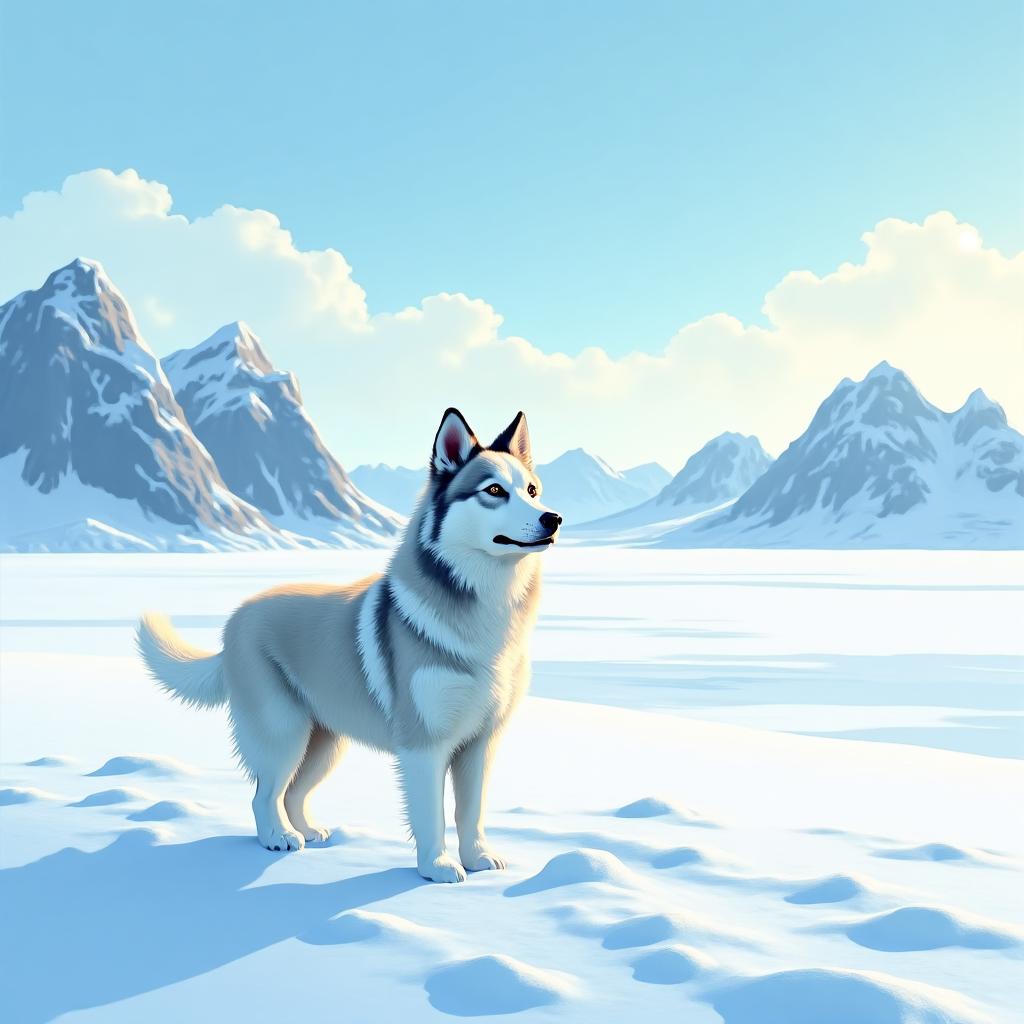
The Greenland Dog, faithful companion of the Inuit peoples for millennia, remains one of the undisputed masters of the polar trails. Both robust and enduring, it embodies an ancestral know-how where every fiber of its coat and every muscle of its body have been shaped by a harsh environment. Exploring its history, physical qualities, and temperament is to dive into a world where man and dog share the same quest: to defy the extreme.
❄️ Inuit origins: a breed domesticated over 2,000 years ago at the edges of Greenland to meet the need for traction on snow.
💪 Exceptional endurance: capable of covering more than 60 km per day at temperatures often below –30 °C.
🧣 Adapted coat: dense double fur combining a highly insulating undercoat and water-repellent guard hairs.
🏆 Versatility: used both for scientific expeditions and traditional sled dog races.
Origins and history
Millennial Inuit roots
The Greenland Dog’s lineage with the first Arctic dogs dates back several centuries before our era. The Inuit, true masters of the Arctic, shaped this breed by selecting the most resistant individuals, capable of pulling heavy loads over kilometers of sea ice. Each lineage thus settled in a specific region, with the local climate and topography influencing size and strength. Today, oral archives recount how these dogs served not only for transportation but also as support during seal or polar bear hunting.
Evolution in the face of climate change
As Arctic warming gradually changes the nature of the terrain – alternating between hard ice and soft snow – the Greenland Dog must adapt. In recent decades, some breeders have integrated a selection program focused on the ability to pull in wetter conditions or on sandy terrains resulting from partial melting. This adaptation helps keep the breed alive in areas where the sea ice thickness is now less consistent, while preserving the original DNA of the Inuit populations.
Physical characteristics
Robust body and insulating coat
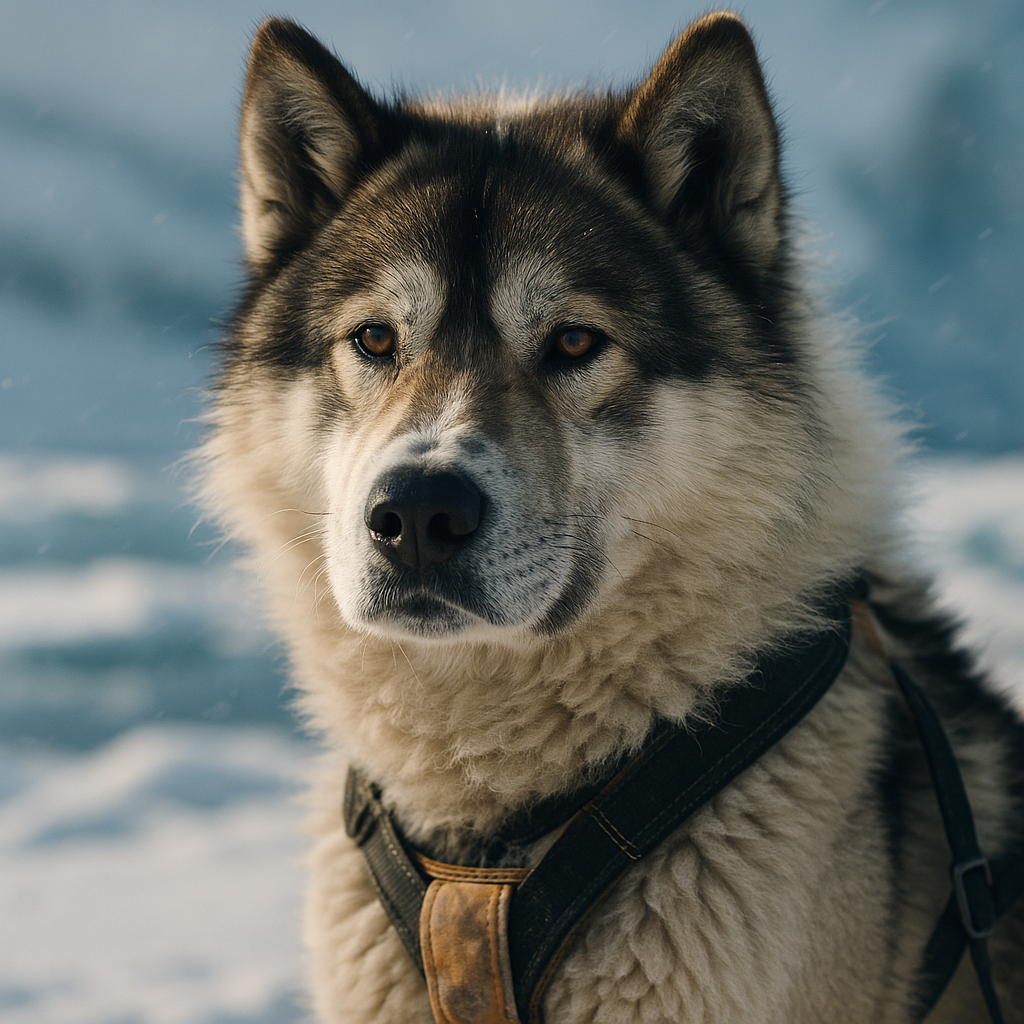
Massive without being heavy, the Greenland Dog has a powerful skeleton supported by dense muscles. Its height generally ranges between 58 and 70 cm, with a weight oscillating from 30 to 45 kg. The coat consists of a woolly undercoat, very thick, and a hard, straight guard hair that effectively repels moisture. In blizzard conditions, snow literally slides off its back, thus preventing any accumulation of cold water on the skin.
Endurance and muscular strength
The secret of its inexhaustible energy lies in a physiology optimized for long-duration effort. Its heart and lungs have an oxygenation capacity superior to that of many other sled dog breeds. The muscles, rich in slow fibers, allow it to maintain a steady pace without excessive fatigue. Studies show that a team of Greenland Dogs can cover up to 60 km per day, or even more during multi-day expeditions.
Behavior and Temperament
- Team spirit: sociable, it quickly integrates into a team, respects the hierarchy, and responds to the musher’s commands.
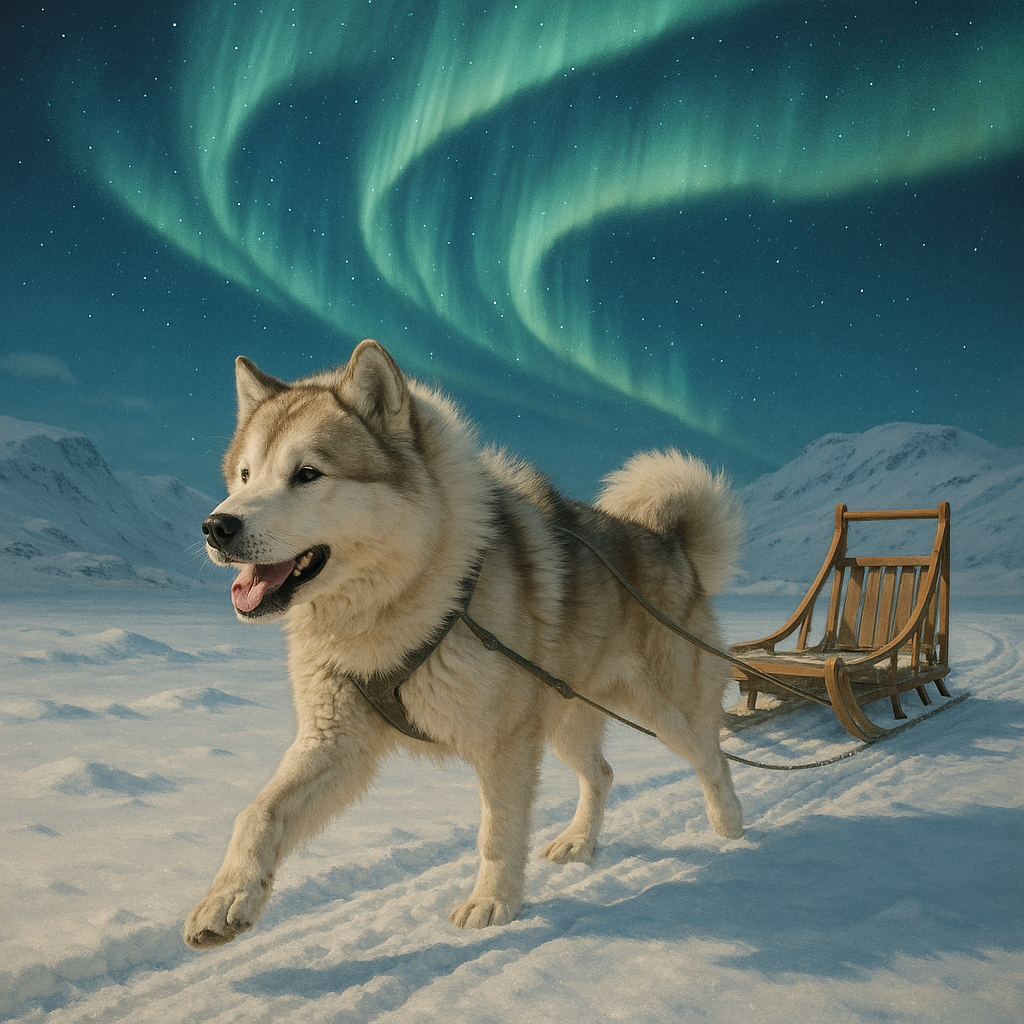
- Pulling instinct: pronounced, it likes to feel the tension on the harness and finds a form of pleasure in running.
- Mental strength: capable of focusing on the goal even in storms or when facing Arctic solitude.
- Controlled independence: remains attentive, autonomous during long expeditions, while willingly returning to its handler.
Use in Competition and Expeditions
Roles in sled dog races
Some North American and European circuits host races intended for Greenland Dogs. These events highlight the collective performance of the team more than pure speed. The distances covered vary from 40 to 200 km, sometimes over several stages. Mushers appreciate their consistency and ability to maintain a steady pace, avoiding jerks and preserving the overall energy of the team.
Participation in scientific research
During polar expeditions or geophysical missions, Greenland Dogs still accompany research teams. Their robustness allows them to transport equipment, tents, and provisions over areas inaccessible to motorized vehicles. Moreover, their presence reassures scientists: a healthy dog is often the best indicator of cold conditions tolerable for humans.
Comparison between sled dogs
| Breed | Average height | Average weight | Endurance (km/day) |
|---|---|---|---|
| Greenland Dog | 58–70 cm | 30–45 kg | 60+ |
| Siberian Husky | 50–60 cm | 20–27 kg | 40–50 |
| Alaskan Malamute | 58–64 cm | 34–39 kg | 45–55 |
Care and Maintenance
Diet adapted to the climate
To support their high metabolism, these dogs receive a caloric intake higher than that of temperate breeds. The diet combines quality animal proteins (fish, small game), healthy fats (fatty fish, oils), and complex carbohydrates (root vegetables). In extreme cold, the quantity can double or even triple to compensate for energy expenditure and maintain a constant body temperature.
Training and socialization
Training of the Greenland Dog begins from one to three months of age with recall and leash walking exercises. As soon as it can wear a harness, light pulling is gradually introduced before increasing the load. Exposure to different stimuli—cars, other animals, mechanical noises—ensures a balanced temperament ready to face the challenges of an expedition.
FAQ
What is the average lifespan of a Greenland Dog?
Between 10 and 14 years, depending on care, diet, and the intensity of physical activity.
Can this dog tolerate heat?
Despite its dense coat, it can live in a temperate climate if outings are adapted and effort is avoided during the hottest hours.
Can you go hiking on foot with a Greenland Dog?
Yes, provided the distance is adjusted and enough fresh water is planned.
What is special about the Greenland Dog’s howl?
Lower and longer than that of the Husky, it is often described as a guttural song, memorable during polar nights.