
The Labrador Retriever, with its mischievous look and silky coat, embodies the very image of the family dog. One might think that a perfect dog only exists in photos, yet this versatile dog proves every day that it knows how to make itself indispensable, whether living in a house with a garden or in an apartment ventilated by long walks.
🐾 Gentle temperament and sociable, the Labrador bonds with all family members, young and old alike.
🏡 Remarkable adaptability: it thrives equally well in physical activity and in quiet moments in the living room.
🍽️ Clear nutritional needs, with a balanced diet to avoid weight gain, common in this greedy breed.
🎓 Easy education to conduct, thanks to its sharp intelligence and desire to please, ideal for beginners as well as experienced owners.
Origins and temperament
Originating from Nordic countries, the Labrador Retriever traces its roots to the fishermen of Newfoundland, where it retrieved nets and brought back fish that had fallen into the water. In less than two hundred years, it has transformed into one of the most popular dogs in the world, notably due to its balanced temperament and its ability to live in harmony with humans.
A working history
Unlike some contemporary companion dogs, the Labrador was not created for solo “couch potato” life. Its past as a retrieving dog, strong swimmer, and scout on fishing boats explains its endurance and taste for aquatic activities. “In open water, it’s a fish in a dog’s body,” a dog trainer likes to say.
Playful and gentle character
The term “gentle” does not suffice to describe the Labrador’s natural generosity. Always up for a cuddle or a playtime, it knows how to vary the pleasures: wild runs in the garden, Frisbee thrown on the fly, or calm time by your side. This duality between energy and serenity creates a rare balance in large dogs.
The Labrador’s daily needs
Exercise and mental stimulation
The Labrador requires at least one hour of daily physical activity, divided between leash walks, retrieving games, and swimming sessions. On the mental stimulation side, treat-dispensing toys and obedience exercises work wonders to prevent boredom and unwanted nibbling.
- Varied walks (forest, seaside, urban park)
- Foraging games (hiding objects or treats)
- Swimming sessions to strengthen muscles and endurance
- Learning simple commands (sit, lie down, retrieve object)
Balanced Diet
The biggest challenge for owners remains controlling the voracious appetite of the Labrador. A daily caloric intake adapted to its age and activity level prevents weight gain, which can lead to joint problems. Here is an overview of the daily ration:
| Age | Average Weight | Calories per Day | Meal Frequency |
|---|---|---|---|
| Puppy (3–6 months) | 10–15 kg | 900–1,200 kcal | 3 meals |
| Young (6–12 months) | 15–25 kg | 1,200–1,600 kcal | 2 meals |
| Adult (1–7 years) | 25–35 kg | 1,600–2,200 kcal | 2 meals |
| Senior (7+ years) | 25–35 kg | 1,400–1,800 kcal | 2 meals |
The Labrador in the Family: Strengths and Challenges
At home, this dog blends in with disconcerting ease. Its primary asset? An exemplary tolerance towards children, even when they pull its ears or jump on its back. The icing on the cake is its size, which provides a reassuring build for the little ones without being intimidating.
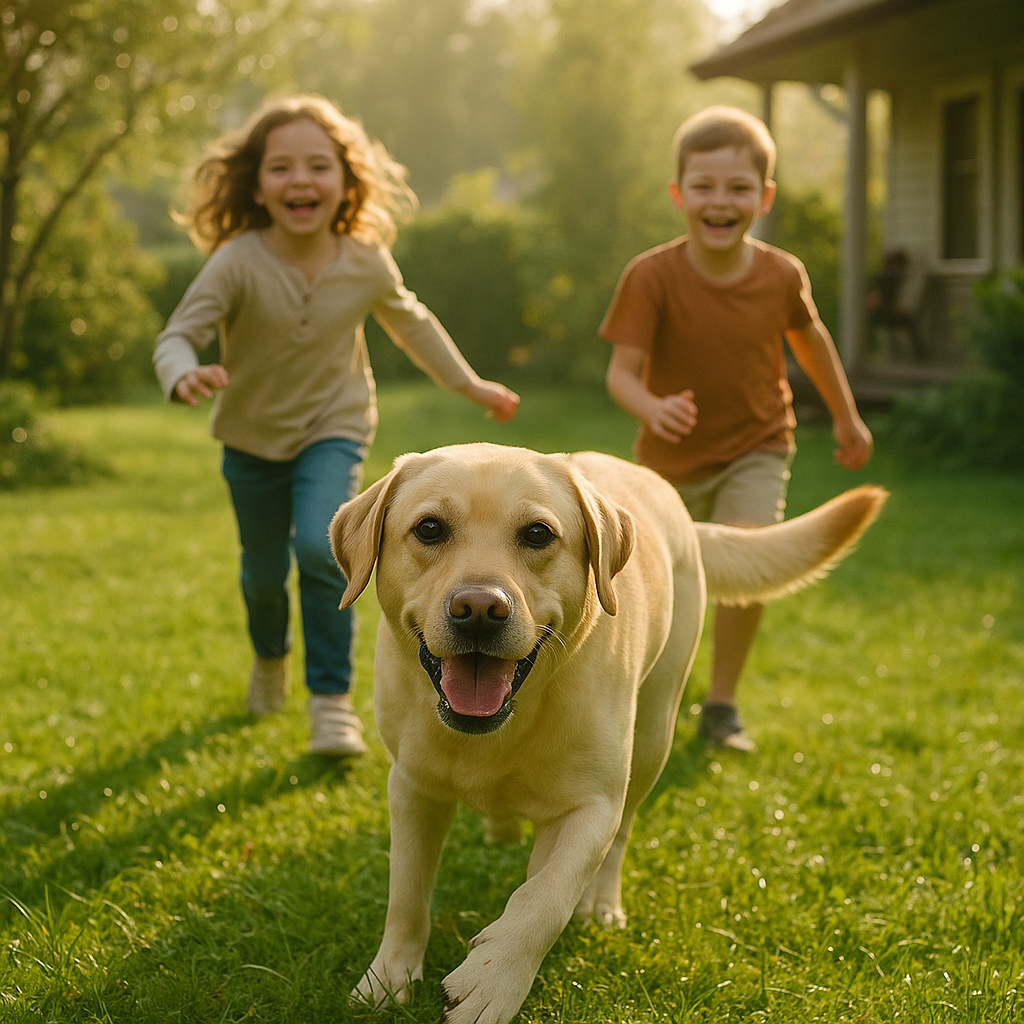
With Children
“My three-year-old daughter and the Labrador fight over the pillow on the couch,” confides a young parent. The dog willingly accepts this closeness, as long as mutual respect is established: the child is taught to pet gently and not to disturb the dog during its meals or naps.
With Other Animals
- Cats: generally tolerant, but a gradual introduction is preferred.
- Other dogs: its social nature facilitates encounters at dog parks.
- Rodents or birds: caution is necessary, as the retrieving instinct may drive it to chase.
Training and Socialization Tips
The Labrador likes to please, which makes training almost playful. Positive reinforcement (treats, petting, verbal praise) is favored for every good behavior. Short (10–15 minutes) and regular sessions keep its attention alert. Above all, it is accustomed very early to street noise, dogs, and strangers to avoid any future anxiety.
When Adopting: The Right Approach
Adopting a Labrador from a shelter or a responsible breeder involves verifying breeding conditions, veterinary follow-up, and health tests (hips, elbows, eyes). Most serious breeders provide a health certificate and agree to meet future owners to ensure a lasting match.

FAQ
What is the ideal age to welcome a Labrador?
Between 8 and 12 weeks, the puppy has received its first vaccinations and begins socialization. This is the perfect time to build a solid relationship.
Is the Labrador suitable for apartment living?
Yes, provided it is offered frequent and intense outings. Its need for exercise can be met by swimming, cani-cross, or well-paced play sessions.
How to prevent obesity in this greedy breed?
By measuring portions, avoiding table scraps, and regularly offering physical activity. Slow-chew toys (Kongs, dispensers) also help manage cravings.