The Miniature Schnauzer has this unique blend of a neat appearance and the energy of a little guardian: expressive mustache, furrowed brows, brisk gait. Contrary to appearances, it is not just a cuddly companion; it is a dog with a strong personality — lively, attentive to its surroundings, sometimes stubborn, but deeply loyal. This article offers a comprehensive and practical overview: history, physical standards, grooming, health, training, and tips for harmoniously integrating this dog into family life. We will also discuss its “mini-guardian” temperament and what that implies on a daily basis.
🐾 Origins and role: The Miniature Schnauzer is a descendant of the Standard Schnauzer, adapted to farm work, effective against rodents, and vigilant as a small guard dog.
✂️ Essential grooming: Regular maintenance and professional clipping every 6–10 weeks keep its wiry coat and typical mustache in good condition.
🧭 Practical character: Intelligent, responsive, and sometimes stubborn — an excellent family companion provided it receives consistent training and daily mental stimulation.
🩺 Health to watch: Life expectancy around 12–15 years, watchfulness for pancreatitis, dental problems, and dry keratoconjunctivitis.
Origins and historical role
The Miniature Schnauzer was born in Germany, the result of a deliberate crossbreeding aimed at obtaining a dog smaller than the Standard Schnauzer but just as effective against pests. The goal was a sturdy dog with a harsh coat, capable of working on the farm and alerting the household. Its compact silhouette and expressive mustache have become aesthetic signatures — the mustache is not just a decorative detail; it also protects the muzzle during rodent hunts. Over time, it evolved towards a mixed role: family companion and attentive sentinel. Enthusiasts of more massive guard dogs sometimes cite the Bullmastiff as an example of balance between power and composure; interesting links between these approaches to canine guarding can be observed by looking at their proportions and working methods.
Appearance and standards
A recognizable look
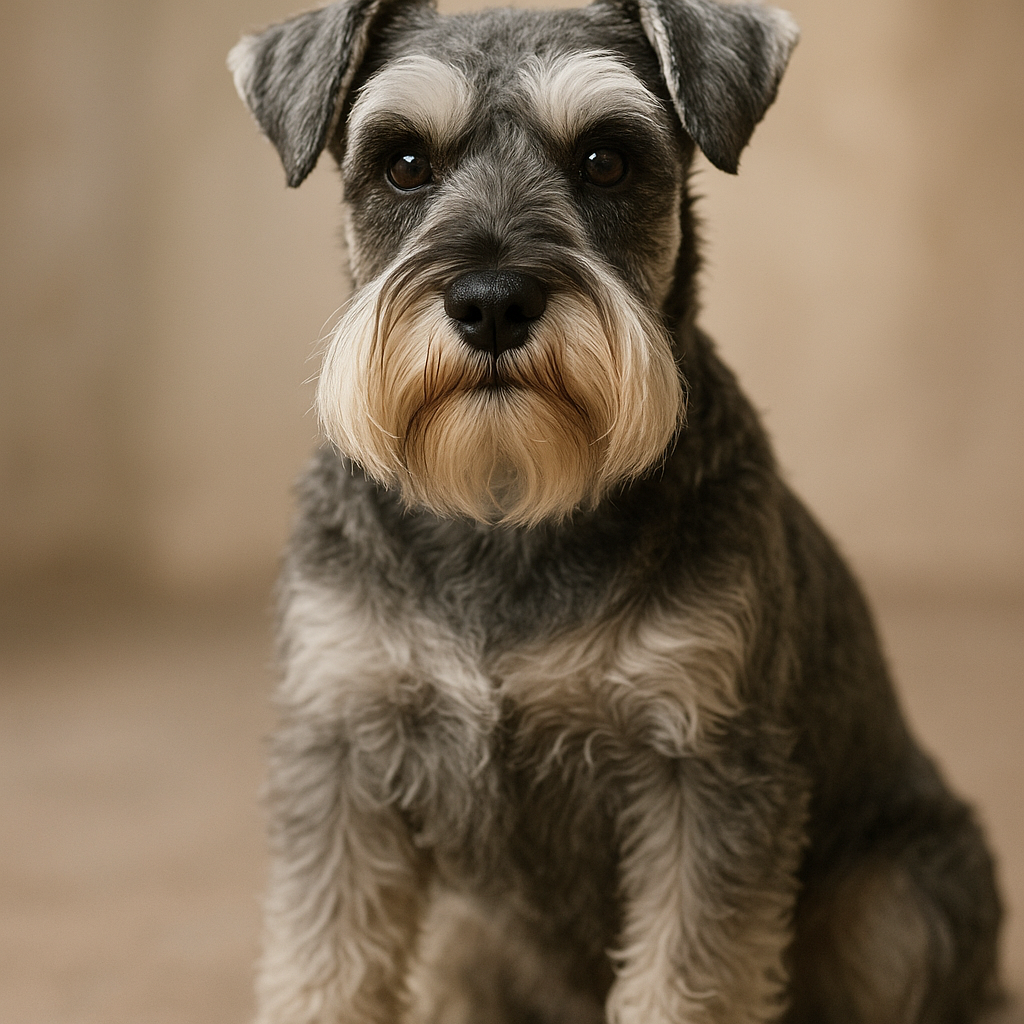
The Miniature Schnauzer sports a square head, marked eyebrows, and especially that mustache which gives a humanized look. The coat is double: a soft undercoat and a hard, wiry outer coat. Classic colors are salt and pepper, black and pepper, and solid black. The coat requires a structured cut — short on the body, four well-defined “legs,” and a head highlighted by the beard and eyebrows.
Measurement table
| Characteristic | Miniature Schnauzer |
|---|---|
| Height at withers | 30–36 cm |
| Average weight | 5–9 kg |
| Life expectancy | 12–15 years |
| Activity | Moderate to high — needs mental stimulation |
Temperament: small dog, big personality
What often surprises is the balance between a proud attitude and genuine sociability. The Miniature Schnauzer is courageous without being aggressive. He is naturally wary of strangers, hence his role as an alert dog: he barks to signal, then observes. If not properly socialized, this instinct can turn into overprotection or excessive barking. On the other hand, when well integrated, he is a lively companion, playful with children — provided interactions are supervised — and extremely attached to his humans.
Behavioral strengths
- Intelligence: learns quickly, gets bored quickly if limited to walks without stimulation.
- Alertness: excellent at detecting changes in the environment.
- Adaptability: adapts to apartment living if exercise needs are met.
Training: gentle firmness and consistency
Training the Miniature Schnauzer must be firm, fair, and creative. He responds particularly well to positive methods based on rewards, varied exercises, and consistency. Early socialization is essential to temper his reactions to strangers and other dogs. Short but frequent sessions are preferable — he prefers variety to monotonous repetition.
Recommended exercises and games
- Thinking games (food puzzles, object search).
- Playful obedience and light canine sports (agility, rally).
- Dynamic walks with reinforcement phases (approach, recall, eye contact).
Grooming and maintenance
The Schnauzer’s coat is not 100% hypoallergenic, but it sheds less than some breeds. Regular brushing prevents mats and limits hair loss. Specialized clipping by a professional is recommended every 6 to 10 weeks to maintain the characteristic shape and texture of the coat. Between appointments, home maintenance includes brushing, eye cleaning, beard care (to avoid food deposits), and frequent dental hygiene — as oral health strongly impacts overall well-being.
Grooming checklist
- Brushing 2–3 times per week
- Cleaning the beard after meals
- Professional clipping every 6–10 weeks
- Regular ear checks and nail trimming
Health: vigilance and prevention
Generally robust, the Miniature Schnauzer does have some predispositions: pancreatitis (sensitivity to dietary fats), liver diseases, urinary stones in some individuals, dental problems, and sometimes dry keratoconjunctivitis. Genetic tests and regular veterinary check-ups allow early detection of pathologies. A balanced diet, adapted to age and activity level, combined with dental care, significantly reduces many risks.
Practical health advice
- Avoid overly fatty treats to limit the risk of pancreatitis.
- Basic annual check-ups: blood tests, dental exam, vision check if necessary.
- Monitor urinary behavior; consult promptly if changes occur.
Living with a Miniature Schnauzer
It adapts well to apartment living if you provide stimulating walks and mental activities. Its size makes it a practical companion, but its need for attention and tendency to bark to alert require good management. It can be left alone for a few hours, but prolonged isolation develops anxiety. For active families, it is an adventure partner; for sedentary people, intellectual games and regular outings will be necessary to compensate.
Integration Tips
- Establish a clear routine from the moment it arrives.
- Encourage calm moments with occupation toys and regular naps.
- Work on recall and obedience to limit undesirable behaviors.
Quick Comparisons
If you are considering several breeds of domestic guardians, the Miniature Schnauzer offers a compact and spirited alternative. Unlike large protective mastiffs that rely on physical presence, this small Schnauzer favors alertness and reactivity. It is a difference in approach: vigilance and agility rather than brute physical deterrence.
Adopting or Buying: Points to Check
Whether from a breeder or adoption, check the medical history, puppy socialization, and the health of the parents. Ask to see the breeding conditions; a serious breeder offers health guarantees and genetic testing. Avoid vague ads: the Miniature Schnauzer must come from an environment that has prepared it for family life. Finally, anticipate annual costs (quality food, grooming, vaccinations, dental care).
FAQ
Does the Miniature Schnauzer bark a lot?
Yes, it can be vocal: it actively signals. If it barks excessively, it is often due to boredom, anxiety, or lack of socialization. Working on recall, desensitization to stimuli, and providing mental activities significantly reduces this behavior.
Is it a dog suitable for children?
Generally, yes: it is playful and affectionate. But interactions must be supervised, teaching both the dog and children mutual respect, and monitoring play to avoid accidental injuries in case of excitement.
What budget should be planned for the first year?
Include purchase or adoption fees, initial vaccinations, possible sterilization, professional grooming, equipment (leashes, bedding), and a reserve for veterinary consultations. A reasonable estimate varies by country and chosen options, but the first year is generally the most expensive.
In Practice: Quick Checklist Before Arrival
- Book a first veterinary appointment
- Prepare a feeding area and a secure bedding
- Choose a recommended groomer
- Plan a routine of outings and exercises
Practical Summary
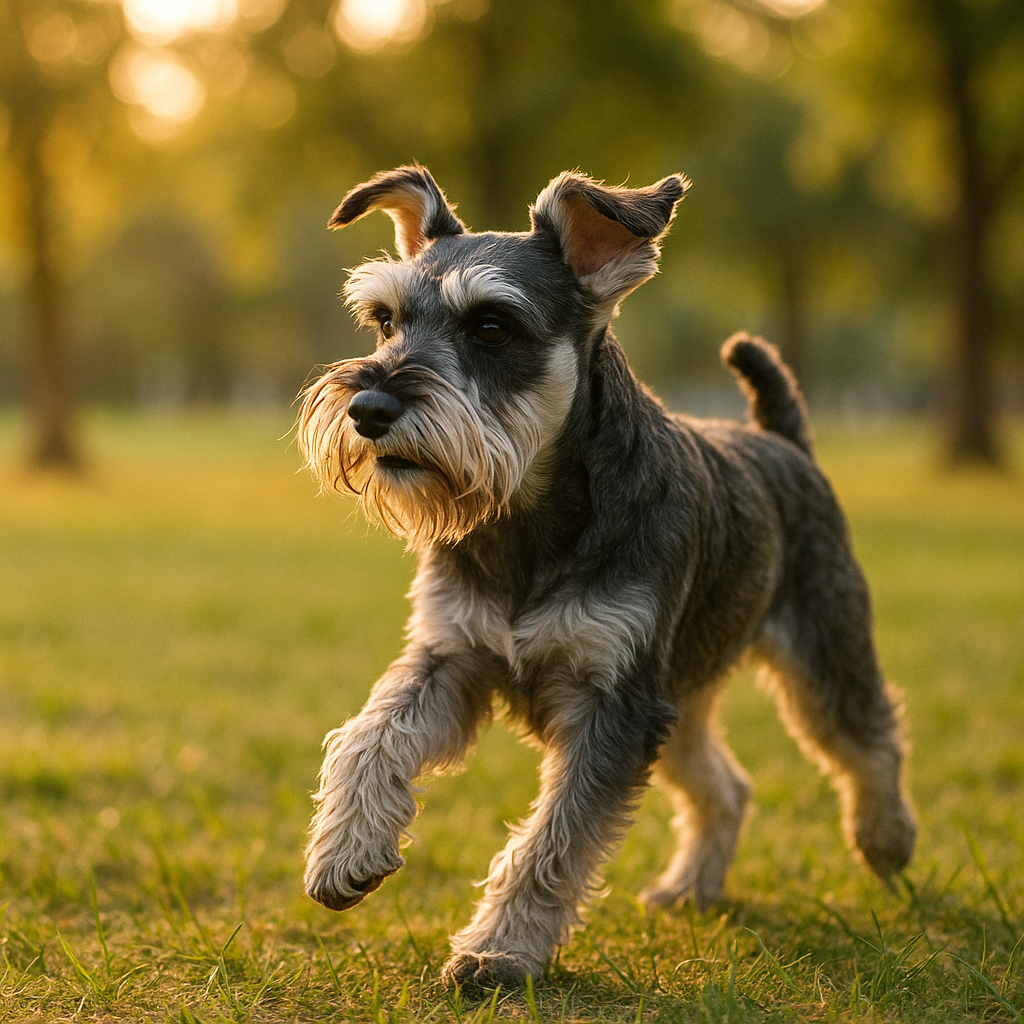
The Miniature Schnauzer is a lively companion, instinctively protective, and extremely endearing if you know how to meet its needs for exercise, grooming, and mental stimulation. It is a breed that rewards educational investment with remarkable loyalty — it often becomes, for its close ones, a true “mini mustached guardian.”