
Less known than its cousins the Puli or the Komondor, the Mudi fascinates with its elegant appearance and fiery temperament. Originating from the Hungarian plains, this compact and agile shepherd dog stands out for its versatility and great intelligence. In this article, you will explore its little-known history, its overflowing energy, its specific exercise and grooming needs, as well as the keys to a successful coexistence.
In brief
🐾 Hungarian origins: the Mudi stems from pastoral traditions established since the 19th century, when every farm required a dog that was both vigilant and multitasking.
⚡ Overflowing energy: born to guard and herd, it demands at least 1 hour 30 minutes of daily activity, including ball games, agility courses, or hikes.
🛁 Moderate grooming: its neat, medium-length straight coat does not tangle easily but deserves frequent brushing to remove dead hair and dirt.
🤝 Versatile companion: sociable and quick-witted, it fits equally well into a family home or structured canine activities (obedience, dog sports, tracking…).
Origins and history of the Mudi
Birth in the Hungarian plains
At the heart of the Carpathian basin, in the invigorating atmosphere of the vast Hungarian pastures, the Mudi was established. At the end of the 19th century, shepherds sought a dog capable of herding livestock but also exterminating pests that threatened crops and poultry. Very quickly, this natural selection shaped a robust, medium-sized dog able to endure both dry summers and harsh winters. Its name, “Mudi,” appeared in local documents around the 1920s, alongside other breeds like the Pumi or the Kuvasz.
Recognition and current status
Long confined to a circle of enthusiasts, the Mudi obtained recognition by the Fédération Cynologique Internationale (FCI) in 1966. In France and several European countries, it remains a rare breed, often imported in small numbers. Breeders emphasize preserving its original qualities: versatile character, hardiness, and great working ability. For a few decades, more and more enthusiasts have emerged seeking an active and intelligent companion ready to share sporting adventures or herding missions.

Character and temperament
The Mudi embodies a rare value: it combines the obedience of a working dog with the liveliness of an athlete. Gifted with attentive listening, it can understand complex commands and quickly adapt to changing situations. Behind its erect ears, every sound catches its attention: the flapping wings of a bird, the slam of a door, the call of its master. Curious, impulsive, sometimes playful, it hates monotony and often reveals itself as a born player.
- Intelligence: ability to retain routines and solve problems.
- Alertness: a perfect watchdog, he does not hesitate to signal any unusual activity.
- Sociality: he is friendly with children and other dogs, provided he has been properly socialized.
- Attachment: he forms strong bonds with his family and may suffer from boredom if left alone too long.
Care and specific needs
Exercise and mental stimulation
A true bundle of energy, this athlete needs daily sustained sessions. Agility, flyball or canicross: he doesn’t care which sport, as long as he moves and thinks at the same time. Herding, trying obstacle courses or searching for hidden objects are all ways to channel his energy. Without suitable activity, the Mudi risks developing destructive or anxious behaviors.
Grooming and coat care
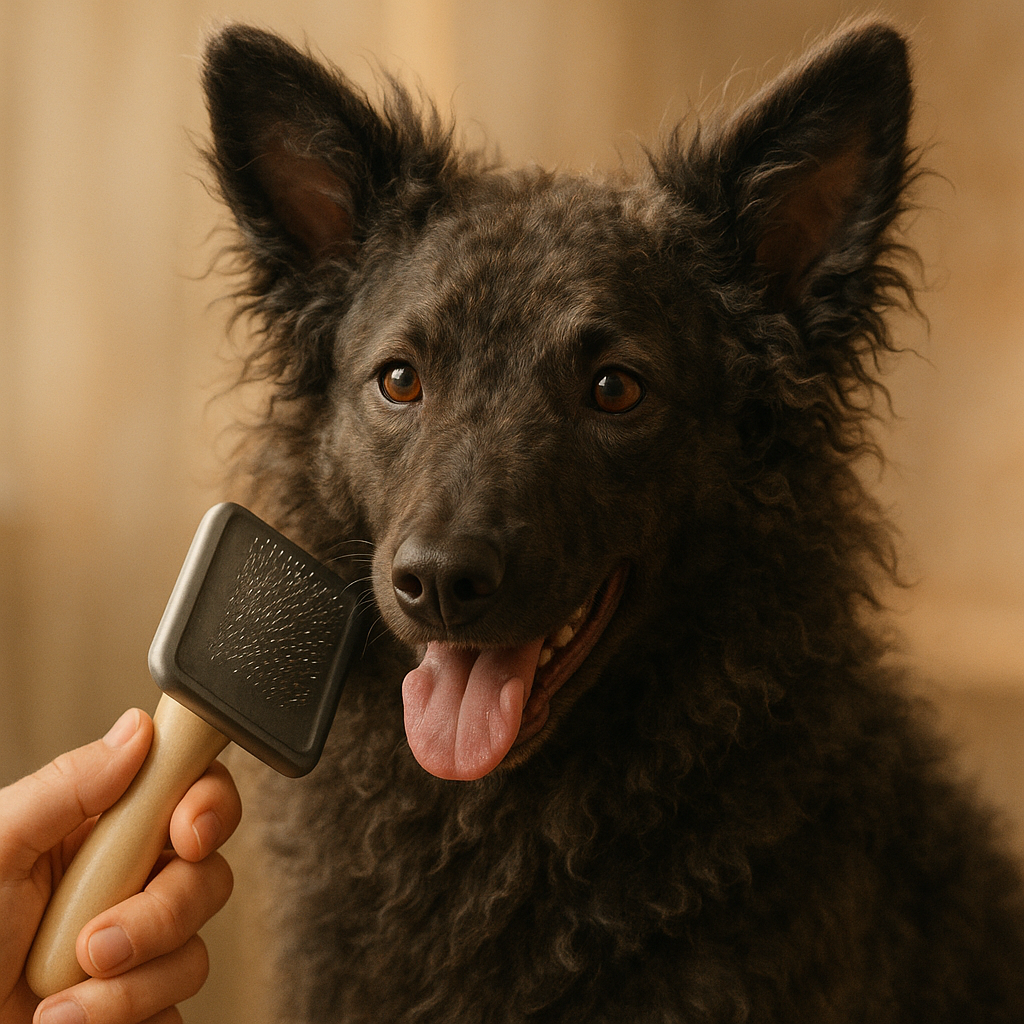
His medium-length, dense, and straight coat requires neither systematic clipping nor sophisticated trimming. Brushing two to three times a week is enough to remove dust deposits and dead hair. During shedding periods, daily brushing with a slicker brush effectively removes the undercoat. Regular nail trimming and ear checks are also basic care routines.
Health and longevity
| Characteristic | Detail |
|---|---|
| Life expectancy | 12 – 14 years |
| Height | 30 – 42 cm at the withers |
| Weight | 8 – 13 kg |
| Colors | Black, brown, gray, apricot, brindle |
| Predispositions | Hypertension, dysplasia; screening recommended |
Training and daily life
To flourish this lively dog, training must combine kindness and consistency. Basic exercises (sit, lie down, recall) are repeated enthusiastically, with varied rewards: toys, petting, or treats. Short, dynamic, and playful sessions maximize his attention. Thanks to his sharp memory, he quickly assimilates sequences but poorly tolerates overly rigid routines. In the family, regular outings, hide-and-seek games, and nature walks strengthen the bond.
“The Mudi is not just a lap dog: he is an adventure partner. The more challenges he finds to tackle, the stronger his balance becomes.” — specialized breeder
FAQ
Is the Mudi suitable as a first dog?
This breed can suit a novice, provided they are ready to provide regular physical and mental stimulation. Without this, the Mudi can become anxious or prone to running away.
At what age should training start?
Ideally from 8 weeks, through learning games and socialization, to establish trust and curiosity without stress.
Is it hypoallergenic?
No, its undercoat produces allergens: very sensitive people may experience symptoms during shedding.
Can it live in an apartment?
Theoretically yes, if the owner commits to going out several times a day and practicing intense outdoor activities.
How much does a Mudi puppy cost?
In France, generally expect between €1,200 and €1,800, depending on lineage, health tests, and the breeder’s prestige.