
The Norfolk Terrier charms with its compact appearance, mischievous gaze, and above all its deeply sociable character. Originating from a thoughtful mix of small English terriers, this lively and sturdy dog combines energy and gentleness with astonishing ease. Far from being just a pet, it proves to be an adaptable life partner, ready to share both urban daily life and countryside getaways.
In brief
😊 British origins: born in the 19th century, it descends from Norfolk terriers and other lines of rodent hunters.
🐾 Robust and compact body, 25–26 cm at the withers, 5–5.5 kg: a practical size for apartment living.
⚡ Playful and curious temperament, perfect for families, it loves exploring, playing, and balances between mischief and cuddles.
🛁 Moderate maintenance: regular brushing, some hair trims, and a good dose of exercise are enough to keep this little terrier in great shape.
Origins and history
Towards the end of the 19th century, the Norfolk and Suffolk countryside in England housed various small terriers known for their rodent predation service. Breeders, seeking to obtain a more uniform dog, crossed these lines until the 1920s, giving birth to the Norfolk Terrier. Official recognition came gradually, consolidating a breed whose essence remains that of a courageous hunter, now turned towards family life.
Physical characteristics
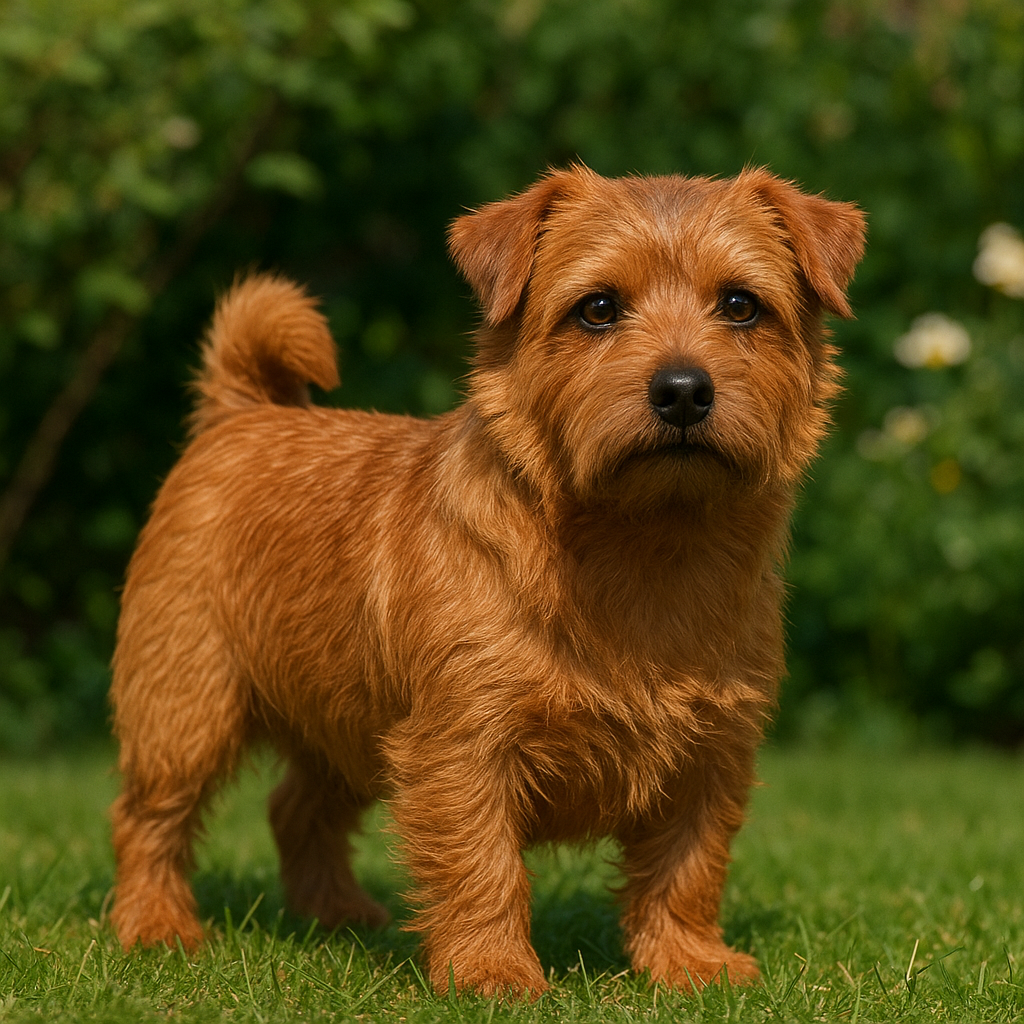
Compact without being frail, the Norfolk Terrier displays a solid bone structure beneath a hard and dense coat. Its square silhouette, supported by short but muscular limbs, gives it surprising mobility for its size.
| Characteristic | Detail |
|---|---|
| Height at withers | 25–26 cm |
| Weight | 5–5.5 kg |
| Coat colors | Red, liver, black and tan, brindle |
| Coat type | Fluffy, hard, dense undercoat |
Temperament and behavior
Sociable and playful
The first trait that strikes those who meet a Norfolk Terrier is its sparkling, almost human gaze. Curious down to the tips of its ears, it immediately shows affection towards household members. In the presence of children, it demonstrates great patience and willingly engages in lively games, provided it is stimulated.
Fearless and alert
Behind its gentle appearance hides a formidable mouse hunter: it maintains an intact sense of alertness. A suspicious noise around the corner or a small scratch in the garden, and there it is, fully committed to the cause of vigilance. This watchfulness combined with its natural courage also makes it an ideal walking companion.
Education and Activities
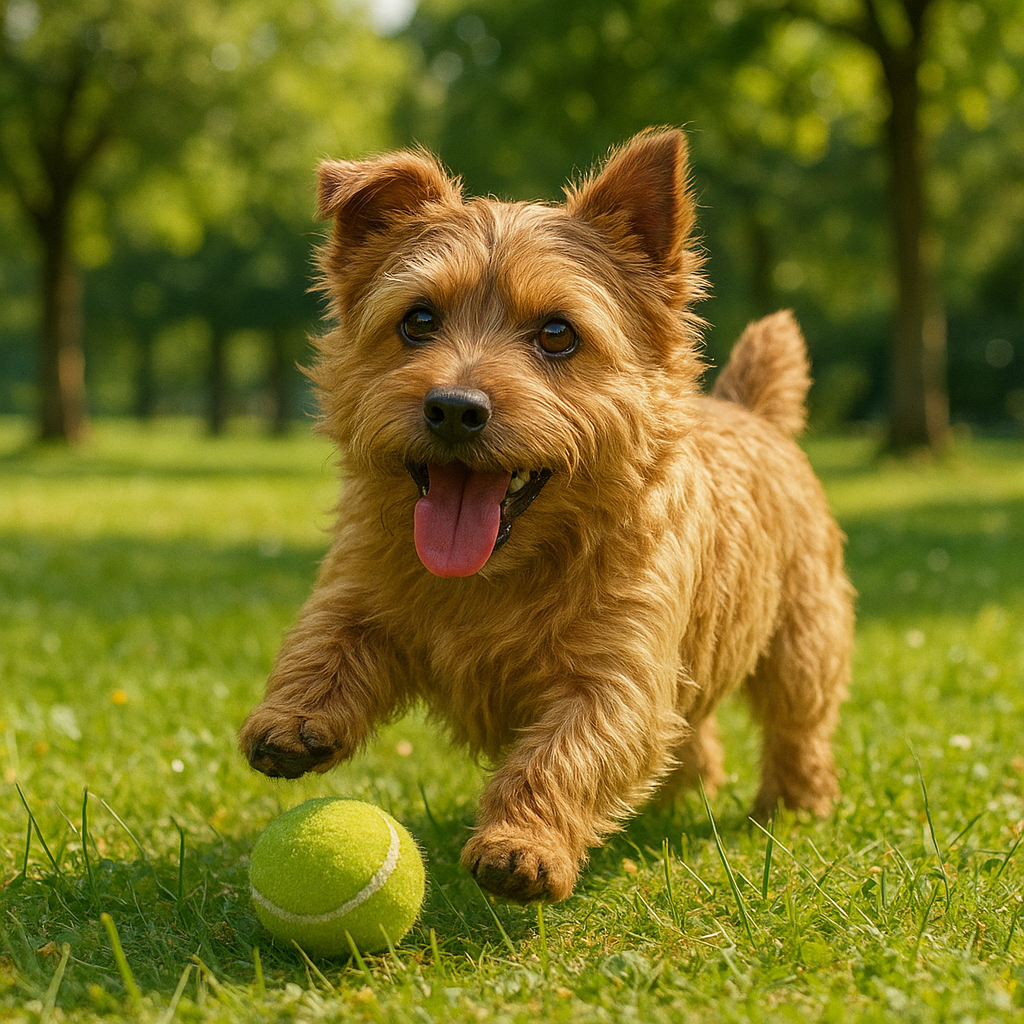
Educating a Norfolk Terrier is above all about understanding its intelligence and thirst for action. It learns quickly when playful and consistent methods are used. Rewards, in the form of petting or small treats, foster a lasting relationship of trust.
- Socialization: gradually exposing the puppy to various situations to temper its hunting instinct.
- Obedience games: short but regular sessions (5–10 minutes) to maintain its attention.
- Canine activities: agility, tracking, flyball: all disciplines requiring liveliness and coordination suit it perfectly.
In the city as well as in the countryside, it is enough to vary the walks and establish a steady rhythm. Nothing amuses it more than a new path where it can sniff every corner.
Health and Care
Coat Care
The Norfolk Terrier requires weekly brushing to maintain the texture of its coat and avoid tangles. A light clipping every 3–4 months may be necessary to preserve the rough appearance of the coat. Bathing, occasional, should only be done when necessary: too much water would damage the protective layer of the undercoat.
Exercise and Diet
Active, it demands at least 45 minutes of intense exercise per day. The diet, based on quality kibble, must be adapted to its lively metabolism: moderate proteins, essential fatty acids for the coat, and fibers for digestion.
FAQ
Is the Norfolk Terrier suitable for apartment living?
Absolutely, provided it is offered dynamic outings and mental stimulation. Its small size facilitates cohabitation in an urban dwelling.
What is its life expectancy?
Expect between 12 and 15 years, provided a balanced diet and regular health check-ups.
Is it noisy?
It barks to signal the unexpected, but appropriate training can reduce excessive alerts.
Can it be left alone?
It can tolerate a few hours of solitude if gradually accustomed. An occupation toy or a treat dispenser will help it wait.
What type of family suits it?
An active family ready to welcome a willing and playful companion. Dynamic seniors will also find an ideal walking partner in it.