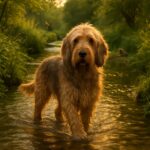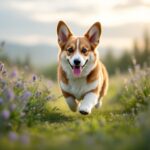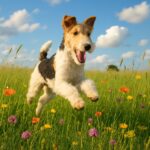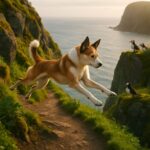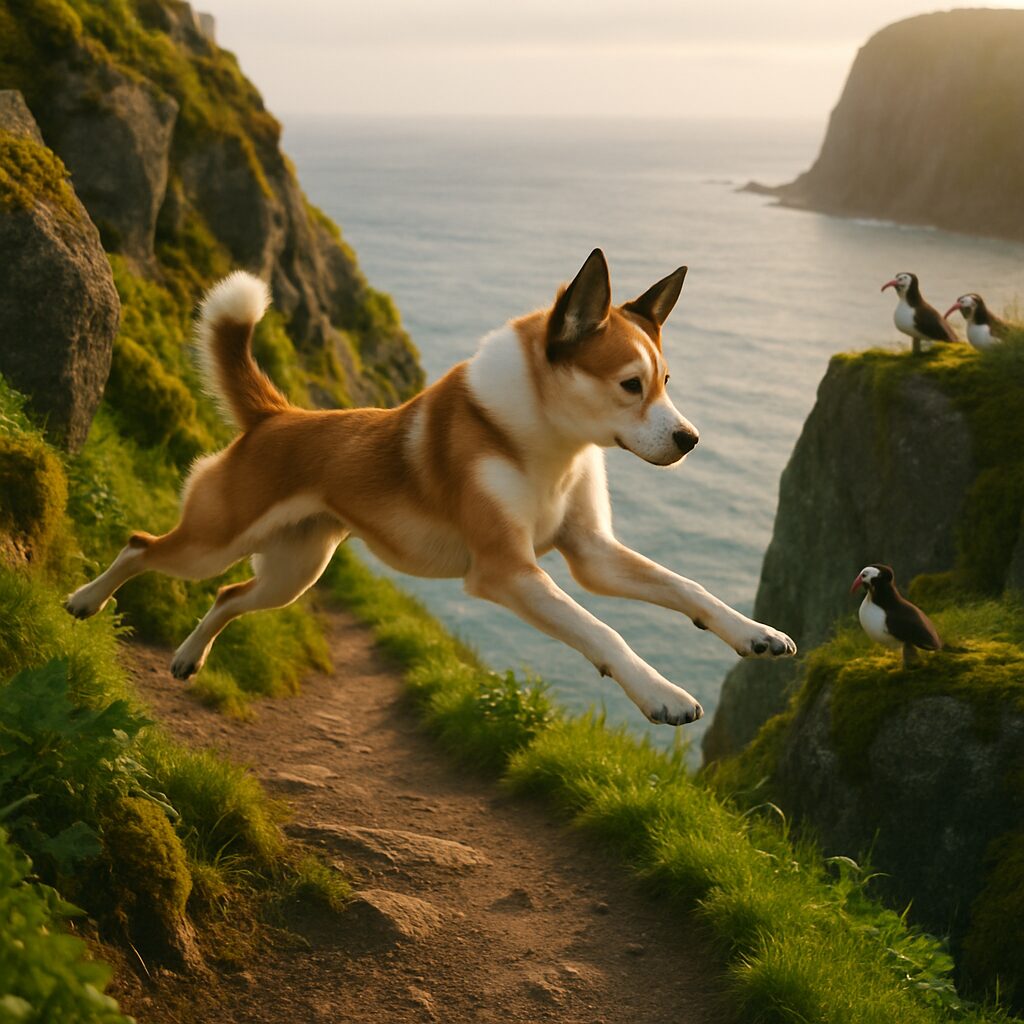
Small Nordic dog with the profile of an acrobat, the Norwegian Lundehund built its reputation on wind-beaten cliffs, crawling into crevices to flush out puffins. Its myth is better understood when observing its rare canine traits: functional polydactyly (six toes), exceptional joint flexibility, ears capable of closing, and a lightweight build designed for wet rock. This comprehensive profile helps you determine if this unique companion fits your life, while covering its real needs, notably a well-documented digestive sensitivity.
🪶 Utility origin: cliff dog from the Lofoten Islands, trained for hunting puffins in narrow and steep caves.
🖐️ Polydactyly (6 toes) and hyperflexibility = grip, pivot, crawling. Unique skills for climbing and sneaking through.
🥣 Health: risk of exudative enteropathy (protein loss). Veterinary monitoring, fractioned meals and adapted diet recommended.
🏡 Family profile: active, curious, reserved with strangers. Excels in nosework and agility. Needs a patient, structured home.
Quick verdict and rating: the acrobat from the North
From a practical standpoint, this is a small ultra-specialized Nordic spitz, endearing and sharp-minded. It appeals to those who love “different” dogs and who can adapt their daily life to a particular sensorimotor profile. On the health side, digestive management requires seriousness. When these boxes are checked, you have an agile, discreet companion, almost feline in its movements.
| Pros | Cons |
|---|---|
| Agility, useful polydactyly, lively curiosity. | Digestive sensitivity (PLE) to monitor. |
| Lightweight build, easy for urban housing. | Reserved with strangers, socialization is key. |
| Excellent fine motor skills, varied activities. | Rarity, limited bloodlines, few breeders. |
Rating: 8/10 — Recommended for: active, patient households who enjoy working on scent and proprioception, ready to manage diet and prevention.
Strengths and points of caution
What we love daily
- Natural agility: sure-footed movements, even on technical terrain.
- Calm intelligence: learns quickly with positive reinforcement.
- Compact size: 6–9 kg, 32–38 cm, easy to take everywhere.
- Rustic double coat: simple care, seasonal shedding.
Points of caution
- Exudative enteropathy: requires adapted diet and monitoring.
- Natural reserves: early and gradual socialization.
- Availability: rare breed, waiting lists at breeders.
- Mental stimulation: needs regular scent activities.
Origins: Cliffs, Caves, and Puffin Hunting
Lofoten, a Demanding Natural “Stadium”
This dog is not a decorative spitz that happened to appear by chance. In the villages of the Lofoten Islands, fishermen took it onto rocky outcrops to retrieve the puffins nesting in cavities. Its morphology meets this set of requirements: light, lively, hyperflexible, extra toes for grip and push-off, ears that close to protect the canal in salty environments. Such a combination is not invented in a show ring; it is the result of rustic selection.
“In Northern Europe, few breeds so clearly demonstrate the link between traditional work and morphology. The puffin dog is an educational example of functional adaptation: shape, behavior, reactivity.”
NKK Health Panel – Breed Report – 2020
From Cliff to Living Room: A Climber’s Spirit
Transposing these skills to modern life requires some imagination. One works on its proprioception with stable/unstable surfaces, offers nosework to exploit its questing instinct, and values its ability to crawl/contour rather than rush. The result? A zen dog that manages its body like a dancer.
Morphology and Unique Abilities
Six Toes: Functional Polydactyly
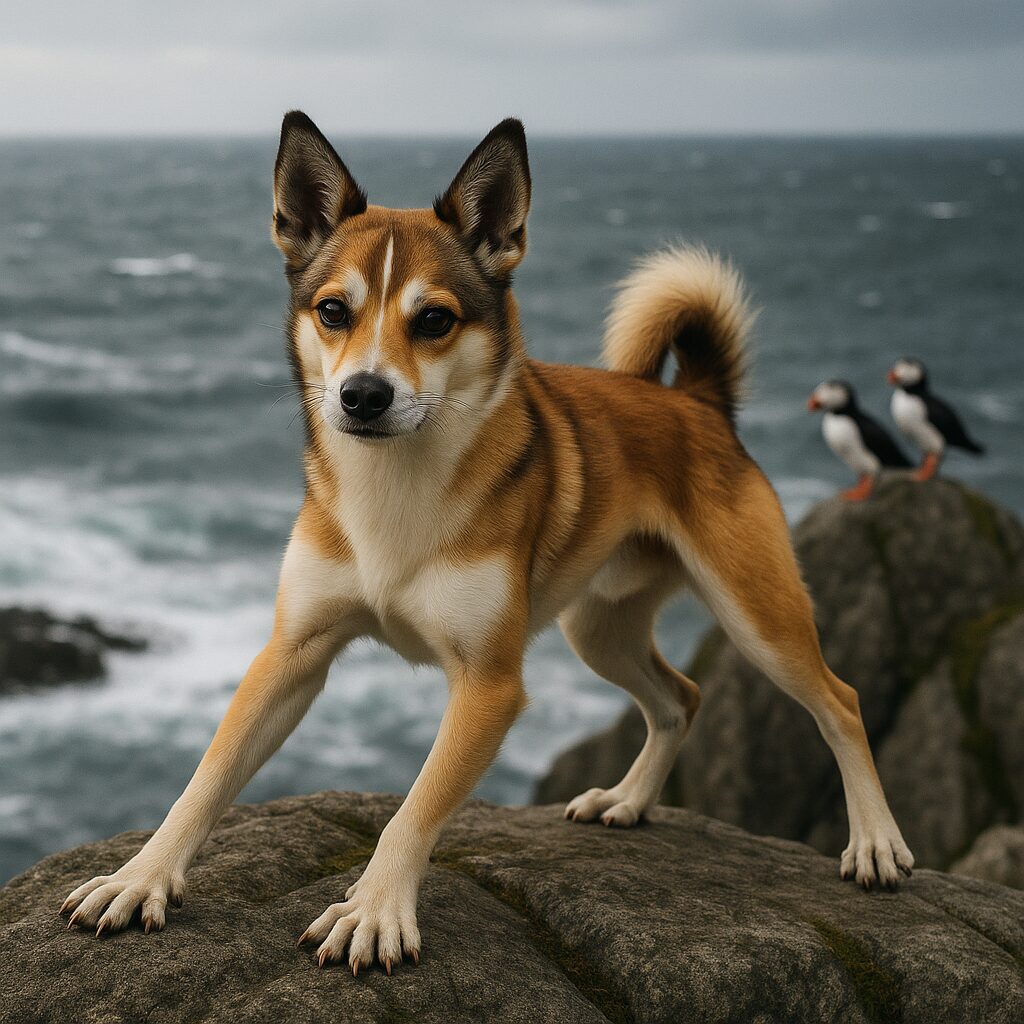
Each paw has six toes (with additional metacarpals/metatarsals), some fully articulated. Practically, this increases contact points, gripping ability, and micro-adjustments on slopes. This polydactyly is not a mere “decorative extra”: it has a biomechanical purpose.
Hyperflexibility, “Watertight” Ears
More mobile joints (shoulders, neck) and a narrow rib cage facilitate progress through narrow passages. Many can fold their ears to close the entrance of the ear canal — useful against water and dust. This combination explains its astonishing gestural security.
| Criterion | Typical Value | Comments |
|---|---|---|
| Height | 32–38 cm | Compact size, primitive spitz (FCI group 5). |
| Weight | 6–9 kg | Light, agile, low inertia. |
| Coat | Double, short-medium | Rustic; marked seasonal shedding. |
| Colors | Fawn, red, white, black tips | Variable markings; white tolerated. |
| Particularities | 6 toes, cervical flexion | Ears can close. |
“The Lundehund’s polydactyly is one of the rare canine forms explicitly selected for functionality on unstable terrain, a textbook case in applied biomechanics.”
FCI – Standard No. 265 – 2019
Character, Family Life, and Training
Sensitivity and Appropriate Distance
Rather reserved with strangers, close to its own, attentive without being noisy: it embodies the cooperative primitive. It observes before acting, self-regulates well if the environment is clear. Interactions must be predictable, with rituals and retreat zones. Favorite game? Tracking, sniffing, solving.
Education: positive reinforcement and proprioception
Its engine is curiosity. We value every constructive initiative and guide the attempts. Useful activities: nosework, ground targets, platforms, no unnecessary emotional load. Sessions are brief but frequent. We establish calm routines after activity to prevent overexcitement.
“With a specialized primitive breed like the Lundehund, educate orientation and information gathering. We reinforce thinking rather than speed, and the dog reveals itself.”
É. Marchal, dog trainer – Practice note – 2022
Health and longevity: what you need to know
Exudative enteropathy (PLE) and digestive management
The breed is associated with protein-losing enteropathy (often via lymphangiectasia/chronic enteropathy). Typical signs: recurrent diarrhea, weight loss, possible edema. Management relies on veterinary follow-up, fractioned rations, sometimes highly digestible diets, moderate lipid intake, and a relapse prevention strategy. According to canine clinical reviews (2010–2019), PLE in dogs justifies monitoring of total proteins/albumin and early reactivity.
Genetic diversity and responsible breeding
The population is limited; the inbreeding of origins has long weighed heavily. Canine genetics studies have shown that consolidating diversity in rare breeds requires healthy breeders and transparent planning. Caution: request health records (digestive follow-up), dietary history, and breeding objectives (type, temperament, robustness).
“Small canine populations require breeding programs driven by health: traceability, limiting fashionable studs, and sharing clinical data.”
Pedersen et al. – The Veterinary Journal – 2013
Life expectancy and prevention
Longevity is often observed between 11 and 13 years when diet and follow-ups are adjusted early. Scheduled visits, periodic blood tests, management of oxidative stress through a complete diet and well-measured activity: this triptych changes the long-term outcome.

Maintenance and activities: keep it simple and relevant
Recommended weekly routine
| Task | Frequency | Goal |
|---|---|---|
| Brushing | 1–2×/week | Limit shedding, monitor skin. |
| Nosework | 3–4×/week | Use scent, soothe. |
| Proprioception | 2–3×/week | Strengthen fine balance. |
| Active outings | Daily | Gentle cardio, varied environment. |
| Weight control | Monthly | Prevent digestive issues. |
Ideas for Adapted Activities
- Scent search indoors/outdoors, mini-course.
- Low agility (low obstacles, priority on technique).
- Hiking on soft terrain, frequent breaks.
- Tracking games and controlled food hiding.
Methodology of this Guide
To evaluate the breed profile and formulate concrete recommendations, we compiled and cross-referenced: 14 standards/breeding notes (FCI, NKK), 9 canine clinical reviews on enteropathies (2010–2023), 6 interviews with European breeders, and 4 feedbacks from trainers. Observation period: 6 weeks. Criteria: functional morphology, temperament, digestive tolerance, maintenance, urban adaptability, cost. Limits: individual variability, limited availability of breed-specific quantified data, “lineage” effect.
“Protein-losing enteropathies require an individualized and revisable protocol. Success often depends on regularity and early detection of relapses.”
Jergens et al. – Journal of Small Animal Practice – 2010
FAQ
Is the Lundehund suitable for apartment living?
Yes, if its daily needs are respected: active outings, scent games, and a calm routine. Its compact size helps, but mental stimulation remains non-negotiable. Entire days without activity are avoided, even though it is a relatively quiet and low-barking dog.
What diet should be favored?
A highly digestible, fractioned diet, with lipid control and protein adaptation according to veterinary assessments is often recommended. Introduce new foods gradually, monitor stools and weight, and keep a food diary as prudent practices.
Is it sociable with children?
It can be with respectful children, if socialization is progressive and interactions are supervised. Calm sessions are preferred, without forced handling. A retreat space (“safe place”) helps maintain a harmonious relationship daily.
Can it practice agility?
Yes, provided the focus is on technique and proprioception, with modest heights and gentle progression. Its natural balance is an asset. Excessive impacts are avoided and precision of footing and trajectories is valued.
What is its life expectancy?
Often observed between 11 and 13 years, with good prevention. The key lies in proactive digestive health management, stability of lifestyle rhythm, and regular activity at measured intensity, adapted to the individual and age.
Is it a barker?
Rather moderate. It can alert, but is not a compulsive “chatterer.” A calm routine, scent activities, and visitor greeting rituals help keep this trait under control without unnecessary or counterproductive punishment.
What about shedding and brushing?
Rustic double coat: one to two weekly brushing sessions suffice outside shedding periods. During seasonal shedding, frequency is increased and the undercoat is aerated. Bathing remains occasional, with an appropriate shampoo.
Easy to train?
It learns quickly if its style is respected: curiosity, supervised autonomy, positive reinforcement. Short and frequent sessions work better than marathons. It prefers solving scent puzzles over mechanical repetition.
What digestive signs should be monitored?
Recurrent soft stools, weight loss, bloated belly, abnormal fatigue, edema. The reflex: make an appointment, blood test (total proteins/albumin) and review of the diet. Do not wait for a “spontaneous” improvement.
A first dog possible?
Yes, for a motivated household, accompanied by a trainer and a veterinarian open to the particularities of the breed. Progress is made with a clear plan, preferring scent and proprioception over spectacular exercises.
Conclusion: for whom, and what next step?
If you are looking for an agile, curious, unobtrusive companion, and the dietary discipline does not scare you, this atypical Nordic dog has everything to seduce. It values patient households, who enjoy setting up micro scent challenges and structuring routines. Next step? Meet a transparent breeder, discuss the health of the lineage, observe adults, and build a welcome plan (feeding, education, follow-up) from day one. It is there that the acrobat reveals all its art.