
The Portuguese Water Dog, or Lusitanian Water Dog, fascinates with its elegant appearance and outstanding aquatic skills. Originating from southern Portugal, this versatile companion long assisted fishermen by pulling nets, spotting fish schools, and delivering messages between boats. Today, it appeals to active families and dog challenge enthusiasts thanks to its brilliant intelligence, contagious energy, and shaggy coat, often perceived as hypoallergenic.
In Brief
🐾 Maritime origin: originating from the fishermen of the Algarve, this water dog was known for retrieving nets and long-distance swimming.
🌊 Active companion: renowned for its intelligence and endurance, it requires daily exercise and mental stimulation.
✂️ Specific coat: curly or wavy, hypoallergenic according to some, it requires regular maintenance (brushing, bathing, clipping).
🎓 Positive training: sensitive and attentive, it responds particularly well to gentle, reward-based methods.
Origin and History of the Portuguese Water Dog
Noble Roots in the Algarve
In the fishing villages along the Portuguese coast, this dog was nicknamed “Cão de Água”: a nickname that sums up its destiny. Local archives mention subjects roaming the beaches as early as the 15th century, distinguished by their dense coat and aquiline muzzle. They wore collars adorned with shells, a sign of their precious role alongside seafarers.
Its Role with Fishermen
More than a simple companion, it pulled nets ashore, dove into deep water to cut nets or retrieve submerged objects. Capable of swimming alongside a boat for several kilometers, it also served as a messenger between vessels. This aquatic versatility forged its strong character and remarkable sense of direction.
Physical Characteristics
Size, Weight, and Build
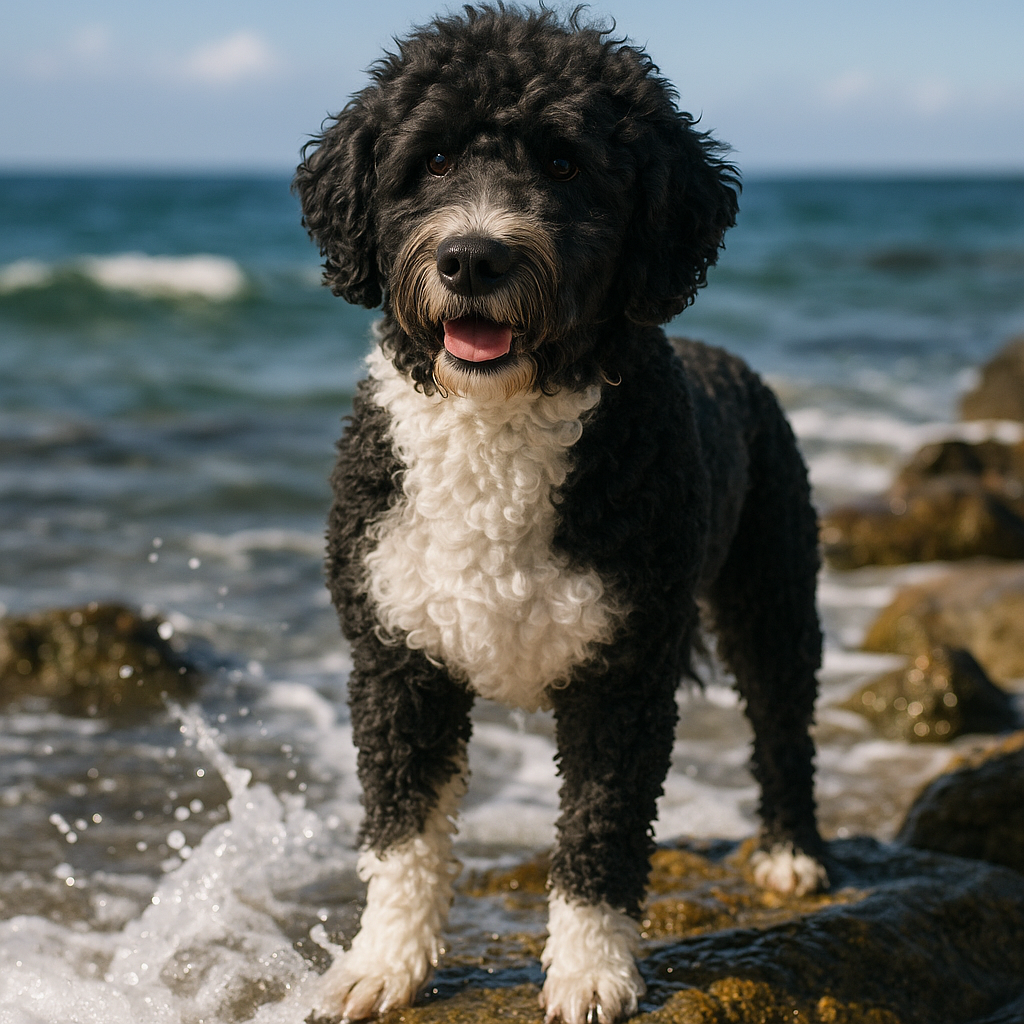
At the withers, males range between 48 and 57 cm and females from 43 to 52 cm. Their balanced bone structure gives an impression of agile strength: muscular legs glide perfectly on slippery ground, and the “pom-pom” shaped tail acts as a rudder when swimming. The eyes, often dark, give a lively and curious look.
The Coat and Its Particularities
Two types of fur coexist: tight curls reminiscent of a sheep’s fleece, or softer waves. In both cases, the undercoat is almost absent, which limits shedding indoors. This “functional coat” requires care: without brushing, the curls tangle and knots form around the rump and thighs.
Temperament and Behavior
A Lively and Sociable Companion
The Portuguese Water Dog shines with its generous nature: it loves participating in family activities, whether hiking, swimming, or even tracking sessions. Its natural sociability allows it to form a strong bond with children, provided the first interactions are supervised to establish a safe framework.
Intelligence and Learning Abilities
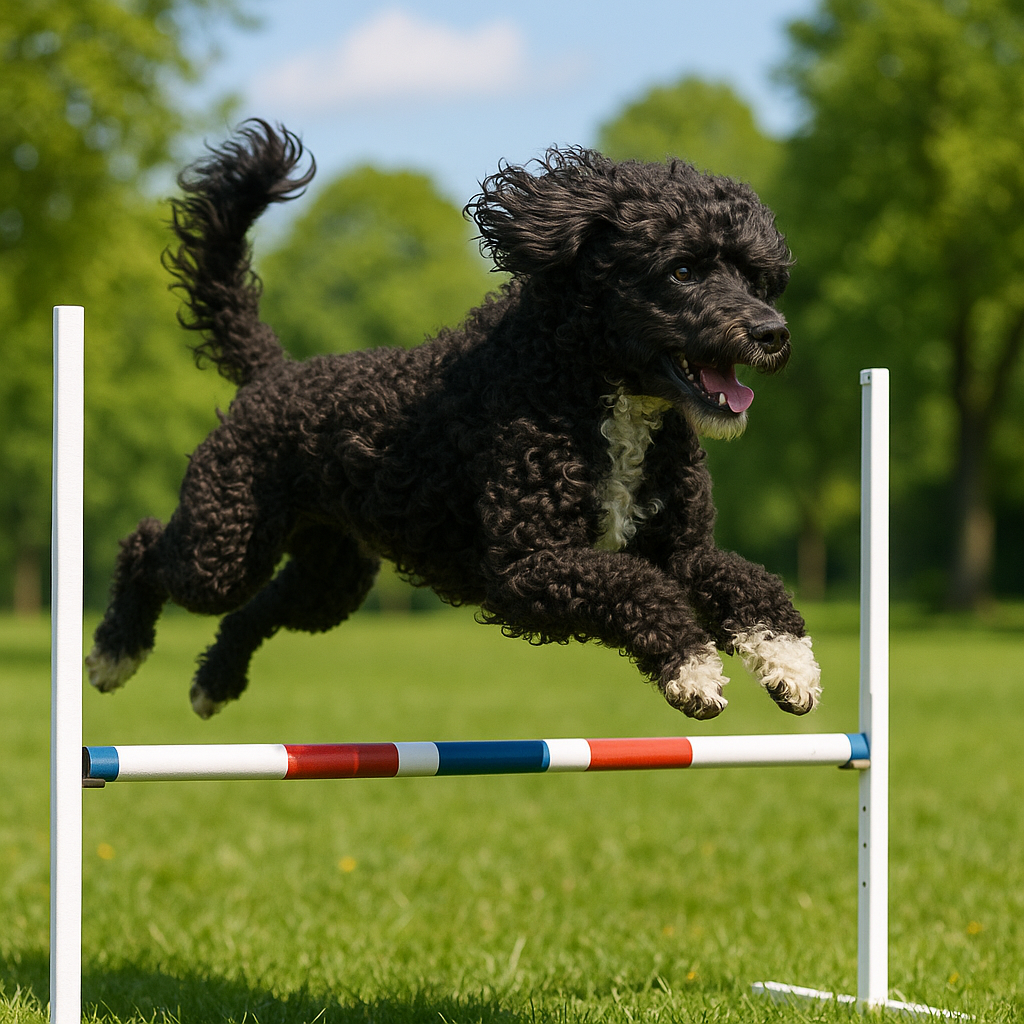
Awake and curious, he quickly knows how to identify his goals: a toy, a challenge, or a command. Complex tasks, such as fetching a specific object or navigating an obstacle course, stimulate him both mentally and physically. His high canine IQ makes him an excellent candidate for agility, obedience, or water rescue.
Training and Socialization
First Steps with the Puppy
From the moment he arrives at home, establishing clear routines accelerates learning: meals, outings, play, rest. The first weeks are dedicated to socialization: urban noises, canine encounters, contact with different environments. This crucial phase shapes his confidence and prevents separation anxiety.
Positive Reinforcement Techniques
- Food rewards adapted to size.
- Interactive games praised with an enthusiastic voice.
- Avoid any form of excessive constraint to preserve trust.
- Gradual progression in difficulty, without sudden jumps.
Needs and Care
Physical and Mental Exercise
At least 60 minutes of running or swimming daily: a water dog without stimulation can develop restlessness or destructive behaviors. Object search games, playful courses, and floating sessions in the pool are all ways to channel his energy.
Grooming and Coat Maintenance
| Frequency | Action | Advice |
|---|---|---|
| Every week | Gentle brushing | Use the metal brush without forcing |
| Every 6 to 8 weeks | Bath and trimming | Use a hypoallergenic shampoo |
| As needed | Ear check | Clean with a veterinary product |
Health and Life Expectancy
Genetic Predispositions
Like any breed, he may suffer from hip dysplasia, progressive retinal atrophy, or skin allergies. Genetic testing before breeding helps limit these risks.
Prevention and Veterinary Follow-up
Semi-annual visits for joint and eye assessments, annual blood tests, and careful observation of behavior: slight weight loss or dull coat can be the first signs of imbalance.
Choosing Your Portuguese Water Dog
Where to Adopt?
Breeders recognized by breed clubs, specialized associations, or responsible owners offering animal rehabilitation. A serious breeder provides a health history, clear lineage, and initial socialization.
Criteria for Selecting a Breeder
- Health certificates of the parents (hips, eyes).
- Spacious living environment, access to water.
- Transparency about lineage and breeding conditions.
- Presence of a follow-up booklet for the first months.
FAQ
Does the Portuguese Water Dog shed a lot?
No, its undercoat is very minimal: it does not shed like other breeds and many owners report less allergenicity.
How much exercise is needed each day?
Between 1 hour and 1.5 hours of intense activities, ideally split into two outings, including at least one session of swimming or water play.
Can it live in an apartment?
Technically yes, if compensated by long and stimulating outings; without this, it may develop boredom and anxiety.
Is it suitable for families with children?
Absolutely: playful and protective, it quickly forms a strong bond, provided it is taught to respect resting spaces.
What is its annual maintenance cost?
Between €800 and €1,200, including quality food, grooming, vaccines, and routine veterinary care.