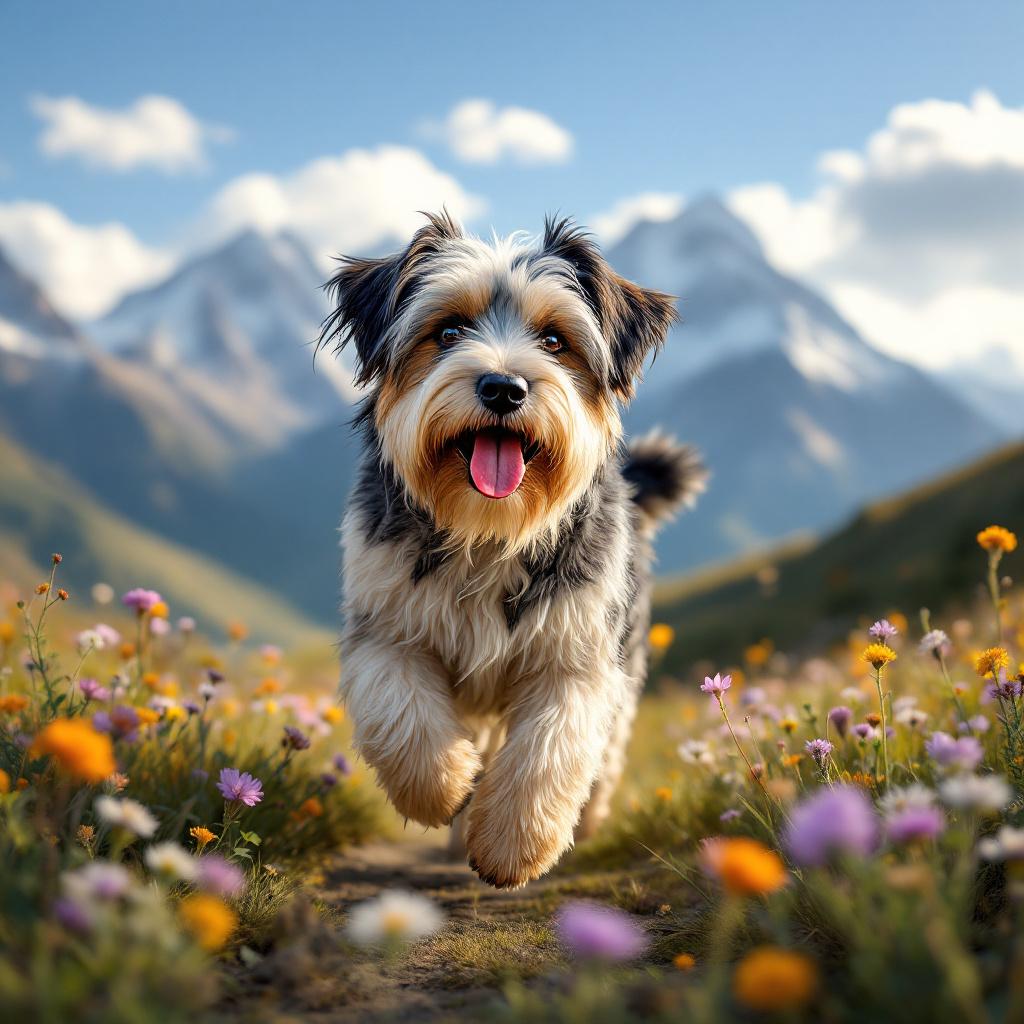
The Tibetan Terrier, often called the “bearded dog” because of its lush coat framing the muzzle, embodies both Tibetan tradition and an affectionate character. Beyond its unique appearance, it stands out with an ancient history, sharp intelligence, and an astonishing ability to adapt. Whether a hiking enthusiast or a companion for quiet moments at home, it knows how to become indispensable.
🗻 Ancient origins: a sacred companion in Tibet, raised by monks for its vigilance and gentleness, it has crossed centuries before conquering the West.
🐾 Balanced character: sociable with family, sometimes reserved with strangers, it combines loyalty and curiosity.
✂️ Specific care: long and silky coat requiring regular brushing and adapted care, without becoming time-consuming.
🎓 Accessible training: intelligent and willing, it responds well to consistency and positive encouragement, whether in the city or countryside.
Origins and History of the Tibetan Terrier
Millenary Tibetan Roots
On the high Himalayan plateaus, the Tibetan Terrier was not a terrier dog in the Western sense, but a discreet guardian of monasteries. The monks appreciated it for its scent, capable of detecting intruders or finding a lost object in the snow. Far from domestic life as we know it today, it evolved among yaks and local legends, becoming a symbol of protection and luck.
Recognition in the West
From the beginning of the 20th century, some specimens were given as diplomatic gifts, awakening the curiosity of British breeders. Their mischievous gaze, coupled with a silky coat, quickly charmed. Very quickly, standards were established, preserving the sturdy silhouette and characteristic beard. It was in 1930 that the breed obtained official recognition, launching its European and American adventure.
Physical Characteristics
The Tibetan Terrier displays a medium size, between 35 and 41 cm at the withers, with a weight ranging between 8 and 14 kg. Its head, proportionate, carries a thick beard and long strands falling over the eyes, giving it an expression both serious and mischievous. The body, compact and muscular, gives an impression of robustness, reinforced by so-called “lion’s paw” legs, wide and strong, adapted to rough terrain.

Temperament and Behavior
The bearded dog from Tibet is not a solitary adventurer: it forms a deep bond with its family. Its intelligence allows it to quickly understand the rules of life, but a lack of stimulation can make it stubborn. On the other hand, well channeled, it reveals unwavering loyalty.
An Affectionate Companion
- Seeks human contact, loves cuddles.
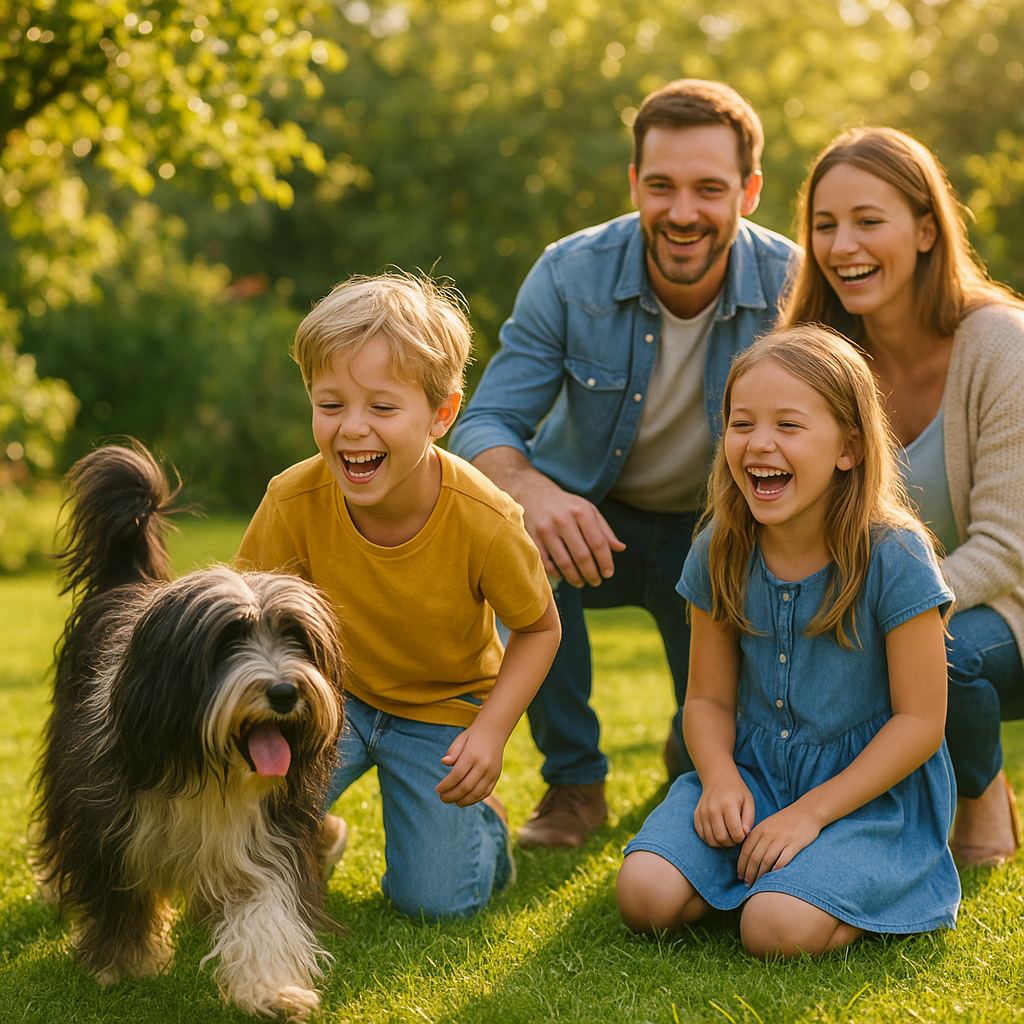
- Adapts to children, shows patience and protectiveness.
- Sometimes shows a hint of vigilance towards strangers.
Intelligence and Curiosity
- Learns quickly, enjoys thinking games.
- Explores its environment willingly, avoid boredom.
- Responds well to encouragement and rewards.
Care and Health
Its long and dense coat requires regular brushing, ideally three times a week, to prevent knots at the base of the hair. Baths are not necessary too frequently: once a month to six weeks is sufficient, favoring a gentle shampoo. The eyes and ears, often hidden under the hair, deserve a weekly check to avoid irritations or infections.
- Invest in a fine brush and a metal comb.
- Regularly check the condition of the paw pads and clean them after muddy outings.
- Schedule visits to the groomer for a light trim every three months.
“The care given to one’s bearded dog shows as much love for it as respect for the Tibetan tradition.”
Training and Daily Life
To have a well-balanced companion, the key lies in consistency and gentleness. Every exercise, whether it is leash walking or house training, should be rewarded. Socialization from an early age prevents excessive mistrust of strangers.
- Establish morning and evening walking routines.
- Gradually introduce other animals and children into its environment.
- Provide intelligence toys to channel its lively mind.
Adopting a Tibetan Terrier
Choosing a Breeder or a Shelter
Given the growing enthusiasm, favor a recognized breeder who respects the breed standard and performs health screenings (dysplasia, eye problems). Shelters, less common for this breed, can sometimes welcome adults seeking a new home, ensuring responsible adoption.
Budget and Commitment
Beyond the purchase price, expect on average:
| Expense | Average Amount |
|---|---|
| Vaccinations + deworming | 200–300 € per year |
| Grooming | 50–80 € every 3 months |
| Quality food | 40–60 € / month |
| Health insurance | 120–200 € / year |
FAQ
What is the average lifespan of a Tibetan Terrier?
The Tibetan Terrier lives on average between 12 and 15 years, or more, provided it benefits from a balanced diet and regular veterinary visits.
Is the Tibetan Terrier suitable for apartment living?
Yes, provided it is given daily outings and stimulating games. Its medium size and adaptable character facilitate life even in a small space.
At what age should socialization begin?
From 8 weeks old, it is recommended to gently introduce the urban environment, noises, and other animals to prevent any future apprehension.