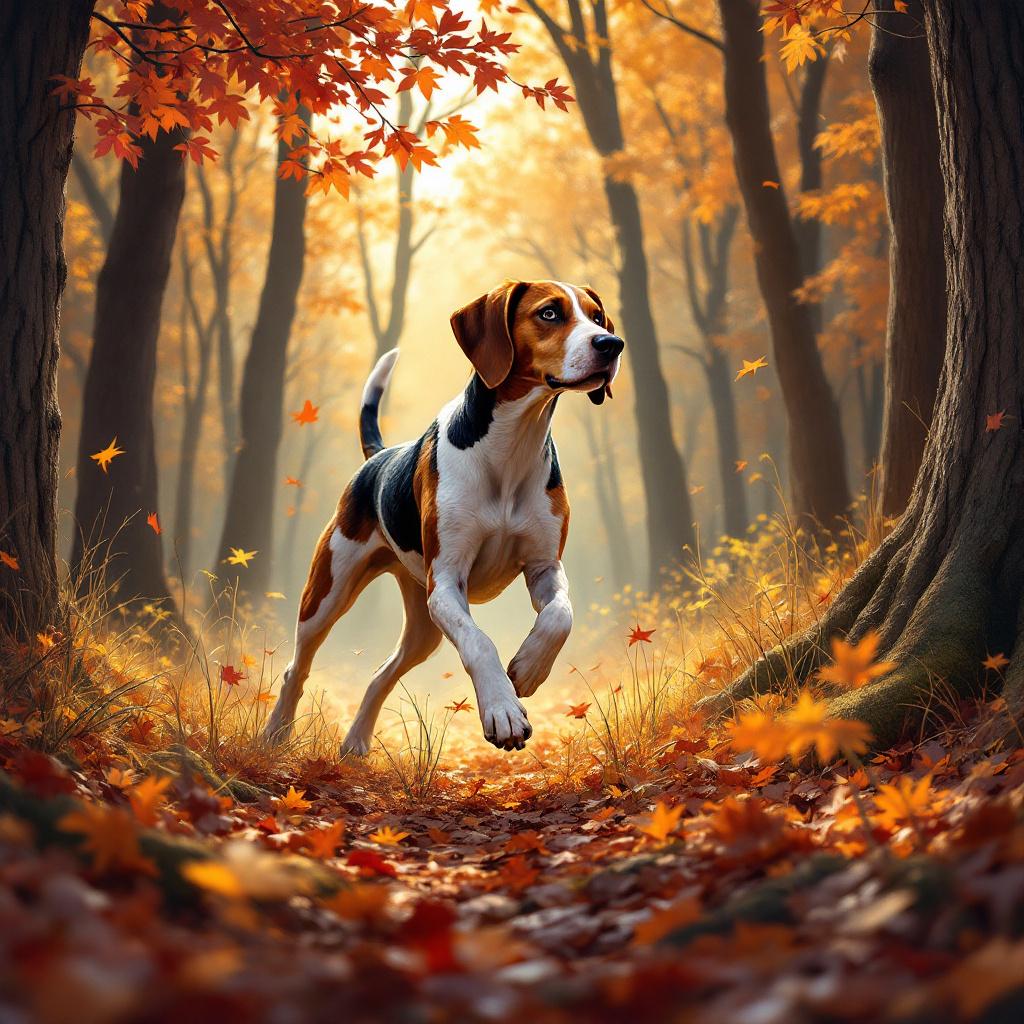
Originating from the forests of Tennessee, the Treeing Walker Coonhound establishes itself as one of the finest American treeing trackers. Between athletic elegance and resonant barks beneath the oaks, it puts its exceptional scenting ability at the service of hunters of nocturnal rodents. But beyond its hunting talents, this companion reveals a temperament alternately passionate and tender, requiring a subtle balance between freedom and a reassuring framework.
In brief
🐾 American origin descended from the Tennessee Walkers, selected for its scent and speed in the forest.
🌳 Requires lots of exercise and mental stimulation: nocturnal tracking, long walks, tracking games.
🎯 Combines tenacity and domestic gentleness, provided early socialization and a stable environment.
Origins and history
At the beginning of the 19th century, the Walker brothers imported English Foxhounds and crossed their best subjects with American Coonhounds. The goal: to obtain a lighter gait, better treeing ability, and a higher-pitched bark to locate high-perched game. Quickly, the Treeing Walker Coonhound stood out for its ability to “tree” – literally follow the trail up to rabbits or raccoons taking refuge in trees. Its name, commonly shortened to “Walker,” was officially recognized by the United Kennel Club in 1945.
Appearance and physical characteristics
Size and coat
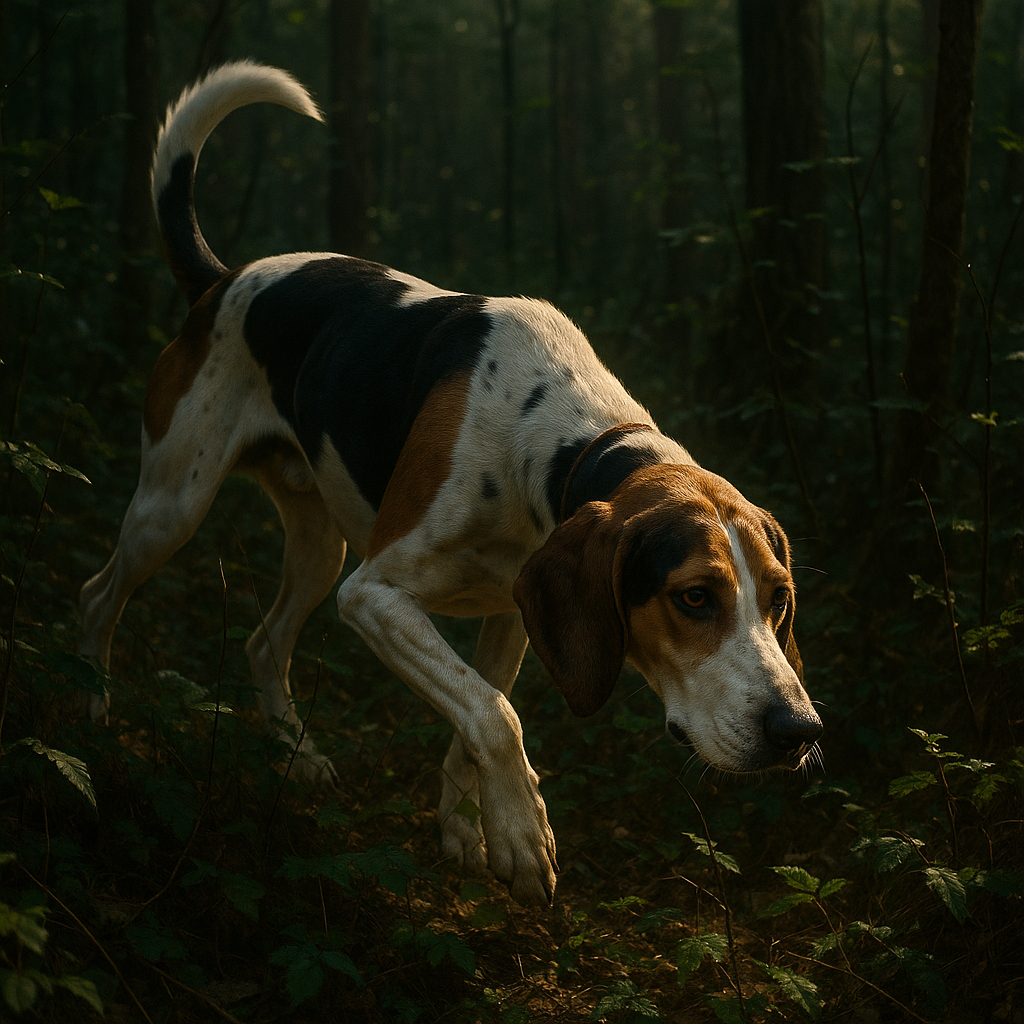
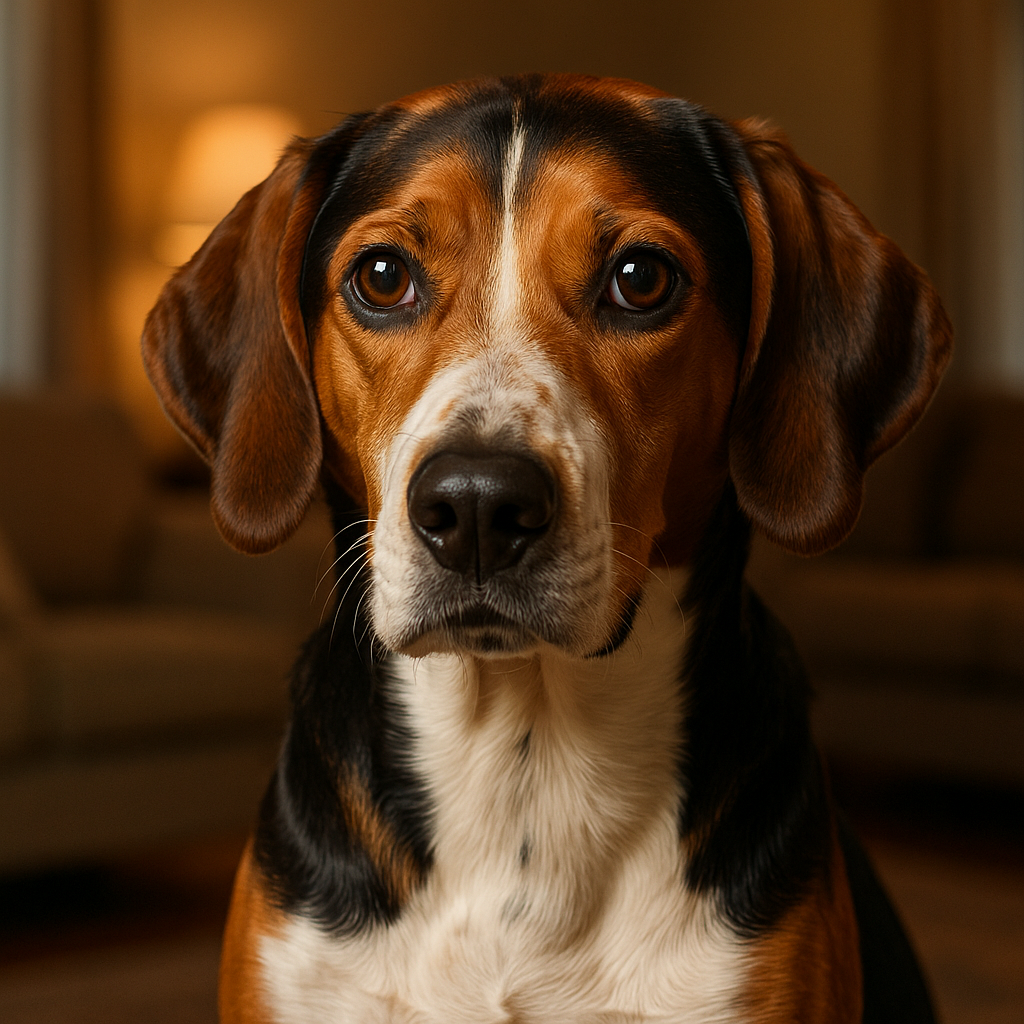
This dog with a harmonious silhouette has a medium size of 50 to 64 cm for 25 to 32 kg. The standard coat follows a bicolor code: white base marked with black spots and tan accents, more rarely tricolor. The markings can extend as a coat or be limited to a few discreet spots. The skin is tight, the hair short and smooth, ideal for slipping through thickets without snagging.
Ears, tail, and silhouette
The Walker’s ears fall elegantly, wide at the base, tapering to a point. Set high, the tail is carried proudly, elongated, ending with a white brush facilitating visual location during tracking. The lively musculature and well-descended chest guarantee a long and regular stride, typical of an enduring working dog.
Temperament and behavior
A relentless hunter
With a natural curiosity boosted by an overdeveloped sense of smell, the Walker cannot conceive of a day without putting its nose to work. On the lookout for the slightest scent fragment, it lets out its distinctive cry as soon as it locates game in a tree. This impulse, far from being mere noise, constitutes a valuable signal for the pack leader. But beware of escape: once the trail is launched, only a well-trained recall can bring your dog back to you.
Everyday companion
Outside of its hunting sessions, this hound proves sociable and playful, particularly with children. It enjoys family gatherings, tolerates the presence of other dogs, and adapts to home life, provided its need for activity is met. A couch potato? Not for him: he prefers chasing a frisbee or exploring a new trail.
Training and Socialization
- Early socialization: meeting various people and animals from 2 months old to prevent mistrust.
- Recall training: using short commands, treats, and toys to maintain attention during tracking.
- Tracking games: hiding treats or toys to sharpen their scenting skills in a domestic environment.
- Positive reinforcement: avoiding stressful timing, favoring immediate rewards.
- Basic education: sit, lie down, stop, heel to channel their energy.
Need for Exercise and Activity
This dog requires a sustained pace: at least 1.5 to 2 hours of daily activity, varied between jogging, trail running, hiking, or tracking games. When space allows, a fenced area proves ideal to let them express themselves and burn off energy without risk of escape. Lack of stimulation can lead to boredom, even destructive behaviors, as their brain is constantly seeking olfactory challenges.
Care and Health
Adapted Diet
Active, the breed requires a diet rich in proteins (minimum 25%) and fats (15–20%) to support its energy expenditure. Splitting rations into two daily meals helps prevent stomach torsions, common in deep-chested dogs.
Main Ailments
Generally robust, this hound can nevertheless suffer from hip dysplasia, eye problems (entropion, distichiasis), and sensitivity to external parasites. Weekly brushing is sufficient to maintain coat quality and detect possible tick bites.
Veterinary Check-up and Life Expectancy
Annual check-ups allow monitoring of hips and eyes. With proper care, life expectancy ranges between 12 and 14 years, a fine commitment for lovers of wide-open spaces and lasting companionship.
Living with a Treeing Walker Coonhound
“Adopting a Walker is like inviting a four-legged adventurer into your living room: every outing becomes an expedition and every return a moment of tenderness.”
Having a secure garden is almost essential, as this dog’s curiosity drives it to follow every intriguing scent. Indoors, it remains relatively calm once it has emptied its energy reservoir. Moments of bonding around brain games (food puzzles, snuffle mats) strengthen the bond and channel its sharp mind.
Coonhounds Comparison
| Characteristic | Treeing Walker | Black & Tan | Redbone |
|---|---|---|---|
| Height | 50–64 cm | 58–68 cm | 53–69 cm |
| Weight | 25–32 kg | 29–36 kg | 25–34 kg |
| Coat | Tricolor bicolor | Black and tan | Solid red |
| Hunting type | Treeing | Open terrain | Ground hunting |
| Temperament | Energetic, sociable | Protective, calm | Balanced, loyal |
FAQ
Does the Treeing Walker Coonhound adapt to apartment living?
Rather not, unless you can offer it several long and varied outings each day. Its need for activity far exceeds what a confined living space can provide.
Is it compatible with other animals?
Yes, if well socialized from a young age. Pet birds and rodents remain a bad idea: the hunting instinct is too strong.
What monthly budget should be planned?
Count about €50–70 for premium food, plus around €30 on average for veterinary prevention (chip, deworming, antiparasitic).