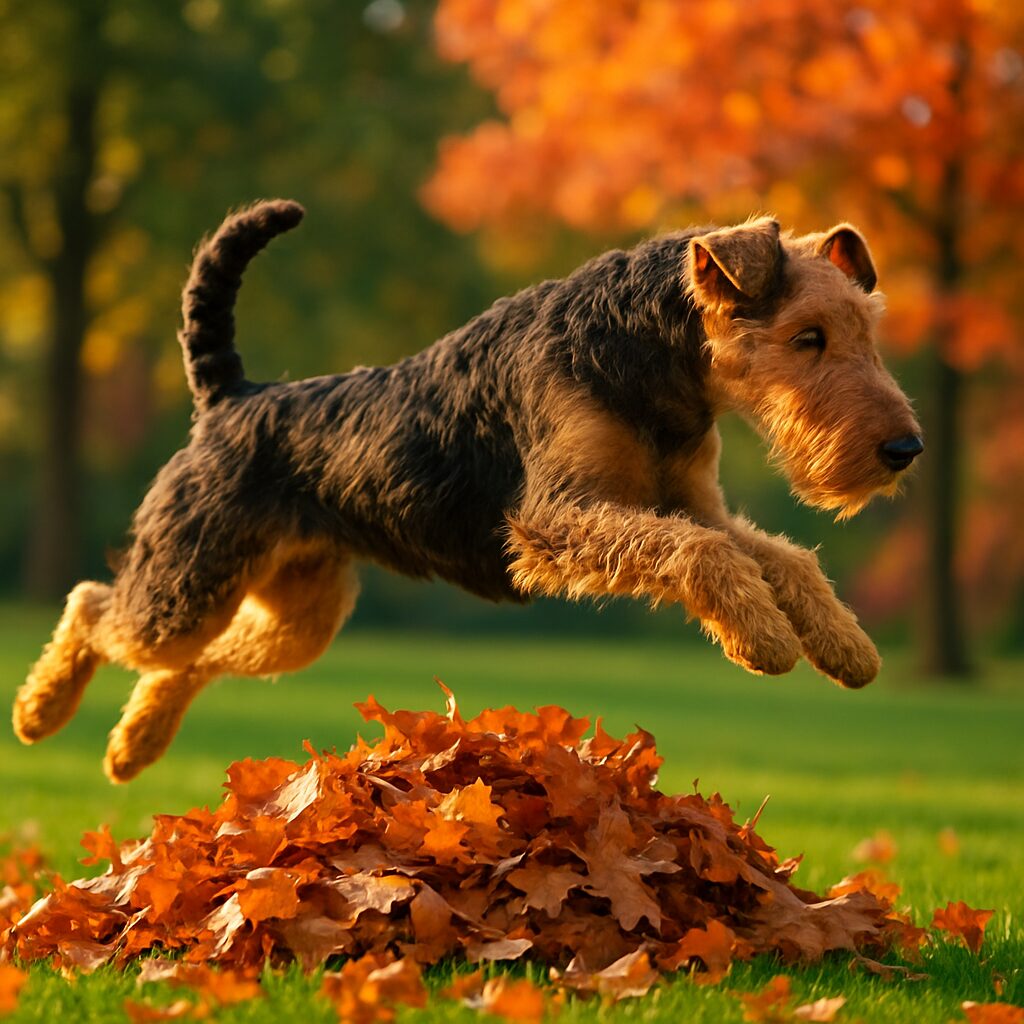
The Welsh Terrier surprises with its bicolor coat and lively temperament. Originating from Wales, it stands out for its boundless energy and loyal character. At first glance, the compact silhouette of a terrier evokes discretion and sturdiness – yet beneath its serious appearance, it hides a rare zest, ideal for those dreaming of an alert and faithful companion.
History and Origin of the Welsh Terrier
The journey of the Welsh Terrier began in the 19th century, in the Welsh valleys where peasants and breeders sought a versatile dog. A small hunter of badgers, voles, and foxes, it quickly became appreciated for its courage and tenacity. Its name, “Terrier,” comes from the Latin terra: the earth that these dogs did not hesitate to dig into to reach their prey.
Geographical Origins and Uses
In the farms of Montgomeryshire and Radnorshire counties, the Welsh Terrier worked both on land and sometimes in marshes. It accompanied the farmer on his travels as much as it guarded the chicken coops. Today, this former rural utility dog has earned its nobility as a companion and show dog, without ever losing its taste for adventure.
Physical Characteristics of the Welsh Terrier
Its typical coat combines a tough outer hair, jet black or slate blue, and a burnt tan undercoat. The skull, broad and flat, carries two bright eyes with an intense gaze. It has a square body, sturdy limbs, and a tail carried proudly, sometimes docked according to standards. The color combination creates a striking contrast, immediately recognizable.
Standard Size and Weight
| Sex | Height (at the withers) | Average Weight |
|---|---|---|
| Male | 36–39 cm | 9–10 kg |
| Female | 36–39 cm | 9–10 kg |
Temperament and Personality
Here is why the Welsh Terrier charms: it combines determination and affection. Its curious nature drives it to explore every corner of the garden, while its loyalty makes it a caring companion. The image of the stubborn terrier is common, but in reality, it knows how to be affectionate, provided it is stimulated both mentally and physically.
“The Welsh Terrier is never short of enthusiasm: it blankets each day with its contagious zest.”
Dr. Anne-Marie Delacour, canine behaviorist – University of Lyon – 2020
In the presence of children, it proves playful and protective, as long as it is taught the codes of gentleness. With other dogs, its sociability will depend on your early socialization. The more it is exposed to different situations, the better it will thrive as an adult.
Maintenance and Grooming
The Welsh Terrier requires regular maintenance to keep its dense coat. A weekly metal brush prevents tangles, and professional grooming (dematting and stripping) every three months helps maintain its characteristic texture.
- Weekly brushing: distribute sebum, prevent tangles.
- Manual stripping: remove dead undercoat.
- Light trimming: enhance the contours of the face and paws.
- Occasional bath: only if really necessary, to avoid drying out the skin.
It tolerates low temperatures better than high heat. During heatwaves, provide shaded areas and plenty of fresh water: its coat is not designed to dissipate extreme heat.
Physical Activity and Play
To channel its energy, the Welsh Terrier needs dynamic walks and varied play sessions. Throwing a ball, organizing agility courses, or starting a tracking session suits it perfectly. Boredom sets in when it stays too long without activity.
Ideas for Stimulating Activities
- Agility: jumping, weaving, and crawling stimulate its agility.
- Tracking: develop your bond while engaging its sense of smell.
- Ball throwing: classic but effective way to expend energy.
- Intelligence games: food puzzles and hide-and-seek.
Health and Longevity
The Welsh Terrier lives on average 12 to 15 years when veterinary care is appropriate. The main concerns revolve around hip dysplasia, ear infections, and possible skin allergies. Regular monitoring of head carriage, gait, and coat condition helps detect problems early.
“Prevention, based on annual check-ups including X-rays and blood tests, remains the best guarantee of longevity in terriers.”
Prof. Jean-Luc Martin, specialized veterinarian – National Veterinary School of Toulouse – 2019
To limit risks, choose a breeder who screens for dysplasia and anticipates genetic predispositions. Dental and ear care, as well as a balanced diet, complete this preventive approach.
Adoption and Training
Before falling for a Welsh Terrier, take the time to assess your lifestyle. Its liveliness demands an environment where it can exercise daily. Early introduction to obedience, leash walking, and interactions with other humans or animals facilitates its integration.
Tips for Successful Cohabitation
- Early socialization: gradually expose to various stimuli from 8 weeks old.
- Positive training: reinforce good behaviors with rewards.
- Routine and structure: establish fixed times for meals and walks.
- Patience: persevere, as its determined nature can make learning longer.
In Brief
🐾 Welsh origin: rustic hunter, the Welsh Terrier takes its name from the earth it digs to flush out its prey.
🎨 Black and tan coat: striking contrast, resistant hair and dense undercoat to be maintained three times a year.
🏃♂️ Overflowing energy: needs daily exercise, agility games, and tracking to channel its vigor.
❤️ Loyal companion: protective, playful with children, sociable depending on the quality of its socialization.
FAQ
What is the ideal activity level for a Welsh Terrier?
The Welsh Terrier requires about 60 minutes of physical exercise spread out over several sessions. Combine brisk outdoor walks and mental stimulation games to balance its need for activity.
At what age can training begin?
As soon as it arrives at home, generally around 8 weeks. Gradual socialization and the use of positive methods facilitate learning cleanliness, leash walking, and basic commands.
How to prevent hip dysplasia?
Choose a breeder who performs official X-rays and favor a diet adapted to its growth. Avoid intense exercise before 12 months to protect its joints.
What is the average lifespan?
Between 12 and 15 years on average, provided there is regular veterinary follow-up and a balanced lifestyle, including dental care and ear maintenance.
Does the Welsh Terrier tolerate apartment living?
It can adapt if you provide enough daily activities (walks, indoor games, mental stimulation). In the absence of outdoor space, you will need to be extra creative to entertain it.