The Wirehaired Pointing Griffon, often called the wirehaired pointing griffon in French, intrigues with its rustic appearance and versatility both in the field and at home. An elegant yet sturdy hunting dog, it combines practicality, loyalty, and a playful personality that appeals equally to hunters and families. This article breaks down its history, character, care, and everything that helps you determine if this companion is truly right for you.
In brief
🐾 Origin: pointing dog created in the 19th century, versatile for both fur and feather game. Versatility and hardiness are its hallmarks.
🧰 Care: hard and wiry coat that requires regular brushing and targeted maintenance every 3–6 weeks depending on activity.
🎯 Temperament: balanced, lively, easy to socialize; it demands mental and physical work to stay happy.
History and origins
The genealogy of the wirehaired pointing griffon mixes European and Nordic lineages: rustic spaniels, griffons, and sometimes touches of sturdy Nordic dogs. Designed at the end of the 19th century to meet a clear requirement — to find a versatile dog capable of working in water and on land — it quickly gained a reputation as a reliable tool for hunters. One might think it is purely utilitarian; in reality, it retains a rustic charm that has also attracted enthusiasts of so-called “character” dogs outside of hunting.
Appearance and standard
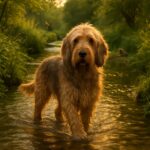
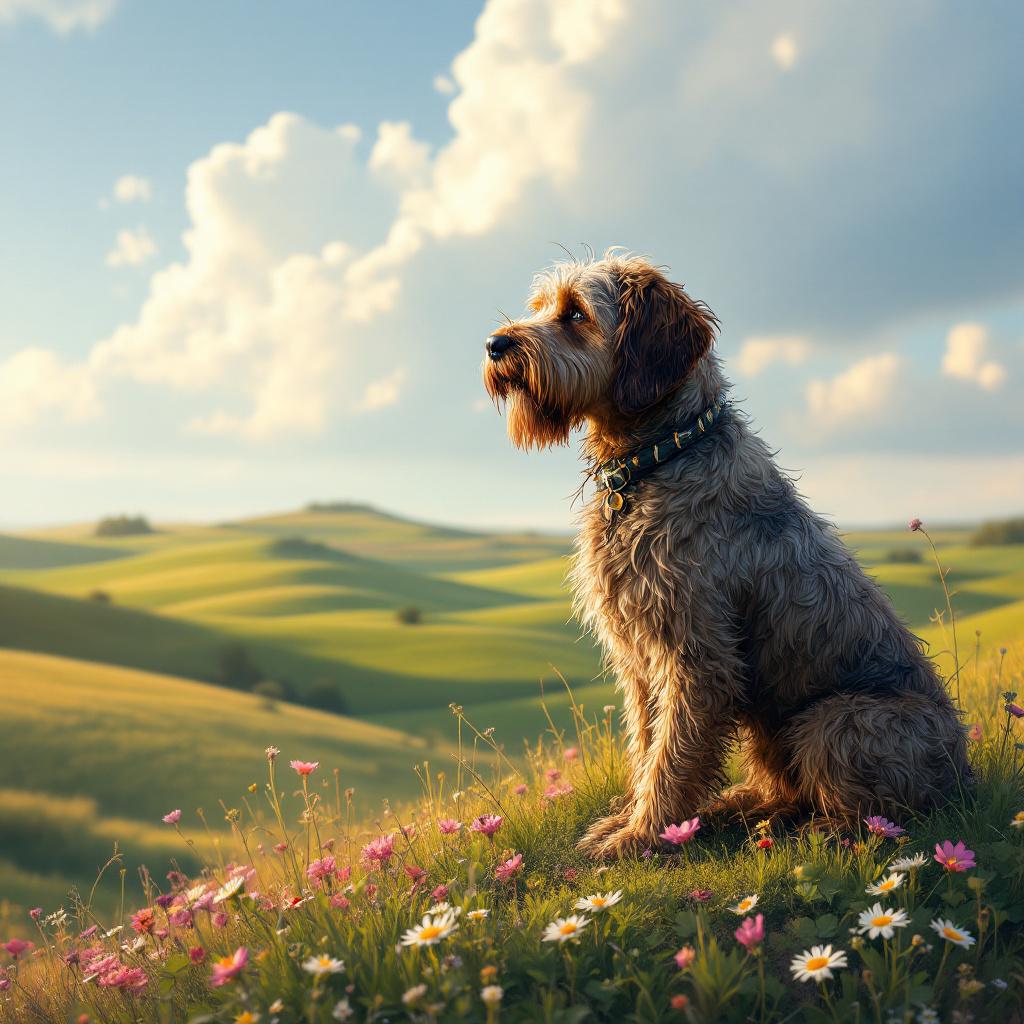
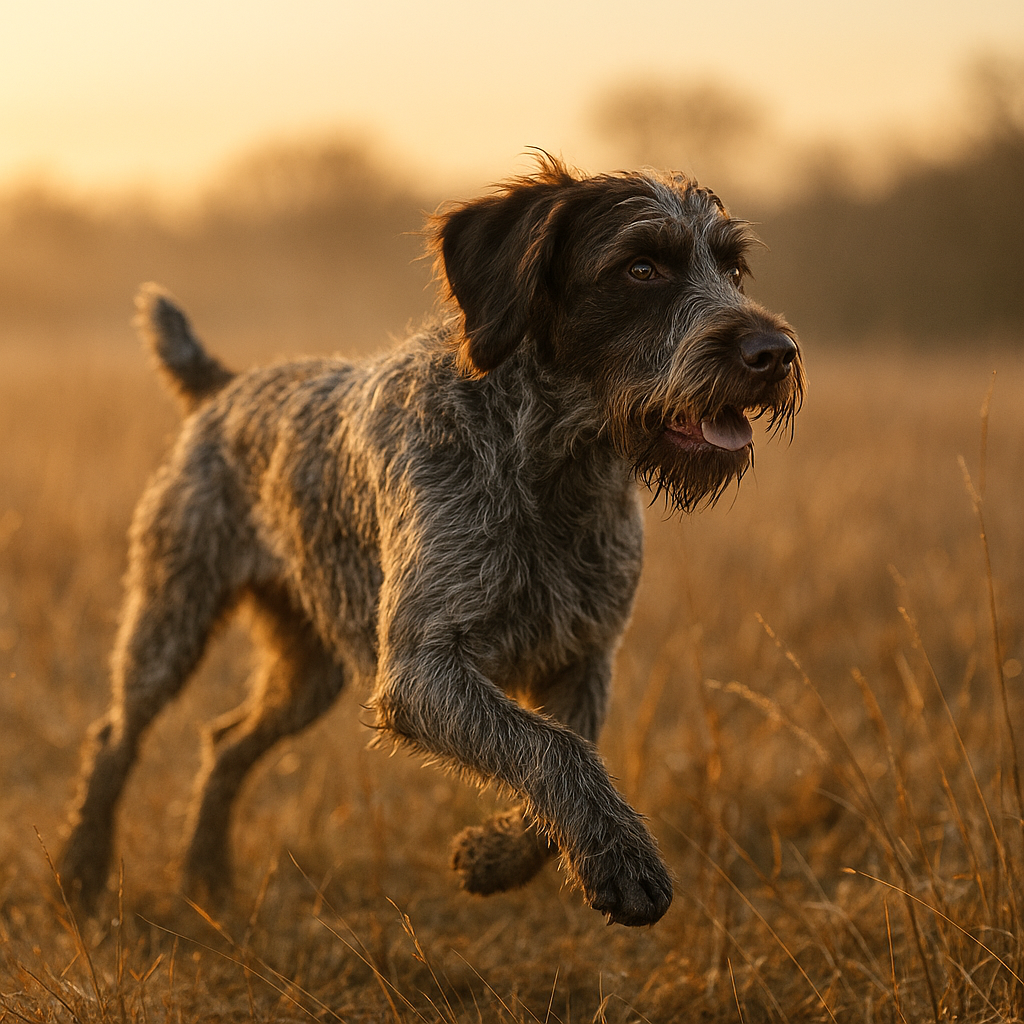
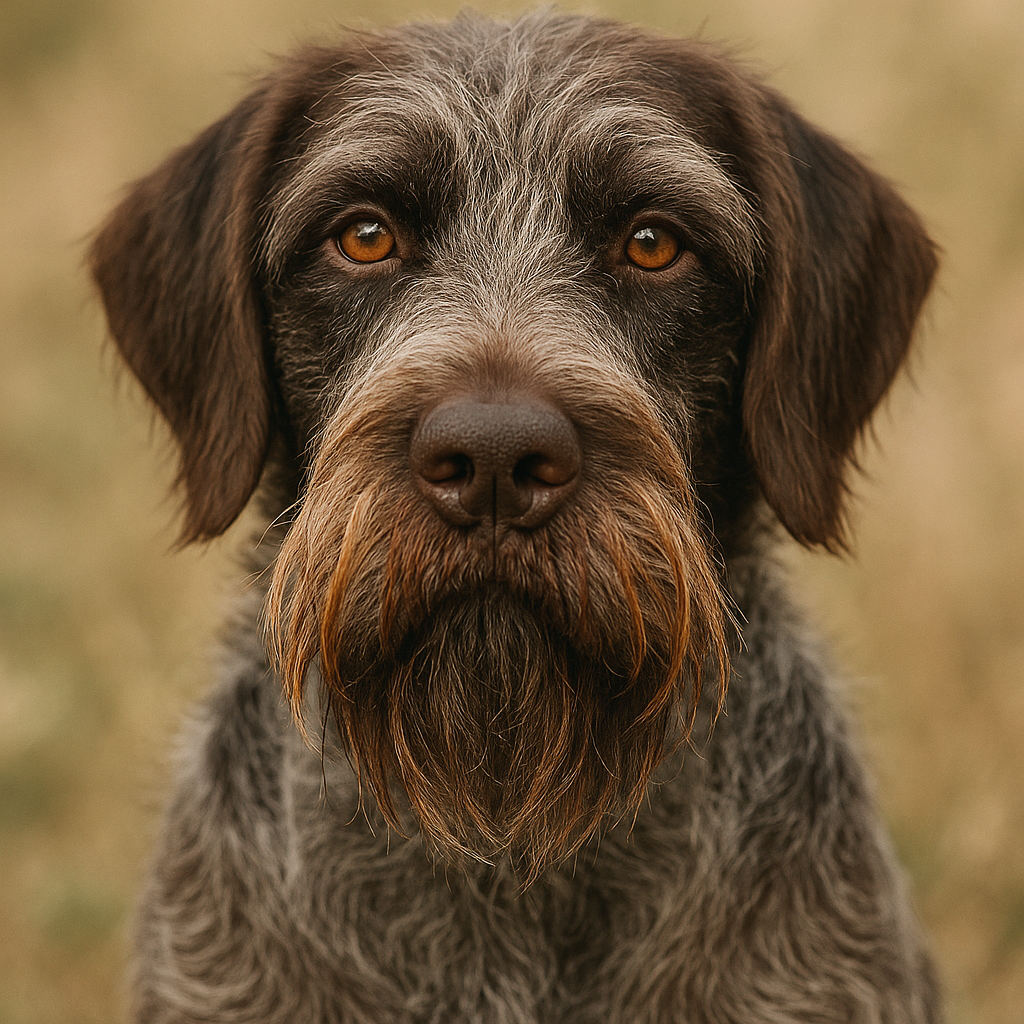
The wirehaired pointing griffon displays an athletic silhouette, muscular without heaviness, and a determined expression. Its coat is hard, wiry, and the mustache/beard shapes an expressive face — hence its very recognizable look.
Dimensions and proportions
| Characteristic | Standard |
|---|---|
| Male height | 58–61 cm |
| Female height | 56–59 cm |
| Weight | 20–27 kg |
| Life expectancy | 12–14 years |
Coat and colors
The dominant colors range from slate gray to brown, often with mottling. The rough coat protects against dense vegetation and moisture; it should be appreciated for its functionality as much as for its aesthetics. The undercoat is softer and appears seasonally — interesting for those who frequent varied climates.
Character and temperament
The wirehaired pointing griffon is not an emotional bulldozer: it shows measured sociability, intelligence, and curiosity. It is instinctively inclined towards a relationship with its owner, but it poorly tolerates prolonged isolation. Its temperament leans towards balance — neither clingy nor distant — which makes it an effective hunting companion and a pleasant family ally when it gets enough exercise.
Behavior with family
With children accustomed to dogs, he is patient and playful. He appreciates routines and settings where his skills are called upon: long outings, retrieving games, field training. His loyal nature means he adapts well to family life, provided he is offered regular activities.
Compatibility with other animals
In the field, his hunting instinct may be expressed; socialization from a young age is essential if you live with small animals. With other dogs, he generally shows himself to be a good companion, especially if the approach has been gradual and positive.
Training and use
Training a Wirehaired Pointing Griffon requires gentle firmness and consistency. This dog likes to understand the purpose of an exercise: positive reinforcement, scent games, and varied recalls work very well. He responds well to work activities — tracking, retrieving objects, water search — which honor his primary vocation.
- Start socialization early: noises, vehicles, people, and other dogs.
- Vary the exercises: obedience, thinking games, scent trails.
- Offer long outings: he needs endurance and stimulation.
Care and health
The robustness of the coat hides simple but regular maintenance. Weekly brushing is often sufficient, but after outings in undergrowth or swampy areas, you will need to check and carefully clean the whiskers and leg hairs. Unlike fine long coats, the rough hair dries quickly and naturally protects against dirt.
Practical care
- Brushing: 1 to 2 times a week; more frequent during shedding periods.
- Cleaning beards: rinsing and drying after swimming or meals.
- Ear check: weekly to prevent ear infections.
- Nail trimming: every 4–6 weeks if necessary.
Common health issues
Generally healthy overall, the griffon may present classic orthopedic issues (dysplasia), eye conditions, or ear sensitivities if hygiene is neglected. Choosing a rigorous breeder who tests the parents greatly reduces these risks.
Choosing a puppy: criteria and questions to ask
Good breeding is seen in the posture of the parents, the cleanliness of the premises, the presence of health monitoring, and early socialization. Aim for a breeder offering health tests on the breeders, vaccination documents, and a handover that allows you to observe the puppies’ behavior.
- Ask for dysplasia and eye tests of the parents.
- Check socialization: noises, handling, games.
- Favor transparency about character and bloodlines.
Quick comparisons (to place the griffon)
Compared to other pointing dogs, the Wirehaired stands out for its rough coat and its ability to remain effective in difficult environments. It is often more rustic than a fine Setter or a Pointer, while maintaining a finesse of movement appreciated by hunters who practice in varied terrain.
Summary table: key points
| Aspect | To remember |
|---|---|
| Use | Versatile pointing dog (land and water) |
| Care | Regular brushing, beard care |
| Temperament | Balanced, hardworking, sociable |
| Audience | Active hunters or sporty families |
Practical advice for future owners
If you live in an apartment, expect the need for sustained daily activities: outings, retrieving games, scent sessions. In a house with a garden, there will still be a dog that demands interaction and training — a garden without activity will not be enough for him. For active city dwellers, consider dog clubs and canine sports such as agility or rally obedience to channel his energy.
FAQ
- Is the Wirehaired Pointing Griffon suitable for families with young children?
- Yes, if he has been properly socialized; his natural patience makes him suitable for respectful children. Education on both sides is essential to prevent awkwardness and tensions.
- How much exercise does he require per day?
- At least 1.5 hours of active activity (brisk walks, retrieving games, olfactory work), plus moments of mental stimulation to avoid boredom.
- Does the coat need frequent grooming?
- Weekly brushing is sufficient under normal conditions, but after outings in abrasive or wet environments, targeted cleaning of the beard and checking for knots are necessary.
- Is he a good dog for a beginner hunter?
- Yes, if the beginner is willing to learn the basics of field training and invest in supervised outings or hunting dog courses.