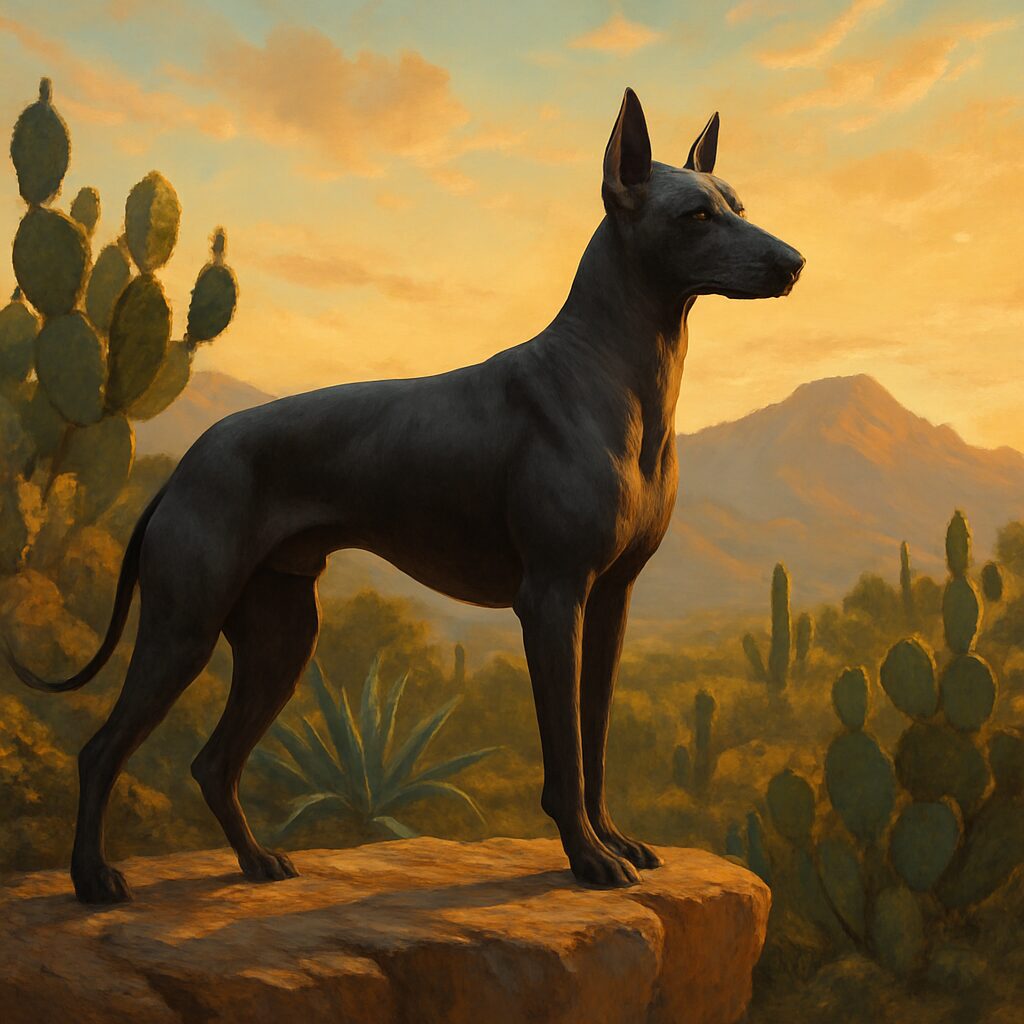
The Xoloitzcuintli — often shortened to Xolo — is an ancient breed, rooted in the pre-Hispanic cultures of Mexico, recognizable by its smooth skin and, for many, its lack of hair. More than just a “naked dog,” the Xolo carries a history, myths, and biological adaptations that make it fascinating both for animal lovers and for future owners eager to understand the peculiarities of an uncommon companion.
🦂 Millennial Origin: a pre-Columbian breed from Mexico, used ritually and as a companion; its history still influences its image today.
🧴 Skin Care: the hairless Xolo requires adapted hygiene and regular sun protection; the coated variant demands less skin care but more brushing.
❤️ Temperament: loyal, calm, and vigilant — a dog that enjoys close proximity with its family but remains cautious towards strangers.
📏 Varied Sizes: available in toy, small, and medium, which facilitates its adaptation to both urban and rural lifestyles.
History and Origin: a Dog Linked to the Continent’s Civilizations
The Xoloitzcuintli finds its roots at the heart of Mesoamerican societies. Archaeological remains and sculpted representations attest to its presence among the Aztecs, Toltecs, and other ancient peoples. It was often associated with the spirit world: some believed it guided souls in the afterlife. But beyond myth, this dog also fulfilled practical roles — guarding, hunting small game, and providing body heat for the populations.
From Veneration to Rediscovery
Colonization and the following centuries nearly erased the visibility of the Xolo as a distinct breed. It was only in the 20th century, with a renewed interest in Mexican heritage, that it was rediscovered and then standardized by breeders and enthusiasts. Today, the Xolo is recognized by several kennel clubs and enjoys growing popularity outside Mexico, notably for its unique appearance and history.
In Brief
The Xoloitzcuintli combines a rich history and specific needs, especially regarding skin care. It is a dog for whom the human relationship is paramount: it loves being with its family and requires gentle socialization from a very young age.
It exists in three sizes and two coat types — hairless and coated —, which directly affects daily maintenance. The Xolo is not automatically hypoallergenic, but it can suit households sensitive to hair if precautions are taken.
Appearance and Varieties
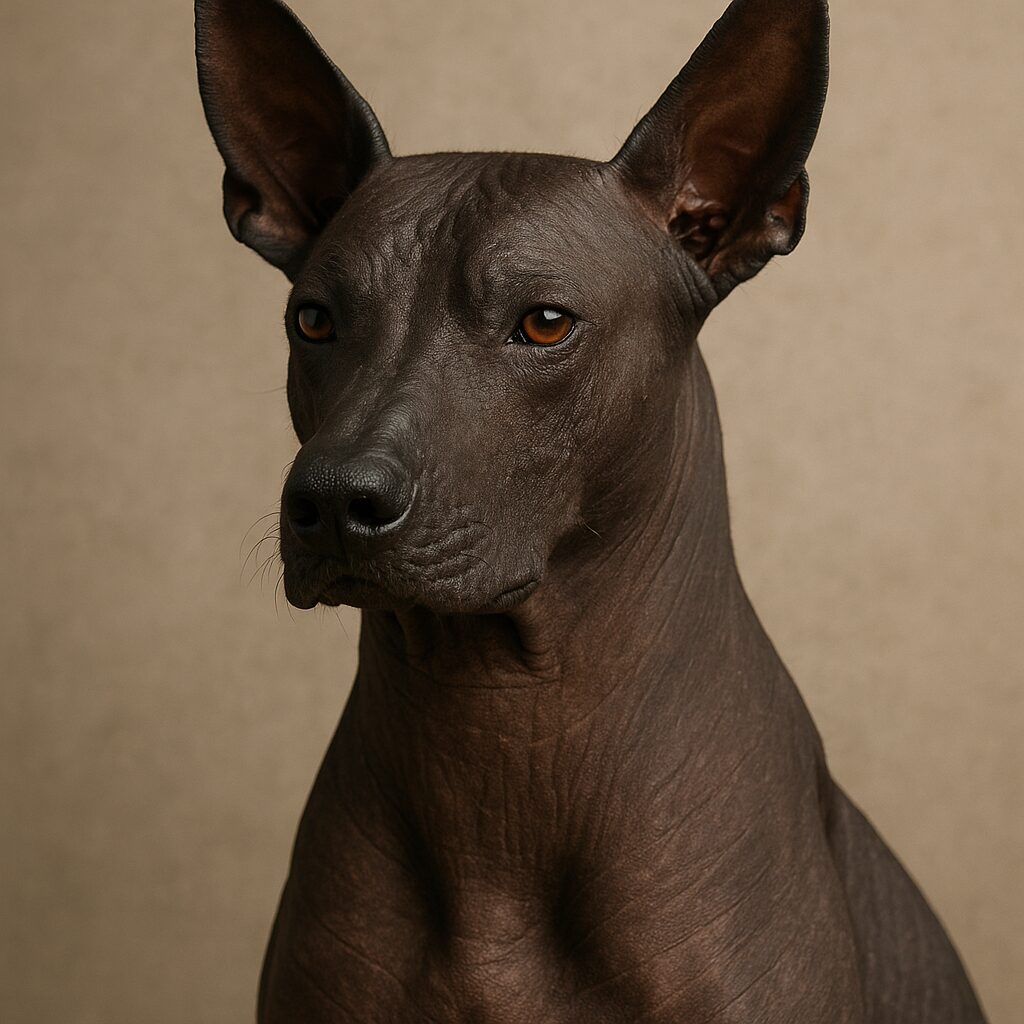
The Xolo’s silhouette is elegant and muscular, the lines are pure, and the expression often intense. The two main variants are the hairless (skin) version and the coated version. The hairless Xolo’s skin is smooth, sometimes wrinkled around the neck, and may show pigmentation spots. Colors range from deep black to slate gray, including fawn tones.
Comparison Table: Hairless vs Hairy
| Characteristic | Hairless | Hairy |
|---|---|---|
| Appearance | Smooth skin, sometimes wrinkled | Short and shiny coat |
| Care | Sun protection and hydration | Regular brushing, moderate baths |
| Allergens | Less hair but not allergen-free | Presence of hair = more allergens |
| Cold adaptation | Sensitive, requires protection | Better resistance |
Temperament and Behavior
The Xolo is often described as a mix of calmness and alertness: it does not fidget for nothing, but knows how to show its attention when needed. It develops a strong attachment to its close ones and hates prolonged isolation. Properly socialized, it is a dog suited to apartment living, provided it is given regular walks and mental stimulation.
Training and Socialization
Starting training early is an advantage: positive methods, consistency, and rewards work better than harshness. The Xolo appreciates clear routines; one might think it is distant, but in reality, it often tests limits and responds well to diplomacy rather than coercion.
Health, Longevity, and Predispositions
The Xolo is generally robust with an honest longevity for its size: individuals can be expected to live between 12 and 16 years if properly cared for. Among specific issues, the hairless Xolo’s skin can be prone to irritations, sunburns, and sometimes dermatitis. Some subjects may also have dental problems; the absence of hair does not confer immunity to common canine ailments.
- Regular check-ups: annual veterinary exams and vigilance regarding skin condition.
- Dental hygiene: tooth brushing, chew toys, and proactive veterinary visits.
- Nutrition: a balanced diet, adapted to size and age, will support skin and musculature.
Specific Care for the Hairless Dog
This is not exotic at all: the skin requires attention. The hairless Xolo needs occasional baths with gentle products, regular hydration adapted to canine skin, and especially sun protection on exposed areas during hot hours. In winter, coats and blankets should be considered to avoid superficial hypothermia.
Practical Tips
- Use sunscreens adapted for dogs on the nose and flanks during prolonged exposure.
- Hydrate the skin with veterinary products to prevent cracking and irritations.
- Avoid too frequent baths: the skin’s lipid barrier must remain intact.
- Protect from cold with well-fitted clothing in winter.
Adopting a Xolo: What You Need to Know
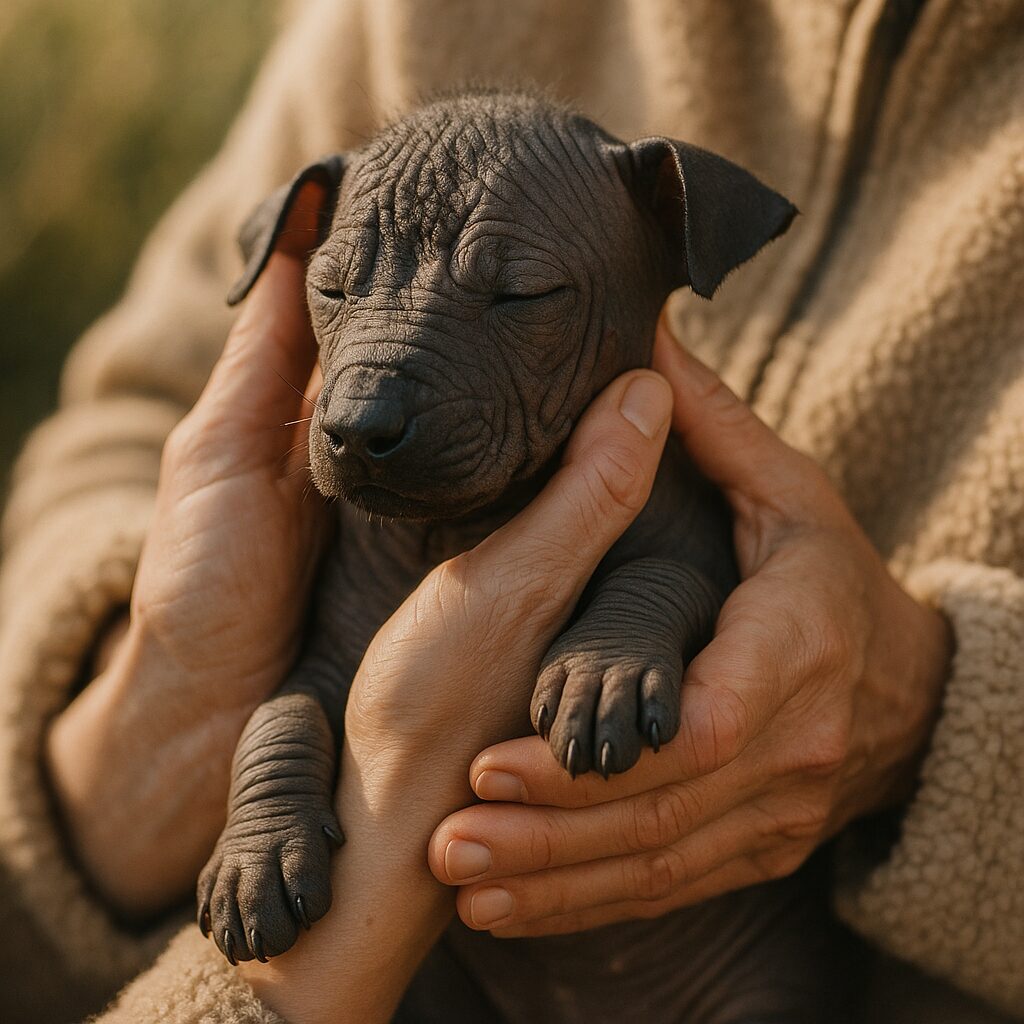
Consider your lifestyle: the Xolo requires companionship and daily responsibility. The criteria to prioritize when adopting — breeder or shelter — include transparency about health, the possibility to meet the parents, and early socialization. Beware of trends: a dog is not a decoration accessory. Longevity and emotional investment are real.
Questions to Ask the Breeder
- Health history of the parents (possible genetic tests).
- Methods of socializing the puppies.
- Weaning and feeding advice provided by the breeder.
In Practice: Price, Availability, and Regulations
The Xolo remains a relatively rare breed outside of Mexico. The price of a puppy varies depending on origin, pedigree, and the breeder’s reputation. In some countries, import formalities or specific health regulations apply. Be sure to inquire locally and prioritize responsible adoption channels rather than less scrupulous ones.
FAQ
Is the Xolo hypoallergenic?
Not entirely. Hairless individuals shed less daily hair, which can reduce allergen dispersion for some people, but dander and saliva remain sources of allergens. Establishing regular cleaning of the living environment and hygiene routines will reduce symptoms in sensitive individuals.
Can the Xolo live in an apartment?
Yes, provided regular walks and mental stimulation are offered. It is a rather calm dog at home, but it hates boredom and prolonged isolation.
Is a large garden necessary for a Xolo?
Not mandatory. A garden is a plus for free play, but the essential thing remains the quality of daily outings and the relationship you build with the dog.
How to protect the Xolo’s skin from the sun?
Canine sunscreens, light clothing, and walks outside of the hottest hours constitute the basic kit. Avoid prolonged exposure without protection, as sunburns can cause burns and chronic skin problems.